From Woody's Couch

Our Playbook on OSU History

Category: Football (page 7 of 9)

Should we call him “Coach” or “Doc”?

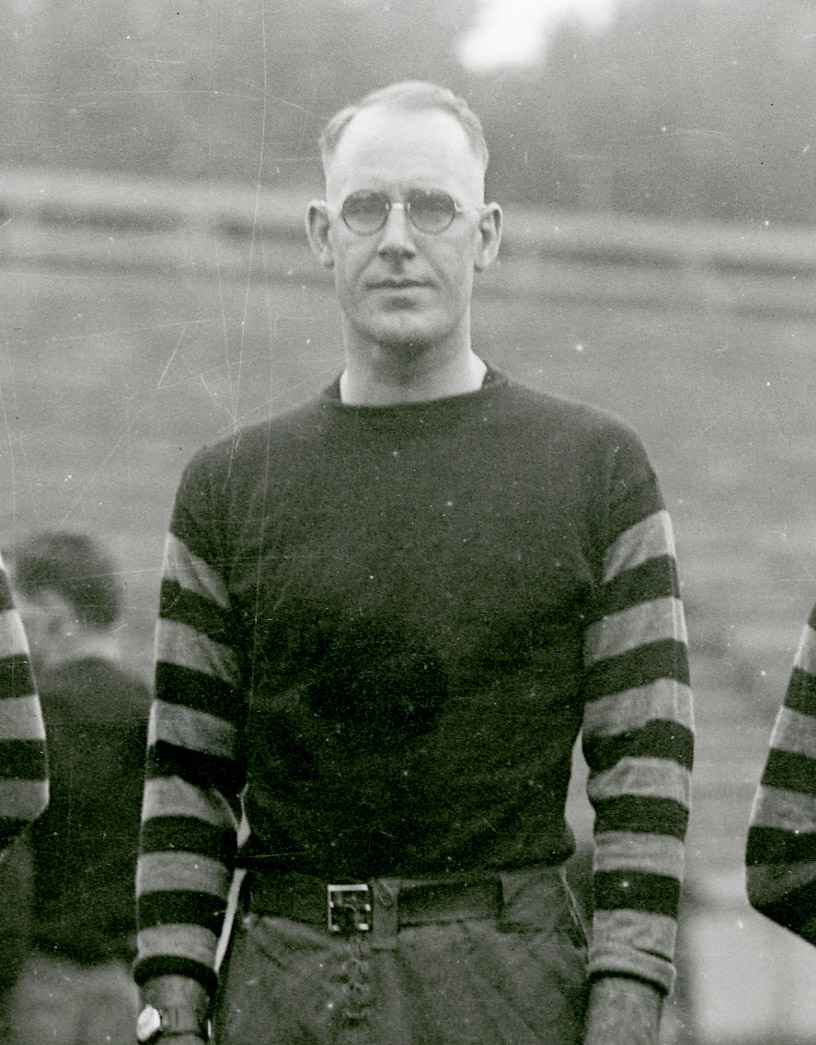
Coach Wilce, circa 1915

Did you know that one of OSU’s football coaches was an M.D.? Coach John Woodrow Wilce became Dr. Wilce in 1919 while head coach of the Buckeyes. In 1913, Wilce came to Ohio State from the University of Wisconsin (his alma mater), where he had been head football coach for two years. At Ohio State, he accepted the dual appointment of football coach and professor of physical education. He was 25 years old.

Wilce served as head coach for 16 seasons, leading the Buckeyes to three Big 10 Championships and into national prominence. Under Wilce, All-American Chic Harley led the Buckeyes to two of those championships. In fact, nine players achieved All-American status during the Wilce era. It was also Wilce who transitioned the team from playing at OSU’s first football game location, Ohio Field, to the big-league venue of Ohio Stadium.
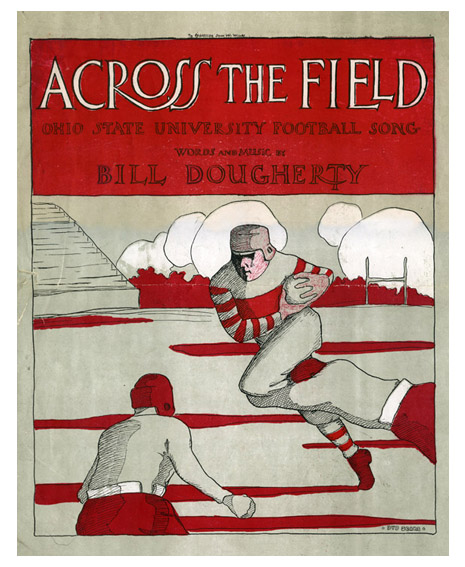
He even had a football fight song written for him. An unidentified press clipping in his biographical file here at the Archives says that back “in 1915, when the Buck team began to show its first signs of being a big conference threat, Bill Doherty, who was managing the team, wrote the ever popular ‘Fight the Team Across the Field,’ and dedicated it to Dr. Wilce, who was coach then.”

Wilce resigned after the 1928 season, took nine months off, and returned to the University as a physician on the staff of the Student Medical Service. Upon the reorganization of that department, he took the helm as director in 1935. In that position, he wrote many journal articles and gave many conference talks about University health services.

Wilce Student Health Center

He continued in that capacity until he retired in 1958, spending additional time studying the cardiac effects of athletic stress, another subject on which he was considered an expert. He was a Fellow and life member of the the American College of Physicians and vice president of the American College Health Association. He also was a recipient of the University’s Distinguished Service Award in 1956. He passed away in May 1963 at the age of 75.

Thousands of sick and injured students now probably link Wilce more with the University’s health services than his record as football coach: In 1969, the Board of Trustees officially named the then-new student health facility in Wilce’s honor.
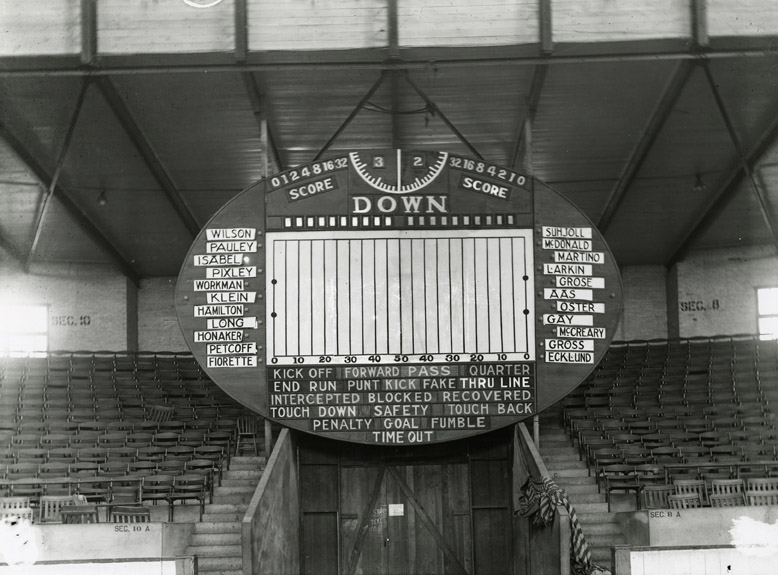


ESPN ticker: Meet the electric scoreboard

A scoreboard in the Ohio Coliseum, c1923

In December 1914, an alumnus by the name of Howard Bryan created an electric scoreboard, consisting of 100 electric light bulbs and the necessary wires, to allow fans who couldn’t make the game to follow the two teams’ movements on the board. It was first used for an away game at Indiana. This was half of the equation; the other half meant actually finding out what was happening at the real game. The solution: OSU “leased a wire,” which wasn’t explained in the Alumni Monthly magazine story, but likely means a telegraph line. So the board operator would receive the news via telegraph, then would show the play on the “scoreboard.” How’s that for “instant messaging”?

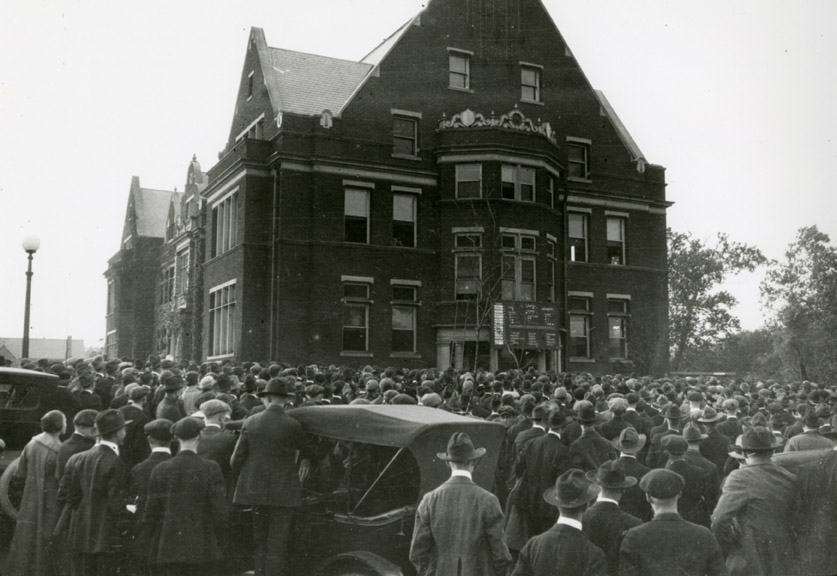
Over time, the “scoreboards” seem to have evolved, while keeping the same basic format. By 1919 there was one hung on the east side of the then-Ohio Union, what is now Enarson Hall on the South Oval. That scoreboard could attract crowds of a thousand people. Those of us who have smartphones may laugh at a group of people waiting for a light bulb to turn on, but it had a party atmosphere all the same. These scoreboard parties continued at least until 1927, which is the last we’ve found them mentioned in our records. At some point, the board was moved under the Stadium, where crowds gathered to find out the latest news. Now those were devoted Buckeyes!

A football scoreboard party outside of Enarson Hall (formerly the Ohio Union), 1919

Scoreboard party under the Stadium, 1923

Filed by C.N.

OSU’s Dad’s Day: a fall-weather festivity for fathers

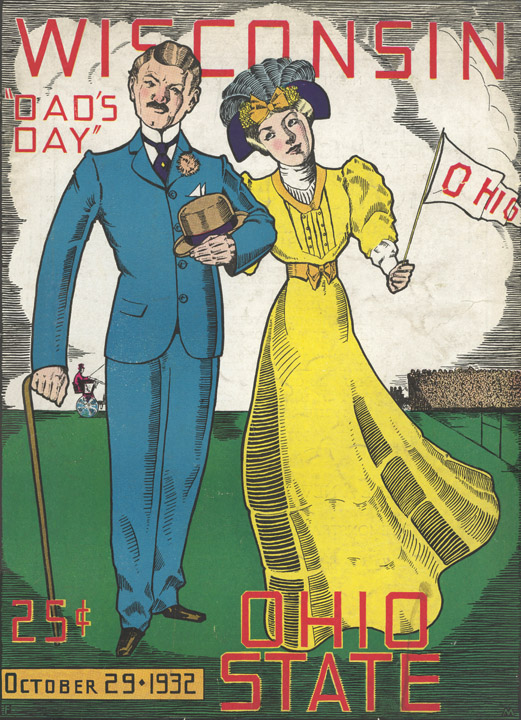
October 29th, 1932 football program cover for "Dad's Day"

In honor of Father’s Day this weekend, we decided to research a bygone OSU tradition: Dad’s Day. Dad’s Day was usually celebrated in late October or early November during a home football game to which students would invite their fathers. The football program for the game would include something about Dad’s Day, and the band would perform a special selection at half time. In 1921, which is the first mention of the celebration, many fathers were seated on the sidelines behind the home team. (We hope they had a better view than they would have today.)

In 1932 OSU parents created a Dad’s Day Association. (There was a Mother’s Association as well, but some mothers helped with the committee.)  In 1932 the association claimed that it would celebrate the ninth annual Dad’s Day that year, although that may or may not be correct. The celebrations continued to be an annual tradition through the 1950s; then it seems that the name changed to Parents’ Weekend. Parent’s Weekend seems to have been popular through the 1960s; after a long hiatus, it was reestablished in the 1990s and is now called Parent and Family Weekend.


Older posts Newer posts