From Woody's Couch

Our Playbook on OSU History

Category: Departments (page 9 of 16)

OSU Extension celebrates 100 years of agricultural outreach


Original farm plots of the Agricultural Experiment Station.  This field was located north of the original University Hall, 1880s

This photo shows one of the original farm plots of the Agricultural Experiment Station in the 1880s. This field was located north of the original University Hall.

In 1914, Congress passed a law that created a system of cooperative extension services to be run through land-grant institutions like OSU. Enacted on May 8, 1914, it was called the Smith-Lever Act, and it aimed to inform people about current developments in agriculture, home economics and related subjects. Officially, OSU’s Ohio Cooperative Extension Service was founded when the law went into effect, but OSU had been reaching out to the state’s residents long before that time with useful research and information.

In 1881, the University became the home of the Agricultural Experiment Station (now known as OARDC in Wooster), where faculty conducted research and studied methods that would be passed onto the state’s agriculture community. Then, in 1895, students at Ohio State formed the Agricultural Students Union, tasked with encouraging cooperative research and demonstrations of new technology for the public.

A.B. Graham, 1911

A.B. Graham, 1911

In 1902, OSU alumnus A.B. Graham founded the first 4-H Club in Springfield. At that time, he also was working with OSU and the Ohio Agricultural Experiment Station at Wooster to test seed varieties and various agricultural methods. In 1905, OSU created the position of superintendent of agricultural extension for Graham, nearly ten years before the federal law was enacted establishing cooperative extension services.

This postman prepares seeds to be mailed to agricultural clubs in Ohio, (1906).  This project was initiated by A.B. Graham and utilized the Agricultural Extension Service.

This postman prepares seeds to be mailed to agricultural clubs in Ohio, 1906. This project was initiated by A.B. Graham and utilized the Agricultural Extension Service.

In 1912, OSU’s extension service took to the rails by making a 100-day tour on the New York Central Railroad. The aim was to reach small farming communities. There were multiple train cars, one for lectures and at least one other for demonstrations involving crops or livestock. They also distributed seeds and literature. At this time there were also extension agents in place in each of the counties, running youth programs, giving farm demonstrations, and providing information back to the University regarding problems with crop health and possible solutions.

An Ag. Extension Agent works talks with a farmer, 1976

An Ag. Extension Agent talks with a farmer, 1976

Now known as the OSU Extension Service, the program has changed over the years. Originally a key resource for farmers, it still plays a big role within the agricultural community but now aims some of its services at more urban targets. Need gardening advice on which plants to use, which varieties of vegetables to plant, or how to can the vegetables once harvested? The extension service can help. Have a problem with rogue geese or other wildlife? The extension service can offer some tips. The extension also helps support such programs as 4-H, and has formed coalitions with urban gardening organizations, as well as the energy and agricultural industries to support new farming technologies and improve the environmental impact of such industries.

For more information on OSU Extension go to: http://extension.osu.edu/.
OSU linguist ‘went the extra mile’ for students, University

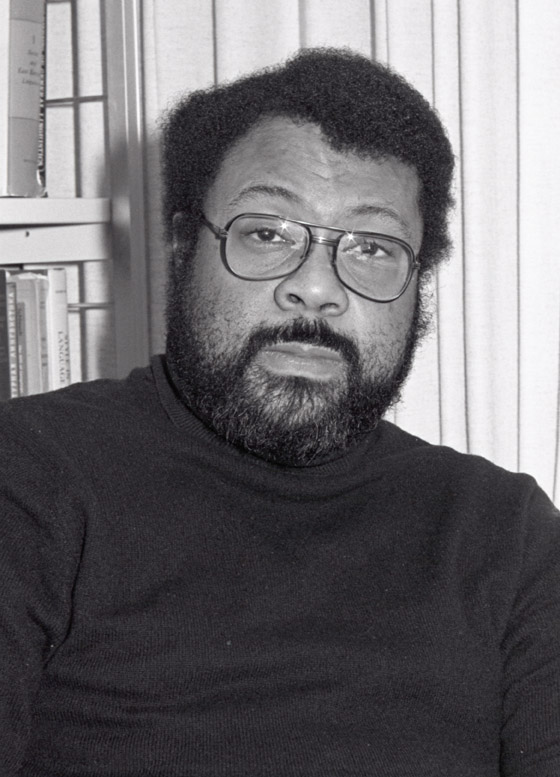
Kenneth Naylor, 1975

Kenneth Naylor, 1975

Kenneth E. Naylor was a professor whose research was world-renowned but spent much of his time, too, as an adviser and mentor to students. Consider this: During his 26-year career at Ohio State, Naylor supervised seven Ph.D. dissertations and was adviser to 31 master’s degree recipients. He served on more than 30 University committees, both at the College department levels. In a Lantern article published after Naylor’s 1992 death, David Patton, assistant director of the Center for Slavic and Eastern European Studies, said: “He always went the extra mile, and that’s how he’ll be remembered by students and colleagues.” 

Naylor, who was born in 1937 in Philadelphia, was first and foremost an expert on Slavic languages and culture. He received his bachelor’s degree in 1958 from Cornell University and his master’s degree in 1960 from Indiana University. From there, he studied at the University of Chicago, taking a year off to study at the University of Novi Sad in Yugoslavia with renowned linguist Pavle Ivic. He returned to complete his dissertation on Yugoslav linguistics at the University of Chicago and was awarded his Ph.D. in 1966.

He came to Ohio State as a Professor of Slavic Linguistics, later becoming a specialist in Slavic and Balkan Linguistics and Culture. He was known for his knowledge of the area, both at home and abroad. In 1984 he received the “Jubilee Medal 1300 Years of Bulgaria” from the People’s Republic of Bulgaria and in 1989 the “Order of Yugoslav Flag with Gold Wreath” from the Republic of Yugoslavia for his study of the Serbo-Croatian language and Yugoslav literature, as well as supporting cultural ties between Yugoslavia and the U.S.

In 1990, Naylor was called to testify before the U.S. House of Representatives, Foreign Affairs Committee on the ethnic rivalry in Yugoslavia and the development of a Serbo-Croatian language. He was commended by those he met in Washington for his clear testimony and demeanor, as well as his knowledge of the area and the people.

Dr. Naylor continued to teach at Ohio State until his death on March 10, 1992.

Happy 100th birthday to Rec Sports!

1910s

1910s

Athletic events have been held at Ohio State almost from the beginning, when student groups organized races from High Street to University Hall, tug-of-war contests across Mirror Lake, and informal football games on the grounds west of Neil Avenue. It wasn’t until December 1913, though, that the University decided to get involved and organize an “Intra-Mural Athletic Association.”

Intramural sports owe a debt of gratitude to former Director of Athletics Lynn St. John, both for his vision and his willingness to carry it out. In 1913 the University reorganized the Department of Athletics, appointing former student St. John as its head. J.W. Wilce (namesake of the Wilce Student Health Center) was also appointed as head football coach and director of intramural athletics. Ohio State had joined the Western Conference in 1912, and St. John was committed to providing “competitive athletics for every student.”

Women's track, 1929

Women’s track, 1929

The intramural program was soon a success, with other colleges asking for advice on starting their own programs. In fact, despite a brief interlude during World War I, the program grew from its five original sports (football, baseball, basketball, tennis, and track and field) to about 20 sports (both team and individual) in 1921. These included soccer, swimming, and bowling for team sports, and fencing, cross country, fowl shooting and golf for individual competitors. By 1937, there were 21 sports for men, with 10,000 participants, and 14 sports for women, with more than 1,000 participants.

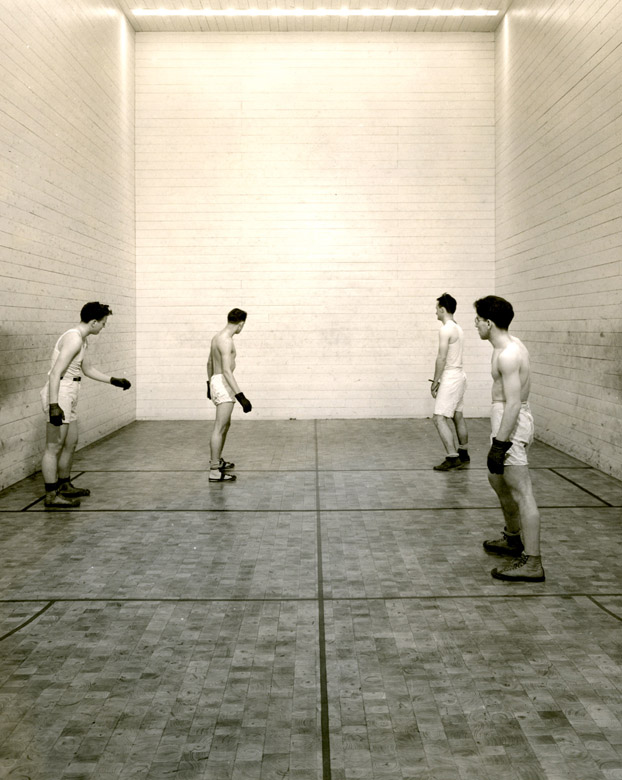
Handball court in Larkins, nd

Men playing handball in Larkins Hall, no date

Many of the men’s indoor sports were played at Larkins Hall, first opened in 1931 as the Men’s Gymnasium and Natatorium, and located just east of where the Recreation and Physical Activity Center (RPAC) now stands. Women’s indoor recreational sports were played at Pomerene Hall, which opened in 1927.

By 1968, however, recreational facilities were deemed insufficient by a University committee charged with evaluating the program. The report found that while the number of students participating in intramurals had tripled since 1945, the number of facilities had decreased slightly. Ohio State, in fact, was far behind other Big Ten universities; for example, while Indiana University had 29 indoor basketball courts at the time, Ohio State had six.

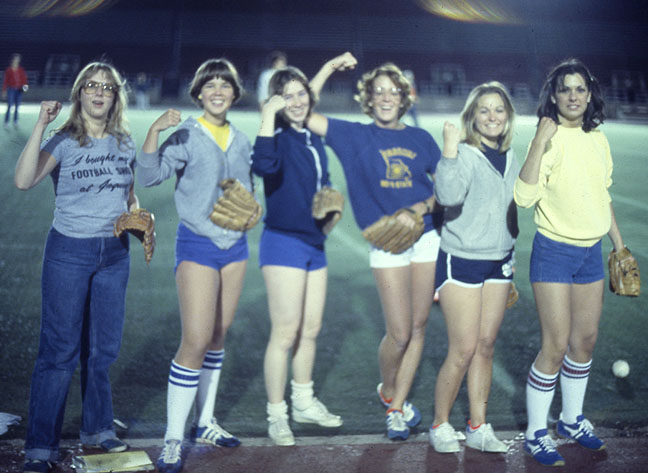
Intramural softball group, 1978

Intramural softball group, 1978

By 1970 OSU’s intramural program was the nation’s largest, encompassing around 30 sports. Today, OSU offers more than 25 different sports throughout the year, ranging from traditional football, basketball and soccer to indoor cricket, chess, “wallyball,” and something called “Battleship” involving canoes and bucket-wielding participants in a pool. It does so at a wide variety of venues, from the Jesse Owens North, South, and West Recreation Centers, which opened in 1976, to the nearly 600,000-square-foot RPAC, which opened in 2005.

So if you are looking for something to do this year, check out the department’s web site. For more on its history, check out its historical timeline.

Filed by C.N.

Older posts Newer posts