From Woody's Couch

Our Playbook on OSU History

Category: Departments (page 2 of 16)

100 years in the making…Centennial Histories now online

As part of our ongoing effort to digitize highly used material, the departmental Centennial Histories have recently been uploaded to the Knowledge Bank for public use.  To access the histories visit our website, where they are organized alphabetically.

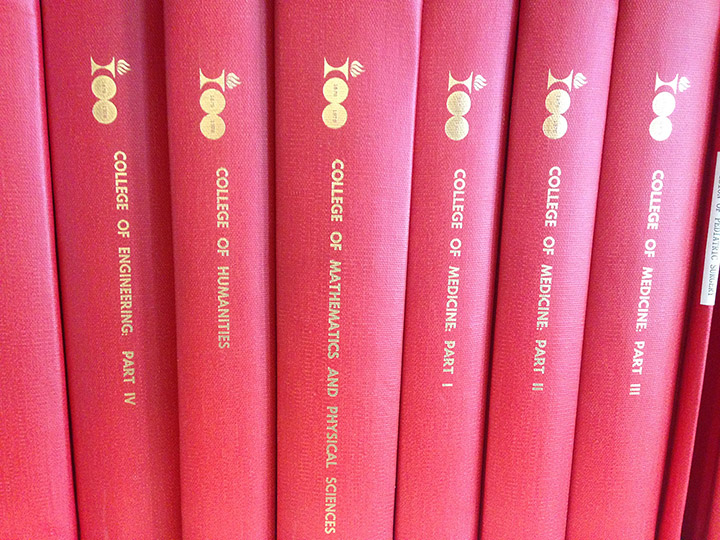
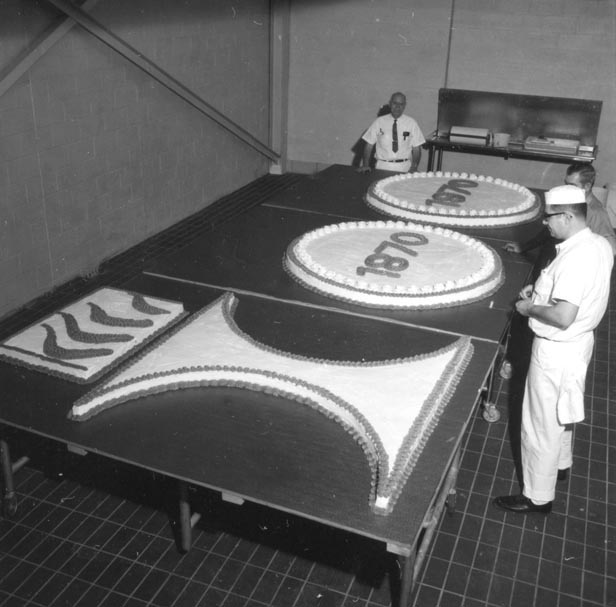
The University celebrated its Centennial in 1970 with a slew of events and ceremonies.  One of the longest lasting legacies of this celebration is the departmental histories, which preserve individual, detail accounts of the emergence Cent.Histand growth of departments.  The centennial histories followed the general theme of the Centennial project:  “to assess [the] first 100 years and utilize this heritage as a foundation for building an even greater institution.”  Before this period of time, little information was collected about the history of departments.
The idea stemmed from secretary of the  Board of Trustees, Edward Moulton and was coordinated by John T. Mount.  The plan was for departments to compile their own histories following prescribed guidelines.  Once finished these histories would sit in both the University Archives and in the general library collection.

To preserve important knowledge, departments had an outline that needed to fulfill four major pillars: Founding and Early Development, the Mature Years (progress within department), Current Status and Future Plans, and Appendix (includes lists of deans, chairs, and publications).  Along with the outline, departments received a page of sources to consult during this process.  These sources included both primary sources, such as the minutes from the Board of Trustees and annual reports, and secondary cake1970sources, including histories of the University in general.
The centennial history writers were current departmental staff, faculty or emeritus faculty.  The writers had an original deadline of July 1, 1969, but it was later extended to late December 1969.  The final product was submitted to the then-University Archivist, William Vollmar.

More than 130 histories were submitted and are in use today.  They range in size from a few pages to hundreds of pages.  Centennial histories are a highly useful research tool for information about departmental formation, faculty members, deans and even prominent students.  The histories collectively combine primary sources into a single source for research.

View the requirements for departments and the selected bibliography.

To see photos from our first 100 years, visit our Flickr page.
University Gardens plants roots for students’ education

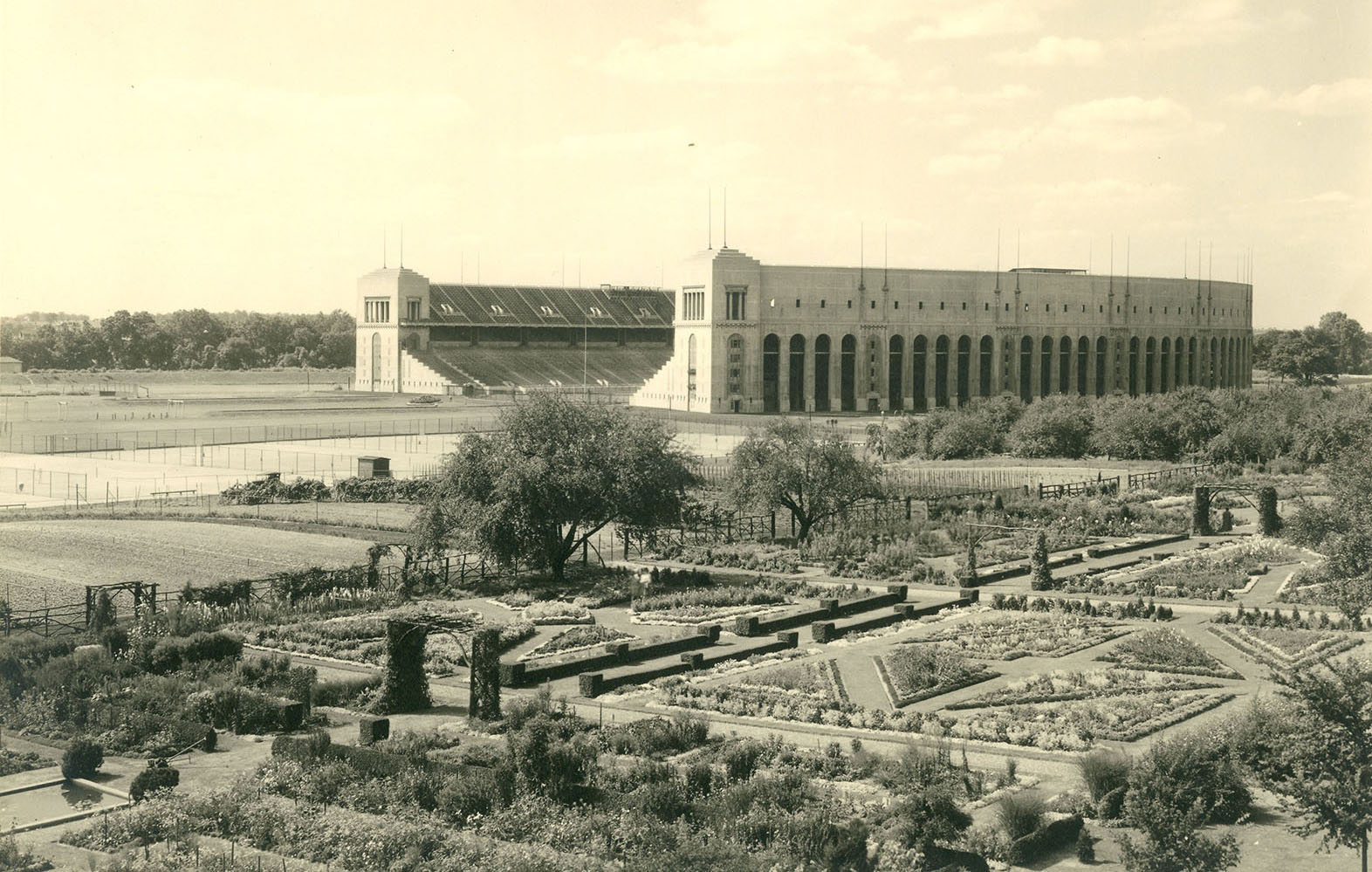
Students walking west of Thompson Library today are likely unaware of just how drastically different the campus landscape appeared in the past.  Starting in the 1920s and 1930s, the University Horticultural Gardens blanketed the campus west of Neil Avenue, presenting an array of plants, flowers, hedges, a lily pond and a number of exotic plants.

As a University largely based in agriculture, it’s no surprise that the school began to set aside a portion of the campus, as early as 1884, to be slated for garden space.  Much of the campus grounds were already covered in farmland when the school officially opened to students in 1873.  However, plans for a formal University Horticultural Garden did not surface until the 1910s, when a number of University Departments began laying out a scheme for the gardens.

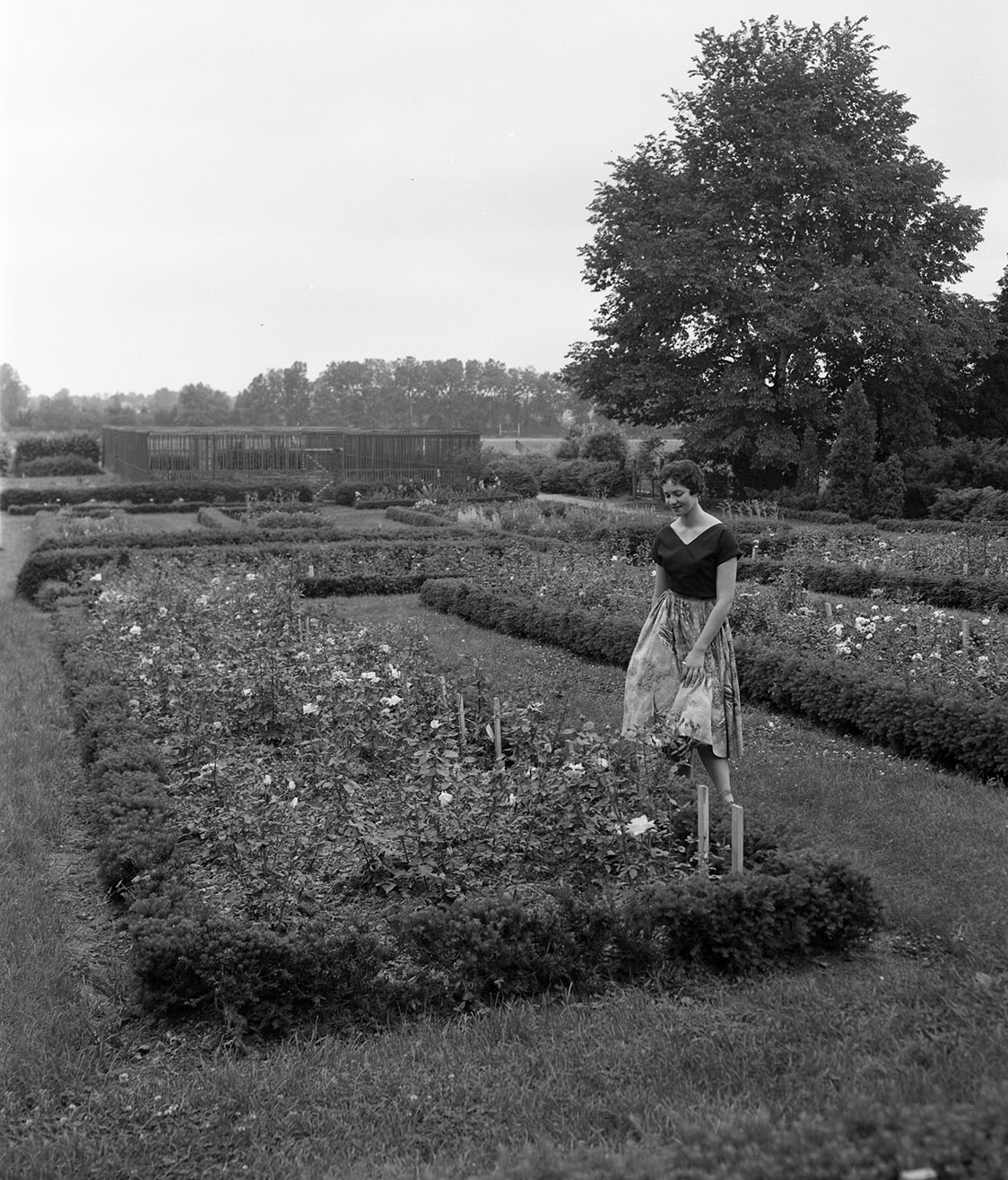
At its peak, the University Gardens covered nearly 15 acres. The gardens were situated south of the McCracken Power Plant, west nearly to the Stadium, east of Thompson Library and south to the site of Jennings Hall.

At its peak, the University Gardens covered nearly 15 acres. The gardens were situated south of the McCracken Power Plant, west nearly to the Stadium, east of Thompson Library and south to the site of Jennings Hall.

c1950

c1950

The gardens presented a nearly perfect learning opportunity for students across a variety of colleges, as it served as an extension of their class work.  Landscape Architecture students were involved in the creation and formation of the gardens; Horticultural students grew experimental types of plants and recorded their results; and Botany and Zoology students were often devoted to plant-breeding experiments and the study of pest control.

The purpose of the gardens was two-fold: it not only provided hands-on experience for students, it also served to beautify the campus.  In fact, many gardening clubs and members of the public visited the gardens to learn about flowers and take a peek at unusual plants.  Some of the plants that were being tended were quite rare, reported the Lantern in 1922.  One species of gladioli had been imported from the Pacific Coast, and the bulbs cost $10 each.  Other plant species were brought from Holland, Asia and a number of other countries.

c1924

c1924

Students must have also enjoyed strolling through the gardens, especially at summer’s peak when the flowers were in full bloom. A July 15th 1927 Lantern editorial author writes: “One follows with amazement the intricate and perfectly executed designs in which the beds are planted and sighs as he recalls the bedraggled and wandering little rows which he has accomplished in the old garden at home – and asks himself if a course in horticulture wouldn’t be a valuable part of one’s education, after all.”

However, as the years wore on and campus construction progressed, the gardens were downsized.  “As size diminished, interest in the garden waned as well”, according to a 1968 Lantern article.  By the 1970s, the gardens were almost entirely gone.

Please see our Flickr page for more images of the University Horticultural Gardens.


A bounty of Buckeye-themed goodies, thanks to Trademark and Licensing

It’s likely many of you have never have heard of one of OSU’s most influential offices, but boy, have you sure seen its imprint.

Trademark and Licensing has been around for more than 30 years, “protecting the University’s name and identifying marks,” according to its web site.  It all started in 1982, with a proposal of a program to ensure OSU received a royalty from each sale of OSU-themed merchandise. The program also would regulate which products were allowed to use Ohio State’s trademark, to make sure the University’s image remained unsullied. (By the way, the Libraries receives a percentage of each royalty, so we are particularly grateful for this program.)

Now, vendors who want to use OSU’s  name or logo on their merchandise must undergo a rigorous application process with the Trademark and Licensing Office to get approval.  While the office is strict about its standards, it does approve a wide variety of items to be sold.  We thought we’d take you down memory lane to show what kind of items once adorned the shelves of various retail outlets around town back in the ’80s. The material in these photos is from a collection transferred to the Archives in 1989 by the office.

Our models in the photos were Brandon Abbott, Britain Wetzel and Jimmy Zimmerman. Brandon, a Math major who was a summer-only Archives student assistant, returned to classes last week. Britain and Jimmy graduated last spring, and this fall, Jimmy is starting his second year of courses at OSU’s School of Dentistry. Meanwhile, Britain is beginning her first year of coursework at Kent State University’s College of Podiatric Medicine. Thanks and good luck to all three!

So let’s get to the photos!


[metaslider id=5122]

Older posts Newer posts