From Woody's Couch

Our Playbook on OSU History

Category: Departments (page 13 of 16)

Now in a new home, Cartoon Library owes much to Milton Caniff

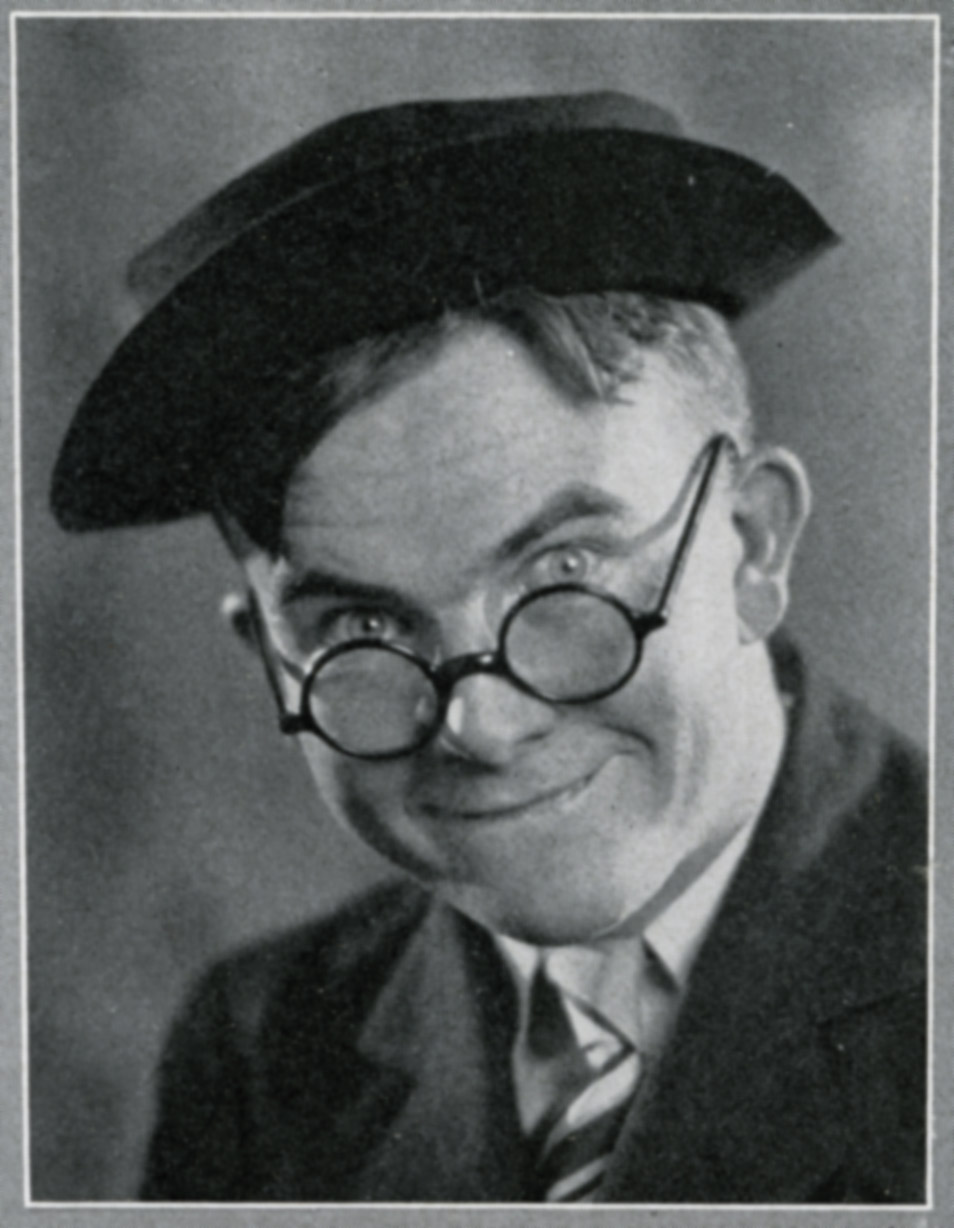
Milton Caniff, 1927

Milton Caniff, 1927

This week the Billy Ireland Cartoon Library and Museum re-opens in its new location at Sullivant Hall, after several weeks of moving its collections from its former location at the Wexner Center. Its first home, though, was in the Journalism Building, and might never have been created, if not for OSU alum Milton Caniff.

 Caniff, as you may know, went to OSU in the late 1920s. During that time he also served as art director of the Makio and the Sundial, an OSU student humor magazine. He graduated in 1930 with a bachelor’s degree in journalism. He later went on to draw “Terry and the Pirates” and later “Steve Canyon,” probably his most famous comic strip. That strip ran for more than 40 years.
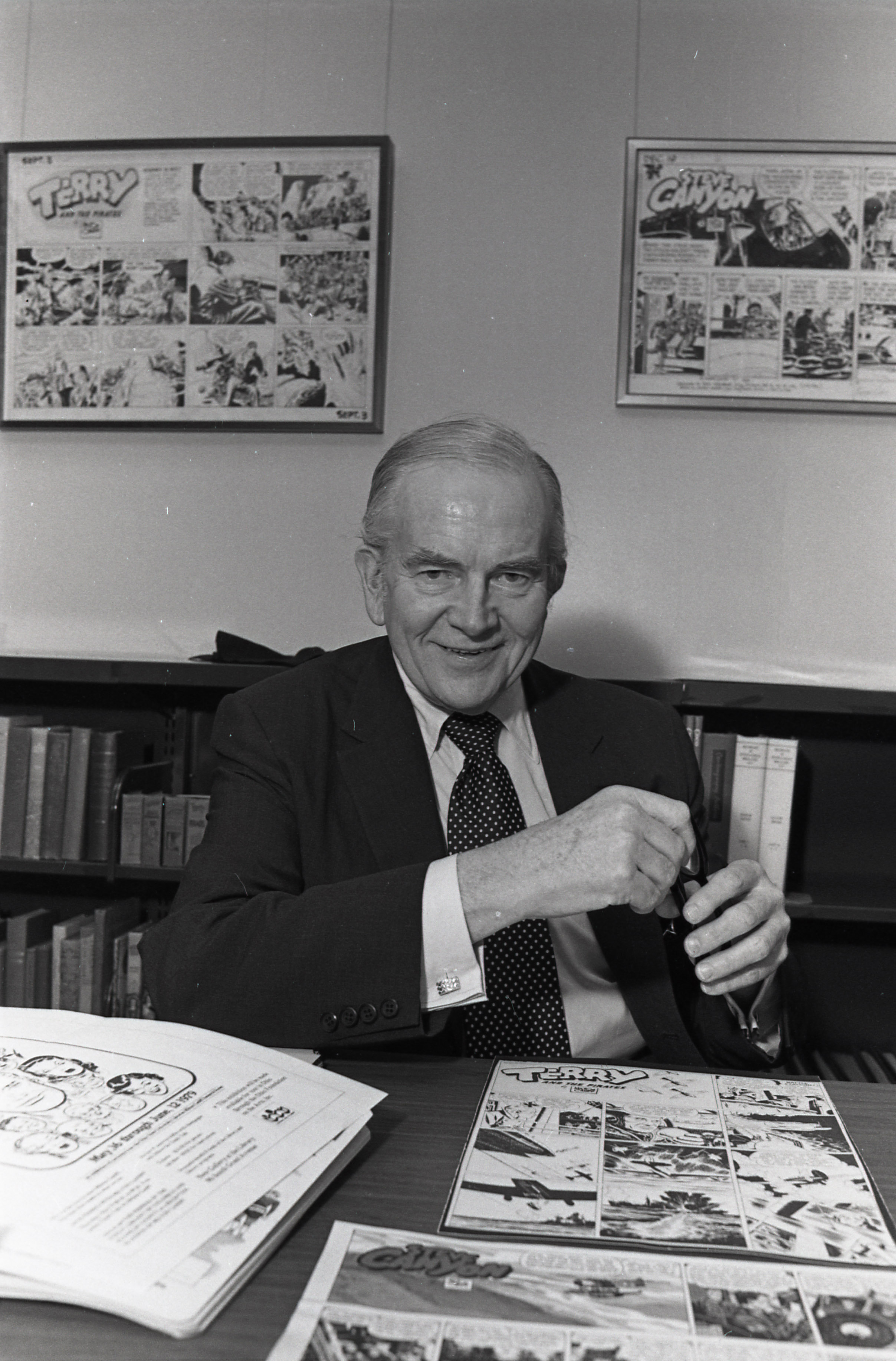
Caniff in the former Caniff research room, 1979

M. Caniff in the former Caniff research room, 1979

Caniff donated his papers and collected works to the University in 1977 to establish the Caniff Research Room in two converted classrooms of the Journalism Building. On May 19, 1979, the the official dedication ceremony was presided over by OSU President Harold Enarson, with many dignitaries attending, including New York Times columnist Jimmy Reston and  retired CBS president Frank Stanton. The original collection also included props, such as model airplanes, guns, and army uniforms that Caniff used to draw from, and his personal correspondence. The rest of the collection was given to the University after Caniff’s death in 1988.

 In the years that followed, a number of other artists bequeathed their work to the room as well, including L.D. Warren of the Cincinnati Enquirer, Ray Osrin and Pulitzer Prize-winner Edward D. Kuekes, both from the Cleveland Plain Dealer.

Students using the collection, 1979

Students using the collection, 1979

In 1990, the then-Cartoon, Graphic and Photographic Arts Research Library moved to the basement of the Wexner Center. Over the years, its collections of original art and manuscripts have been built primarily through gifts-in-kind, and the Billy Ireland Cartoon Library & Museum (re-named in 2009) is now the largest and most comprehensive academic research facility documenting printed cartoon art. 

The Cartoon Library is celebrating its grand opening at Sullivant Hall during the 2013 Festival of Cartoon Art. For information, go to:  http://cartoons.osu.edu/.

– Filed by C.N.

University School yearbooks reflect life at OSU’s unique teaching lab

1936_university_school_yearbookWith the great assistance from the alumni of the University School, the University Libraries has digitized the full run of its high-school yearbook and placed the individual issues in the Libraries’ Knowledge Bank. It was a collaborative project between the University Archives and alumni of University School, an experimental K-12 program that ran from 1930 to 1968.

This is the first such collaboration for the Archives and a community partner, and we hope it’s not the last because the enthusiasm shown and hard work done by the University School alumni were truly amazing. We also want to note that the yearbooks only the first University School materials that will be digitized. In this ongoing project, we plan to add other materials to the Knowledge Bank that make the history of University School more accessible to our researchers and other patrons. We’ll keep you updated.

Of course, some of you may not know what University School was. In 1930, the College of Education founded the Ohio State University School as a laboratory for teaching.  Instead of college students going out into public schools to learn teaching methods, University faculty taught at the university’s own K-12 school to find ways to improve teaching in public schools. It started in temporary quarters and moved to its permanent home, Ramseyer Hall, in 1932.

University School classroom, 1950s

University School classroom, 1950s

Classes were limited to 25 students, who were allowed to have a say in what they learned. So, for instance, they were not given prompts for writing assignments, but instead were allowed to pick topics of their own choice. Grades were not awarded; students’ parents were sent letters each semester explaining the students’ progress. There was no ranking of students, but high-school seniors still took the ACT and SAT tests as well as general aptitude tests as a means of comparison to other students in other schools. The school had its own sports teams, newspaper, and school activities, such as prom. And of course, each year, yearbooks were published.

The Board of Trustees voted to close the University School in 1963. Officials cited relevancy to then-current teaching methods at the time, and financial constraints faced by the university, which funded the school. The last senior class graduated in 1967, and the elementary school was closed the following year.

To access the yearbooks, go to:  https://kb.osu.edu/dspace/handle/1811/56069

Filed by C.N.

School of Music sure cut a rug with Hopkins Hall concerts

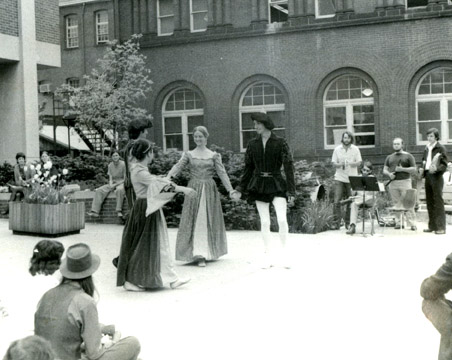
sign_rug_concert_dancingWe recently received from the School of Music a scrapbook of sorts kept by former Music Prof. Theron R. McClure, who started a series of free performances of chamber music in the Hopkins Hall Gallery he called “rug concerts.” The first concert was held in April 1974 – on the rug of the Gallery – and it featured lutes. No chairs were provided for concert-goers; they had to sit on the rug, which is another reason McClure came up with the name. When the weather warmed up, the concerts migrated outside to the Oval, and when the weather got cold again, the concerts returned to the indoor venue.

Dancers perform at the Rug Concert

Dancers perform at the Rug Concert

McClure told The Lantern in 1977 that he started the concerts because “material for several thousand concerts is just sitting on the shelves in the music department. These concerts provide an opportunity for this music to be performed.”

McClure joined the Music faculty as a part-time instructor in 1947 and he retired about the same time the concerts ended in 1979. In addition to his long career at Ohio State, he is credited with helping found the Columbus Symphony Orchestra, and he also served as a bassist in the Cleveland Orchestra. McClure died in November 2010 in Sarasota, Florida, at the age of 98. After his death, the School of Music received from his estate nine viols to enable students to be able to play a complete repertoire of music for early, period ensembles.

Older posts Newer posts