From Woody's Couch

Our Playbook on OSU History

Author: drobik.5@osu.edu (page 39 of 62)

Part I: Rising to the top of their class in college coaching

Wes Fesler, 1947

College football has had many legendary head coaches – Bobby Bowden, Paul “Bear” Bryant, and Woody Hayes, just to name a few. Other coaching legends got their start here at OSU as assistants: Lou Holtz, Bo Schembechler, and Glen Mason, for example. The list also includes Earle Bruce, Jim Tressel, Luke Fickell, and Urban Meyer, who all returned to OSU as head coaches.

This week we’re highlighting some of the lesser-known college coaching stories that began here at Ohio State:

Wes Fesler was a three-sport letter winner while a student at Ohio State, and continued on to become a coach in two of those sports. After serving as an assistant when Sam Willaman was head coach at OSU in the early 1930s, Fesler became head football coach at Wesleyan University, then University of Pittsburgh, then Ohio State, where he served as head coach from 1947 to 1950. Next up was the University of Minnesota, where he served as head coach for three years. Fesler also coached basketball at Harvard and Princeton.

Bill Mallory served as an assistant coach under Woody Hayes from 1966-1968. Mallory went on to coach at Miami (OH), Colorado, and Northern Illinois. In 1984 Mallory began his term at Indiana University and went on to become its most successful coach with 69 wins. Mallory left Indiana in 1996.

Bill Mallory with football group, 1968

Glen Mason also served under Hayes as an assistant. Mason went on to coach at Kent State, Kansas, and Minnesota. After coaching, Mason worked as an analyst and broadcaster on the Big Ten Network.

Glen Mason, 1978

Ron Zook had a long coaching career in both the NCAA and the NFL. Zook was an assistant for seven college teams before becoming an assistant for the Pittsburgh Steelers in 1996. After moving around in the NFL, Zook was named head coach at the University of Florida in 2002. In 2005 Zook took over as head coach of the University of Illinois, where he led the Illini to their first ever back-to-back bowl game wins.

Ron Zook, 1989

Currently you can watch the following former assistant coaches – Nick  Saban (Alabama), Mark Dantonio (Michigan State), and Mark “Bo” Pelini (Nebraska) – pace the sidelines each Saturday.

But that’s not where Ohio State’s influence in football coaching ends. Read about former OSU assistant coaches who later hit the big time in the NFL in next week’s blog.
Homecoming 2012 marks a century of festivities

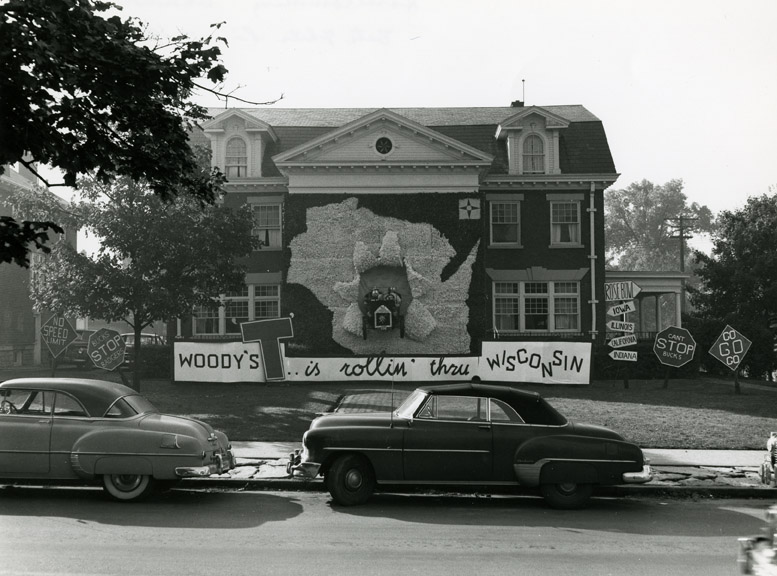
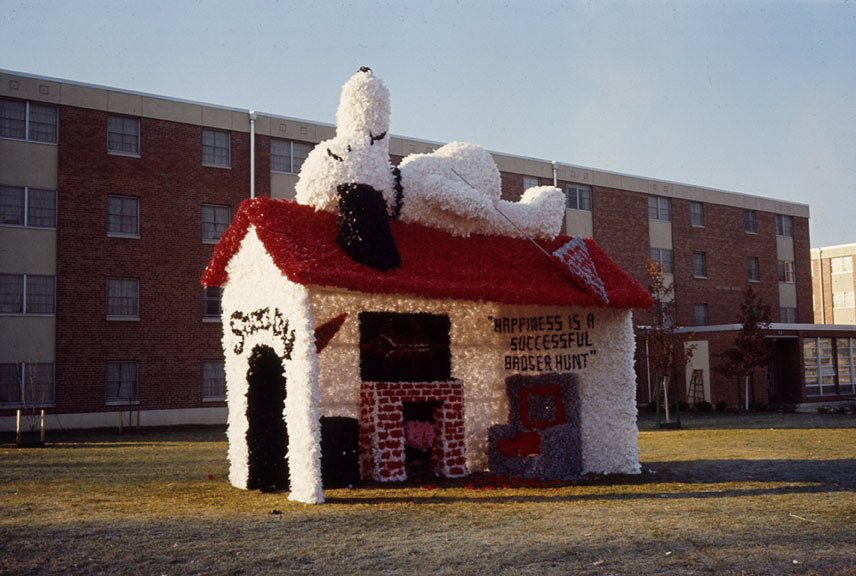
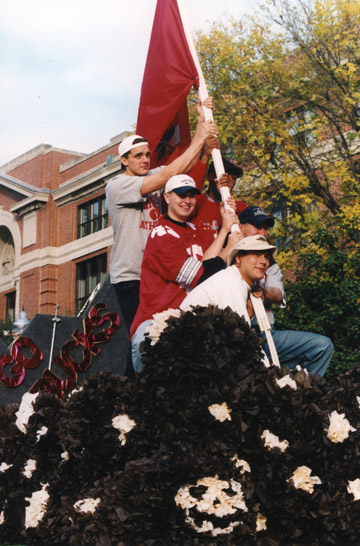
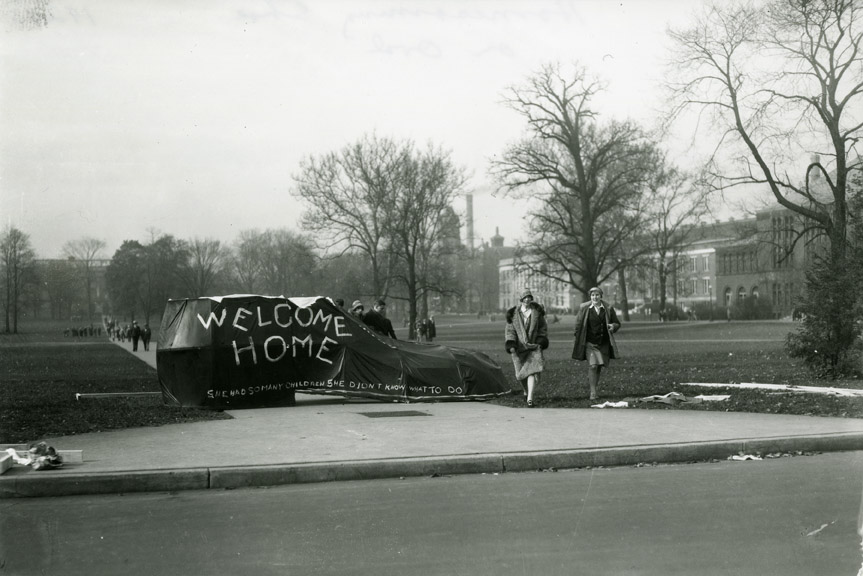
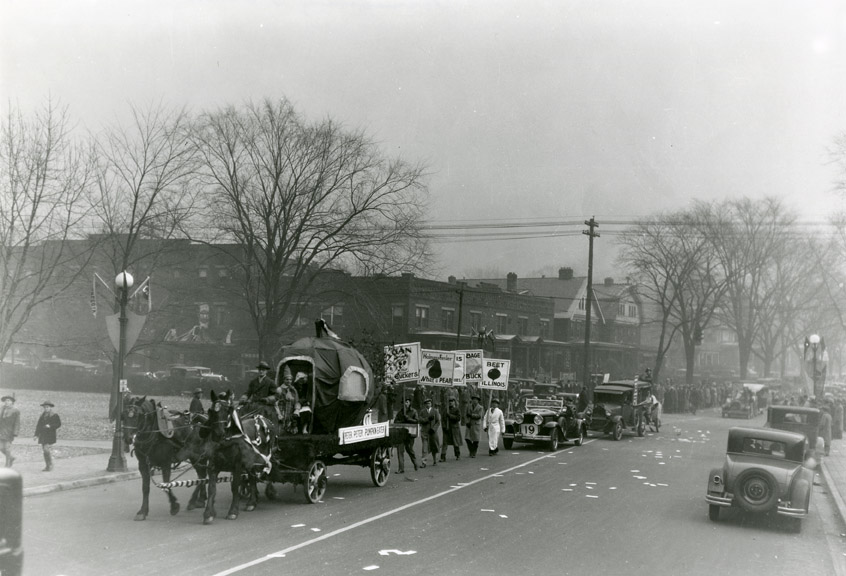
In the 100 years of Homecoming celebrations here at OSU, the festivities really haven’t changed much, unlike the hairstyles, fashion, automobile designs, etc. (see photos below). Since the 1920s, students have decorated their houses and dorms in honor of the event. As parade floats became more popular in the 1970s, though, the art of decorating Greek houses declined. Still, many campus venues continue to be decorated with scarlet and gray.

No matter how it’s celebrated, Homecoming obviously is one Ohio State’s time-honored traditions. We hope everyone in the OSU community enjoys the weekend!

Homecoming decoration on the Oval, “The Old Lady and the Shoe”, 1920s


Homecoming parade, 1929


Homecoming court arriving at the Stadium, 1944


Decorations on fraternity house, 1946


Homecoming decorations, 1952


Beta Theta Pi homecoming decorations, 1954


Decorations in front of the North Dorms, 1964


Homecoming parade, 1985


Homecoming parade, 1998

Early 20th century art – on football programs?

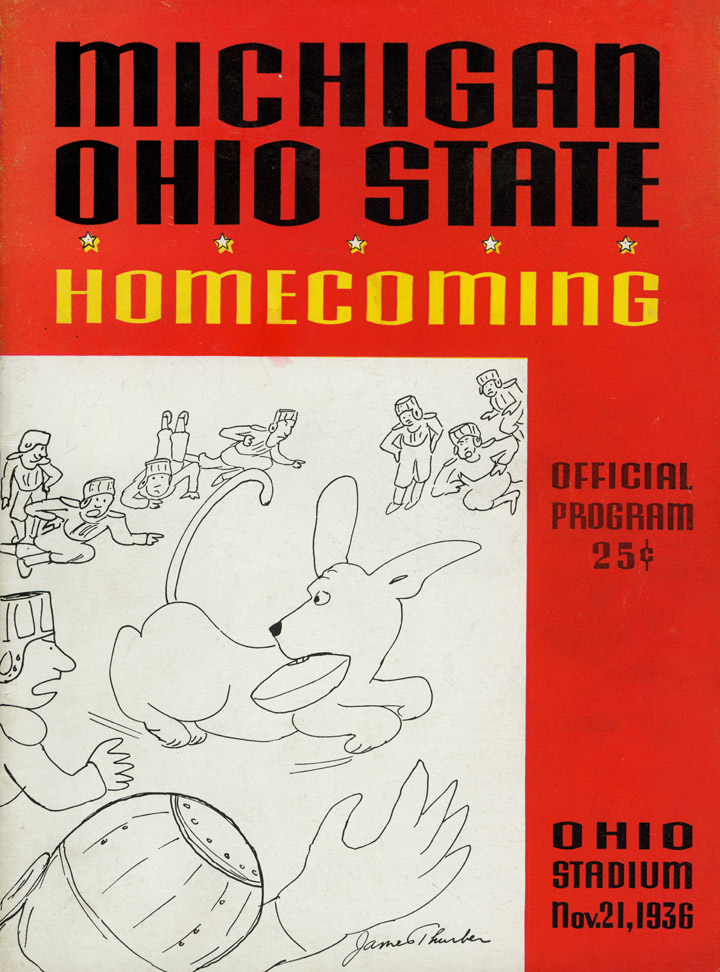
Thurber’s cover art for the 1936 football program

If you’ve ever looked at old OSU football program covers, you’ll notice how arty they were. That’s because they were drawn by actual artists, including two OSU alums who went onto to successful careers using those artistic skills.

James Thurber was one of them, and the one football program cover he drew was actually done after he’d become a well-known author and illustrator. The football program was issued in conjunction with the Nov. 21, 1936, game against Michigan.

At the time of this football program’s debut, James Thurber was associate editor of The New Yorker, and a prominent author, having published two books, “Is Sex Necessary?” and “My Life and Hard Times.” Thurber also was well-known for his illustrations, although they generally received more attention for their humor than their artistic merit.

Thurber was born in Columbus and attended OSU, but withdrew in 1918 before completing his coursework shortly before the onset of World War I. With the outbreak of the war, he became a code clerk for the American Embassy in Paris. In 1926 he relocated to New York to work for the Evening Post, and the following year left to pursue his position at The New Yorker.

Caniff’s cover from 1927

Meanwhile, Milton Caniff has quite a few football program covers that bear his name from his student years at OSU in the late 1920s. During that time he also served as art director of the Makio and the Sundial, an OSU student humor magazine. He graduated in 1930 with a bachelor’s degree in journalism. He later went on to draw “Terry and the Pirates” and later “Steve Canyon,” probably his most famous comic strip. That strip ran for more than 40 years.

Both alumni received honorary degrees from the University.

Want to see how arty those football programs really were? Go here:

https://www.flickr.com/photos/ohio-state-university-archives/sets/

Older posts Newer posts