From Woody's Couch

Our Playbook on OSU History

Author: drobik.5@osu.edu (page 32 of 62)

OSU poured efforts into cleanup, reconstruction after 1913 flood

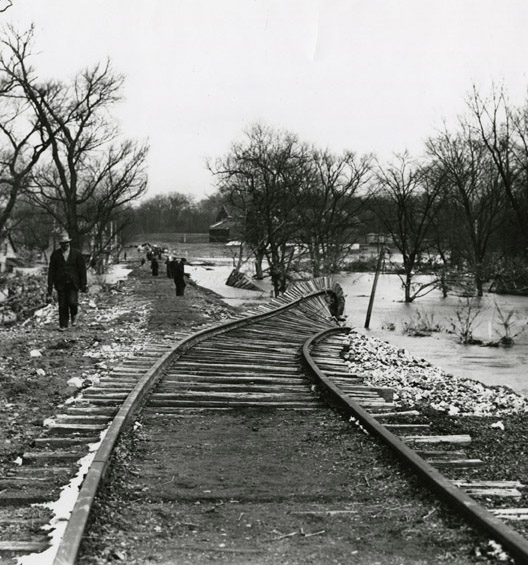
Railroad damage from flood, 1913

Railroad damage from flood, 1913

Cities with rivers flowing through them have always been subject to flooding, and with two rivers that meet downtown – the Olentangy and Scioto – Columbus is no exception. The year 1913 sticks out in particular, however, for the amount of destruction and loss of life caused by such a weather event. Statewide, the flood killed nearly 500 people and destroyed or damaged 40,000 homes. It is why it is still considered Ohio’s most significant weather disaster.

In Columbus, flood-warning bells began ringing on March 24, which was Easter Sunday. River waters had started rising the day before and did not start receding until March 27. All totaled, 88 Columbus residents died, and thousands were rendered homeless. Damage was extensive, with only one bridge (Rich Street) linking Columbus’ West Side to the rest of the city.

Campus came through relatively unscathed: The water reached the foundations of a few agriculture buildings at the corner of Neil and Woodruff Avenues, but all of the livestock survived, and overall damages were estimated at less than $10,000. The week after the flood, the University closed only that Wednesday – because of a lack of city water – but classes did not resume normally for at least another week after that because of ongoing relief efforts.
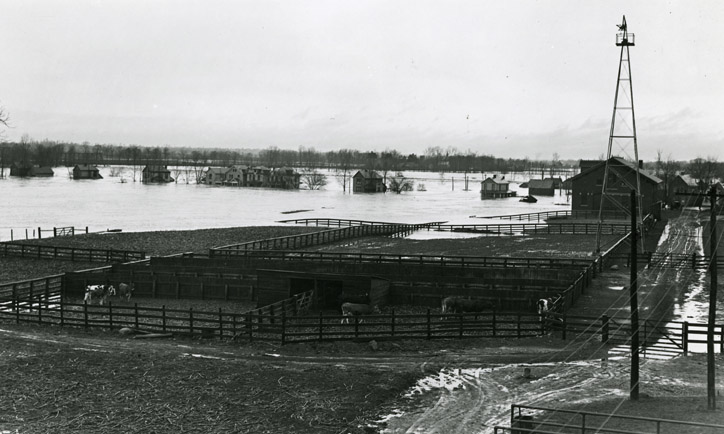
Flood waters on campus

Flood waters on campus

University President William Oxley Thompson first offered the service of the University students in the military science program, who would work under the supervision of University Commandant George L. Converse. The student cadets worked 24-hour shifts to evacuate families from their flooded homes, mostly on the West Side. In addition, University female staff members and students worked to prepare meals, gather and distribute clothing and necessities, and help organize relief efforts. Instead of holding classes, some professors took students to help with relief efforts

Indeed, President Thompson encouraged them by organizing two days devoted to volunteer work, saying that such circumstances only come about once in a generation, and that teaching civic responsibility was certainly one of the finer points of higher education. Students continued to volunteer after the floods had receded and the clean-up had begun.

Later, student arts groups, such as Strollers, organized performances to help raise money for those affected. Meanwhile, the College of Engineering faculty and students began making plans to aid in repairing the levee and rerouting the Scioto River. Faculty in the Department of Forestry also lobbied the state legislature to encourage forest conservation and reforestation to prevent future flooding.
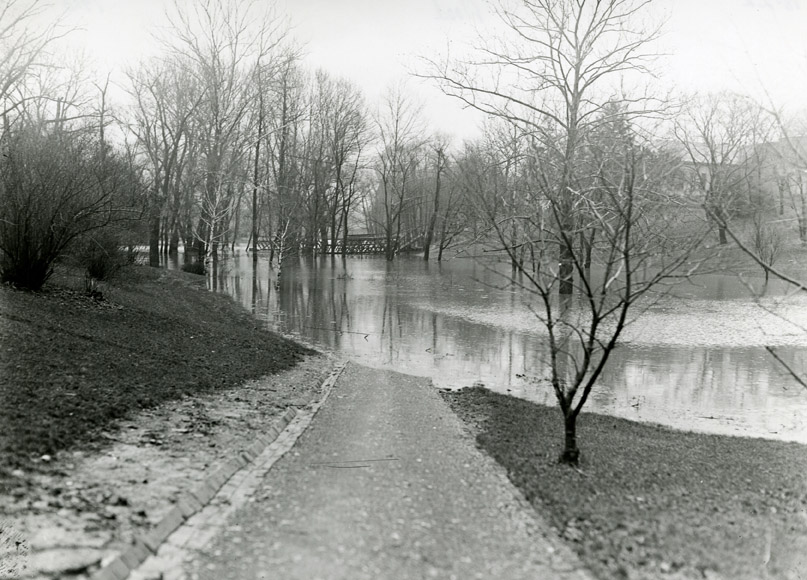
Flood covering pathway to Mirror Lake
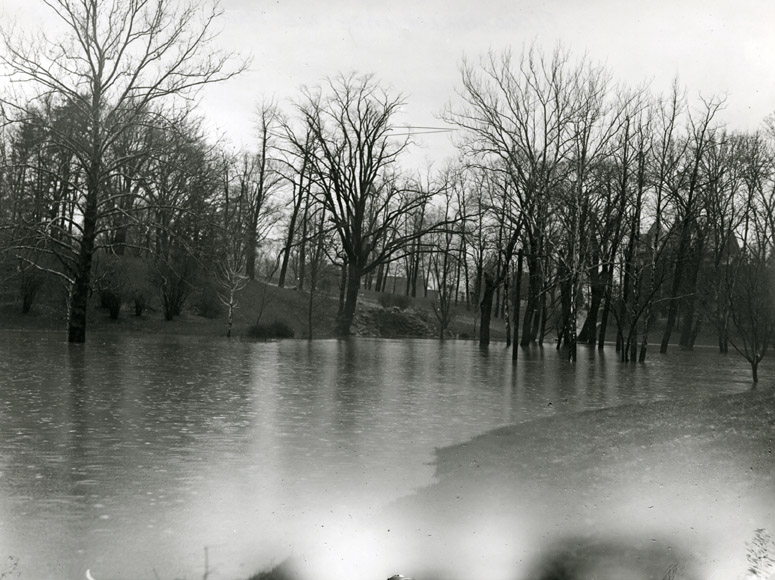
Flood covering pathway to Mirror Lake

Mirror Lake flooding

Mirror Lake flooding

Damage to railroad, 1913

Damage to railroad

Filed by C.N.

Celebrating 35 years of the African American Heritage Festival

To celebrate the 35th Anniversary of the African American Heritage Festival, which starts tomorrow, we decided to dig into our collection to display some photos from festivals past.

1998

1998


1998

1998

1998

1998

1999

1999

1999

1999

2000

2000

2000

2000

For more information on this year’s Heritage Festival, go to: http://heritagefestival.osu.edu/

Bleeds Scarlet and Gray: Registrar as devoted to alma mater as she was to detail

Edith Cockins, 1910

Edith Cockins, 1910

One of our all-favorite people from the University’s past is Edith Daisy Cockins. So upon this anniversary of her death, we thought we should remember her and her commitment to the University.

Edith Cockins first came to Ohio State as a preparatory student in 1888 at the age of fifteen. Two years later, she officially enrolled as a freshman; some of her activities while she was a student included her work on the Lantern and the Makio. She graduated with a bachelor of arts degree in 1894.

She went on to complete a year of graduate work and joined the University staff in 1896 as a record clerk. The following year, she was appointed to the newly created post of University Registrar. She would retire 47 years later, having overseen the records of over 60,000 students.

Cockins, 1937

Cockins, 1937

However, in that interval of 47 years, Miss Cockins accomplished quite a lot. As registrar, she was responsible for all student records, and in 1914 she first organized diplomas at Commencement according to a system that allows students to receive their official diploma at the ceremony. It is still in use today, even though roughly 9,000 students attend the Commencement ceremony.

In 1911, she and another loyal alumnus, Ralph D. Mershon, undertook reorganizing the Alumni Association. The next year, she oversaw publication of the University’s “Who’s Who,” a guide to former notable alumni. And in 1929 was named director of the newly created Alumni Records division.

Along the way, she also held the titles of secretary of the faculty and University Editor. Cockins also was involved with several outside organizations, including the American Association of Collegiate Registrars, of which she was elected president in 1938.

Cockins retired from Ohio State in 1944 and was named registrar emeritus. She didn’t stray far from her alma mater, though. She stayed active with the alumni association, and she served as housing chairman for the national organization of Kappa Alpha Theta sorority. She also oversaw the publication in 1959 of a biography on Mershon, for whom the Mershon Center for International Security Studies and Mershon Auditorium are named.

She was awarded an honorary degree, a Doctorate of Administration, for dedicating so many years and expressing such commitment to the University.

Cockins passed away on March 15, 1963 at the age of 89. In 1967 the Pharmacy and Microbiology Building was renamed Cockins Hall to honor her. The Edith D. Cockins Memorial Award was also established to honor the University registrar employee who best demonstrates Cockins’ high standards.

Cockins Hall, 1967

Cockins Hall, 1967

Filed by C.N.

For information on other notable women at OSU, see The Women’s Place’s Encyclopedia of Pathbreaking Women at the Ohio State University at http://www.womensplace.osu.edu/assets/files/womenpathbreakers_Final.pdf

Older posts Newer posts