From Woody's Couch

Our Playbook on OSU History

Month: January 2013 (page 1 of 2)

Perpetrator eluded police in perplexing OSU poisonings of 1925

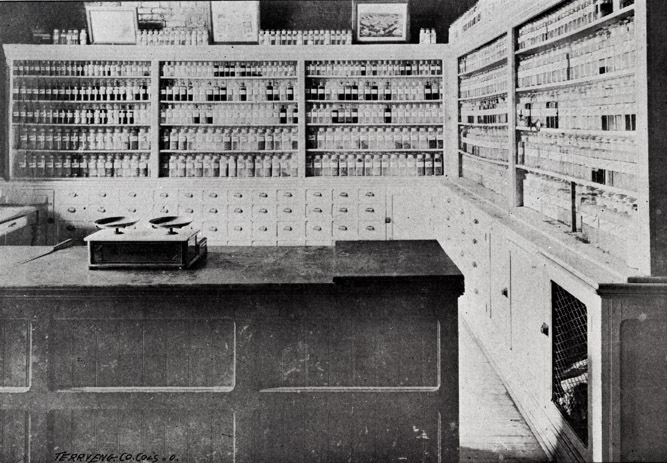
The dispensary, as it would have appeared in the early 1900s.

The dispensary in the early 1900s.

One of OSU’s most horrific unsolved mysteries is the 1925 strychnine poisoning incident that left two students dead and could have killed many others.

It was the last week of January in 1925, and like many winters, there were dozens of ill students lining up for medicine at the dispensary (the campus equivalent of a pharmacy). At that time, quinine was prescribed to relieve fever and aches and came in little white pills. The dispensary was busy and employed many students, and there was little professional supervision. It is believed that these contributing factors that allowed someone, intentionally or mistakenly, to mix strychnine pills into the batch of quinine pills.
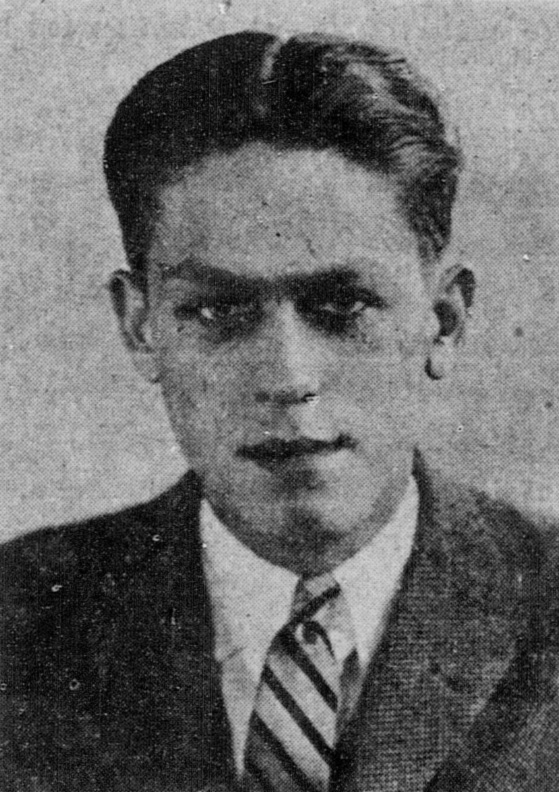
Charles Huls, 1923

Charles Huls, 1923

The first victim was Charles Huls, a 21-year-old senior studying journalism. He was the “big man on campus” type who was involved in many activities: the Makio, Bucket and Dipper and Sphinx, to name a few. On January 31, Huls had a tooth pulled, then went to the dispensary for cold medicine. He was found ill in his room at the Phi Gamma Delta fraternity house on 17th Avenue that night. Huls then developed convulsions and died.

A day later, David Puskin, a 20-year-old junior, took ill. Puskin had been feeling poorly before he sent his friend, Louis Fish, a pharmacy student, to the dispensary for medicine. On Feb. 1, Puskin got up, shaved and took a pill for his continuing cold. Within 20 minutes, he was dead.

At first, Huls’ death was thought to be from tetanus, and Puskin’s death was ruled to be viral meningitis. Officials even isolated Puskin’s friends and acquaintances to prevent an outbreak.

Then, other students became sick, including a sophomore football player, Timothy McCarthy. Lynn St. John, then-athletics director, heard about McCarthy’s symptoms and pressed College of Medicine Dean E.F. McCampbell to test the pills. The pills were found to contain pure strychnine, which prompted a police investigation.

In an April 1925 report, written by McCampbell, at least two other victims tested positive for strychnine poisoning and at least 10 strychnine capsules were found, hidden among the quinine pills distributed by the OSU dispensary.

Unfortunately, the investigation was unsuccessful in locating a perpetrator, or even a motive. The only arrest made was Louis Fish, the pharmacy student who had gone to the dispensary for David Puskin. Fish was allegedly grilled by police, but quickly released. President Thompson was said to be convinced that the poisonings were not an accident, but no more clues were forthcoming. In 2000, The Columbus Dispatch asked Dr. Park Dietz, a forensics psychiatrist for his opinion on the poisonings. Dietz felt that rather than an accident, a prank, or an attempt as mass murder, that the poisonings were likely targeting a single individual, with intent to murder that person and use the poisonings as cover. Dietz also said it is very likely that the actual victims were not the intended target.

The University investigation did change how the dispensary and pharmacy program at OSU operated. OSU became the first school in the country to offer a four-year program for pharmacy students. Tighter regulations and better training measures were put in place at OSU and quickly adopted across the country.

Filed by C.N.

OSU not immune from flu epidemic of 1918

The Military Hospital, where 200 influenza patients were treated in 1918.

The Military Hospital, where 200 influenza patients were treated in 1918.

Unfortunately, it is that time of year again: Flu season. On the upside, it is nowhere near as devastating as it was in 1918.

On October 11, 1918, State of Ohio health authorities ordered the closings of all schools, universities and other public places to help prevent the spread of the Spanish Influenza. Ohio State followed the edict and sent students home. Offices were allowed to remain open, as were classes for those enlisted men in the Signal Corps military training program at Ohio State.

Many of these students did take ill. Over the month that Ohio State was closed, 200 victims of the flu were treated at the military hospital on campus, where five died. The building had just been completed, and sat on the Northern edge of campus, just south of Woodruff Avenue, near the barracks. Women faculty members, as well as a few women students with nursing training, assisted medical staff of the hospital.

Ohio State reopened on November 12, 1918, even though the disease was claiming victims. All totaled, at least 17 deaths of alumni and former students can be attributed to the flu. At least three faculty members lost spouses. Ohio State also lost 41 alumni or students in the First World War, many of whom succumbed to illness in the camps. Worldwide, the illness killed an estimated 21 million people, of which just over a half million were Americans.

As a result of the illness, the usual four-day break at Thanksgiving was reduced to one day. A break for Christmas was also taken, but classes continued into mid-January. It appears that football games continued, despite the closing.

Filed by C.N.

OSU marks MLK’s legacy with service, celebration

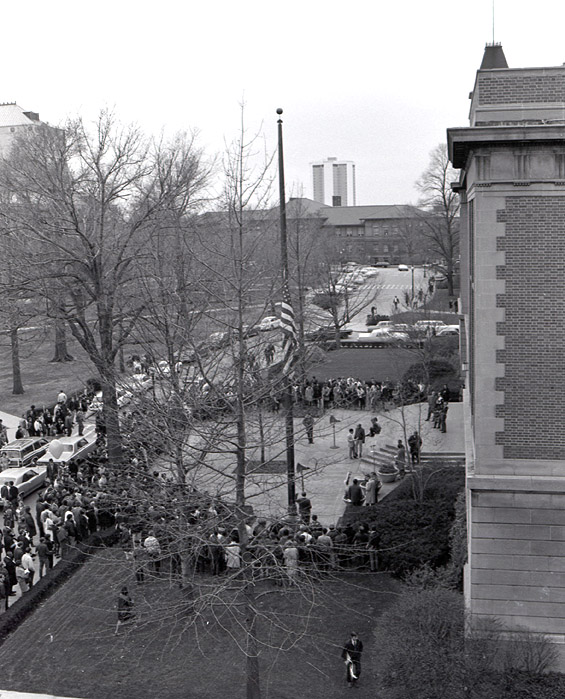
Students hold memorial for Martin Luther King Jr., 1968

Students hold memorial for Martin Luther King Jr., 1968

Martin Luther King Jr.’s assassination on April 4, 1968, sparked immediate reaction from the OSU community. After he was killed, some advocated violence – In The Lantern, one student called for people to pick up their guns – while others carried on his strategy of peaceful protest.

On April 7, a group of about 150 students marched from the Ohio Union to the Ohio State Fairgrounds. According to The Lantern, another group of students removed the American flag flying outside of Bricker Hall and took it to then-Provost John Corbally, saying a flag that represented violence should not hang even at half-mast for a man who stood for nonviolence. On April 9, Novice Fawcett ordered classes cancelled to honor King’s memory.

That year, the May Week Committee and Traditions Board decided that all proceeds made from festivities that week would be used to start a Martin Luther King Jr. Memorial Fund scholarship for incoming students, based on scholastic ability and need. Until then, the profits had gone to the United Appeal fund. The Office of Diversity and Inclusion now administers the Martin Luther King Jr. Memorial Scholarship program.

In 1972, the Office of Diversity and Inclusion (then called the Office of Minority Affairs) began its annual Martin Luther King Celebration, which has included the announcement of the scholarship winners. This year, Danny Glover is the featured speaker. (See more details at http://odi.osu.edu/.)

Students work on a project during the Martin Luther King Jr. Day of Service, 2004

Students work on a project during the Martin Luther King Jr. Day of Service, 2004

In 1990, the College of the Arts teamed up with the Martin Luther King Jr. Center for the Performing and Cultural Arts to provide arts education for minority students. The result was the Martin Luther King Jr. Institute for the Arts. The institute’s mission was to first train minority teachers in the arts. Ohio State provided scholarships to graduate students for training. Classes for students in grades 4-12 in dance, theater, music, and visual arts were also established.

In 1999, Project Community at the Ohio Union started the annual MLK Day of Service at Ohio State. Students, faculty and staff volunteer that day on various community service projects that target children, literacy, senior citizens and the homeless. This year, OSU’s Pay It Forward and  the Frank W. Hale Jr. Black Cultural Center will sponsor the event, which is expected to attract 1,000 volunteers. (For details, see http://ohiounion.osu.edu/get_involved/csls/mlkday.)

Older posts