From Woody's Couch

Our Playbook on OSU History

Page 82 of 106

Summer School: Failure, brought to you by the letter “E”

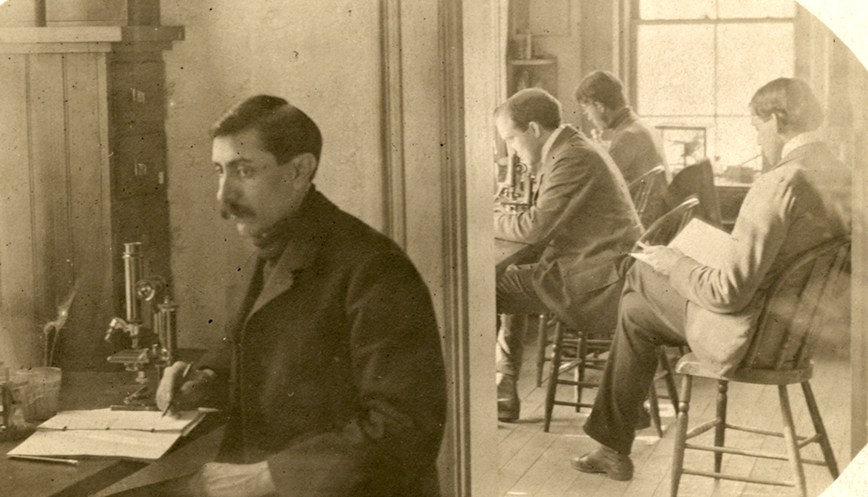
By the time this Botany class was held in the early 1900s, students would have still been receiving an “M” for passed with merit through an “F” for failed.

Recently, a patron asked us why in the world OSU issues an “E” instead of an “F” for a failing grade in a class. So we investigated, and here is what we discovered:

When the university opened its doors in 1873, the marking system for classes was “Pass,” “Fail,” “Conditional,” or “Passed with merit.” This continued until 1894 when the Office of the Registrar added “Absent” as an additional mark.

Around 1890 the first individual permanent academic record cards were kept for students and the grading system was changed. Students then received “M” for passed with merit, “Cr” for credit, “P” for passed, “C” for condition, and “F” for failed. This grading system continued with few changes until 1914 when the system incorporated “G” for good and “A” for average, and removed “Cr.”

A more traditional grading system, “A-E,” was adopted July 1, 1922, when the University switched its academic calendar to quarters. In 1955 the university added, among others, the marks of “F” for filed absent, “I” for incomplete, and “P” for progress.

While researching the grading system, we came across an article in the April 1923 Ohio State University Alumni Monthly explaining the university’s decision to incorporate a point system with the grades given to students. According to an excerpt entitled “Incentive to Scholarship” faculty wished to “stimulate a higher grade of scholarship through a more exacting requirement for a degree.” It seems many students were doing the minimum amount of work needed to pass a class, and by changing to a point system faculty could place a more exact, numeric value on the output of each student. This would allow for the university to deny diplomas to those whom the faculty felt did not deserve such an achievement.

The excerpt ended by stating “The superior student should be given an opportunity to reach his goal unhindered by the drag of mediocrity in his classmates.” Indeed.
 

Summer School: Who needs to be in a classroom to learn?

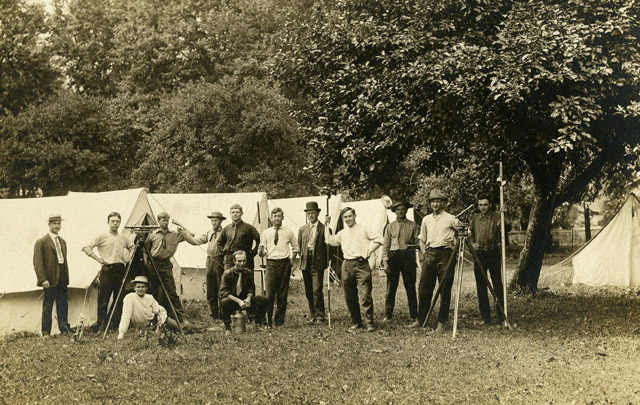
During the warmer months of the year, especially, learning doesn’t have to take place in a classroom. For OSU’s civil engineering students, in particular, fieldwork has long been a part of their studies.

In June 1888, some of these students went to camp – sort of – led by OSU Prof. Charles N. Brown – future Dean of the College of Engineering. He and seven students headed about sixty miles southeast of Columbus to prepare a “reconnaissance, preliminary and location survey for a proposed electric railway 2 ½ miles long.” Maps were made and earthwork was partially computed. (We’re pretty certain their idea of “computing” was different from ours.) It wasn’t really our idea of camp, either: The group stayed in a local hotel.

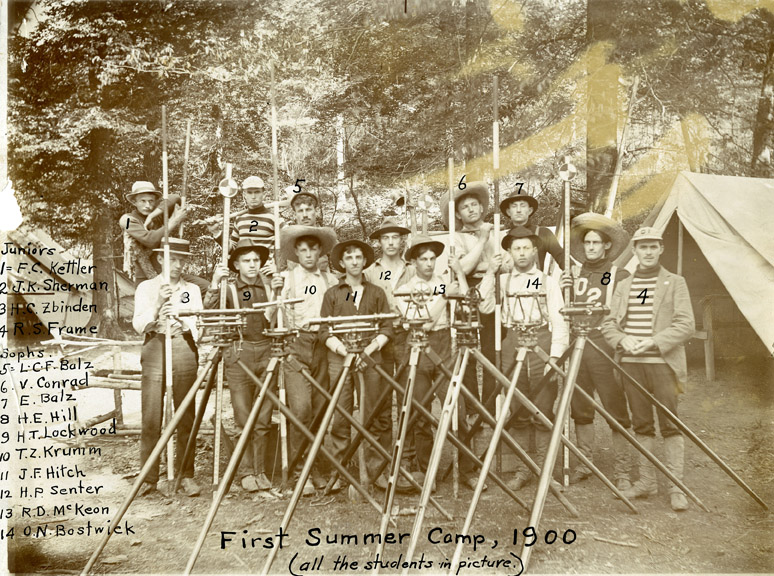
There was then a hiatus from such summer trips until 1900, when Brown again took students off-campus, and this time it really was to a “camp.” (Brown apparently grew up traipsing through the woods with his father, a surveyor in Brown County.)

Nelsonville, 1900


Students on the 1900 trip to the Nelsonville area stayed in tents, two to four students per tent. A tent was set up where a cook prepared the meals; Brown, as camp director, purchased the groceries locally. The camp lasted for four weeks, and cost $20 per student. In that time, students worked on railroad-related projects, “running 12 miles of reconnaissance, 9.2 miles of preliminary line, 5.7 miles of location and taking 4 miles of topography;” in addition, students practiced cross sectioning, computing and drafting.


Yellowstone, 1905

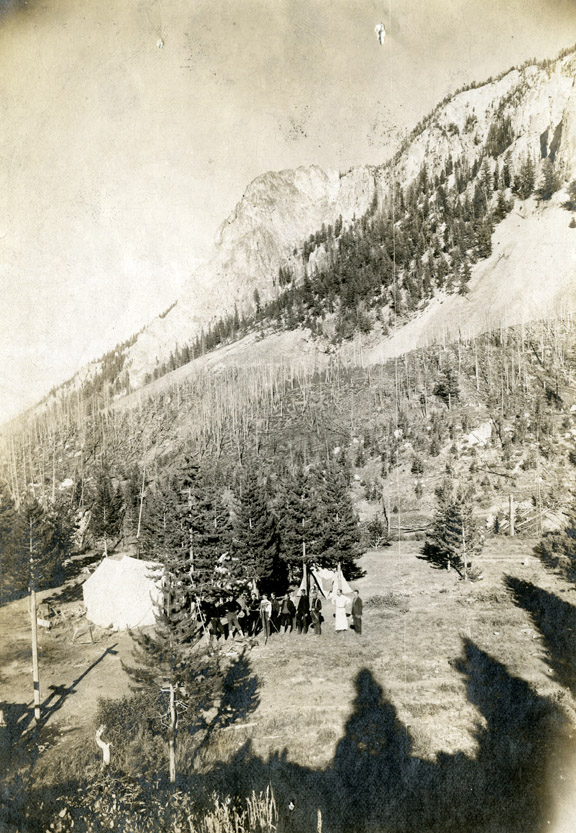
This camp marked the first of many formal summer camps for engineering students, all of which took place in Ohio, with the notable exception of the 1905 trip to Yellowstone National Park in Wyoming. In 1905 the group entered into a six-week contract with the U.S. Engineering Officer, Major Hiram Chittenden, in charge of the improvement plan for Yellowstone Park. The U.S. government furnished the camp equipment, and all food and transportation within the park for their stay. All members of the group were also given a four-day. all-expense-paid journey through the park. In exchange, the students located 45 miles of “stage road” through surveying and mapping. Topography was taken 500-600 feet on each side of the road and prepared an atlas.

The last outdoor “camp” took place in 1946, after which all camps “went under roof.” The last “contract camp,” in which students and professors were under contract to do work, was in 1941. The last record of a civil engineering camp was in 1952.


Summer School: At OSU, the “practice” of baby-rearing

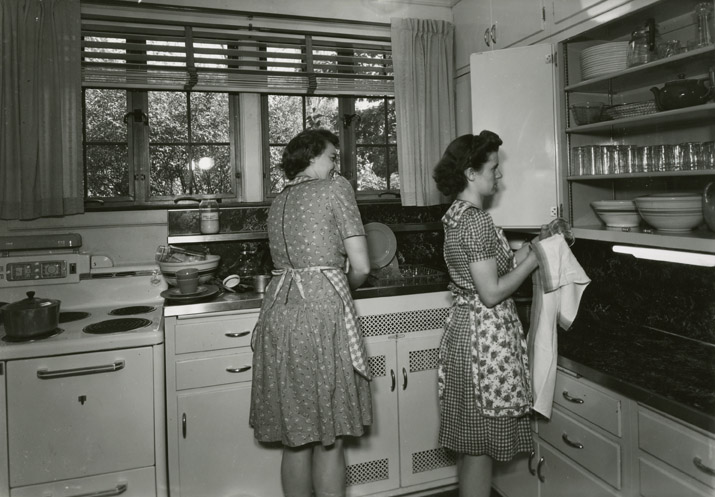
Home Management House, 1942

OSU could never be called an orphans’ home, but it did once include a program through the Department of Home Economics that focused on the care of orphaned babies.

The Home Management House, run by the Department of Home Economics, was established to teach young women how to run an efficient home and life skills, such as finances, nutrition, and child care. At first these courses were mandatory for all senior women, in place of cadet training required of male students.

Eventually, this requirement was dropped, and the Department of Home Economics established an apartment, and then a house, in which these practical experiences could be taught. The house moved to several locations; its last site was the Alumni Scholarship House on 11th Avenue near Canfield Hall.

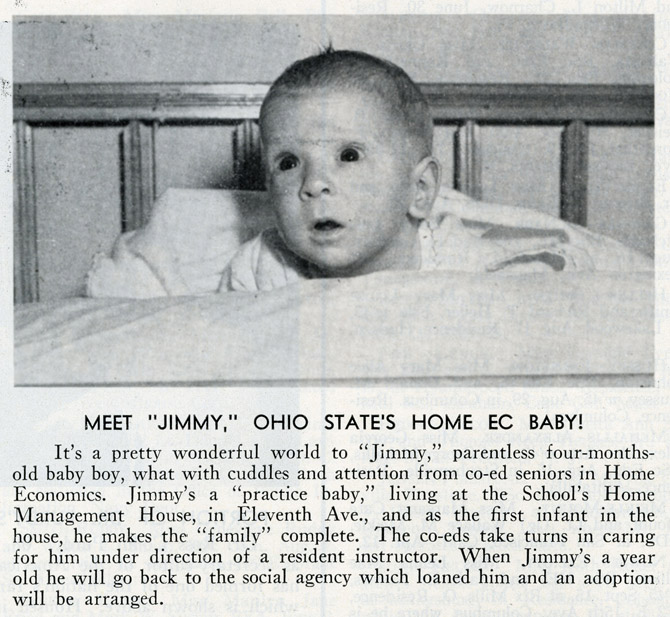
OSU Alumni Monthly, November 1946

These practical experiences included the care of real children: In the early days (1918-1920s), the department ran a nursery school on weekdays and at large events on campus, such as agricultural fairs. Many students also were sent to help out at the homes of married students or graduates of the department who had young children.

During the 1930s, as at many colleges across the country, OSU’s Home Management House introduced a program in which young women could learn mothering skills using a “practice baby.” At that time, groups of young women lived in the Home Management House for half a quarter as part of the coursework for all Home Economics majors.

Every few days, each resident rotated duties: cook, assistant cook, laundress, household manager, and “baby director.” So, for about a week each quarter, students had to change diapers and provide everything else the baby needed. The babies apparently came to the House when they were about three months old and were returned to the adoption agency when they were a year old, to be put in foster care or to be adopted.

The practice of having students take care of practice babies was discontinued sometime around 1958 at which time babies belonging to OSU students were dropped off during the day, as a sort of day care center.

Learn more:

“Coeds In Management House Provide Cozy Home And Family For Orphan Babies” The Lantern, August 21, 1947

“What Were Practice Apartments?” Cornell University Division of Rare and Manuscript Collections 

“‘Practice babies’: An Outdated Practice, Rediscovered” NPR, January 6, 2011

“A Controversy at Eastern Illinois State Teacher’s College” Eastern Illinois University

Filed by C.N.

« Older posts Newer posts »