From Woody's Couch

Our Playbook on OSU History

Page 59 of 105

2 X Gee = many firsts for OSU

President Gee, 1990

President Gee, 1990

On September 1, 1990 – E. Gordon Gee’s first day as president of OSU – there was no such thing as a Pelotonia to raise money for the James (the Arthur G. James Cancer Hospital) since the hospital was only two months old. Back then, the Stadium had about 15,000 fewer seats (86,000), and the plans to renovate the Thompson Library, then known as the Main Library, were nearly 10 years away from being approved. Meanwhile, High Street on the south side of campus was still just one long row of broken-down bars.

When E. Gordon Gee became president that day, he began what would become his first term, and he accomplished much during those seven years:

·         The University renamed the College of Business after Max M. Fisher, a 1930 alumnus whose generous contribution helped build a new business school.

·         The University’s community development arm, Campus Partners, was founded to help redevelop the University District, particularly south end of campus along High Street.

·         Designed by Philip Johnson, known as the father of modern architecture in the United States, the Science and Engineering Library opened. (It is now known as the 18th Avenue Library.)

·         The University Staff Advisory Council, an advocacy group for OSU staff, was established.

·         Gee appointed a task force to create an advocacy group for women faculty and staff, eventually known as The Women’s Place.

·         The annual State of Ohio Tour – a week-long bus tour in which the OSU President visits various counties to connect the University to past alumni and future Buckeyes where they live – was created.
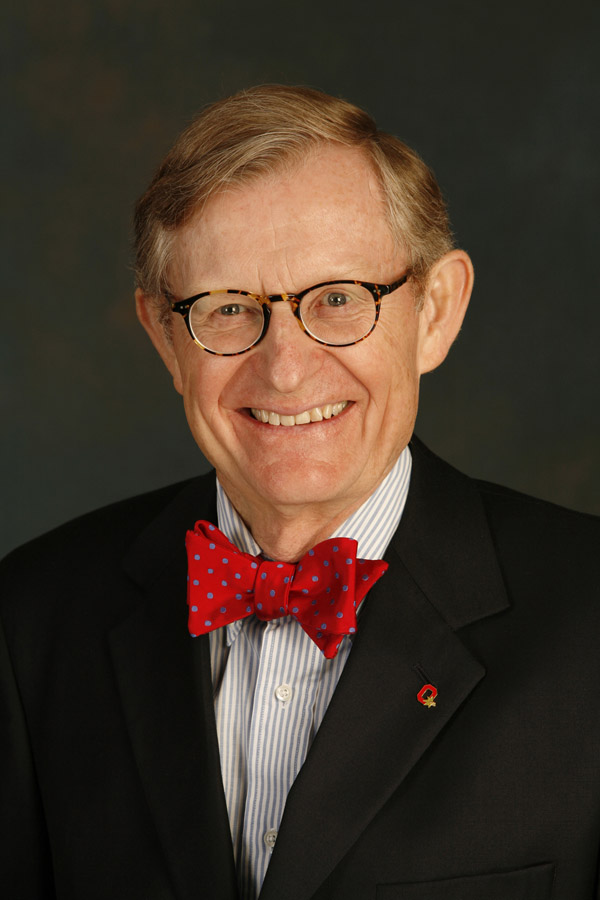
 

President Gee, 2007

President Gee, 2007

On October 1, 2007 – ten years after leaving office – Gee started his second term, and there were more milestones:

·         At a cost of about $120 million, a newly renovated Main Library – now known as the William Oxley Thompson Memorial Library – re-opened.

·         A new Ohio Union, the campus’ third student union since 1912 and its largest, opened.

·         The OSU Medical Center was renamed the Wexner Medical Center and began a $1 billion expansion project for the James Cancer Hospital and Solve Research Institute. Meanwhile, the Pelotonia, an annual bike ride through which all proceeds go to OSU cancer research, was established.

·         The University opened International Gateway offices in China and Brazil, to better handle the transition of international students from their home countries to the Ohio State campus.

·         A $2.5 billion fund-raising campaign, “But for Ohio State,” began.

·         Campus Partners opened the South Campus Gateway, a $152-million mixed-use project with retail, entertainment, apartments, office space along High Street.

·         The University signed a $483 million parking lease with CampusParc, a private vendor, in order to raise money to fund academic programs, student scholarships and bus service.

Like everyone else on campus, we will miss President Gee. We’re lucky, though, because the presidential papers from his first term are here, and we expect a collection from his second term to arrive sometime in the future. The first-term collection is available to the public, and if you’re interested in seeing any of the materials, please contact us. (http://library.osu.edu/find/collections/the-ohio-state-university-archives

Gee's welcome at Bricker Hall, 1990

Gee’s welcome at Bricker Hall, 1990

Gee's tour of southeast Ohio, 1991

Gee’s tour of southeast Ohio, 1991


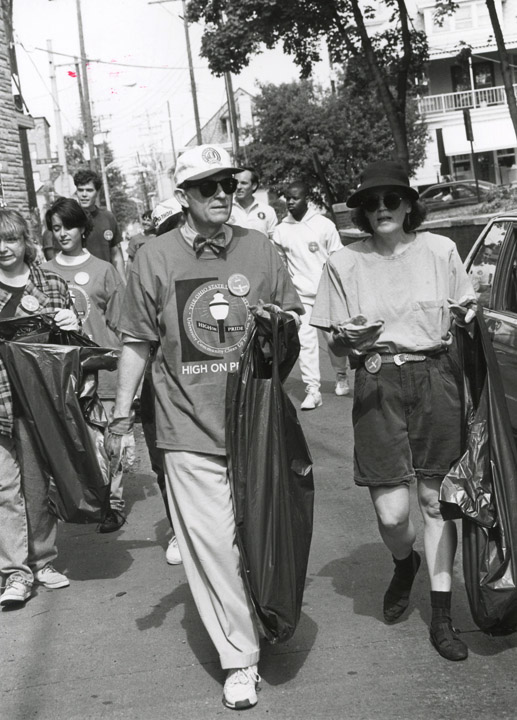
Gee participating in a campus cleanup project, 1994
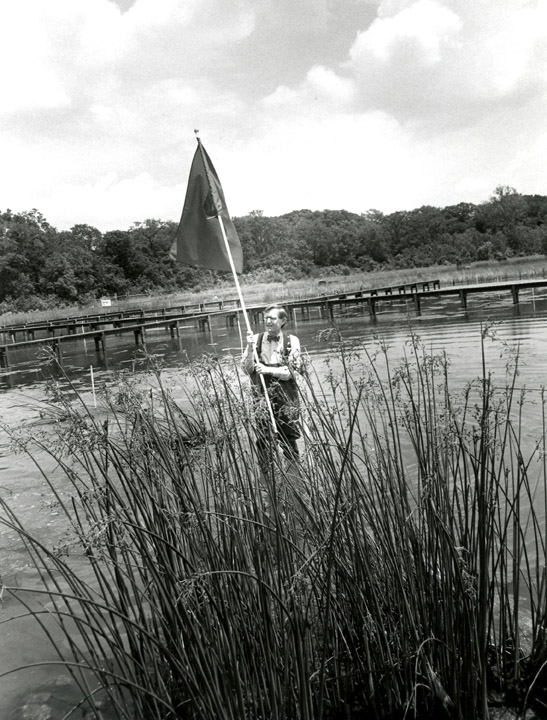
Participating in a campus cleanup project, 1994

President Gee wades in the water during the Wetlands dedication, 1995

Gee wading in the water during the Wetlands dedication, 1995


2007
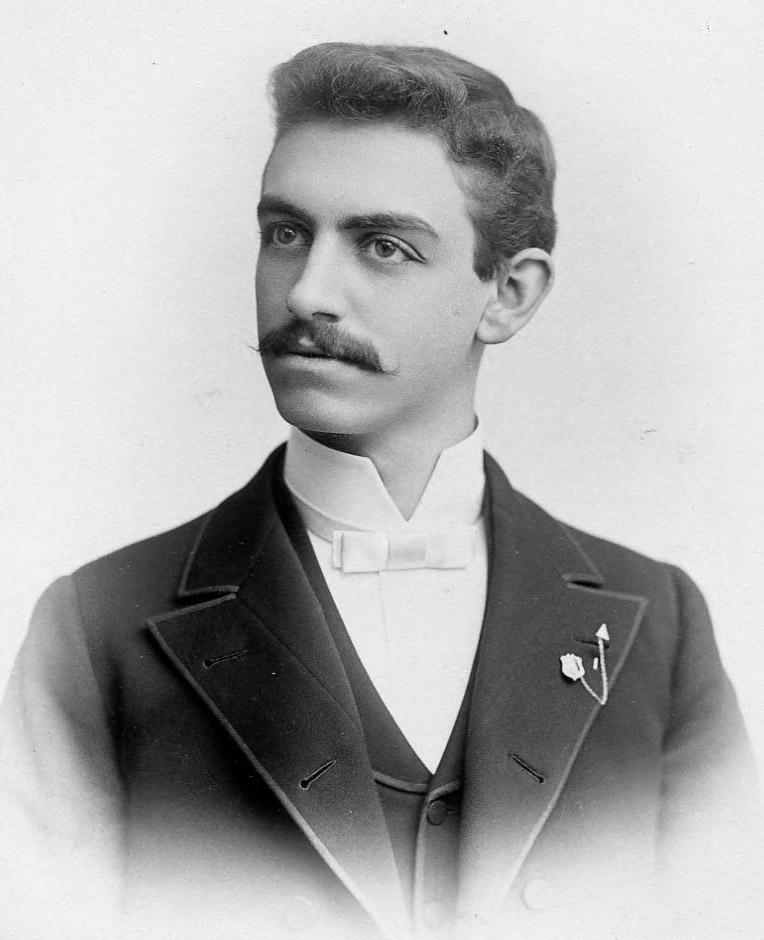
2007

Donor reveals the rest of the story for early OSU grads

James Wilgus, 1888

James Wilgus, 1888

We recently had the chance to peek at the University’s early student life, thanks to Peggy Wymore, granddaughter of James Alva Wilgus, an early OSU graduate who also taught here briefly before leaving to study at Harvard. Wymore graciously donated a number of items from Wilgus’ time here as a student, including a class tie, some of his class essays, some memorabilia from student groups to which he belonged, and some of the exams he gave undergrads when he was teaching history here.

Our resources on individuals who attended OSU before 1900 are unfortunately slim – student directories, early Makios (which were more like literary magazines back then), and if the person became very famous or successful in his or her field, an obituary. So we never really know what happened to students from this era – what did they do after graduating? Where did they go? What were their lives like?

A tie that belonged to Wilgus

Wilgus’ tie, c1887-1888

Thanks to Peggy Wymore, we not only have mementoes of Wilgus’ time here, but she also was kind enough to fill in a lot of the details of his life after OSU – and that of his wife, Flavia, also an alum.

Wilgus was born on a farm near Conover, Ohio, in 1866. He attended a rural school and worked on his father’s farm until age 16 when he entered Ohio State in 1882 as a preparatory student, which meant, like many students coming to OSU at the time, he had to complete a number of prerequisites before becoming an official freshman. Such prerequisites included Latin, Algebra and Physics. He entered as a freshman in 1884, taking a wide range of classes like Latin, Botany, History and Physical Labor.

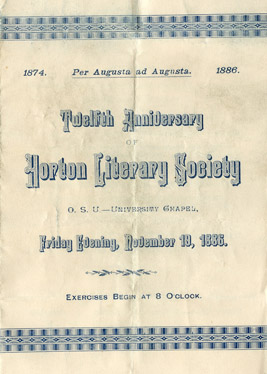
1886_horton_literary_society_front

Brochure for Horton Literary Society event, 1886

 Meanwhile, Flavia McGurer – the future Mrs. Wilgus – entered Ohio State as a Preparatory student in 1887. Her courseload included German, Trigonometry and Physical Geography. According to the 1889 Makio, the Columbus resident had entered OSU as a freshman and was listed as class historian of the Class of ’92. But she never graduated. That’s because she married Wilgus on Christmas Day in 1889, then traveled with him after he earned his master’s degree, to Harvard University where he was a Thayer Scholar from 1891-1892.  He was reappointed at Harvard for a second year, but his failing health prevented him from taking the appointment.

The traveling continued, however: The couple moved to Minnesota in 1894 where Wilgus was hired at the State Normal School in St. Cloud to finish out the term starting in January of that year. In September, OSU President William H. Scott asked Wilgus to do a small amount of teaching in history, and Wilgus returned to Columbus to serve as assistant of History from 1894-95. On January 3, 1895, Wilgus received a telegram from James Chalmers, professor of the Platteville (Wisconsin) Normal School, asking him to “accept the history professorship” there. (The name later changed to the Wisconsin State Teachers’ College – Platteville.)

Wilgus accepted, and the couple moved to Wisconsin, where he spent the rest of his career at the State Teachers’ College as a professor of History and Social Sciences. He taught there until his retirement June 6, 1939. He died in Platteville shortly after that – July 24, 1939.

Flavia McGurer Wilgus, 1888

Flavia McGurer Wilgus, 1888

Upon moving to Platteville in 1895, “Mrs. Wilgus at once identified herself with the Platteville Normal. The Wilgus home became a place where students as well as faculty members spent many happy hours. As the years passed, the family circle became larger. Curtis came, then Dorothea, and finally Wallace . . .  Mrs. Wilgus continued to live in her beautiful, helpful way.” (from the June 23, 1926, issue of The Exponent,” the Platteville State Teachers’ College newspaper).

Flavia also was involved in many activities and societies at her church; she was a member of the Eastern Star as well as other women’s clubs and civic societies. In 1903 she even had a small mail-order business. During World War I she contributed monthly to “The Fatherless Children of France.”

According to Wymore, Flavia was a loving mother, devoted to her children and active in their lives – their studies, play, training, and even in making  many of their clothes: In Dorothea’s letters to home from the University of Wisconsin, she would draw a picture of what she wanted in an outfit, and Flavia would sew it up for her.

On June 21, 1926, 31 years after she and her husband moved to Platteville, Flavia died suddenly and unexpectedly after complications set in from an emergency operation.  In her obituary it stated, “Mrs. Wilgus was a beautiful life. Forgetful of self, . . . writing upon every page of the book of her life . . . All who approached her were received with that simple grace that bespoke the true woman. . .”


We’d like to thank Peggy Wymore most sincerely for not only preserving such important tokens of her grandparents’ lives, but for sharing some of them with us, as well as her grandparents’ stories. Thank you, Peggy!


Horton Literary Society, back of brochure, 1886

Horton Literary Society, back of brochure, 1886

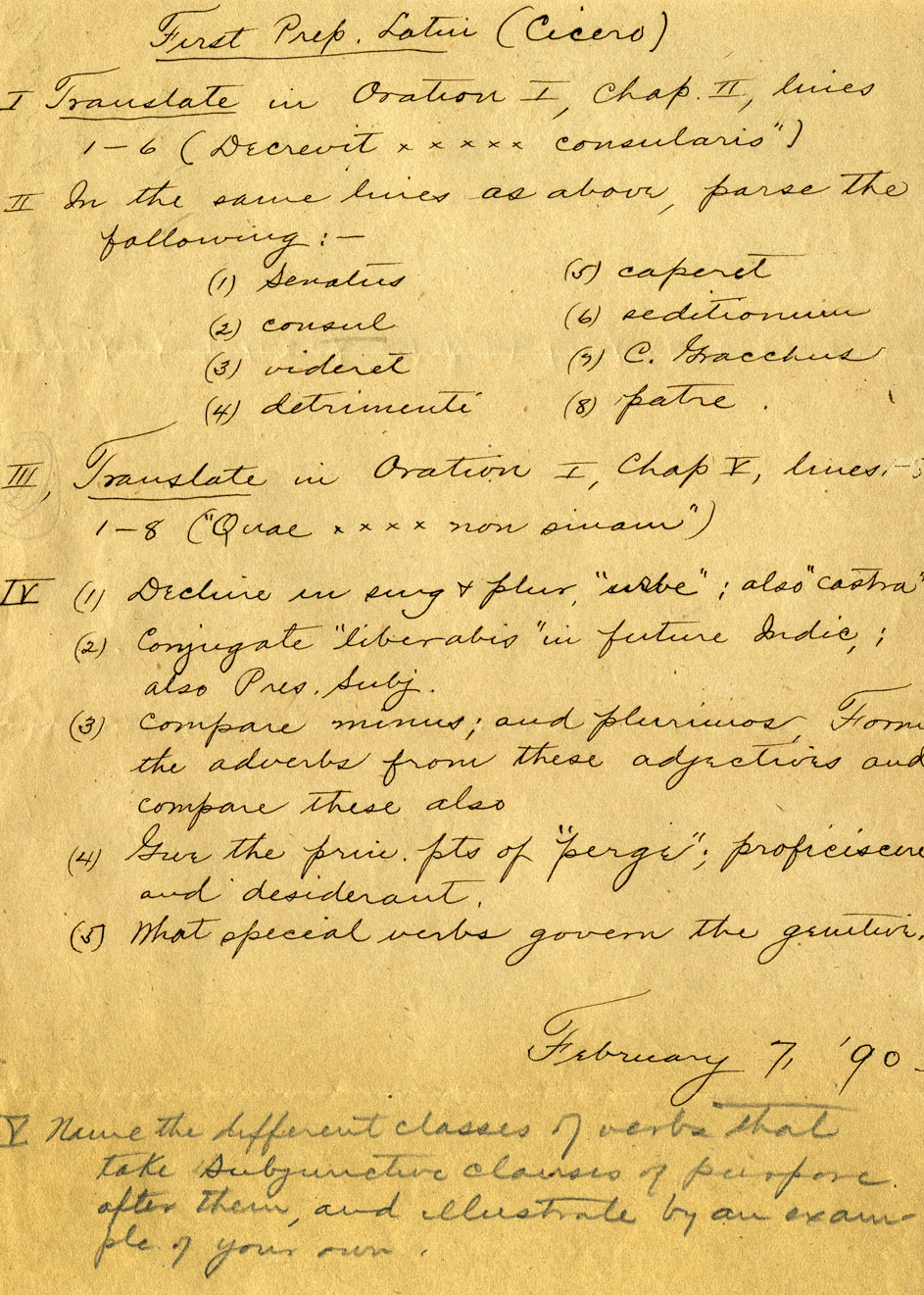
Exam questions from Wilgus' Roman History Class at OSU, 1888

Exam questions from Wilgus’ Roman History Class at OSU, 1888


Long Gone Campus Traditions: Cut-throat competition for the cane

1919 Cane Rush

1919 Cane Rush

(“Long Gone Campus Traditions” is a continuing series of posts where we explore some of the more unusual, sensational and even violent student traditions that have been obsolete from OSU’s campus for quite some time.)

The Cane Rush was undoubtedly one of the most brutal student traditions to ever taken place on OSU’s campus.  In fact, some have described the event as a mixture of rugby, football and WWF wrestling.

The Cane Rush, which originated in the 1880s, was a contest between classes of undergraduate men.  The object of the game was to find and obtain the rival’s walking cane and move it across the opponent’s goal line.  The teams, which often numbered in the hundreds, could be quite brutal.  Students tackled each other, wrestled one another on the ground, and tore each others clothes, all in an effort to obtain the cane.

The Cane Rush in 1894 was so violent that one Lantern reporter wrote:

“If our young men are to do that for which in the ordinary walks of life they would have to answer to the law of the land, it is high time that the iron hand of discipline be imposed. University history should not be blotted by the record of many such affairs as occurred last Thursday.”

The first presidents of the university and many of the faculty agreed that the Cane Rush disrupted classroom activities.  The competition was normally an unplanned event and the early rushes had few rules or authority figures involved.  One Cane Rush in 1889 reportedly lasted for an hour and a half.

President Thompson holds the cane, 1920

President Thompson holds the cane, 1920

However, when William Oxley Thompson became president in 1899, he confronted the controversy of the Cane Rush head-on.  Rather than waiting for the event to begin spontaneously, Thompson organized the event himself.  The President said that as long as the students conducted the event in an orderly manner, he would allow it to continue. Under his direction, the competition had official rules, a specific date and location, and a set time of 20 minutes.    

The Cane Rush became a beloved student tradition under Thompson’s administration and in 1908 it reportedly drew some 10,000 spectators.  Because of its reputation, students even began charging admission to the event.

The popularity of the Cane Rush began to decline in the late 1920s and by 1932 the event was no long held. Lack of interest, the shift away from class as the focus of student life, and the fact that Thompson retired, were some of the reasons that caused the demise of the Cane Rush.  There were efforts to revive it in the 1930s and 40s, but those efforts never took off.

Cane Rush on the Oval, 1891

Cane Rush on the Oval, 1891


Students pose with cane in front of University Hall, 1894

Students pose with cane in front of University Hall, 1894


1919 Cane Rush

1919 Cane Rush

« Older posts Newer posts »