From Woody's Couch

Our Playbook on OSU History

Category: Professors (page 9 of 14)

Twelve Days: Stone’s rock-solid support of OSU led to Lake Erie research lab

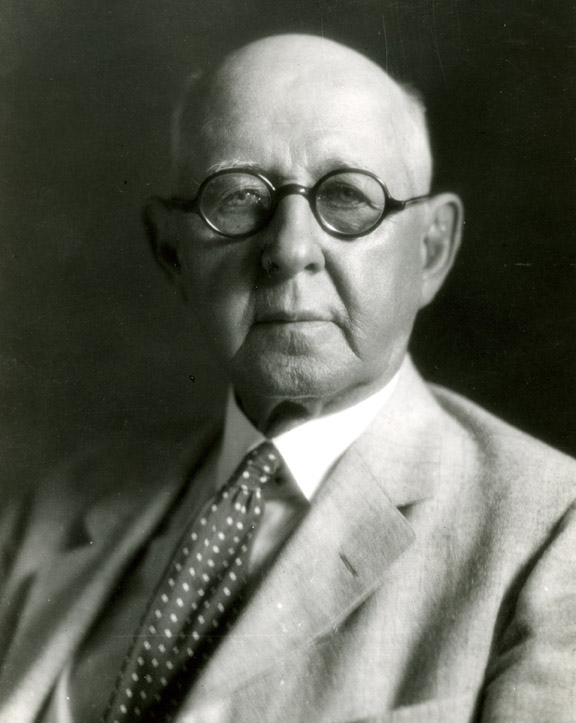
Julius Stone

Julius Stone

If you learn nothing else about Julius Stone, know that he laughed often, learned much, and shared both of these gifts with everyone he knew. He is also a wonderful example of the American archetype of the self-made man who tries to give back as much as he gets.

That was certainly true with his support of the University. He purchased Gilbraltar Island on Lake Erie and donated it to Ohio State to support the marine research conducted there by OSU faculty and students. He served two terms on the Board of Trustees for a total of 20 years. Even in small ways, his support had a long-lasting effect: He convinced a New York financier to build an observatory on OSU’s grounds.
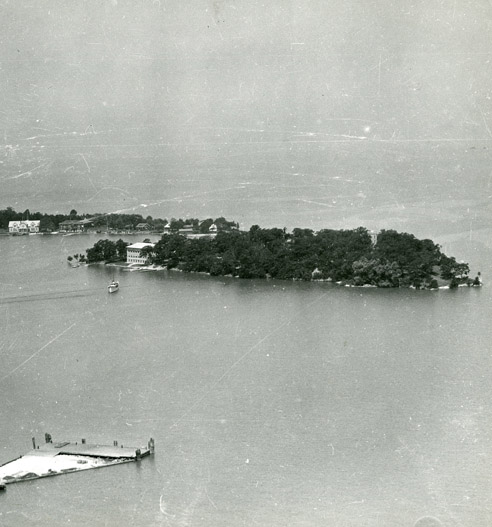
Gibraltar Island, 1926

Gibraltar Island, 1926

Stone was born on June 1, 1855, on a farm in Michigan to emigrant parents. As one of eleven children, though, Stone did his part to support the family. Julius left school at 13, working first for a grain purchaser. By the age of 16, he was a telegrapher for the railroad. He then worked in the coal industry and focused on manufacturing sometime around the turn of the century.

Besides having a great aptitude for business, Julius Stone also possessed both a keen scientific mind and a desire for adventure.  He was a fellow of the American Geographical Society, the Explorer’s Club of New York, and the Royal Astronomical Society in England. He lectured on astronomy and geology frequently. He traveled all over the globe, from the Galapagos Islands, to South Africa. He led the first major expedition through the Grand Canyon, and he went white-water rafting when he was 84 years old.

Stone Lab, 1958

Stone Lab, 1958

He was also an ardent philanthropist, although most of his work went unknown until his death. For the most part only he and his personal staff knew which charities he was supporting and how much he was giving. One of the few occasions on which he was publicly recognized was at the dedication in 1925 of the Franz Theodore Stone Laboratory on Gibraltar Island in Lake Erie. The lab was named for Stone’s father, after Stone purchased the island for the University.

Before the purchase, the fresh-water research institute was housed in temporary quarters on Put-in-Bay. OSU Zoology Prof. Raymond C. Osburn had heard that Gibraltar Island was for sale, so he wrote to Stone, then a former Board of Trustees member, what he thought of finding someone to buy the island, possibly as a memorial gift. Stone decided to buy it himself, which he did, but he had the deed made out to the university before he received the deed from the seller, then handed both over to Osburn. Stone Lab is now the oldest freshwater biological field station in the United States.
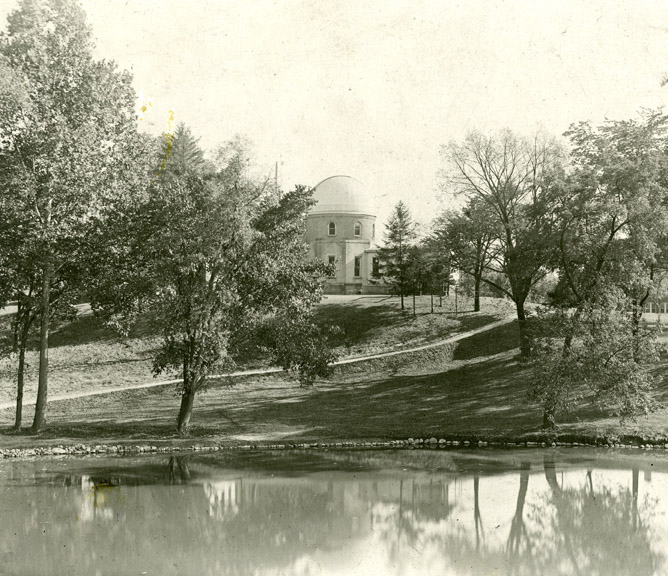
McMillin Observatory, n.d.

McMillin Observatory, n.d.

Long before he bought Gilbraltar Island, Stone was having dinner in New York one evening and struck up a conversation with Emerson McMillin, a New York financier. They both shared a love of astronomy, and when McMillin mentioned he’d like to build an observatory, Stone told him of the perfect place: Ohio State. So McMillin donated $10,000 to the University to build the observatory, which opened in 1895 near the Faculty Club. Before construction began, McMillin gave another $5,000 to beautify the area around the observatory, including Mirror Lake. Good thing he did: the University had been pondering laying a new road right through the Mirror Lake area. If Stone hadn’t convinced McMillin to build the observatory at OSU, who knows what the area might look like today.

Stone died on July 25, 1947, at the age of 92. According to the Columbus Dispatch, Stone instructed before he died that postcards to be mailed out on the day of his death. On the front was a picture of a snuffed-out candle; on the back was the following poem:

With a ripple of merry laughter,

A smile and a gay goodbye

To all who made life worth living;

Back to the dust go I

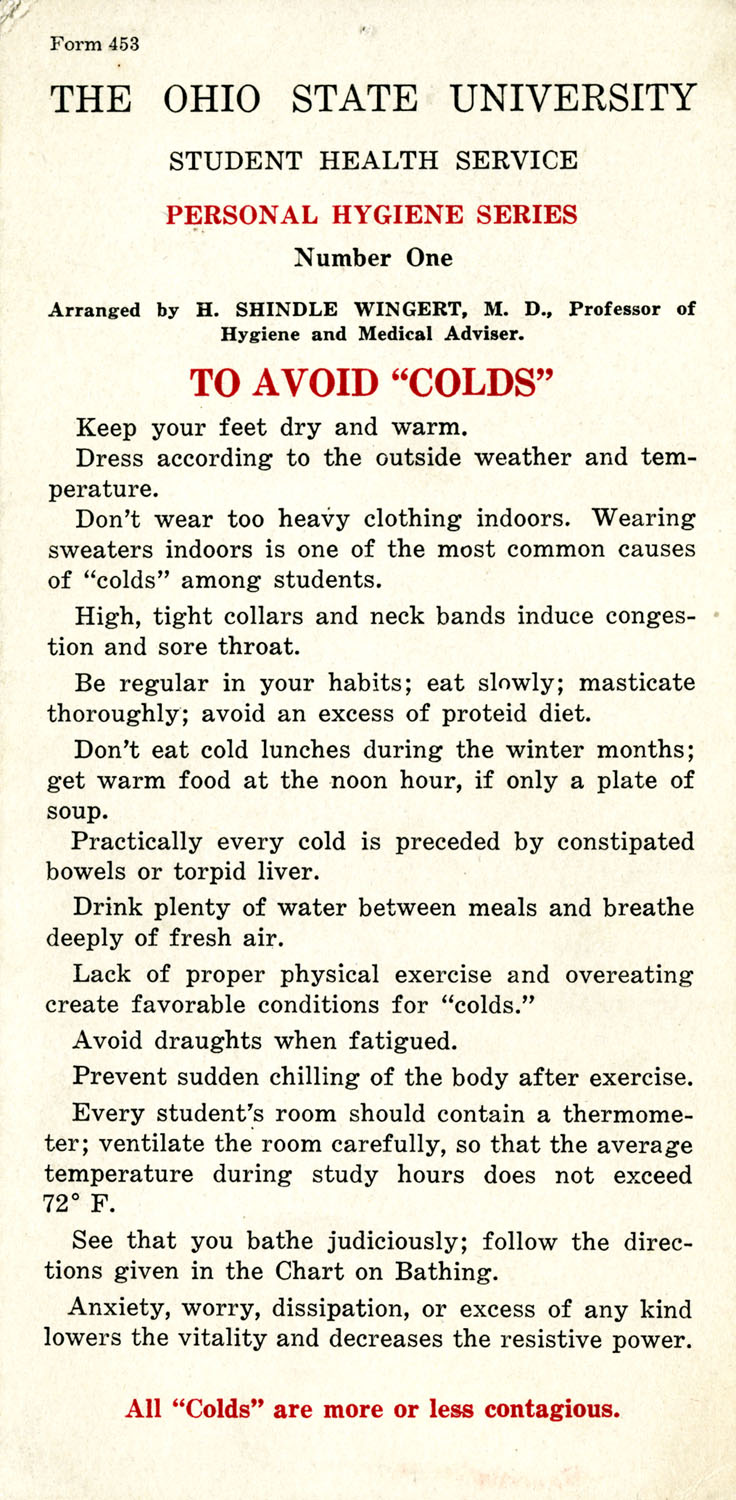
Avoiding a cold at OSU: Drink plenty of fluids, get fresh air and … don’t wear sweaters indoors?

A student being examined in the student health clinic, 1948

A student being examined in the student health clinic, 1948

Nowadays, OSU students hoping to avoid catching colds might check out the web site for the Centers for Disease Control for advice. Back in the early 20th century, before the Internet, they went instead to the Student Health Service to pick up a handy Form 453, called “To Avoid Colds,” which was part of the health service’s personal hygiene series.

Some of advice is still recommended today, such as: drink plenty of fluids, get fresh air, dress according to the weather, and avoid stress and anxiety. There were some strategies, however, that were just kind of odd:

·         “Don’t wear too heavy clothing indoors. Wearing sweaters indoors is one of the most common causes of ‘colds’ among students.”

·         High, tight collars and neck bands induce congestion and sore throat.

Student Health Service pamphlet

Student Health Service pamphlet

·         Be regular in your habits; eat slowly; masticate thoroughly; avoid an excess of protein diet.

·         See that you bathe judiciously; follow the directions given in the Chart on Bathing. (Unfortunately, the Archives does not have a copy of that likely helpful pamphlet.)

·         Practically every cold is preceded by constipated bowels or torpid liver.”

Those torpid livers, they are never up to any good.

In any case, as was mentioned, the list of advice on avoiding colds was just part of a series of health tips issued by the Student Health Service, which began in the Department of Physical Education during the 1912-13 academic year. Headed by Dr. H. Shindle Wingert, the service grew rapidly in popularity from its first year when 851 visits were recorded; by 1920, roughly 10,000 students a year were visiting the service, which had been made a separate stand-alone unit in 1915.

As it grew over the years, it changed locations: Hayes Hall, Baker Hall and the first Ohio Union (now Hale Hall) were some of its homes. In November 1969, the Wilce Student Health Center opened. It was named after Dr. John W. Wilce, who had been director of the Student Health Service for 24 years, head football coach for 16 years, and a member of the faculty for 45 years.

For some modern medical advice, see the CDC’s webpage:  http://www.cdc.gov/flu/about/season/flu-season-2013-2014.htm

Filed by C. N.

School of Music sure cut a rug with Hopkins Hall concerts

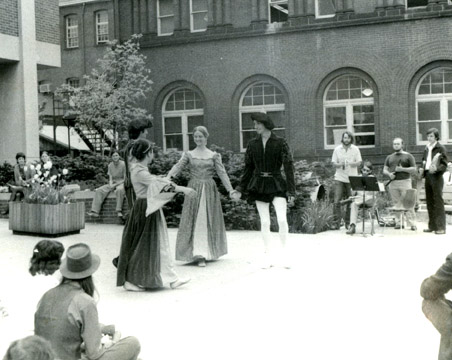
sign_rug_concert_dancingWe recently received from the School of Music a scrapbook of sorts kept by former Music Prof. Theron R. McClure, who started a series of free performances of chamber music in the Hopkins Hall Gallery he called “rug concerts.” The first concert was held in April 1974 – on the rug of the Gallery – and it featured lutes. No chairs were provided for concert-goers; they had to sit on the rug, which is another reason McClure came up with the name. When the weather warmed up, the concerts migrated outside to the Oval, and when the weather got cold again, the concerts returned to the indoor venue.

Dancers perform at the Rug Concert

Dancers perform at the Rug Concert

McClure told The Lantern in 1977 that he started the concerts because “material for several thousand concerts is just sitting on the shelves in the music department. These concerts provide an opportunity for this music to be performed.”

McClure joined the Music faculty as a part-time instructor in 1947 and he retired about the same time the concerts ended in 1979. In addition to his long career at Ohio State, he is credited with helping found the Columbus Symphony Orchestra, and he also served as a bassist in the Cleveland Orchestra. McClure died in November 2010 in Sarasota, Florida, at the age of 98. After his death, the School of Music received from his estate nine viols to enable students to be able to play a complete repertoire of music for early, period ensembles.

Older posts Newer posts