From Woody's Couch

Our Playbook on OSU History

Category: Students (page 26 of 32)

Commencements past: Held at fairgrounds, fortresses and football fields

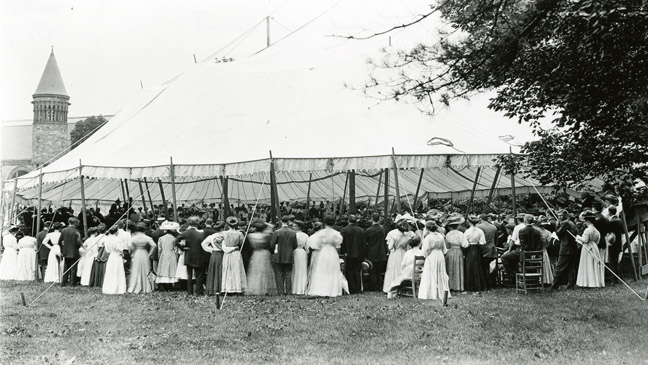
Oval, 1909

Because there were so few students, the University’s first commencement ceremonies were held in University Hall’s chapel, from 1878 when the first class graduated, to 1908. That venue grew too small, so the University tried going outdoors, first in 1909 with a tent on the Oval. (Exercises also were held under a tent there in 1918 and – sans a tent – in 2001, when the Stadium was under renovation.) In 1910, a tent was erected again, this time next to Mirror Lake.

Next up was the Armory, a fortress-like building that once stood where the Wexner Center is now located. Exercises were held there from 1911-1912 since the interior of the building consisted mostly of one huge gymnasium.
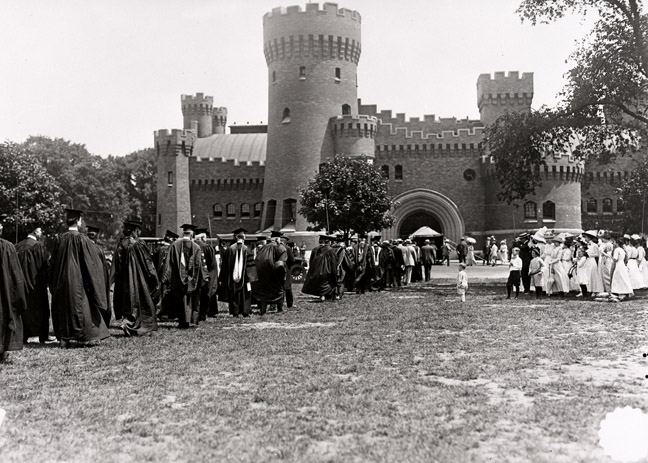
Armory, 1912

By 1922, however, the number of students graduating had outgrown even that facility, so for the next five years, the ceremony was held off-campus at the Coliseum on the Ohio state Fairgrounds.

Finally, in 1928, Ohio Stadium became home, at least to the spring Commencement ceremony where thousands receive their diplomas. It has been home to nearly every spring commencement ceremony since then, and has witnessed a variety of pageantry, firsts and unusual student displays.

In 1986, graduating dentists, doctors and optometrists got a little too rowdy during the spring graduation ceremony. The dentists, with high-flying balloons announcing “We ain’t afraid of no teeth” were seemingly outdone by the optometrists, who had hired an airplane to fly over the Stadium, hauling the message “Optometry ‘86, You Look Mahvelous”. The horseplay caused OSU President Ed Jennings to advise the College of Dentistry to have a separate ceremony the next year, with hopes to avoid the disruptive behavior. (They apparently behaved the next year.)
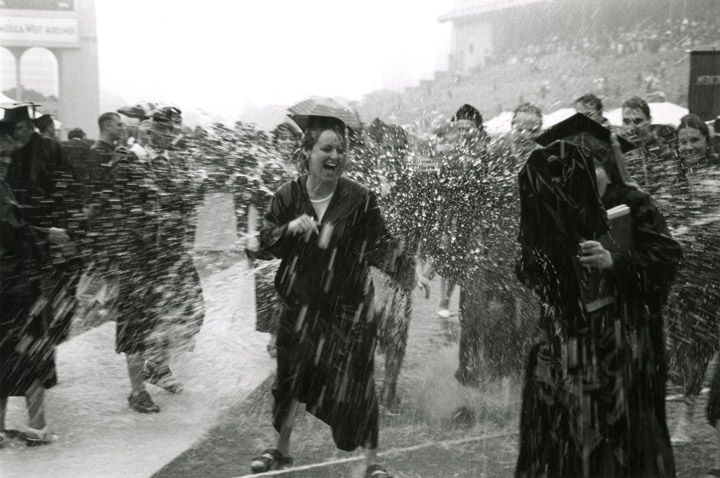
Ohio Stadium, 1997

But sometimes, the outcome of an outdoor ceremony is beyond anyone’s control. Shortly after commencement exercises started on Friday, June 13th, 1997, a downpour caused the ceremony to be cancelled – for only the second time in University history (The first rain cancellation was in 1941.) Soaked graduates waded in knee-deep water in the end zone before relocating to the French Field House to receive their degrees. In a follow-up letter to the graduating students, President E. Gordon Gee noted that “One graduate remarked that she wasn’t sure she had graduated, but was certain she had been baptized.”
Tracking the early history of African-American fraternities at OSU

Patrons sometimes are baffled that we don’t know the exact chronology of certain individuals, organizational entities or student groups on campus. They wonder aloud, “Haven’t you made a list?”

And the answer usually is, “No, we haven’t.” We’re archivists, so we’re very busy collecting, organizing and preserving our materials. We rarely have time for research; we rely on our patrons for such things.

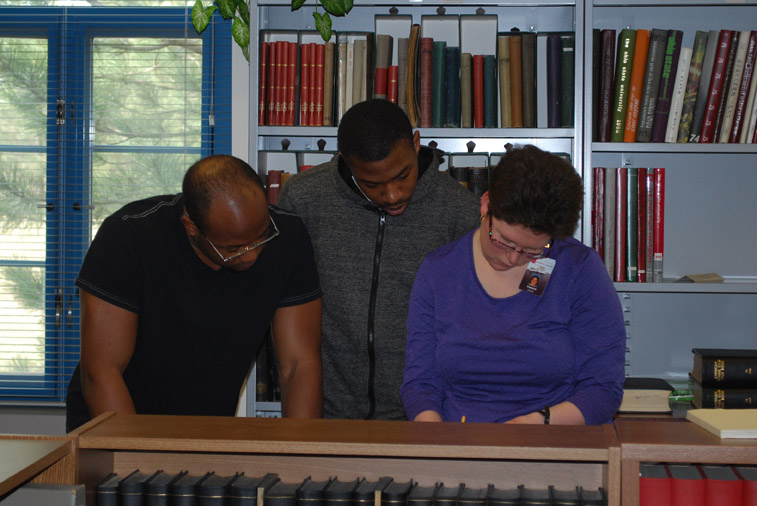
Keith Johnson and Herman Jones Jr. work with University Archivist Tamar Chute

Such was the case when two students – Keith Johnson and Herman Jones Jr. – walked in one afternoon looking for information about the first African-American fraternity on campus. They didn’t assume we had a list; we’re pretty certain they had no expectations at all. But what a find they ended up making to add to our chronology of African-American Greek life on campus.

They had in their hand a book called Black Greek 101: the culture, customs and challenges of Black fraternities and sororities, by Walter M. Kimbrough (2003). Inside was a comment from the author citing a 1906 article in The Chicago Defender about a new African-American fraternity at OSU called Pi Gamma Omicron. The two students’ professor had posed a challenge to them and their classmates: Anyone who can find evidence of this group here at OSU gets extra credit.

Unfortunately, there is little evidence left of student groups at Ohio State from the time that Pi Gamma Omicron was founded. This means the Archives has very little information about African-American Greek Life from this period. The Alpha Phi Alpha fraternity’s web site states that it was chartered at Ohio State in 1911, although the earliest reference of the fraternity here at the Archives is 1918. The Archives also has found references dating back to 1919 of another African-American fraternity, Kappa Alpha Psi, as well as the African-American sorority, Delta Sigma Theta.

So when Herman and Keith told us what they were seeking, we weren’t sure we would be able to help them.

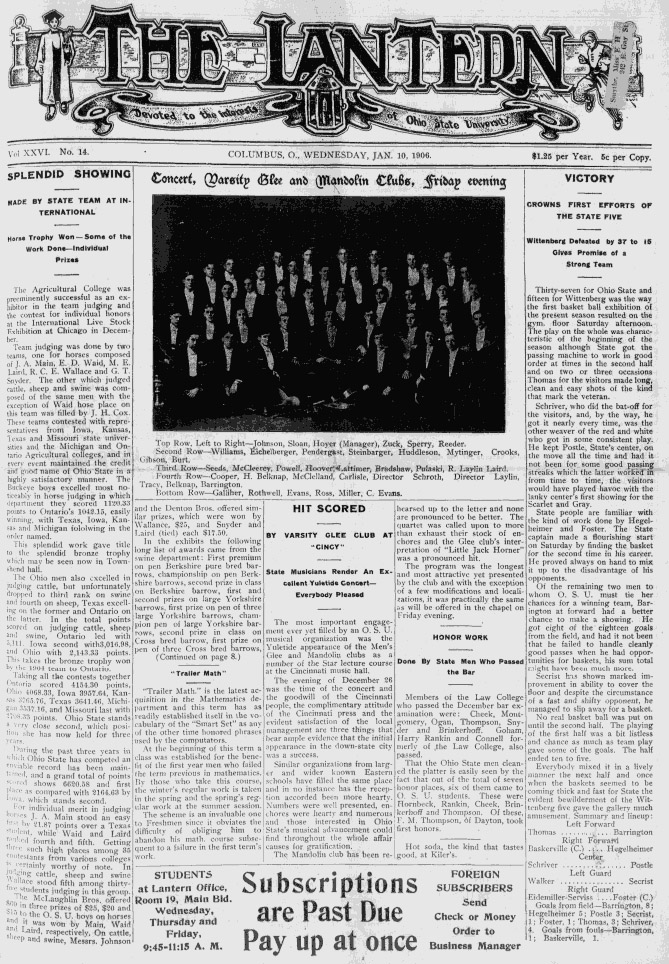
Lantern cover, 1906

This is where technology comes in: Recently, the OSU Libraries digitized the full run of The Lantern, OSU’s student newspaper. Every issue from 1881 through 1997 is now available in a searchable database. (The Lantern’s online archives can be found as a link on the right-hand side of our home page at go.osu.edu/archives.) So after looking through our paper records here at the Archives and finding nothing, University Archivist Tamar Chute decided to try The Lantern’s online archives. And there, she found it. (Click here to see the story.)

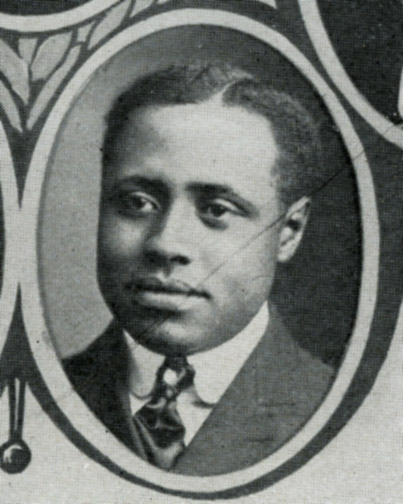
W.E. Davis, 1908


A story in the Jan. 10, 1906, issue said that a new fraternity called Pi Gamma Omicron had been founded, and it listed all of the founding members’ names. Herman and Keith had discovered the evidence they needed to show their professor that the book citation was correct. But they wanted to know more – who were these founding members?

This is where our patrons help us out tremendously in our reference service. The Archives has a copy of a 1983 dissertation by Pamela Pritchard, “The Negro Experience at Ohio State University in the First Sixty-five Years, 1873-1938,” in which she had compiled a list of African-American OSU graduates from 1892 to 1950. Some of the founding

Elmer Shackelford, 1906

members of Pi Gamma Omicron were listed in the dissertation – W.E. Davis and Elmer Shackelford – and we were subsequently able to find their graduation photos. (Pritchard’s dissertation lists Shackelford as the first African American at OSU to earn a certificate of law – then the equivalent of a law degree.)

With the other fraternity members, we were able to find how long they attended OSU, what their majors were, where they lived and some of their extracurricular activities. (See the list here.)

Near the end of their afternoon of research, one of the students said, “I’ve never had so much fun doing research in my life.” We were very proud!

Herman and Keith later made a class presentation, which we were very happy to attend, after which they received not only extra credit but applause from the entire class and their professor.

It might seem like a small thing to have found just one article about a fraternity; after all, we don’t have any evidence – at least, yet – of how long Pi Gamma Omicron was on campus. But every such find pieces together the historical puzzle of this University’s past. We thank Herman and Keith for their research, copies of which we’ve placed among our reference materials so future patrons can build on it. Who knows what else they might find?

Keith Johnson and Herman Jones Jr. pose with the book that started it all: "Black Greek 101"


March Madness Part II: The offbeat side of OSU

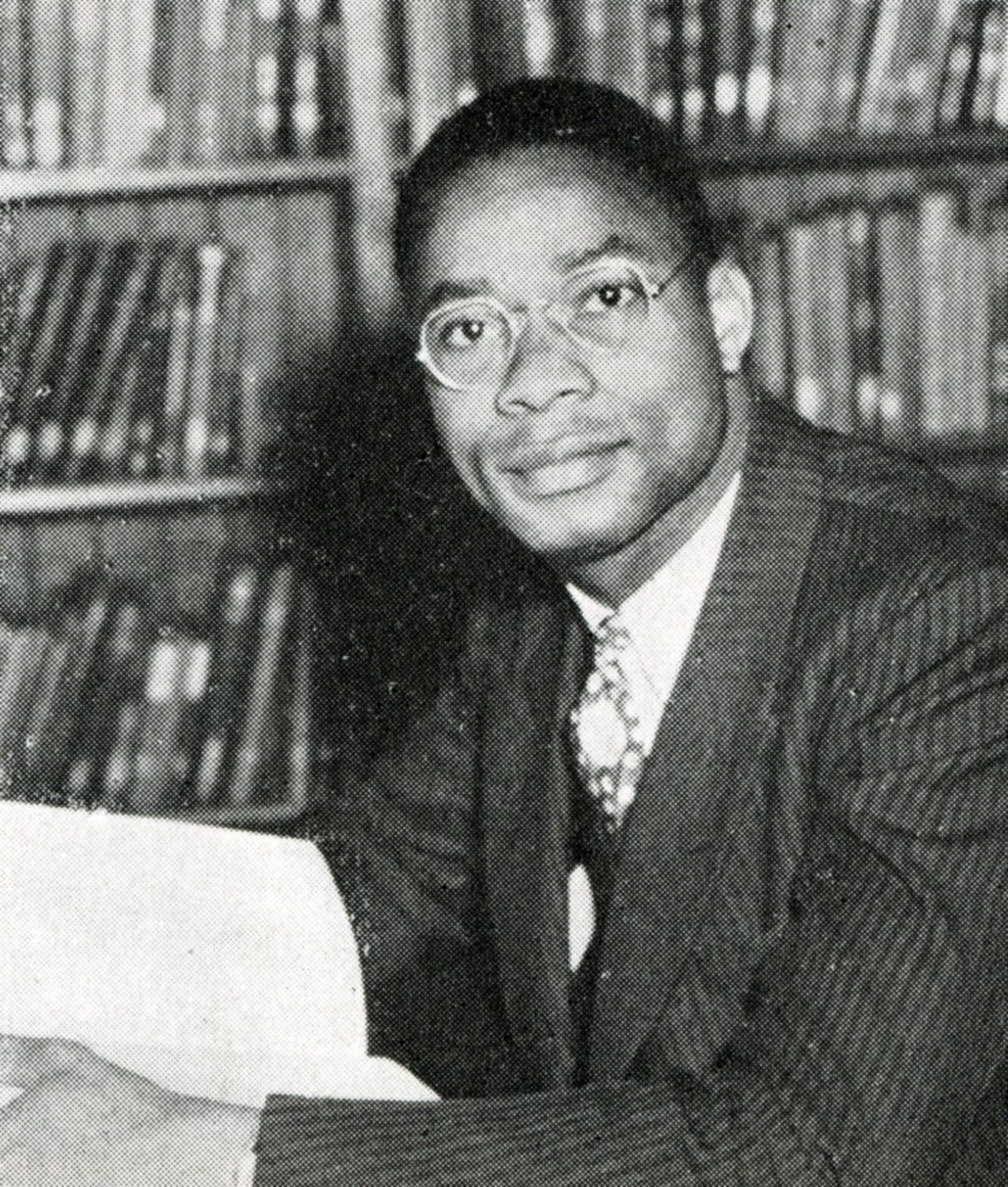
Prince Orizu, 1942

Ohio State Royalty?

Prince Akweke Abysinnia Nwafor Orizu of Nigeria studied at Ohio State in the early 1940s. Prince Orizu, or “Chris” as hewas known on campus, came to OSU around 1940 to study political science; he had previously received his Junior Certificate from Cambridge University in England. The then-22-year-old prince was a member of the Nwei, a progressive monarchy in the then-British Protectorate of Nigeria. Why did he choose Ohio State? He told the alumni magazine it was because it was in the heart of America. Apparently, it was known on campus that he was part of the ruling family. After returning to Nigeria, Prince Orizu had a long political career, followed by service in education. He died in 1999.

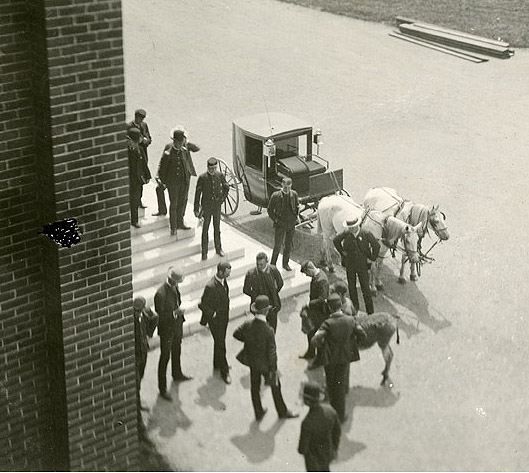
Donkey at Univ. Hall, 1893


Roaming Livestock

How can Ohio State forget its roots when it has—and seems always will have—livestock running amok, with or without the aid of students? In the early years of the University (prior to the turn of the century) a group of students carried a (very quiet and cooperative) donkey up to the third floor of the old University Hall. They put the donkey in a professor’s office and waited until morning. Students who arrived early for class that morning were rewarded with helping to carry the donkey back down the stairs. Sounds like fun, huh? Once again it is clear that the Internet had not been invented yet.


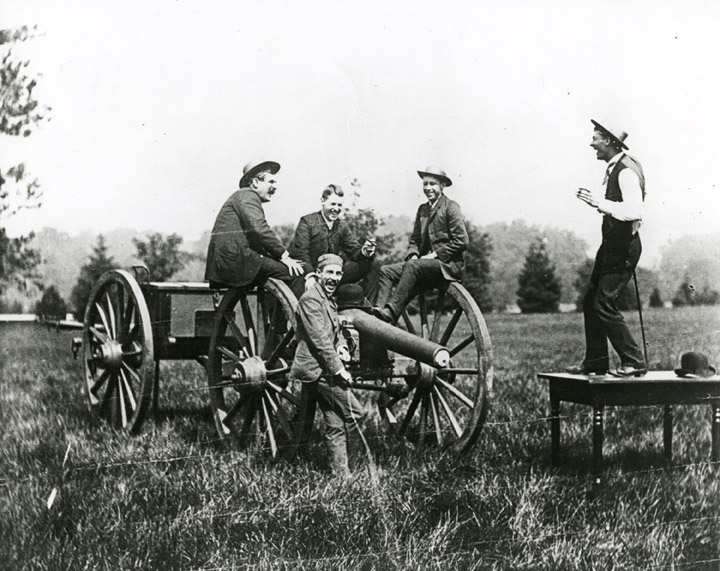
Students with cannon, 1884

If You Give a College a Cannon…

You get chaos. For that, we can thank Luigi Lomia, OSU’s first U.S. Army drill instructor. He arranged for cannons to be brought to campus as part of the military training that was required for all male students at the time. He was, after all, an artillery man himself. However, it appears it soon became a common prank to drag a cannon off to the river, or to push one into Mirror Lake. The following morning, the students in drill would have to lug it back into place. There is also an account of someone attempting to fire a tree trunk from the cannon. Amazingly, there were no casualties among students, faculty or livestock reported after any of the stunts.

Older posts Newer posts