Patrons sometimes are baffled that we don’t know the exact chronology of certain individuals, organizational entities or student groups on campus. They wonder aloud, “Haven’t you made a list?”
And the answer usually is, “No, we haven’t.” We’re archivists, so we’re very busy collecting, organizing and preserving our materials. We rarely have time for research; we rely on our patrons for such things.

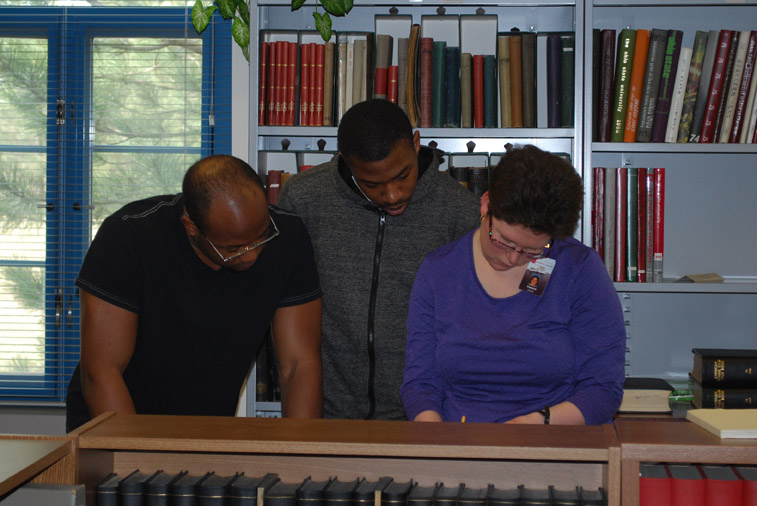
Keith Johnson and Herman Jones Jr. work with University Archivist Tamar Chute
Such was the case when two students – Keith Johnson and Herman Jones Jr. – walked in one afternoon looking for information about the first African-American fraternity on campus. They didn’t assume we had a list; we’re pretty certain they had no expectations at all. But what a find they ended up making to add to our chronology of African-American Greek life on campus.
They had in their hand a book called Black Greek 101: the culture, customs and challenges of Black fraternities and sororities, by Walter M. Kimbrough (2003). Inside was a comment from the author citing a 1906 article in The Chicago Defender about a new African-American fraternity at OSU called Pi Gamma Omicron. The two students’ professor had posed a challenge to them and their classmates: Anyone who can find evidence of this group here at OSU gets extra credit.
Unfortunately, there is little evidence left of student groups at Ohio State from the time that Pi Gamma Omicron was founded. This means the Archives has very little information about African-American Greek Life from this period. The Alpha Phi Alpha fraternity’s web site states that it was chartered at Ohio State in 1911, although the earliest reference of the fraternity here at the Archives is 1918. The Archives also has found references dating back to 1919 of another African-American fraternity, Kappa Alpha Psi, as well as the African-American sorority, Delta Sigma Theta.
So when Herman and Keith told us what they were seeking, we weren’t sure we would be able to help them.
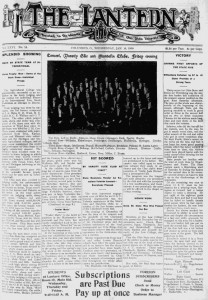
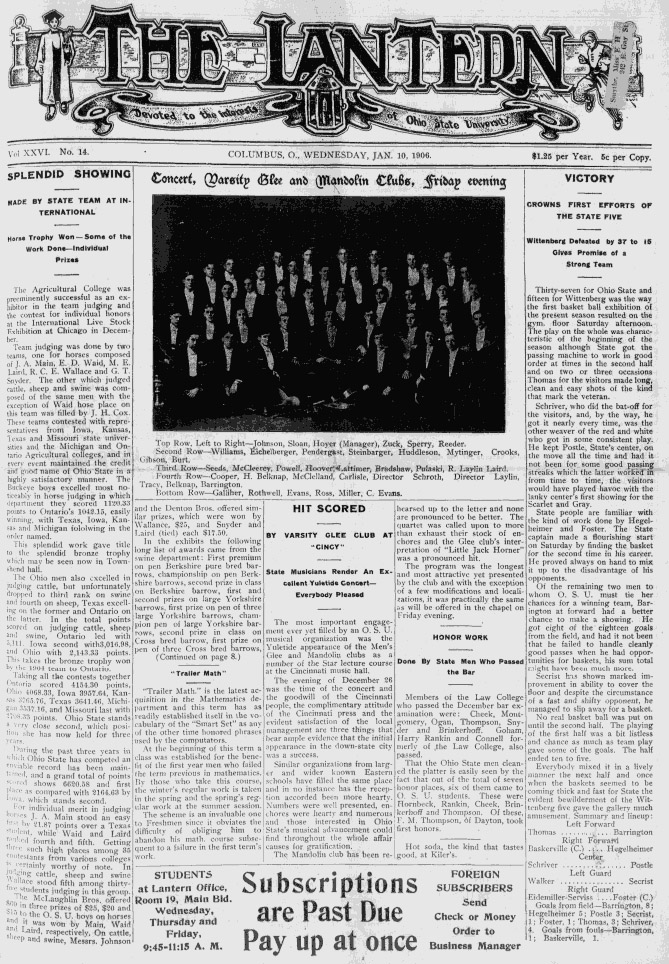
Lantern cover, 1906
This is where technology comes in: Recently, the OSU Libraries digitized the full run of The Lantern, OSU’s student newspaper. Every issue from 1881 through 1997 is now available in a searchable database. (The Lantern’s online archives can be found as a link on the right-hand side of our home page at go.osu.edu/archives.) So after looking through our paper records here at the Archives and finding nothing, University Archivist Tamar Chute decided to try The Lantern’s online archives. And there, she found it. (Click here to see the story.)
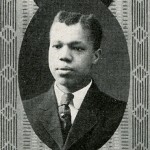
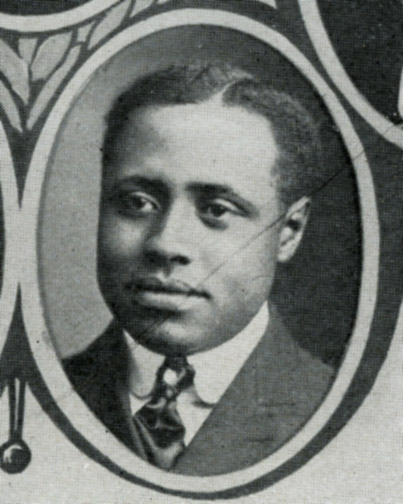
W.E. Davis, 1908
A story in the Jan. 10, 1906, issue said that a new fraternity called Pi Gamma Omicron had been founded, and it listed all of the founding members’ names. Herman and Keith had discovered the evidence they needed to show their professor that the book citation was correct. But they wanted to know more – who were these founding members?
This is where our patrons help us out tremendously in our reference service. The Archives has a copy of a 1983 dissertation by Pamela Pritchard, “The Negro Experience at Ohio State University in the First Sixty-five Years, 1873-1938,” in which she had compiled a list of African-American OSU graduates from 1892 to 1950. Some of the founding

Elmer Shackelford, 1906
members of Pi Gamma Omicron were listed in the dissertation – W.E. Davis and Elmer Shackelford – and we were subsequently able to find their graduation photos. (Pritchard’s dissertation lists Shackelford as the first African American at OSU to earn a certificate of law – then the equivalent of a law degree.)
With the other fraternity members, we were able to find how long they attended OSU, what their majors were, where they lived and some of their extracurricular activities. (See the list here.)
Near the end of their afternoon of research, one of the students said, “I’ve never had so much fun doing research in my life.” We were very proud!
Herman and Keith later made a class presentation, which we were very happy to attend, after which they received not only extra credit but applause from the entire class and their professor.
It might seem like a small thing to have found just one article about a fraternity; after all, we don’t have any evidence – at least, yet – of how long Pi Gamma Omicron was on campus. But every such find pieces together the historical puzzle of this University’s past. We thank Herman and Keith for their research, copies of which we’ve placed among our reference materials so future patrons can build on it. Who knows what else they might find?

Keith Johnson and Herman Jones Jr. pose with the book that started it all: "Black Greek 101"








Recent Comments