From Woody's Couch

Our Playbook on OSU History

Category: Archival resources (page 14 of 14)

Twelve Days of Buckeyes: A “Magic Mirror” of OSU history

(We’re still in the holiday spirit, so this post about OSU’s yearbook, the Makio, will open to the tune of “Santa Claus is Coming to Town:”)

It’s seen students when they’re sleeping

It’s seen them while they’re in class

The Makio has had photos of it all

But its time is about to pass
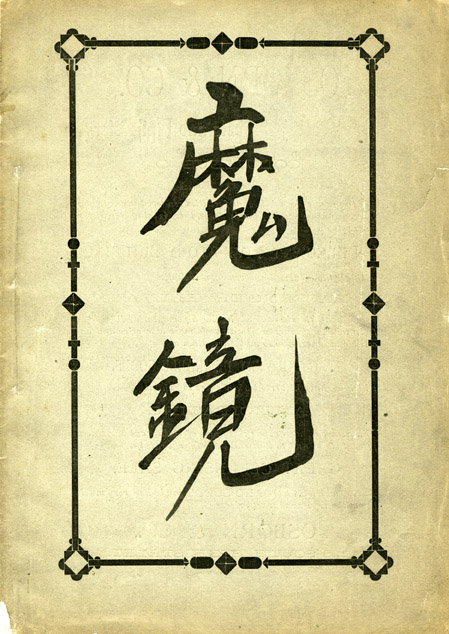
1880 Makio cover

After a day of classes and studying in 1878, three men discussed starting a collegiate annual for Ohio State. The three men were Sidney Short, John Ward and Willis Jones, and their initial idea became what we now know as the Makio.
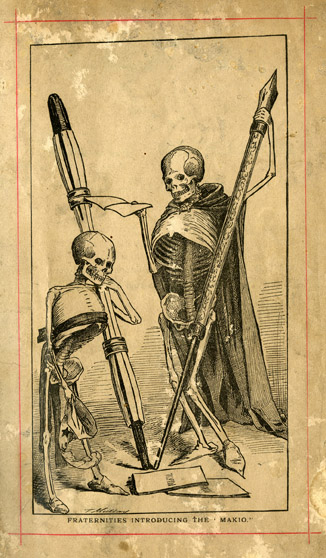
Drawing from 1882 Makio

Overseen by the two fraternities on campus, Phi Gamma Delta and Phi Kappa Psi, the Makio was worked on in secret and completed in the six weeks before commencement. The name Makio, meaning “Magic Mirror,” was translated from Japanese by Prof. Edwin Morse. Prof. Morse and Prof. Thomas Mendenhall collaborated in Japan on the study of such mirrors. The first issue, published in 1880, was 68 pages long, containing no photographs.

The Makio has been the subject of disputes among organizations on campus. In 1882, the Makio staff and the Lantern staff quarreled about it, and in 1883 the founding fraternities disagreed on allowing newly founded fraternities to participate in the publication of the Makio, resulting in two yearbooks being published. In 1896 the yearbook was known as The Scarlet and Gray, but in 1897 it returned to its original name. A junior class Makio Board was formed in 1906, taking over publishing responsibilities from the fraternities. The Makio Board progressed over the years allowing students from all classes to participate.
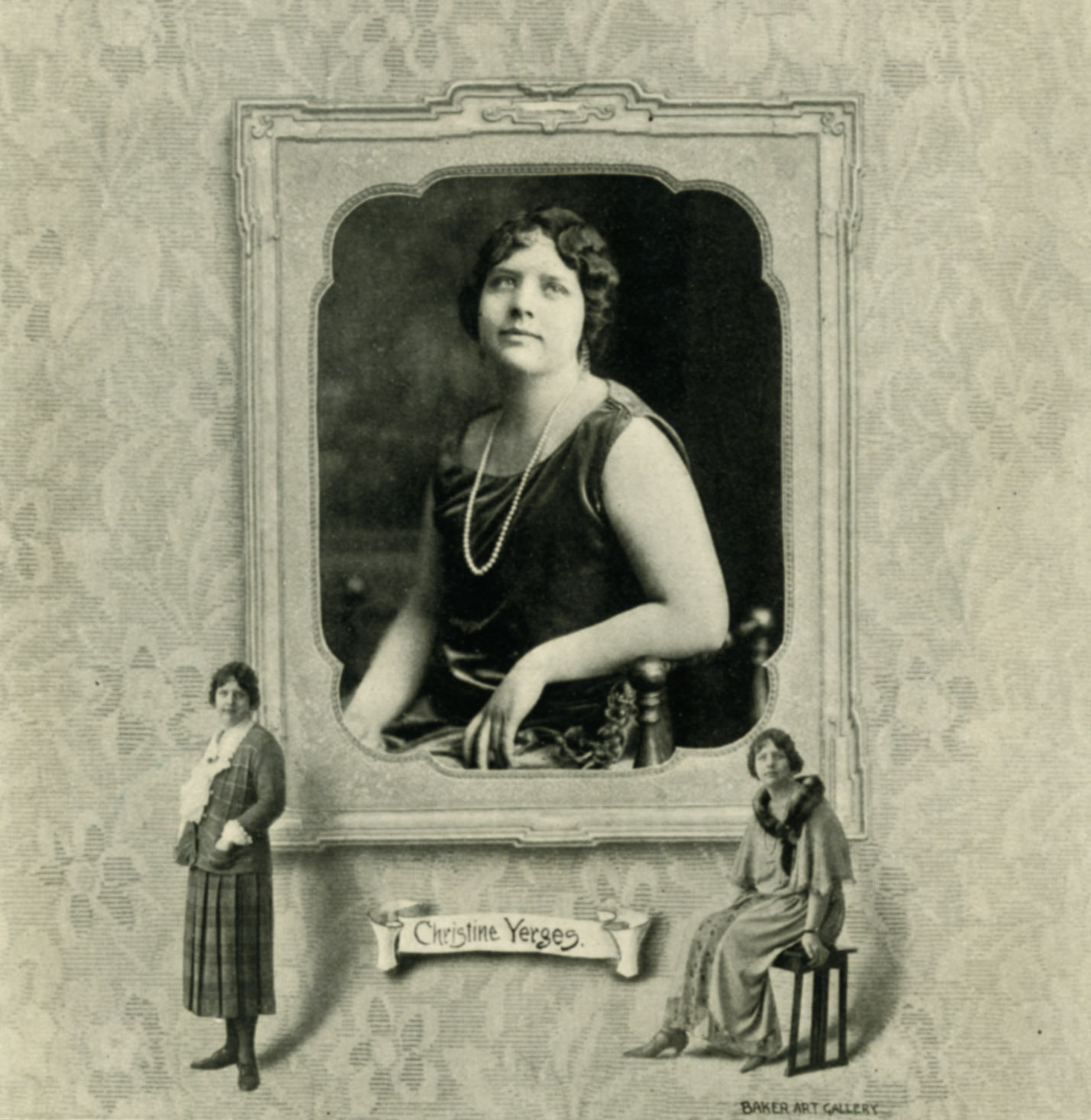
“Magic Mirror Girl”, 1923

The contents of the Makio have also evolved from the first publication. At first, the yearbooks focused on Greek affairs. Essays, satires and political cartoons were included as the popularity of the Makio grew. Photographs were first published in 1887 with the addition of color photos in 1920. Women were highlighted in sections such as “Rosebud,” “Magic Mirror” and Makio Queen when the student body voted for the prettiest and most popular girls on campus.  Audio recordings on vinyl records were included with the 1953 and 1959 Makios.

Since 1880 there have been several years the Makio was not printed. The 1881 issue was the first year the publication was skipped, but it was stopped altogether in 1995. Publishing restarted in 2000. As the article from The Lantern states, the Makio will once again cease to exist.


Twelve Days of Buckeyes: Ralph Mershon and the R.O.T.C.

Ralph Mershon, 1918

Ralph D. Mershon, namesake of Mershon Auditorium, is one of four OSU men who can take much of the credit for the establishment of the Reserve Officers Training Corps, or R.O.T.C., on the nation’s university campuses.

Ralph Davenport Mershon was born in Zanesville, Ohio, on July 14, 1868. He came to Ohio State in 1886 and graduated in 1890 with a degree in Mechanical Engineering. He began experimenting and consulting in the fields of electrical engineering, which would eventually gain him worldwide recognition for his inventions and his work with hydroelectricity, particularly at Victoria Falls in South Africa.

During World War I, Mershon served as a Lieutenant Colonel in the U.S. Army Corps of Engineers, but his greatest contribution to the military was his efforts to establish a civilian military training program for the nation’s universities. Before World War I, military training on campuses consisted mostly of drills and physical education; he advocated broadening the curriculum so students would be ready to serve as military officers once they graduated. Mershon was involved in a series of conferences on the matter, along with Brigadier Gen. Edward Orton, Jr. (son of former OSU President Edward Orton, Sr. and an OSU professor), Col. George L. Converse (at that time Commandant of Cadets at Ohio State), and William Oxley Thompson, then-OSU President.

ROTC students, 1943

These four men came up with what was known as the Ohio Plan for Reserve Officers. In 1916 the Ohio Plan was presented to Congress; that year, the National Defense Act was passed, and it included a provision for the establishment of the R.O.T.C.

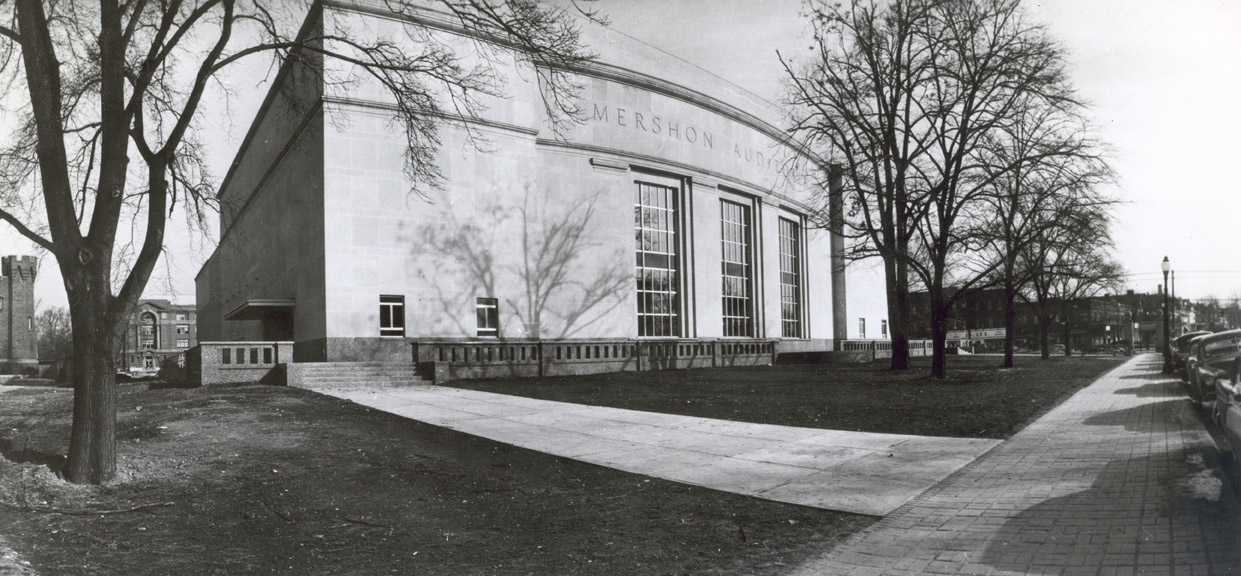
Mershon died on Feb. 14, 1952. He left his $7.5 million estate to the University. An endowment fund was established, with half of the annual income to be used to promote military education. The funds are still used to support professorships, scholarships and seminars in the field of military education, and his bequest also led to the establishment of the Mershon Center for International Security Studies at Ohio State. The fund also paid for the construction of the Mershon Auditorium, which opened in 1957.

Mershon Auditorium, 1957

The University Archives has recently finished processing the Ralph D. Mershon Papers. If you’d like to take a look at its inventory, contact haire.14@osu.edu.


Buckeye Stroll

Want to take a walk through OSU history?   Now it’s easy, with the Libraries’ new mobile app and web site, Buckeye Stroll.

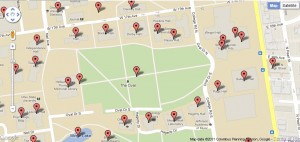
The site  features current and historical landmarks of the Columbus campus.  Included is a map view of more than 70 sites of interest on The Ohio State University campus, and a browse view for locating a known site by name. Each stop on the tour includes several historical photographs from the OSU Photo Archives, as well as historical summaries of the location.  This campus tour can be taken by either using your mobile device or your computer.

Click the map to go to the Buckeye Stroll web page

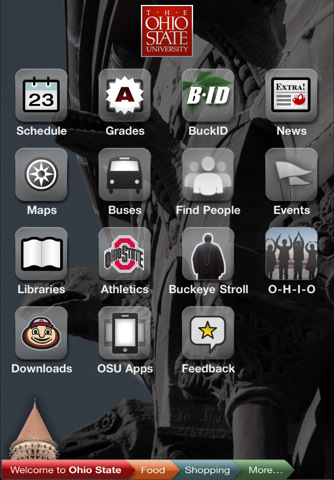
This summer, Buckeye Stroll was also released on the University’s new mobile application, OSU Mobile.

OSU Mobile allows you to access all the great features of Buckeye Stroll that are available on the web site.  The mobile application also includes other tools, including access to OSU news, real-time bus schedules, maps, grades and class schedules.

The Archives is continuing to add locations and photographs to Buckeye Stroll,  so please check back as the site is always changing.

Have you tried using Buckeye Stroll yet?  Please let us know what you think about it.


Newer posts