From Woody's Couch

Our Playbook on OSU History

Category: Activities (page 14 of 16)

Twelve Days of Buckeyes: Brutus has come a long way from papier-mâché

Brutus, 1965

Brutus, 1965

For a beloved OSU icon, Brutus Buckeye has a bit of a rough life. As would anyone else who had been kidnapped no less than five times, thrown in a dumpster near 11th Avenue, painted blue and gold by the enemy, abandoned at Port Columbus, and held hostage by Lantern reporters. Given his advanced age, we hope his future journey will be a little less rocky.

Brutus first appeared at Ohio State’s Homecoming Game against Minnesota on October 30, 1965. Four years later, in 1969 Brutus was abandoned at Port Columbus after leading his team to victory in the Rose Bowl. He hitched a ride back to campus. The 1970s were rough years for Brutus, too: In 1971, Brutus was taken from a van in Ann Arbor the night before the Michigan game by members of the Michigan chapter of the Theta Chi fraternity. They carried him into the stadium the next morning—after painting maize and blue stripes all over his head. He was rescued by friends before being taken onto the field.

1977

1977

In 1972 Brutus was kidnapped again, this time from his home in St. John Arena; someone cut the lock from his door and held him for several days before leaving him, greatly damaged, outside of Bricker Hall. Another time, reporters from The Lantern held him until 1,000 students signed a petition saying they wanted to keep Brutus. In more recent history, Brutus was taken from a car near 11th Avenue in the early hours of the morning. After witnesses made calls to radio stations to alert the police of his whereabouts, Brutus was found in a dumpster a few blocks north of his last known location.

Brutus has also undergone several makeovers. Brutus’ original look was papier-mâché; a few years later he was updated to fiberglass. That change added a few (as in 80) pounds to his figure. Meanwhile, the Department of Athletics began receiving complaints because Brutus began tripping over bystanders on the sidelines. In 1975, the athletic department tried to replace Brutus when it took over his contract from the Ohio Staters, Inc. The fans booed the interloper—who looked nothing at all like our beloved mascot—off the field at his first game. In 1976 Brutus was back on the sidelines. He underwent subsequent makeovers in 1977, 1981 and 1982, at which point he decided to just change up his wardrobe every few years. As to retirement? There is only one mascot, and Brutus is here to stay.

Filed by C.N.

Twelve Days of Buckeyes: Six who’ve attended OSU have led as Ohio’s governor, too

John Bricker, 1916

John Bricker, 1916

The list of high achievers who have attended OSU is incredibly long, so today we focus just on those six who have reached the pinnacle in Ohio politics – the governor’s office.

John W. Bricker received his bachelor’s degree in 1916 and his law degree in 1920, demonstrating along the way how active he would later be in politics: He was a member of the political science club, on varsity debating team and baseball team, a member of Varsity “O,” class president his junior year, chairman of the senior memorial committee, YMCA president and a member of the senior honorary, Sphinx.

After he received his law degree, Bricker went into politics. Among the high offices he held were Ohio Attorney General, Ohio Governor (three two-year terms) and two terms as U.S. Senator. He also served as the Republican nominee for Vice President in the 1944 presidential election between Thomas Dewey and Franklin D. Roosevelt.

He was a member of OSU’s Board of Trustees from 1948 to 1969, serving his last year as chairman. Because of his long service to the University, the former Administration Building was renamed for him in 1983.

Thomas J. Herbert didn’t graduate from OSU, but he did attend the University’s Ground School training program during World War I. Before he was elected governor, Herbert served as Ohio Attorney General. After the end of his single-term governorship, President Dwight Eisenhower appointed him chair of the federal government’s Subversive Activities Control Board, an agency formed to hear testimony regarding charges of communism in the U.S.

Though Herbert didn’t receive an academic degree from OSU, his son, John D. Herbert did graduate from OSU in 1949. Another son, David J. Herbert, followed his in his father’s political footsteps and served as state treasurer for three terms.
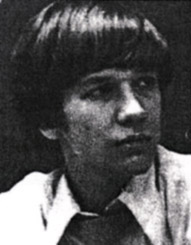
John Kasich

John Kasich

John Kasich, Ohio’s current Republican governor, has had much more success running for state and national offices than he did when he was a student at Ohio State. He ran twice for president of the Undergraduate Student Government, but was defeated both times. He protested the second election, citing voting irregularities, but nothing came of his appeal. He graduated in December 1974 with a bachelor of arts degree in political science.

At age 26, Kasich became the youngest person ever to be elected to the Ohio Senate; he then ran for U.S. Congress and ultimately served nine terms. From 2001 to 2009, Kasich served a number of roles as a private citizen, including as a host of “Heartland with John Kasich” on the Fox News Channel. In 2010, he ran for governor, defeating then-incumbent Ted Strickland.

C. William O’Neill actually began his political career while attending OSU’s College of Law. Before entering law school, he had campaigned for other Republican candidates, but in 1938, he decided to campaign for himself, for a seat in the Ohio House of Representatives. Winning the election made him the youngest General Assembly’s youngest representative, at age 22. A member of Phi Beta Kappa while in school, he earned his law degree in 1942.

During a 40-year political career, O’Neill lost only one race – the gubernatorial election of 1958. But he more than made up for that one loss, ultimately becoming the only person to serve as Ohio’s Supreme Court Chief Justice, Governor, Speaker of the House and Attorney General. He died after a heart attack in 1978 while serving as Chief Justice. At that time, he also was serving on the OSU Alumni Association’s Board of Directors as immediate past president.

Governor Rhodes, 1969

Governor Rhodes, 1969

James Rhodes only briefly attended OSU in the mid-1920s before he had to drop out to help support his family, according to the alumni magazine. His first election victory came as Republican ward committeeman in Columbus, thus beginning a long political career in the state capital. His highest office was as Ohio Governor – for four terms, making him one of the longest-serving governors in U.S. history.

Though Rhodes is remembered for sending the National Guard to quell student protests on various Ohio campuses, including OSU (on May 4, 1970, four students were shot to death by Guardsmen at Kent State University), he is also credited with developing a network of community and technical colleges around the state to increase opportunities for vocational education.

Rhodes also promoted OSU as a major center for medical training and research; in 1976, the Rhodes Hall addition to University Hospitals was named after him.
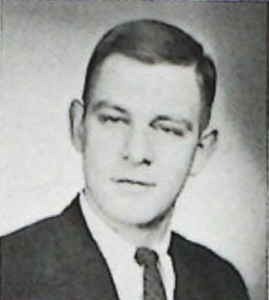
George Voinovich, 1961

George Voinovich, 1961


George Voinovich graduated in 1961 with a law degree from The Ohio State University. He got his start in political leadership roles while still on campus, serving as president of both his class and the campus Young Republicans.

After graduation, Voinovich went on to serve the state of Ohio in a wide variety of offices as a state representative, as Lieutenant Governor under fellow Buckeye James Rhodes, as the Mayor of Cleveland, the Governor, and, most recently, as U.S. Senator. His 2004 Senate victory was won by a landslide with all 88 Ohio counties selecting him to serve.

Founder’s Day: ‘A small beginning makes a good ending’

University Hall, 1874

Nearly 140 years ago, the Ohio Agricultural and Mechanical College opened its doors.

On September 17, 1873, seven faculty members greeted the roughly two dozen students who showed up to get a college degree. (Reports vary between 17 and 25 on how many students there actually were.) The college’s sole building—University Hall—was still under construction, with an unfinished roof, no interior doors, and no more than a few benches for students.

There was no formal opening ceremony, nor a dedication. Therefore, it is not surprising that its opening went mostly unnoticed. However, one Ohio newspaper did write, perhaps a bit prophetically, “They say a small beginning makes a good ending.”

Despite the inauspicious beginnings, the University did succeed, and a lot of the credit for that success goes to the outstanding faculty. The Board of Trustees found remarkable individuals – men (and they were all men) who may not have achieved great honors but who recognized the worthiness of the University’s mission and dedicated themselves to the cause. And it was dedication. The faculty undertook significant workloads, not only teaching but donating time as per state requirement. For example, the agriculture professor was required by the state to analyze fertilizer samples—for free—for the general public. The faculty was also required to help with the grounds, including sanitation. On top of all that, many of the original faculty members lived in University Hall along with the students. Despite these conditions, many of these faculty members spent the rest of their careers at Ohio State.

First graduating class, 1878

But what did these professors teach? The focus was science, but the liberal arts were also required as part of the curriculum. Incoming students were required to take an entrance examination in “arithmetic, geography, English grammar, and elementary algebra.” Students also had classes in literature, history, agricultural science, engineering, chemistry, philosophy, and language (Professor Joseph Millikin apparently taught Latin, Greek, French, German, Anglo-Saxon and the Romance languages). From here, you know the story: Ohio State has been accumulating courses and departments—and students—ever since.

In 1878, the college changed its name to The Ohio State University, and the rest, as they say, is history.

For more information about the founding, visit our web exhibit at: http://library.osu.edu/projects/founding/.

Filed by C.N.

Older posts Newer posts