From Woody's Couch

Our Playbook on OSU History

Author: drobik.5@osu.edu (page 59 of 62)

Bleeds Scarlet and Gray: Milton Caniff

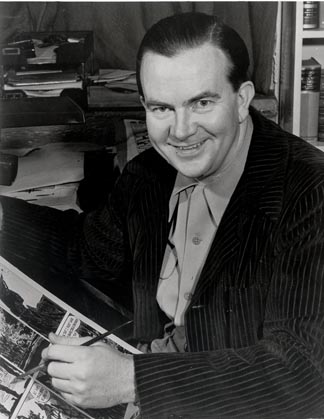
Milton Caniff, 1950

(Editor’s Note: This post is part of a series of profiles of life-long Buckeyes who have had a notable impact on the University. In other words, they bleed scarlet and gray.)

We’ve been talking lately about football season, and Homecoming, especially, which for alumni is always a great time to reconnect with other former students. One of OSU’s more famous alumni – and one of its most loyal – is Milton Caniff, sometimes known as the “Rembrandt of the comic strip.”

Caniff was born in 1907 in Hillsboro, Ohio, and he began drawing cartoons in grade school. One of his first professional jobs was at the Dayton Journal Herald. As an undergraduate at
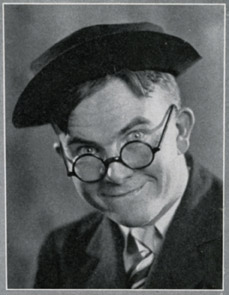
Caniff in the Scarlet Mask show "Beau Kay", 1927

Ohio State he served as art director of the Makio and the Sun Dial, also creating football program covers and working as a cartoonist for The Columbus Dispatch. These projects also helped to fund his education.  Caniff was also a member of Sigma Chi, president of Strollers, and vice president of Scarlet Mask, a male acting troupe at OSU. He graduated in 1930 with a bachelor’s degree in Journalism. He later wrote that, “In my five years [at OSU], I have run up a debt I will never liquidate. But I shall try, even though there can be no price tag on brain surgery from within.”

Caniff went on to become a world-renowned cartoonist. He is most famous for his two comic strips, “Terry and the Pirates,” and “Steve Canyon.” Caniff later said that he took inspiration for many of his “Terry” characters from real people he met at OSU, including his good friend Frank “Dude” Hennick (OSU class of 1925), who inspired the character of Capt. Dude Higgs. In 1947, Caniff launched “Steve Canyon,” a serial cartoon about an Air Force pilot for hire that was so popular, it spawned a short-lived television series in the late 1950s. Canyon wrote the strip for more than 40 years.
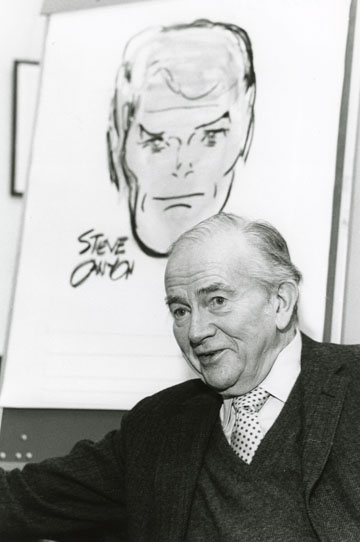
At the August 1974 Commencement, Caniff was awarded an honorary doctorate of Humane Letters and gave the Commencement address. Milton Caniff died on Easter Sunday in 1988 at the age of 81. He donated much of his work to the School of Journalism. His papers and artwork became one of the founding collections of the Billy Ireland Cartoon Library and Museum, named for Caniff’s good friend and fellow Columbus Dispatch cartoonist.

Filed by C.N.
 

The artistry of … football programs?

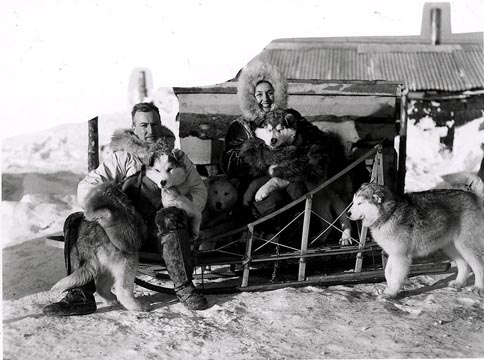
Fred Machetanz with his wife in Alaska, n.d.

With Homecoming season upon us, we decided to showcase the artistry of some of our old football program covers. Even better, some of the best were drawn by OSU alumni. One such artist was Fred Machetanz, an OSU alum. Between 1929, when he was still an undergrad, and 1942, Machetanz drew 37 football program covers.

Machetanz was born in Kenton, Ohio, in 1908, and he graduated from OSU with his bachelor’s degree in 1930. He earned a master’s degree in Fine Arts in 1935. He was also a member of Phi Kappa Psi, Scarlet Mask, and University Players.

Immediately after receiving his second degree, Machetanz went to visit his uncle in Alaska for short vacation. He loved the area so much, though, that he became a permanent resident, basing his artwork on the various scenes and people he saw. Shortly after arriving, he began making sketches, and he decided to illustrate a children’s book. He went to publishers in New York, only to be told that they wanted illustrations for a book about sky scrapers—if he wanted to do a book on Alaska, he would have to write it himself. Machetanz ended up publishing “Panuck, Eskimo Sled Dog,” the first of several books published for children about Alaska.

He served in the Navy during World War II, ending his service as a lieutenant commander in the Aleutian intelligence detail. He eventually made his home in Alaska, although he and his wife travelled the “Lower 48” extensively, showing documentaries and lecturing about their home state. Eventually, Machetanz became a full-time painter. He was awarded an honorary doctorate of Humane Letters at Ohio State’s Commencement ceremony in March 1984. He died at the age of 94 in 2002.

Filed by C.N.

To see some of the old football programs, go here: https://kb.osu.edu/dspace/browse?value=Ohio+State+University.+Athletic+Department&type=author

You can find more football cover art on our web site:  https://www.flickr.com/photos/ohio-state-university-archives/sets/


Of pompons and human pyramids

A lone cheerleader in 1909

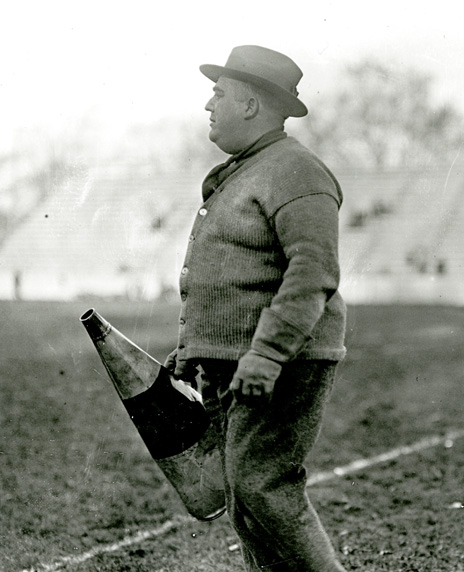
In honor of the season, we decided to look into the history of cheerleading at OSU. The first record we have of a “cheerleader” was in 1902 for Fred A. Cornell. Yep—the first OSU cheerleader was a guy. Anyway, up until 1909 there was only one cheerleader at football games; in 1909 another was added, and in 1910 a third came on board.

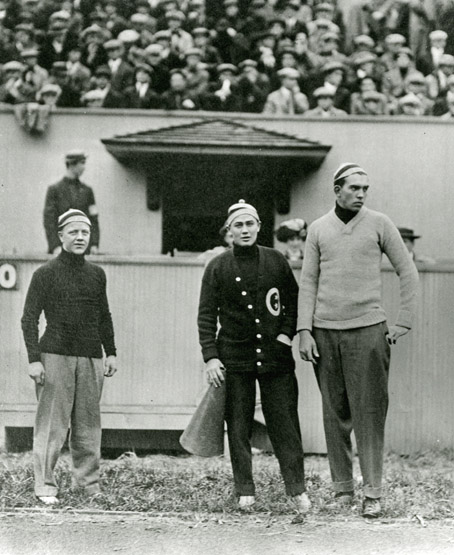
Cheerleaders, 1911

Scandal struck in 1914 when Miss Clara Rutherford came to a football game and performed the same cheers and “flip flops” with the official male cheerleaders—in her blouse and bloomers. Her behavior was denounced widely, and labeled “hoydenish” and “improper.” Didn’t someone say that well-behaved women rarely make history? It would not be until the 1930s that women could become official cheerleaders.

By the 1920s, six cheerleaders were performing at football games; one of these cheerleaders was Milton Caniff, the famous cartoonist (you’ll read about him in a later blog). Cheerleaders also began to travel to away games, lead rallies, and cheer at basketball games when the football season was over. At this time the Student Senate selected the cheerleaders.

1933

In the 1930s, before women joined the squad, the “Gentlemen of the Cheer” began adding more athletic stunts, including Evel Knievelesqe jumps over human pyramids—which they performed in jackets, sweaters and ties. The ’30s also marked the establishment of another favorite game-day tradition: Block O.

Around 1938 the first women’s squad was established, though they, of course, did not perform stunts. The Second World War took a toll on almost every aspect of campus, and cheerleading was no exception. With few men around, the girl cheerleaders got their own show. They also got Chris. Chris was a German Shepherd who performed tricks with the cheerleaders at half time.

First female cheerleading squad, 1938

"Chris" takes on an opponent, 1941


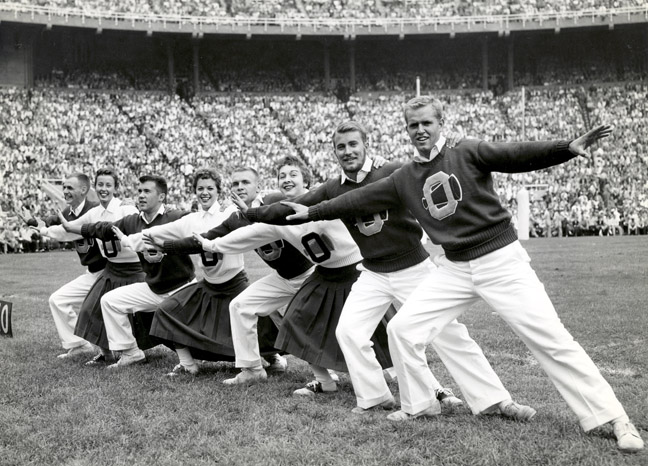
In the 1950s the “holler guys and gals” were selected by the two head cheerleaders and the faculty advisor. The uniform for that decade included sweaters for the men and for the women, skirts below the knee, a shirtwaist, sweater, white socks and saddle shoes. It wasn’t until 1968 that the skirts were shortened to their current length. Judging by some of the correspondence the University received at the time, Clara Rutherford was not the only one to get people riled up about proper feminine attire.

1955

1972


Filed by C.N.


Older posts Newer posts