From Woody's Couch

Our Playbook on OSU History

Author: drobik.5@osu.edu (page 56 of 62)

Twelve Days of Buckeyes: Late to class? Give yourself a demerit!

A chemistry class in 1885

With its current focus on selective admissions, OSU can boast of a student body dedicated to scholarly pursuits; when Ohio State was first opened in 1873, the University relied on demerits to keep students academically focused. It was a pretty simple system:

The penalty for an unexcused absence from class or from drill was four demerits; an unexcused failure in recitation got you two demerits; and for each unexcused tardiness, one demerit was assigned. If a student received ten demerits in a single term, twenty-five demerits in the first two terms or thirty in the first year, the parents were notified. Expulsion was the price to pay for twenty demerits received in the first term, thirty-five in the first two terms, or forty during the year.

There’s no record of how many demerits were issued; the system was abolished fifteen years later, except for preparatory classes. OSU’s third president, William H. Scott, wrote at the time: “This action by no means exempts students from accountability; but instead of having a definite penalty measured out by law for each delinquency, they must answer for any abuse of their liberty to the teacher in whose class the delinquency occurs.”

Orton, 1875

That’s according to James Pollard’s 1959 history of OSU, where he also recounts how little misbehavior there was in general. According to Pollard, OSU President Edward Orton apparently was impressed by the dearth of mayhem on campus: “We have been happily free during our short history from the relics of barbarism that still survive in so many colleges in the shape of hazing and the reckless destruction of property.”

North Dorm students, 1889

Not counting the North Dorm, of course. Several OSU Alumni Monthly articles have recounted stories of OSU’s first residence hall, where male students lived, and its collegiate atmosphere: Stolen pigs appearing in dorm rooms, firecrackers set off in the house, coal scuttles tossed down the stairs at night. Apparently, it also was common in the dorm to shoot out of the window. Aiming seems to have been optional – in one incident, a horse was hit, so then-University President Edward Orton ordered all of the boys to produce their weapons in order to match bullet to the gun. It was, to his chagrin, and the detriment of justice, that every boy in residence produced a .32 caliber revolver.



Twelve Days of Buckeyes: Women in the R.O.T.C.

In 1958, the voluntary Coed Cadet Corps was formed at OSU, providing the framework for the nationwide incorporation of women into ROTC in 1973. (The Co-ed Cadets are shown here in 1965.)

In 1969 OSU became the first university to offer training for co-eds for the Women’s Air Force (WAF).

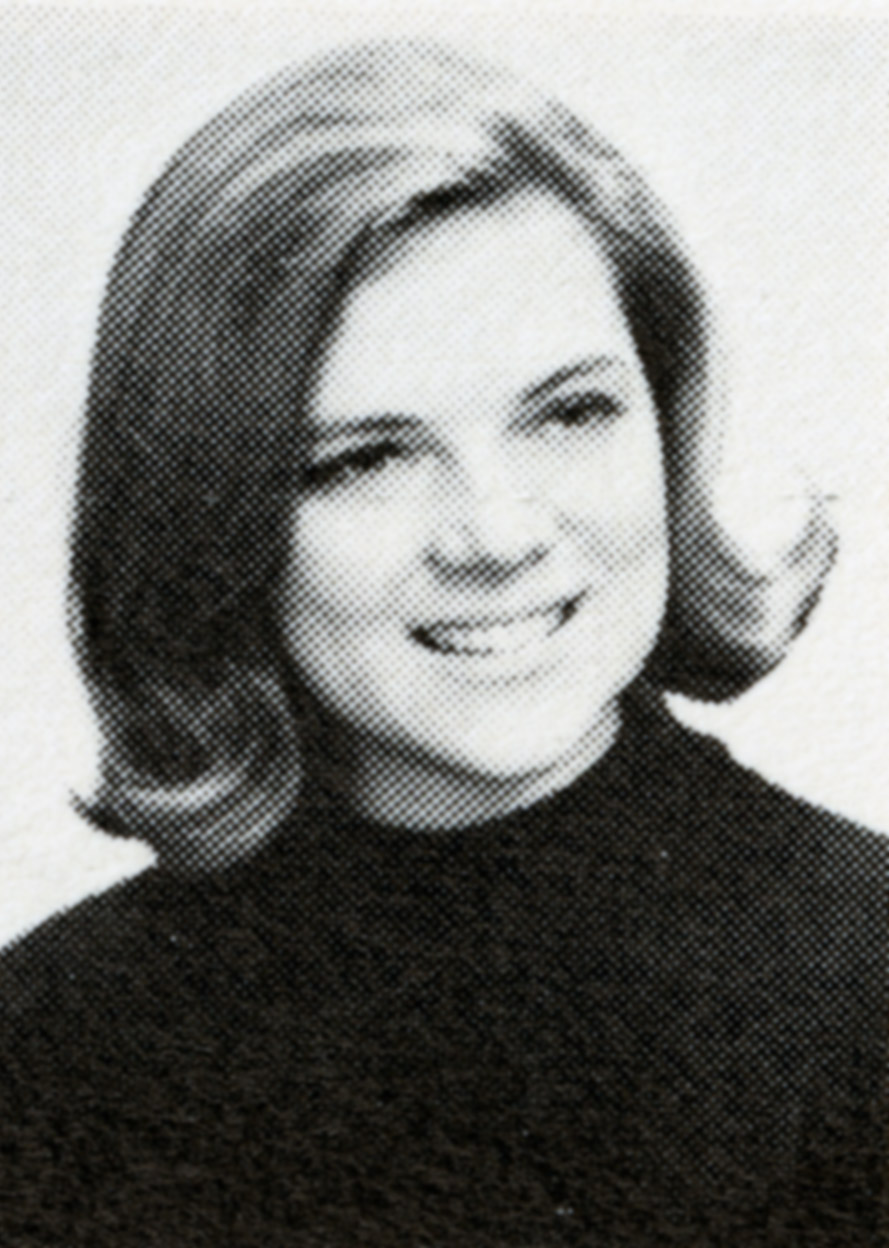
Orkins, 1971

In 1970 Capt. Rosetta A. Armour came to OSU, and became the first African-American WAF instructor to join a University’s staff since the 1950s. And in 1971 Susan Orkins, a senior at OSU, became the first woman in the Air Force ROTC to hold the top student position of cadet commander on any campus. At the time, OSU was one of only four schools in the country to allow women to join the ROTC.


Twelve Days of Buckeyes: Ralph Mershon and the R.O.T.C.

Ralph Mershon, 1918

Ralph D. Mershon, namesake of Mershon Auditorium, is one of four OSU men who can take much of the credit for the establishment of the Reserve Officers Training Corps, or R.O.T.C., on the nation’s university campuses.

Ralph Davenport Mershon was born in Zanesville, Ohio, on July 14, 1868. He came to Ohio State in 1886 and graduated in 1890 with a degree in Mechanical Engineering. He began experimenting and consulting in the fields of electrical engineering, which would eventually gain him worldwide recognition for his inventions and his work with hydroelectricity, particularly at Victoria Falls in South Africa.

During World War I, Mershon served as a Lieutenant Colonel in the U.S. Army Corps of Engineers, but his greatest contribution to the military was his efforts to establish a civilian military training program for the nation’s universities. Before World War I, military training on campuses consisted mostly of drills and physical education; he advocated broadening the curriculum so students would be ready to serve as military officers once they graduated. Mershon was involved in a series of conferences on the matter, along with Brigadier Gen. Edward Orton, Jr. (son of former OSU President Edward Orton, Sr. and an OSU professor), Col. George L. Converse (at that time Commandant of Cadets at Ohio State), and William Oxley Thompson, then-OSU President.

ROTC students, 1943

These four men came up with what was known as the Ohio Plan for Reserve Officers. In 1916 the Ohio Plan was presented to Congress; that year, the National Defense Act was passed, and it included a provision for the establishment of the R.O.T.C.

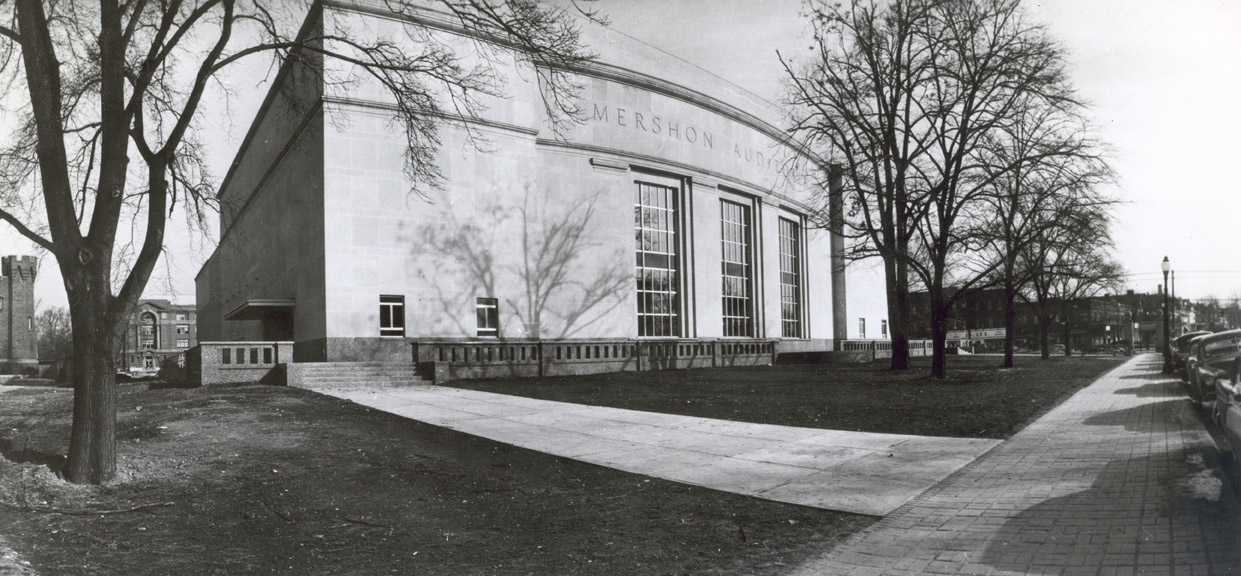
Mershon died on Feb. 14, 1952. He left his $7.5 million estate to the University. An endowment fund was established, with half of the annual income to be used to promote military education. The funds are still used to support professorships, scholarships and seminars in the field of military education, and his bequest also led to the establishment of the Mershon Center for International Security Studies at Ohio State. The fund also paid for the construction of the Mershon Auditorium, which opened in 1957.

Mershon Auditorium, 1957

The University Archives has recently finished processing the Ralph D. Mershon Papers. If you’d like to take a look at its inventory, contact haire.14@osu.edu.


Older posts Newer posts