Guest post by Anqi Chen
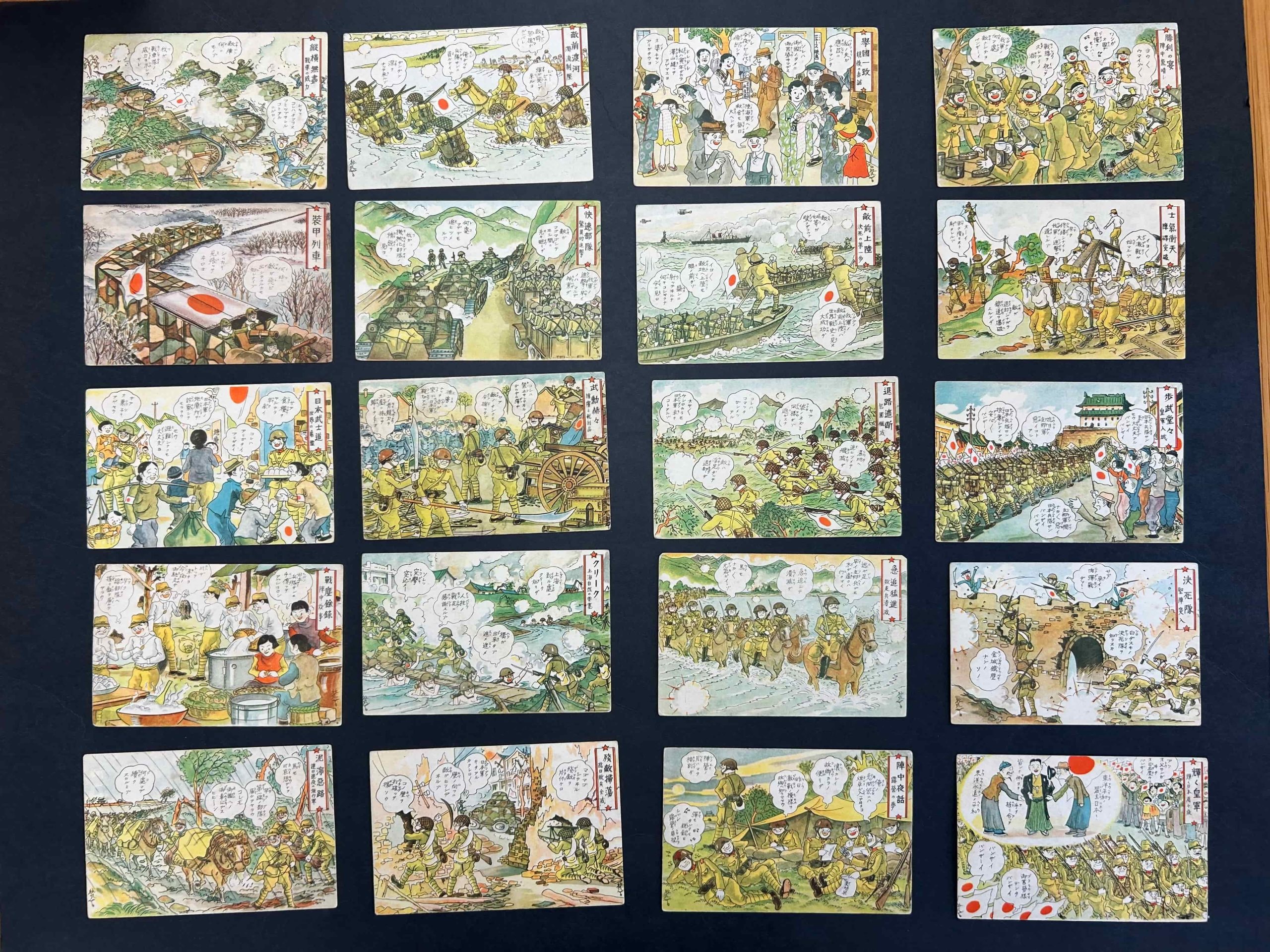
A selection of Japanese wartime postcards illustrating military life through cartoons and popular imagery.
What can a postcard tell us about war? A rare collection of Japanese wartime postcards held by the Billy Ireland Cartoon Library & Museum offers an unusual window into the visual culture of Japan’s wartime years. Produced during Japan’s invasion of China and the broader Asia-Pacific War, these postcards reveal how military life and wartime experiences were depicted for popular audiences. Combining illustration, humor, propaganda, and personal correspondence, they provide valuable primary sources for researchers and students interested in wartime visual culture, popular media, and everyday life.
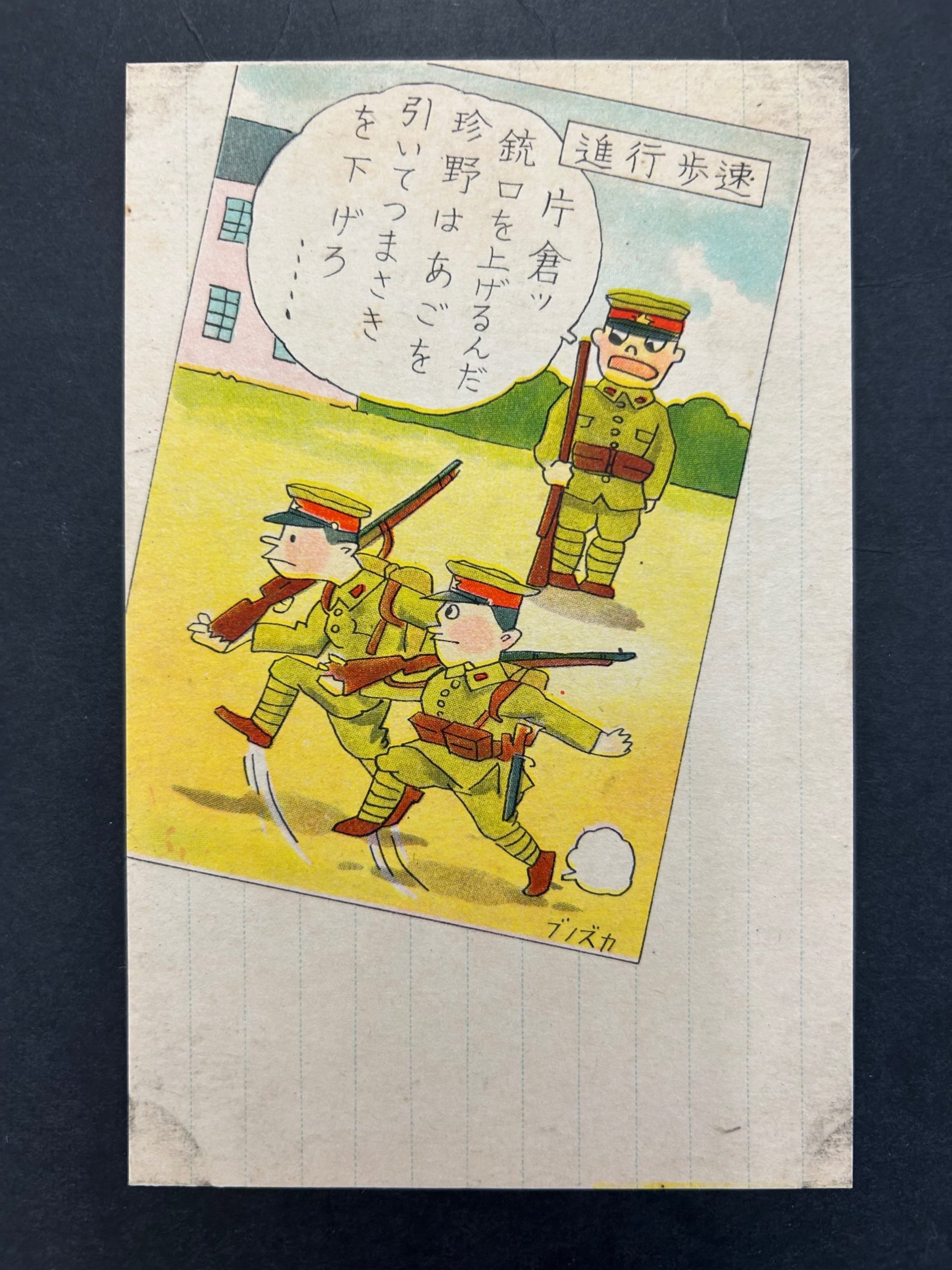
A postcard with a comic depicting two soldiers marching while a third gives them instructions in Japanese. Captions and speech bubble read “Marching Practice” (lit. “Advance at a walking pace.”) and “Katakura! Keep your muzzle up. Chinno, tuck your chin and lower your toes….” respectively.
One of the artists represented in these postcards, Arai Kazuhisa (荒井一寿), was a manga artist particularly known for his humorous depictions of military life. Another artist, Onodera Shūfū (小野寺秋風), was known for his children’s manga, bringing a playful visual style to his wartime postcard illustrations. The postcard format offers a distinctive perspective on the place of manga and cartooning within wartime visual culture. Because postcards could be sent from one person to another, these examples document how humor, cartooning, and other popular visual conventions were used to represent wartime experiences for popular audiences, with dialogue bubbles incorporated by the artists. Notably, a few postcards also bear handwritten notes on the back, offering another way to analyze how these cards were used at the time. As such, this collection is also an excellent source for those interested in Japanese wartime propaganda and its circulation within wartime Japan.
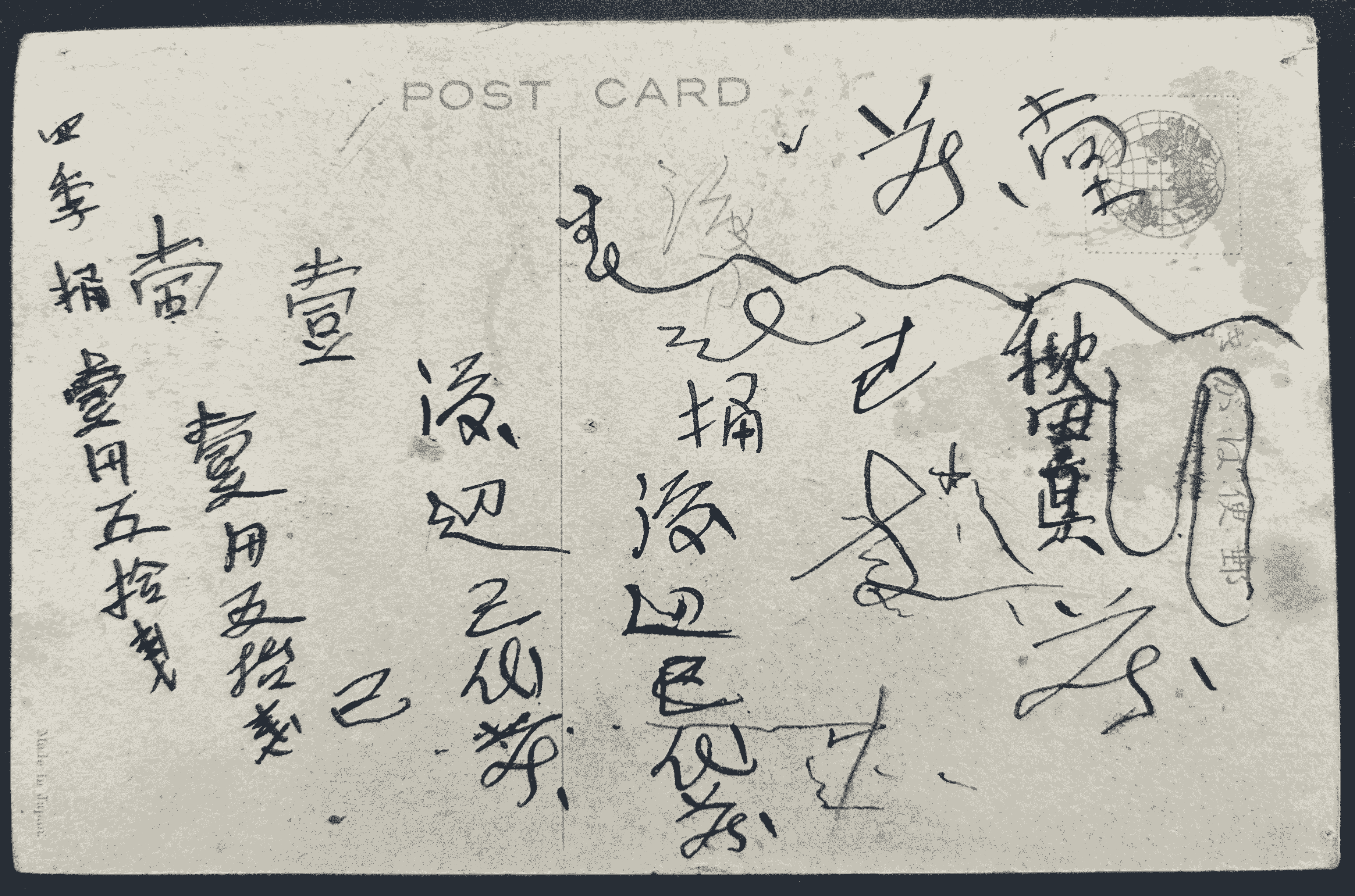
A handwritten note on the reverse of one of the postcards in the collection.
Among our holdings are five wartime postcard series, including a complete set of all 32 cards in the series Postcards of China Incident, as well as the majority of the cards from four other series.
With their vibrant colors and imaginative scenes, these postcards depict subjects ranging from Japanese military equipment to idealized and humorous scenes of soldiers’ daily lives. In particular, the series March on China offers a valuable primary source for studying visual representations of the Japanese invasion of China.
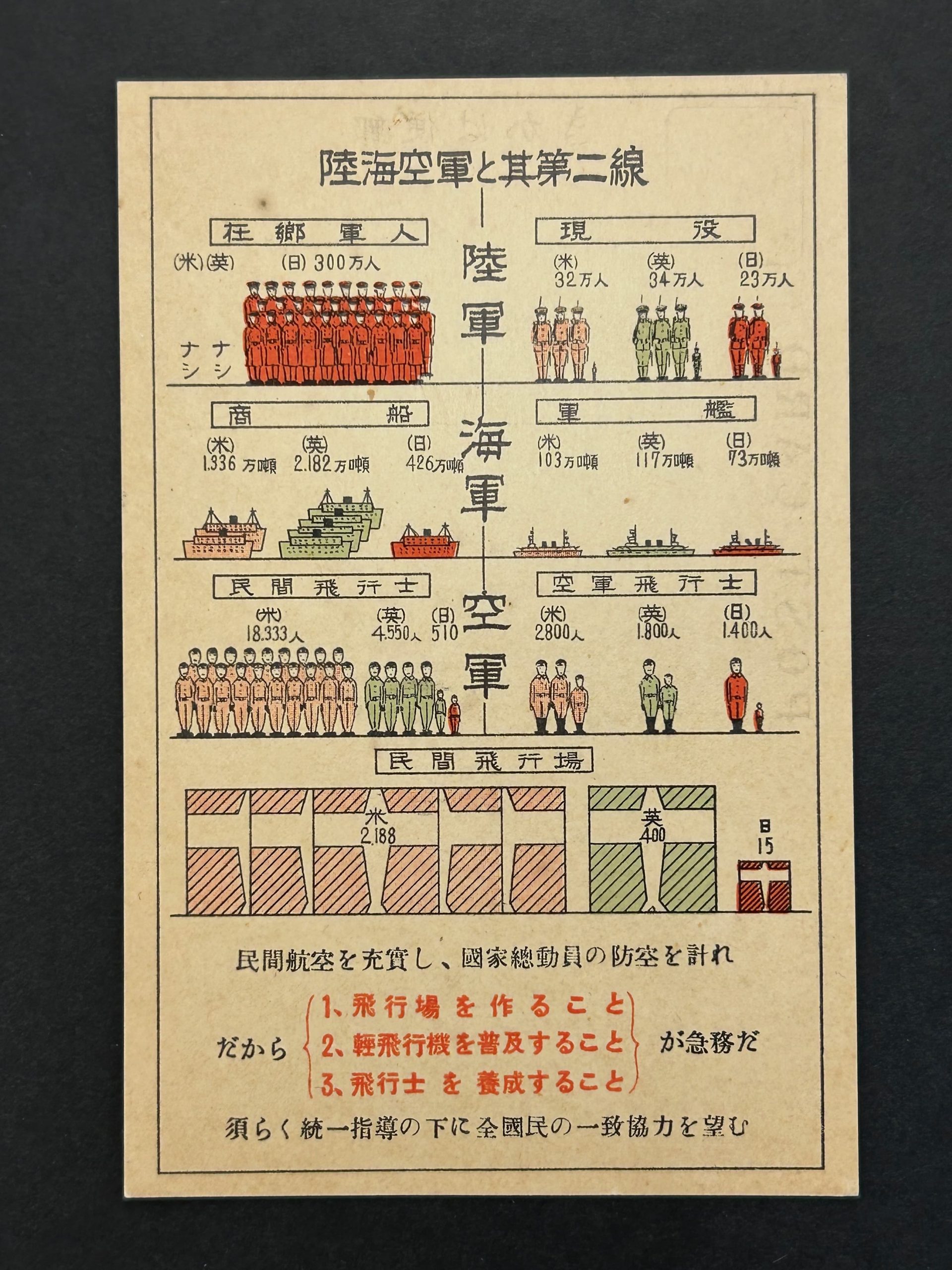
A wartime postcard portraying Japanese military resources as comparatively limited and calling increased aviation capacity and pilot training an “urgent” priority.
Taken together, these postcards demonstrate how cartooning and popular illustration extended beyond the pages of manga and into everyday forms of communication. They also offer opportunities to examine how humor, visual storytelling, and popular media were used to represent—and shape perceptions of—Japan’s wartime experience.
For more information regarding this collection, please contact Area Studies head and Japanese Studies Librarian Dr. Ann Marie Davis at davis.5257@osu.edu or contact the Billy Ireland Cartoon Library and Museum at cartoons@osu.edu.