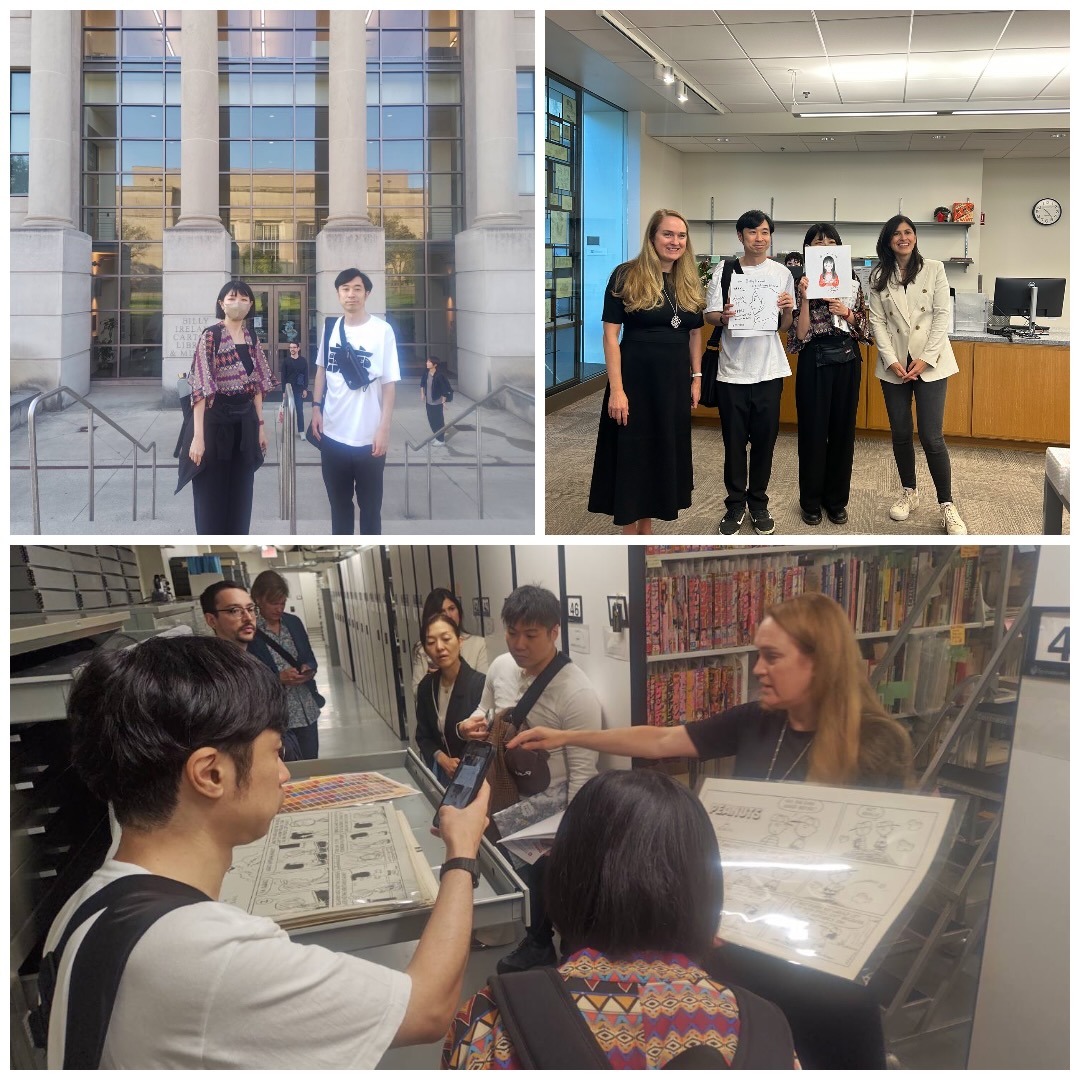
Pictures taken with manga artists Katsushika Keita and Kohinata Marco during their tour of the Billy Ireland Cartoon Library & Museum.
Last week, our library had the pleasure of welcoming two up-and-coming manga artists—Marco Kohinata and Keita Katsushika—from the MINT Project (Manga International Network Team). Their visit to The Ohio State University was part of a larger tour in Columbus in conjunction with Cartoon Crossroads Columbus (CXC), a popular four-day citywide festival celebrating cartoon and comic art.
As part of their visit, the artists toured the Billy Ireland Cartoon Library & Museum, home to the largest collection of cartoon art in the world, and the site where we keep our libraries’ rare and historical manga. As a token of appreciation, the MINT team gifted us a selection of the artists’ works—as well as original drawings—an honor that will enrich our collection and inspire scholars.
Following the tour, Marco and Keita visited an upper level Art History class, where they held a panel talk and responded to a series of thoughtful questions posed by Adam Jimenez (OSU Class of 2012) from the Japan Publishing Industry Foundation for Culture (JPIC). Their answers offered unique and inspiring insights into their creative journeys, the challenges of getting published, and the realities of working in the manga industry today. What follows is a synopsis of their discussion:
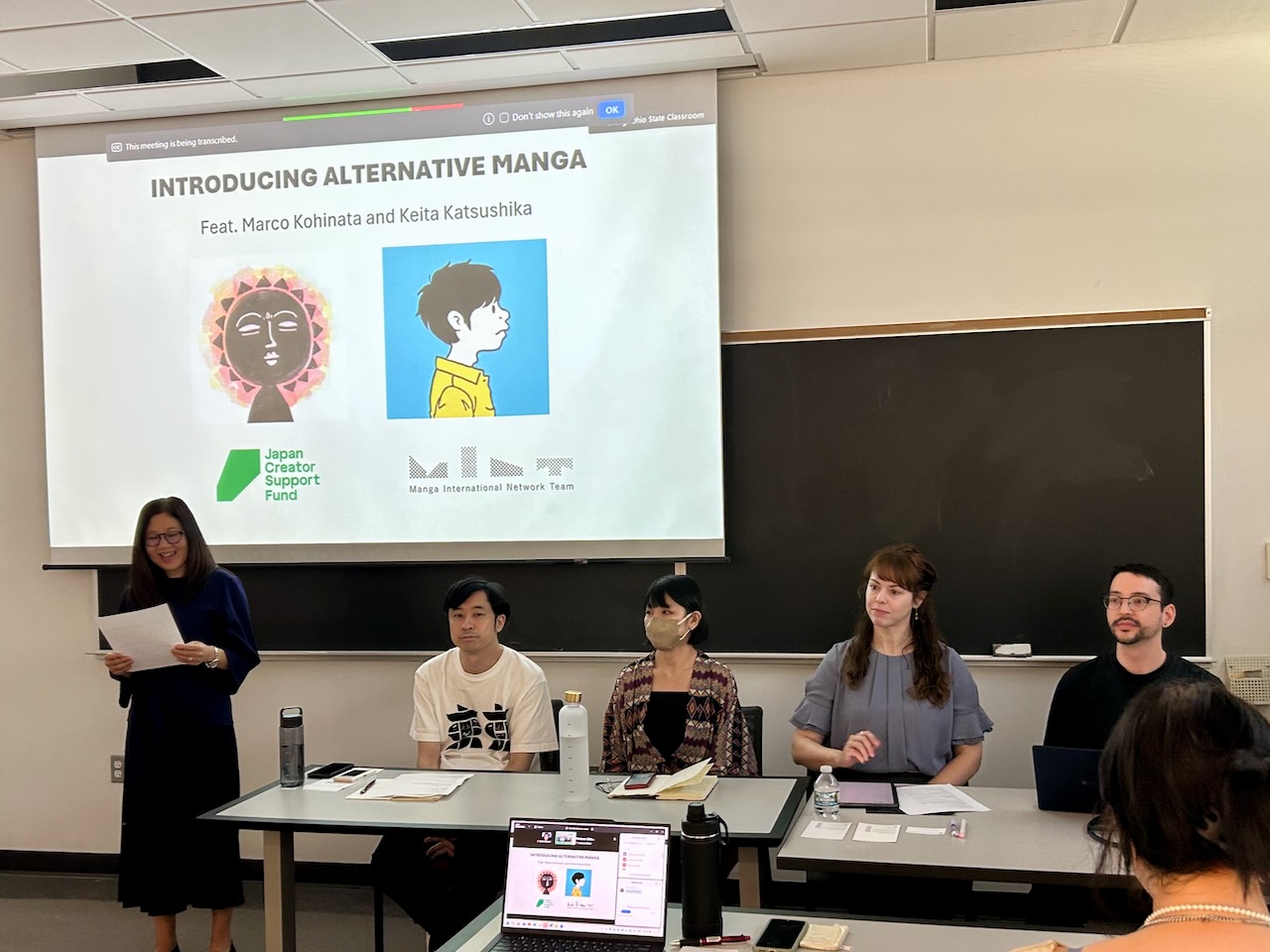
The panelists, manga artists Keita and Marco, as well as moderator Adam Jimenez and their interpreter are introduced by DEALL Professor Naomi Fukumori
How Did You Get Started as an Artist?
Marco Kohinata, creator of Akari, shared how her path began after high school, juggling part-time jobs, university coursework, and caregiving responsibilities. She found her breakthrough by posting work on a vertical-scroll manga app, where an editor quickly reached out.
Keita Katsushika, author of Higashi Tokyo machimachi, began drawing while working at a library. He posted sketches of his town on Tumblr, which led to opportunities in the doujinshi scene—a common entry point for emerging manga artists.
What Was It Like Getting Published?
Marco’s first serialized comic was with HERO’S, a small publisher. She negotiated to complete her work Akari before publishing, a rare move that required financial sacrifice and side jobs to sustain herself.
Keita’s first serial was published by TWO VIRGINS, also a small publisher. While web-based manga pays less than print, it gave him flexibility. His work eventually gained media attention, and hearing readers’ reactions helped balance the financial strain.
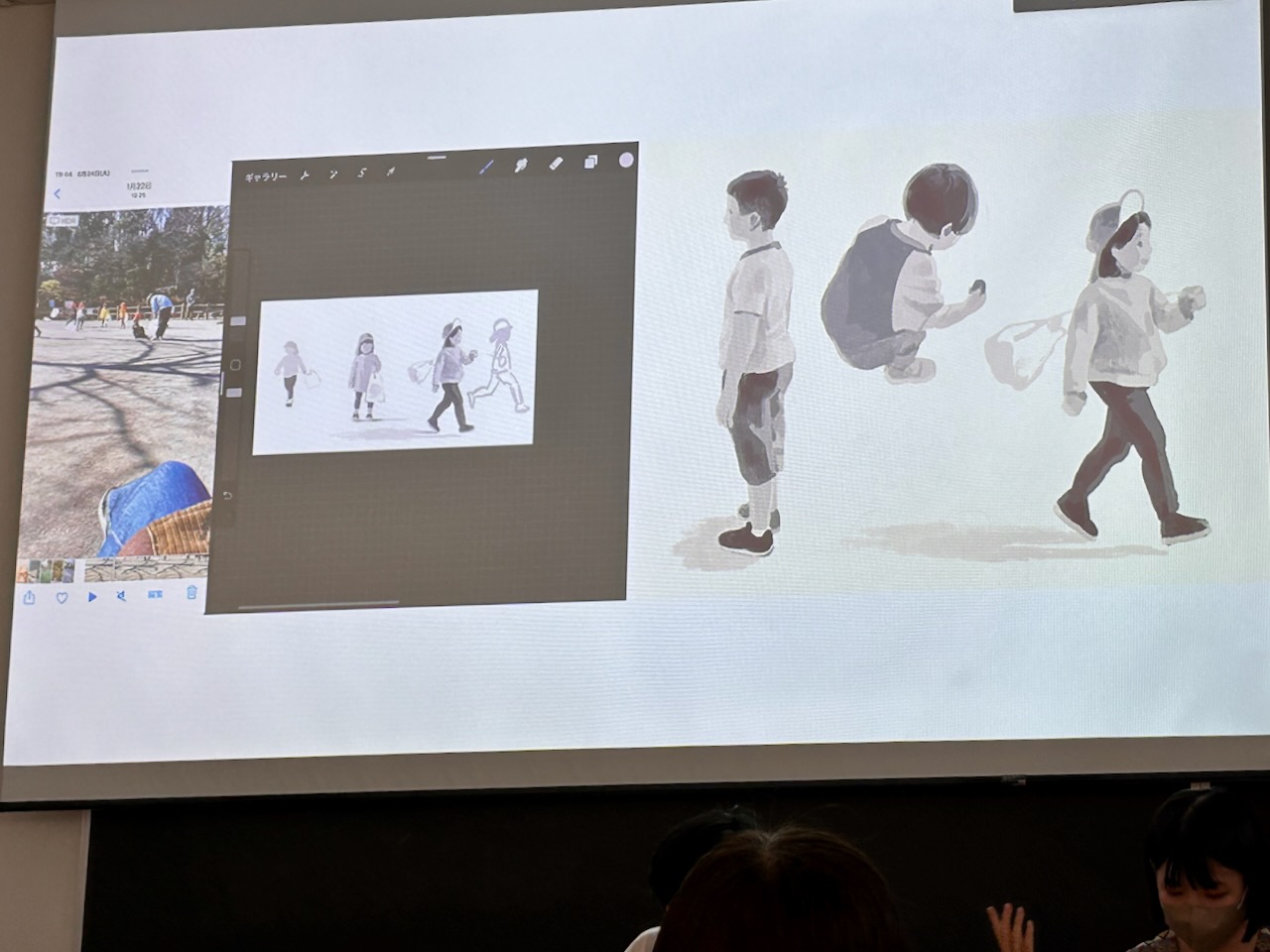
Manga artist Marco Kohinata demonstrates her process of taking photographs of inspiring people scenes to create most of her drawings.
Working with Editors
Both artists spoke candidly about their relationships with editors.
Marco described her early struggles with confidence and creative direction. Her first editor was a veteran who gave strict feedback, which made her hesitant to share her ideas. Over time, she learned to incorporate editorial advice while staying true to her vision.
Keita has worked with three editors and described each relationship as respectful and collaborative. His editors review his work but allow him creative freedom, which he values deeply.
Crafting Manga: Themes and Techniques
Marco’s story in Akari centers on a young woman from a financially struggling family who works with stained glass—a metaphor for resilience and beauty in hardship. She uses a hybrid technique: digital storyboarding for speed, followed by analog inking with watercolor-based paper and fine architecture pens. She prints her digital drafts and traces them by hand using a light box, blending traditional and modern methods to convey emotion.
Keita’s work is heavily influenced by French and Belgian comics, especially Tintin. He uses an iPad and ClipStudio exclusively, drawing inspiration from East Tokyo’s diverse neighborhoods. He incorporates historical references and photographs, including images of Ethiopian community gatherings, to authentically portray the multicultural fabric of his town.
Storytelling and Plot Development
Marco shared a complex plot progression chart for Akari, developed with her editor to track character actions, emotional arcs, and turning points. This structured approach helps her refine the narrative through multiple revisions.
Keita presented a more conventional synopsis for Diverse East Tokyo, which his editor reviews and provides feedback on. He typically spends a day or two refining each chapter’s plot.
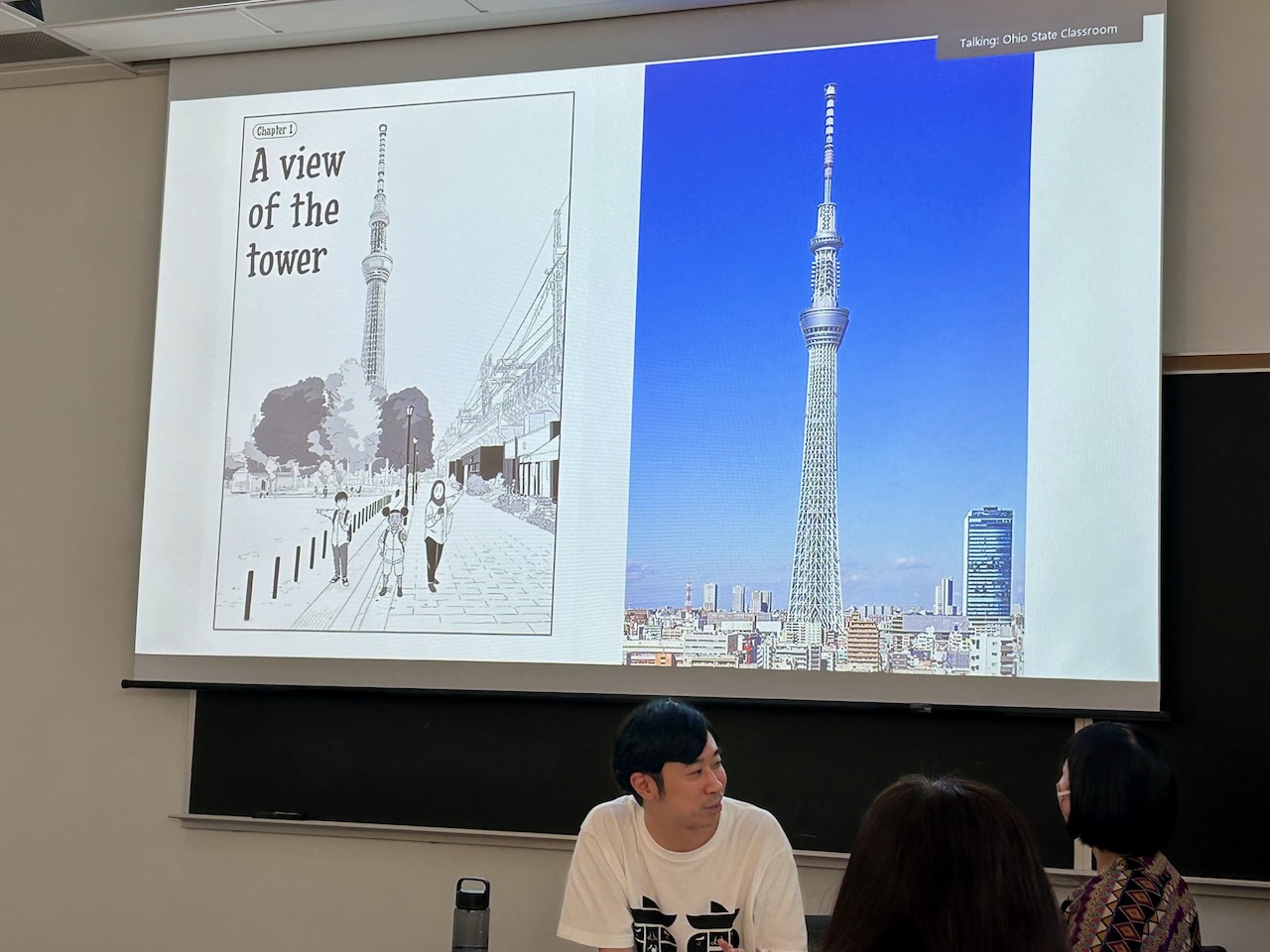
Manga artist Katsushika Keita shares an example of a photograph of Tokyo Skytree which is featured on the first page of his manga about Tokyo.
Drawing People and Places
Both artists emphasized the importance of real-life observation.
Marco builds characters by blending traits from people she knows, often starting with visual sketches and then developing personalities. She takes photos and practices drawing from them to capture authenticity.
Keita draws from his experiences attending community events in East Tokyo, especially among immigrant populations. His manga highlights lesser-known aspects of the city, such as traditional shopping streets and manufacturing districts, aiming to showcase their cultural richness.
This visit was a celebration of manga, art, and international exchange. We’re grateful to Marco, Keita, and the entire MINT team for sharing their time, stories, and creative energy with us. Their insights into alternative manga—both its challenges and its possibilities—left a lasting impression on our students, faculty, and collections.