Manga Collection Development Policy

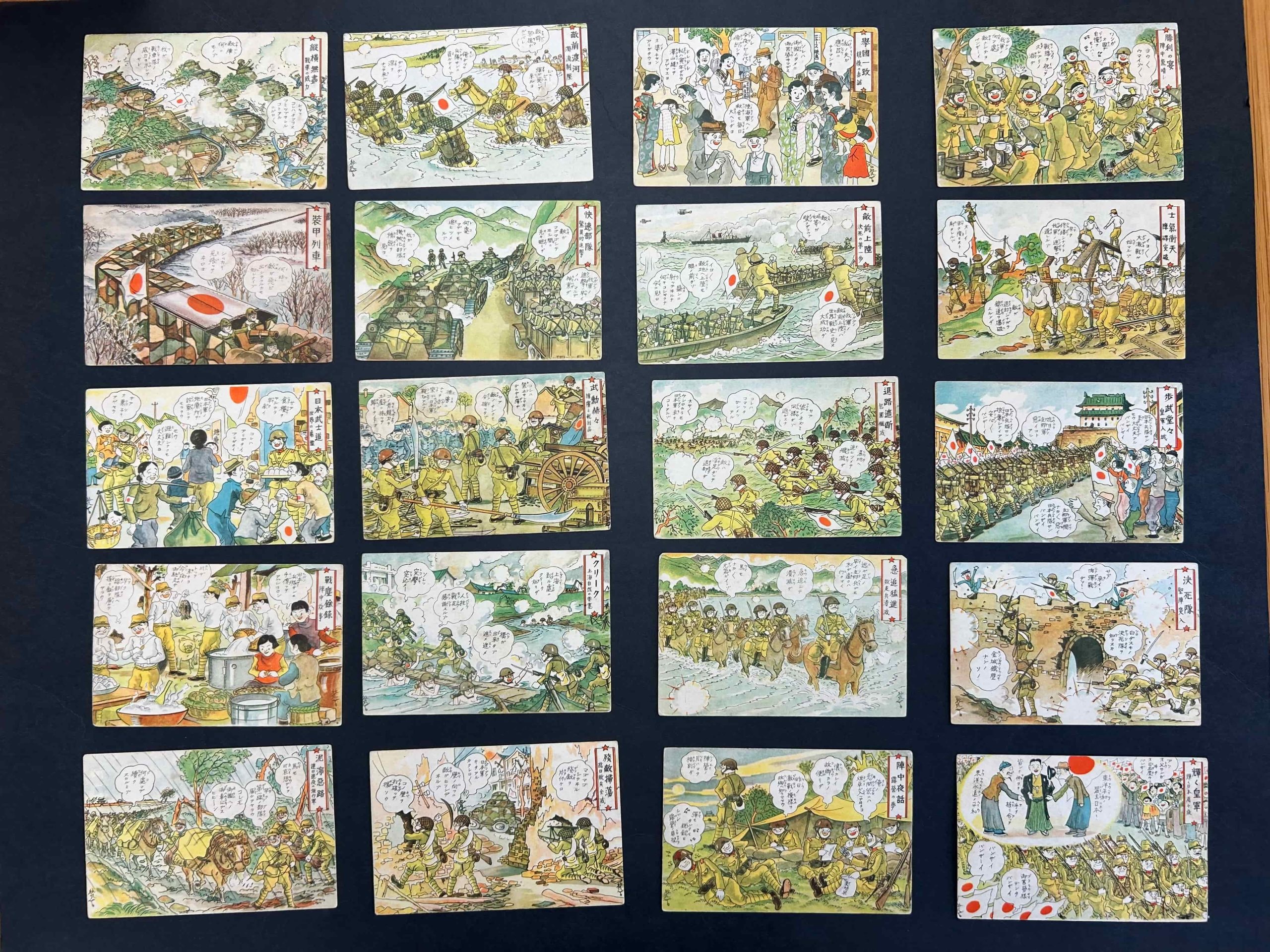
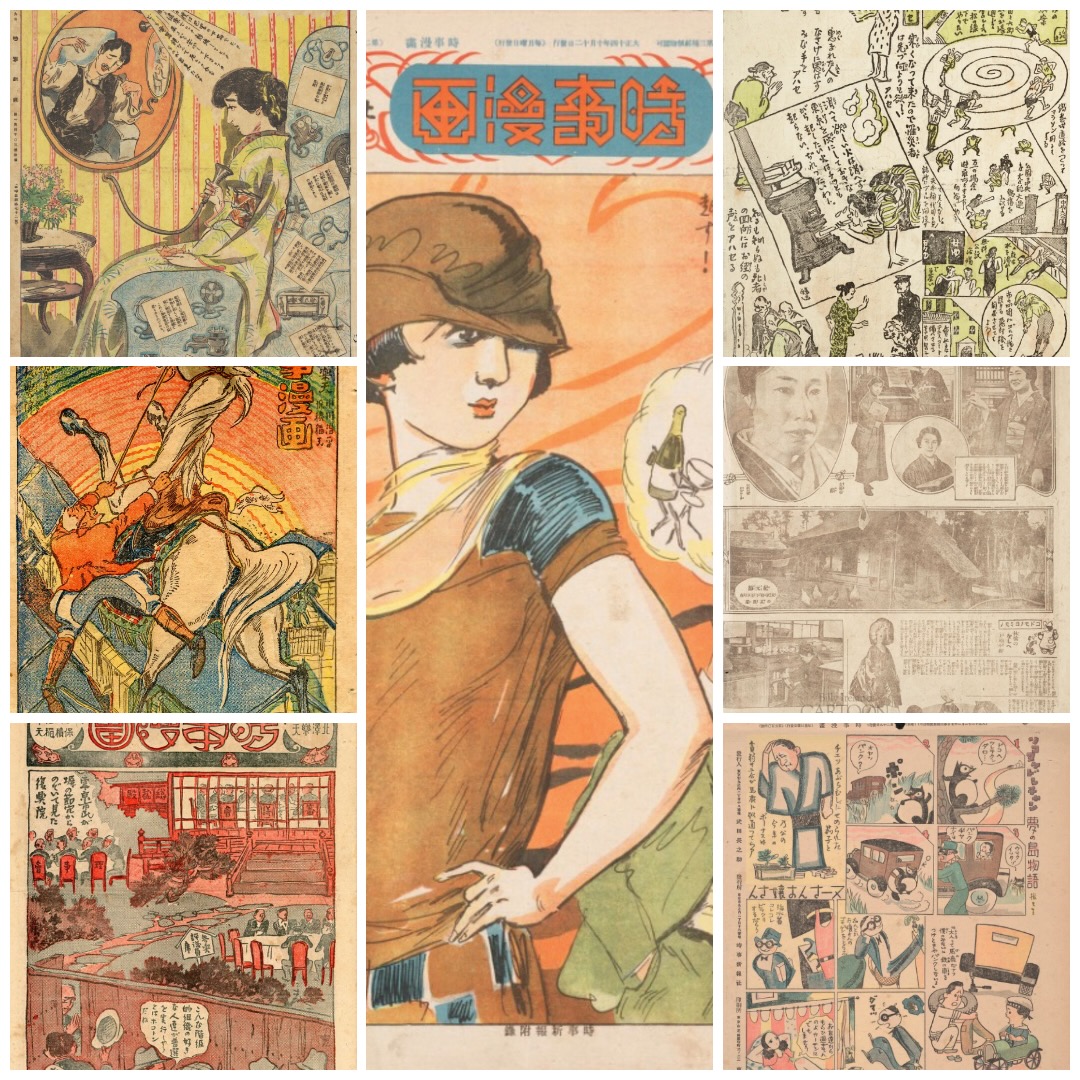
Photo of Manga Magazines taken by Nunocardoso

Manga Magazines by Nunocardoso

Change is coming for users of Ohio State’s manga collection!  

A new Manga Collection Development Policy has just been developed, creating two collections:

  • Manga in the Billy Ireland Cartoon Library and Museum.  Complementing the primary collecting areas of the BICL&M, the manga collection focuses on manga magazines and newspapers, original artwork by manga artists, and translated manga.
  • Manga in the general circulating collections:
    1. Manga.  Broadly representative collection focusing on well-known manga titles and examples of various genres.
    2. Secondary sources on manga and anime.  History and criticism monographs, cartoonists’ biographies and autobiographies, reference works, guides to manga, and related works are collected extensively.
    3. Translations of manga into English are collected selectively as duplicates of holdings in the BICL&M.

What does this mean for users of the manga collection?  At the moment, nothing has changed.   However, wheels are starting to turn which will eventually change many of currently-non-circulating manga housed in the Billy Ireland Cartoon Library & Museum into items that can be borrowed from the general Japanese language collections!   Please read the full policy for (some) details about what will become part of the circulating collection and what will stay in the special collections of the Billy Ireland Cartoon Library & Musuem.

When the change is made,  manga available for circulation will also be available for interlibrary loan.

Important note:  This will take time……   We have a lot of other work to do in the Libraries….  Please be patient!  This is a big change for us…


Posted in News |

MCAA Panel at Ohio State: Manga in Libraries

Tomorrow morning I will join colleagues from CIC universities for a discussion of manga in libraries in a special session of the Midwest Conference on Asian Affairs. Below I am posting the schedule and our proposal text.

Among other things we will be discussing our engagement with students and scholars using manga for teaching, learning, research, and outreach. Here are some websites we will be introducing:

Setsuko Noguchi’s libguide: http://uiuc.libguides.com/mangaresources

Chiaki Sakai’s libguide:http://guides.lib.uiowa.edu/manga-1

This blog (with newly revised links — still needs more work; suggestions are welcome!):http://library.osu.edu/blogs/manga

NCC’s Image Use Protocol site: http://www.nccjapan.org/imageuse/index.html

We will also review some of the issues that Alison Raab raised in her Master’s thesis–
“Manga in Academic Library Collections: Definitions, Strategies, and Bibliography for Collecting Japanese Comics” (2005)

http://etd.ils.unc.edu/dspace/handle/1901/233

Continue reading

Posted in News |

Autumn quarter begins at Ohio State!

Tomorrow will be the start of Autumn quarter at Ohio State and the first meeting of this year’s freshman seminar, “Analyzing the Appeal of Manga.” I posted the syllabus as a page on this blog.

This will be the sixth time I teach this course. This year’s seminar is quite different from the previous ones, which explored works by various mangaka in different genres, in chronological order. This time we will take up the special topic of TEZUKA Osamu’s manga, which have been heralded by many as influencing and enabling the development of Japan’s rich comics culture. We will read seven manga by Tezuka, who is often called “manga no kamisama” (god of comics). In addition we will read two manga by URASAWA Naoki, who has acknowledged the influence of Tezuka’s manga.

Here are all the reading lists, with this year’s first:

AUTUMN 2010 “Analyzing the Appeal of Manga”

Tezuka, Osamu. Metropolis (1949)
Tezuka, Osamu. Astro Boy v. 3 (1964~65)
Tezuka, Osamu. Dororo v. 1 (1967~1968)
Tezuka, Osamu. Phoenix: Karma (1969~70)
Tezuka, Osamu. Ode to Kirihito. (1970~71)
Tezuka, Osamu. Black Jack v.1 (1973)
Tezuka, Osamu. Adolf v.1 (1983)
Urasawa, Naoki. Naoki Urasawa’s Monster. v. 1 (1995)
Urasawa, Naoki. Pluto. V.1 (2004)

Helen McCarthy. The Art of Osamu Tezuka. (Abrams Comic Arts, 2009)
Scott McCloud. Understanding Comics. (Kitchen Sink Press, 1993)
Natsu Onoda Power. God of Comics. Chapter 3 (Univ. Press of Mississippi, 2009 )
Frederik Schodt. The Astro Boy Essays. Chapter 3 (Stone Bridge Press, c2007 )

*********
Continue reading

Posted in News |

Hagio Moto — Iguana Girl Turns Manga Legend

Japanese Book News No. 63 (Spring 2010) has an article, Iguana Girl Turns Manga Legend, by Kawakatsu Miki about the famous shojo mangaka, Hagio Moto.

The Ohio State University Libraries has strong holdings of Hagio Moto’s works. So far not much has been translated into English — we have A, A´ = A, A prime. Her “Hanshin” was published in No. 269 of The Comics Journal.

Posted in News |

Analyzing the Appeal of Manga Club and Cosplay Club in The Lantern!

October 13th’s Lantern carried an article by Katie Vitek about the Analyzing the Appeal of Manga Club (AAMC):OSU Student Club Explores Graphic Novels

October 28th’s Lantern has another article by Katie Vitek about the Cosplay Club:OSU Students Play Big Roles in Cosplay Club

I serve as faculty adviser for both clubs. AAMC was initiated by students who took my freshman seminar, Analyzing the Appeal of Manga. Many of the students in the Cosplay Club also are my former students. Moreover, the author of the two articles, Katie Vitek, also took the seminar in her freshman year. Congratulations to Katie for her great reporting! Also to Hillary Ash, Samantha Hall, Lea Schuffert, Sarah Smith, and everyone in AAMC, as well as to Katrina Webber, Brittany Pawlinski, Lauren Bills, and others in the Cosplay Club. You are contributing to the vibrant intellectual culture at Ohio State!

It is fun for me to watch students build on their interest in manga in different ways. Manga can be a source of inspiration for further research in many different fields. In that regard, there is a famous story that Honda’s efforts to develop a humanoid robot, Asimo, were inspired by Tezuka Osamu’s Astro Boy. Whatever the case, I’ll always be interested in hearing from former students who are pursuing their interest in manga in some way, even tangentially.

Posted in News |

Manga exhibit from the Nanjing Memorial Museum

A touring exhibit on the subject of “My August 15th” sponsored by the Nanjing Memorial Museum is getting quite a bit of attention. China Daily carried an article, “Japanese cartoonists hold antiwar exhibition in China.”

The web site for the My August 15th Society (私の八月十五日の会 / 日本漫画事務局) contains more information, including a list of cartoonists exhibiting, and links.

The Japan Cartoonists Association’s web site has some news, photos, and other information. In July 2009 it was shown in Chiba Prefecture.

Here are links to some Japanese TV shows about the exhibit:

中国(南京大虐殺記念館)で日本の漫画家の「終戦」作品展 【TBS Newsi】

http://ameblo.jp/warm-heart/entry-10323199499.html

マンガ家たちの“戦争”(クローズアップ現代 NHK)

http://www.asyura2.com/09/warb0/msg/436.html

Posted in News |

What is manga?

There’s an interesting discussion over at Manga Village News about the definition of manga.

What is Manga?

Ever since Tokyopop created their line of American created titles, dubbed OEL (Original English Language) manga, fans have been debating if they should be called manga. What is manga? Is it a style, or set of drawing conventions? Is it a country/ethnic specific creation? Or is just as the word translates to, funny pictures, or comics?

The discussants reject a definition based on “style” (big eyes, etc), which is a relief. They pretty much fall into two camps –

1) “comics from Japan.”

John Thomas: ……”culture-specific story lines and themes that can only come from Japanese natives.”
…..”what’s so appealing about manga? I think it’s about diversity. There’s all sorts of stories being told in manga so each person can find their niche….”
….”movement lately away from Western paradigms and culture….”

Alex Hoffman: “culture specific content.”

Katherine Farmer: “… we need to take economics into account. The structure of the Japanese manga publishing industry is radically different……”

2) strong storytelling:

Dan Polley: “manga has a story to tell; a lot of American comics have a character to tell.”

Lori Henderson: ….”The art and greater propensity for character stories…..”…. “more flexible content.”

**************************

I haven’t ventured much into the world of OEL manga (original English language manga or mangaisme, global manga), but picked up some recommended titles from the debate that I will check out.

The simplicity of thinking about manga as “comics from Japan” rings true to me. Still, nobody would be interested in manga if the stories were not compelling.

In the four years that I have taught the “Analyzing the Appeal of Manga” seminar we always conclude that the basis for the “appeal” is the storytelling. With manga that don’t appeal to everyone in the class (Swan + Sexy Voice and Robo come immediately to mind) we always identify plot as the basis of the problem. (How can someone who struggles with practice keep winning international competitions??? It is troubling to think about Sexy Voice being only fourteen years old — her age undermines the credibility of the plot sometimes.)

Any other ideas on how to define manga?

Posted in News |

Kuwata Jiro’s Bat-manga

This year’s manga seminar just ended. As in past years, it seems like we were just getting into a stride. The end came too soon. Well all I can do at this point is start thinking about next year’s course. I asked the students for input and got some great ideas.

One of the questions I always face is about where to start, how far back to go in constructing this 1-credit, 10-week course. This time we started with Tezuka’s Black Jack (OSU catalog). That was a big hit, so I’m going to keep it for next fall’s course. However, I am thinking to assign Kuwata Jiro’s Bat-manga (OSU catalog) as the first week’s reading. There’s an interesting article about it on the Valdosta Daily Times web site by Dean Poling, “COMICS: Batmanga”

Meanwhile, Ohio State’s holdings of Kuwata Jiro’s works are expanding with the acquisition of the Manga Shop Series. We’ve received a grant from the North American Coordinating Council on Japanese Library Resources’ Multivolume Sets Project recently to purchase a second (circulating) copy of the first 150 volumes in that series — and OSU will continue to purchase a 2d copy for volumes being published into the future. The second set is on order now. Meanwhile, Mayumi Kamata (GA working in the Cartoon Research Library) is already cataloging the first set that arrived about a month ago.

Posted in News |

Helen McCarthy: Veteran otaku

Helen McCarthy was in Kuala Lumpur recently to give a talk about Tezuka Osamu. In KL she was interviewed by Elizabeth Tai of the Malaysia Star who wrote an article — Veteran Otaku: How did an English lady get hooked on a Japanese phenomenon some three decades ago?

OCLC’s new “Worldcat Identities” provides an overview of how widely Helen McCarthy’s books are collected in libraries worldwide. Many are at Ohio State, but not the newest one (yet).

This quarter Sarah Kniss, a senior at Ohio State, has been indexing McCarthy’s book. 500 Manga Heroes and Villains, on Carmenwiki to help improve access to the book, connect it with the manga in our collection, and encourage people to look more closely at characters in manga. That’s a great way to start doing research into manga. This is part of a larger project in which Sarah is exploring “professional writing” while promoting Ohio State’s manga collection.

Posted in News |

Manga in the Global Information Society

Hey! I’ll be teaching a course in spring quarter on “What is the Global Information Society?” with my colleague, Miriam Conteh-Morgan. I’ve just written a post about it on my Japanese Studies blog –

Spring Qtr: What Is the Global Information Society?

Syllabus is here: http://is.gd/wHrp

Manga is a good example, I think, of how information/knowledge functions in today’s “global information society.” I have been interested in this for some time, so that led to developing the course. In September 2008 I gave a paper, “Framing Knowledge: Global Youth Culture as Knowledge Society (Research in Progress)” that outlines my plans for further research into manga as global knowledge/information.

Of course, there are many other kinds of global information/knowledge. If you are interested in this kind of thing, please consider taking the course!

Posted in News |