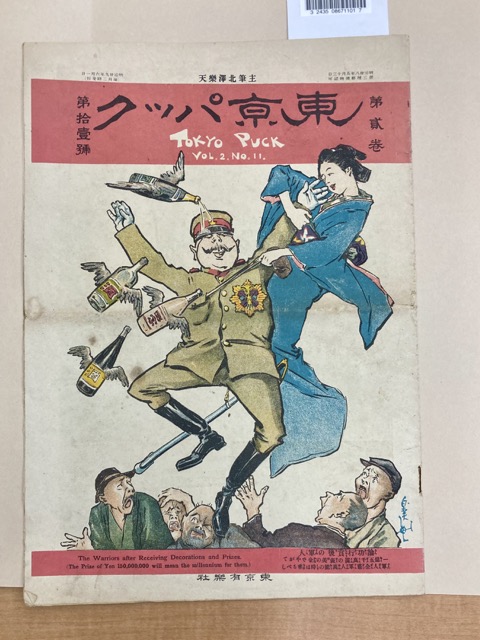
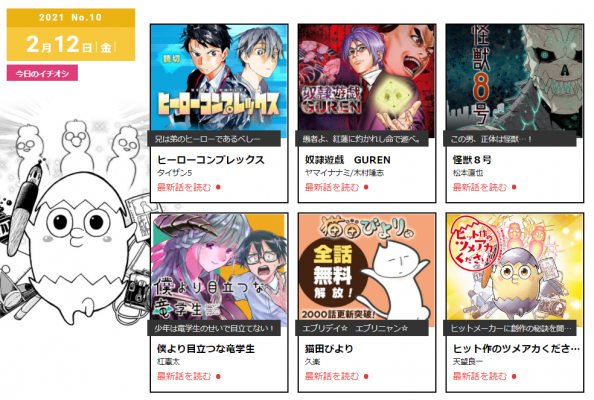
Image: Screen Captures of 3 Featured Manga Reader Catalogs:
ShonenJump+, Manga Library Z, and Sukima
By Chase Conner
Hello again, everyone. I hope the new year is being kind to you all. Today we’d like to return to our list of online manga resources compiled originally by Michiko Ito at UKansas. So let’s look at some of the list’s “Open Access Comics,” which allow us to read manga for free online! There is a plethora of content available on the Internet these days, and many manga publishers have jumped on the bandwagon to provide online comic apps. In addition to newly published manga, we can find many out-of-print comics that have found new life through online manga readers. Let’s get started and take a look at a few resources for accessing some.

ShonenJump+ Website Banner
少年ジャンプ+ (Shonen Jump+)
Shonen Jump has always been a big name in the industry and one that anyone with a passing interest in manga is likely aware of. Given its vast influence and collection of popular print titles, it’s no surprise that Shonen Jump is a leader in the digital comic market. On the Shonen Jump+ site, many segments of their popular manga titles — including One Piece, Death Note, Dragonball, Naruto, and more – are available at no cost! A good number of chapters are available for free, but newer chapters require the purchase of “points,” which users must redeem in order to read. While paying for points is certainly an option, this post aims to highlight its many great “open access” offerings as well.

MangaToshokanZ Website Banner
マンガ図書館Z (Manga Library Z) [http://www.mangaz.com/]
マンガ図書館Z (manga toshokan Z) or Manga Library Z is another site that offers plenty of manga completely free of charge. Specifically, the titles included here include numerous out-of-print series that have been granted uploading rights by the original creators. While its various titles are not as widely known as Shonen Jump+’s, researchers and manga fans alike will certainly value this web site for its older and off-the-beaten-path titles. In addition to the many free manga on this site, there is also some adult-oriented manga, which are locked behind a paywall. Because you might encounter images of these adult titles while browsing the front page, I would advise exercising caution when browsing, especially if you have privacy concerns.

Sukima Website Banner
スキマ(Sukima)
Sukima is yet another valuable online resource for reading manga in Japanese. The Sukima site essentially operates like many other online manga readers that sell access to large collections of titles — including the more recent volumes – through a pay-per-point redemption system. Despite this limitation, I find that Sukima’s big appeal is that it also offers a plethora of new and old manga titles completely free of charge! It’s true that the open access manga tend to lean towards older and lesser known titles, but among these you’ll also find some of the popular classic titles like Kimagure Orange Road or even more recent titles like Gokushufudō (Way of the House Husband). You’ll definitely want to take a trip through Sukima’s library. While an account is not required to read the free manga, users must create a username and password to purchase or peruse some of the more mature titles for the 18-and-over crowd.
I recommend that anyone check out these three sites to see what titles you can find — You may just find something new and interesting! If you encounter something that you would you like to read in print at OSU Libraries, please feel free to contact OSU’s Japanese Studies Librarian, Ann Marie Davis, at davis.5257@osu.edu, with questions and suggestions.


![Cover art for "Ten Count" vol. 1 [Aug. 9, 2016]](https://library.osu.edu/site/manga/files/2022/06/IMG_0138.jpeg)