Category: Education (page 3 of 6)

Cramblett Medical Clinic

Cramblett Medical Clinic, formerly University Hospitals Clinic, is a five-story building that serves as the site for many physician offices and outpatient services. The building was built in 1974 and is slated to be demolished in 2012 to make way for the new 20-story James Cancer Hospital & Solove Research Institute and Critical Care Expansion.

Henry Gaylord Cramblett (1929-) received his BS in 1950 from Mount Union College and his MD in 1953 from the University of Cincinnati. Cramblett came to OSU in 1966 as chairman of the Department of Medical Microbiology. He was Dean of the College of Medicine (1973-1980) and was vice president for health sciences (1980-1982). Cramblett was instrumental in the opening of the clinic facility in 1974 and was honored with it being named for him in 1999.

Tzagournis Medical Research Facility

The Tzagournis Medical Research Facility was officially named in 1999 after Dr. Manuel Tzagournis. This eight story facility houses generic research laboratories and support facilities.

Manuel Tzagournis (1934-) received his BS in 1956 and his MD in 1960 from OSU. While doing an internship at Philadelphia General Hospital Tzagournis became particularly interested in diabetes mellitus thus leading him to practice endocrinology. Tzagournis has held numerous positions at OSU including Assistant Dean for Research and Continuing Medical Education; Secretary of the Faculty of the College of Medicine; Associate Dean; Medical Director for OSU Hospitals; Acting Dean (1980); Dean (1981-1995); Vice President for Health Sciences (1994-2002); and Vice President and President of the University’s Managed Care System.

Starling Loving Hall

Originally built as the new Homeopathic Hospital in 1917, the building became a new hospital for the medical school after an addition in 1924 made it operational. The building was renamed Starling-Loving University Hospital in 1923 in honor of Mr. Lyne Starling (1784-1848), a founder of Columbus and benefactor of Starling Medical College and Dr. Starling Loving (1827-1911), dean of Starling Medical College (1880-1905).

By 1926, with the addition of three wings, the hospital housed 296 beds, an operating amphitheater, laboratories, a maternity department and an outpatient clinic. The main purpose was clinical teaching.

When The Ohio State University Hospital was built in the 1950′s, all hospital practices moved into it. Starling Loving University Hospital was renamed Starling Loving Hall on July 14, 1961. It no longer serves as a hospital facility but rather houses offices and classrooms. The original building has had 5 additions over the years.

The top of the building also features six gargoyles: rabbit, cow, monkey, pelican, cat and horse.

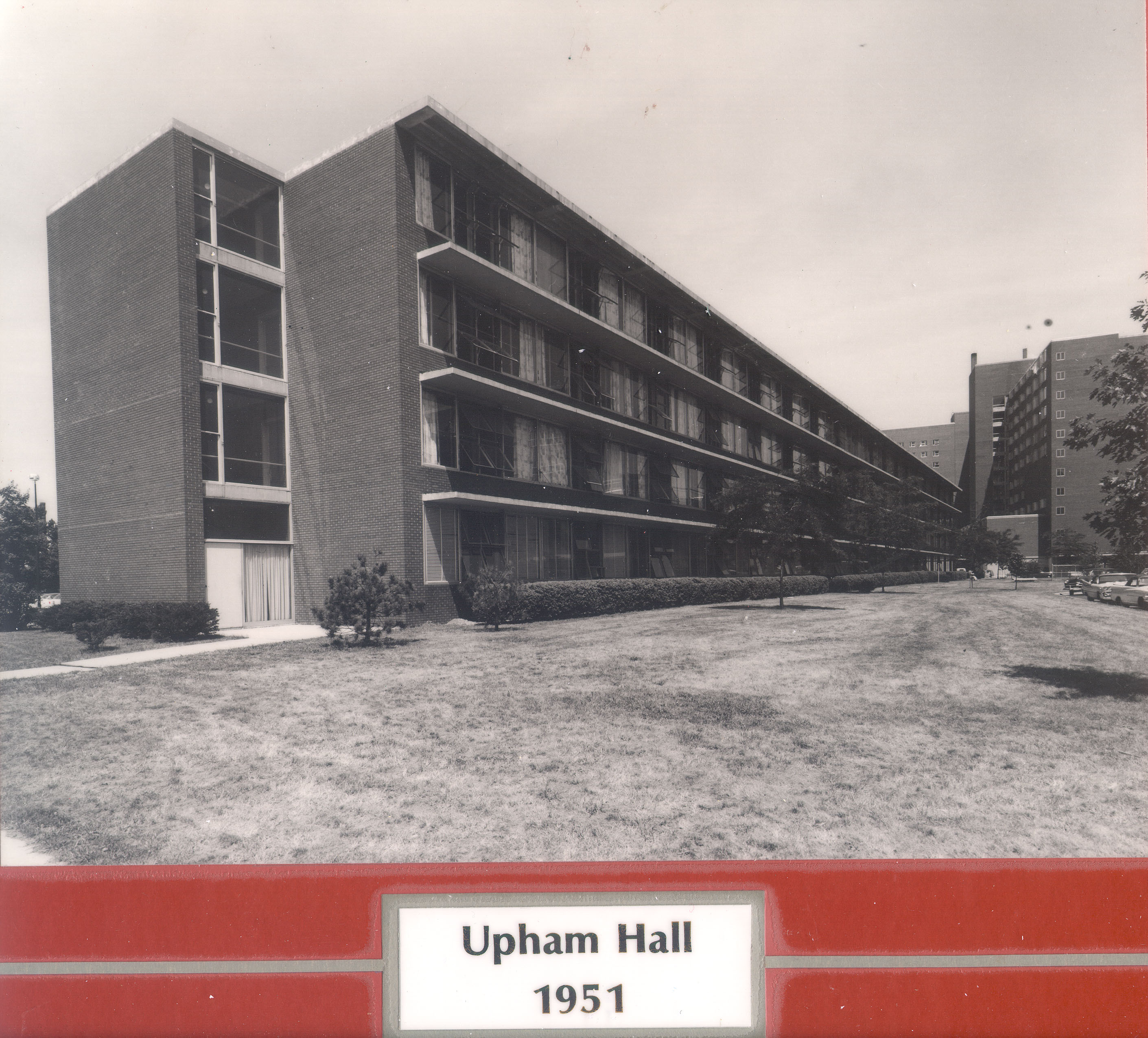
Upham Hall

Upham Hall was built in 1951. It was a reinforced concrete frame with brick exterior.  It consisted of a basement with four floors and a penthouse. The building had two additions. It was located where the OSU Harding Hospital and the Davis Heart and Lung Research Institute now stand on 12th ave. Upham Hall was used for psychiatric care. It was demolished in 1998.

John Howell Janeway Upham (1871-1960) received his BS (1891) and MD (1894) from the University of Pennsylvania. He was a professor at Starling Medical College (1897-1899), Ohio Medical University (1900-1902), Starling-Ohio Medical College (1907-1914), and Ohio State (1914-1941). He served as Dean of the OSU College of Medicine from 1928-1941.

Against the Odds: Making a Difference in Global Health Exhibit at the MHC

The Medical Heritage Center, in partnership with the Health Sciences Center for Global Health, is hosting the exhibit Against the Odds: Making a Difference in Global Health. The exhibit will run from May 7 through June 16, 2012. This exhibit is brought to you by the National Library of Medicine, National Institutes of Health, and the following is taken from the National Library of Medicine press release.

Against the Odds: Making a Difference in Global Health is a banner traveling exhibition highlighting the role of communities in improving health at home and all around the world. The exhibition explores the shared basic needs required for a good quality of life, including nutritious food and clean water, a safe place to live, and affordable health care.

Using historical and contemporary photographs, the banners tell stories of collaboration between families, scientists, advocates, governments, and international organizations, all taking up the challenge to prevent disease and improve medical care. The journey begins in Pholela, South Africa, where husband and wife team Sidney and Emily Kark developed a holistic approach to community health. Traveling on, the exhibition showcases the work of the Bangladesh Rural Advancement Committee to teach mothers across the country Oral Rehydration Therapy, a lifesaving treatment for childhood diarrhea.

Other destinations include Brazil, where the Movimento dos Trabalhadores Rurais Sem Terra (MST), or Landless Workers’ Movement is empowering poor citizens to begin subsistence farming on land left idle by agricultural corporations, and Central America, where the Pan American Health Organization launched Health as a Bridge to Peace to put an end to conflict and rebuild health care services.

As well as recent developments, the exhibition also focuses on historic campaigns that have changed today’s attitudes. The role of activists in the United States during the early years of the AIDS epidemic, for example, includes the work of the AIDS Coalition to Unleash Power (ACT UP) and the battles of Ryan White, the teenager who fought to attend school after contracting HIV through a blood transfusion.

This exhibition raises awareness of the sources and effects of health inequalities and invites each of us to join the global campaign for health and human rights. The experiences described constitute a legacy of success, often based on the simplest means. The exhibit’s message is, working together, we can make a world of difference.

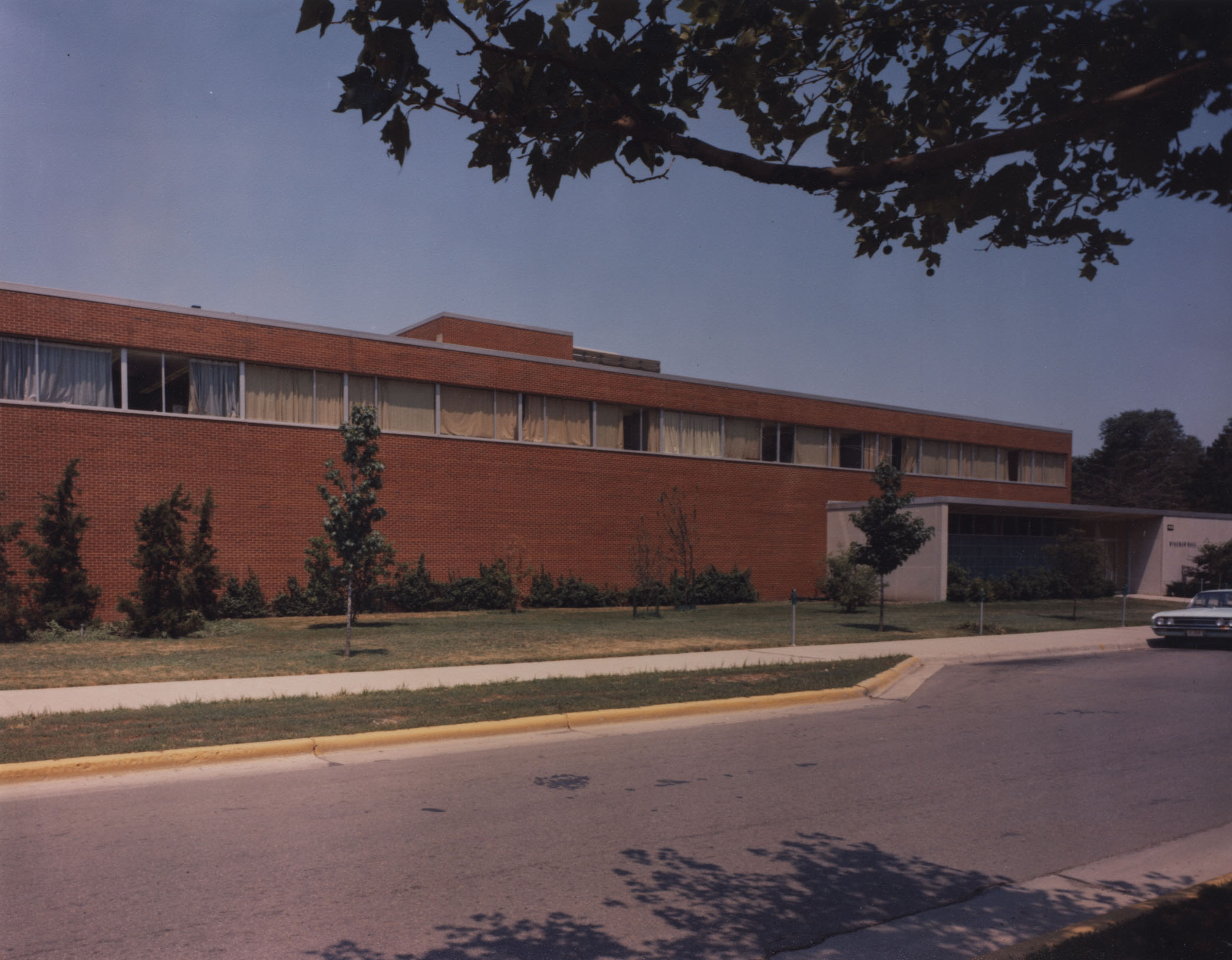
Wiseman Hall

Wiseman Hall, c.1970s

Wiseman Hall was built in 1960 and has had one addition. It serves as the major animal research facility of the College of Medicine. It was named for Bruce K. Wiseman in 1963.

Bruce Kenneth Wiseman (1896-1960) received his BS from Indiana University in 1926. He earned his M.D. from Indiana University in 1928. After an internship at Indianapolis City Hospital (1928-1930) he went to the Rockefeller Institute for Medical Research in New York, where his association with Drs. Florence Sabin and Charles Doan began. At the request of Doan, Wiseman came to OSU in 1931. He was an associate professor of medicine and associate director of medical research (1931-1935); Associate professor of medicine (1935-1938); Professor of medicine (1938-1960); Chair of the Department of Medicine (1944-1960); chief of staff of OSU Hospitals (1948-1960). Along with his colleague Doan, Wiseman made significant contributions in the field of hematology.

Hamilton Hall

Hamilton Hall was built in 1925. The building of Hamilton Hall brought the Colleges of Medicine and Dentistry to the campus from downtown locations acquired through the merger of Starling-Ohio Medical College in 1914. The building has had six additions. The first and second additions were built for dentistry. The fourth addition was an expansion of the library.

The north wing of Hamilton Hall was named the Emil Bozler Wing in 1989 to honor Dr. Bozler.

Hamilton Hall is named for John Waterman Hamilton, MD (1823-1898). Dr. Hamilton received his MD from Willoughby Medical College in 1847. He was a professor at Starling Medical College (1854-74). He founded Columbus Medical College in 1874 and served as professor (1876-1892) and dean (1891-1892). In 1886, along with Dr. W.B. Hawkes, he also founded Hawkes Hospital, later renamed Mt. Carmel Hospital.

Newton Hall

Newton Hall was built in 1969 and was named in honor of Mildred E. Newton. It serves as the home of the OSU College of Nursing.

Mildred Emily Newton (1901-1972) earned a Diploma from Truesdale Hospital School of Nursing ad a BS from Northwestern University both in 1924; a MA from the University of Southern California in 1932; and, a PhD in Education from Stanford University in 1949. Newton was Director of The Ohio State University School (now College) of Nursing from September 1951 until her retirement in July 1968, initiating many changes during these years. She was the first director to hold a doctoral degree and encouraged the recruitment of doctorally prepared faculty. The Bachelor of Science program in nursing received national accreditation within a year of her arrival and a Master of Science degree was started in 1953. She was instrumental in planning the School of Nursing Building which was later named in her honor.

Arthur G. James Cancer Hospital and Richard J. Solove Research Institute

Dr. James in front of Cancer Hospital, c. 1990

Dr. Arthur G. James believed all cancer would eventually be eradicated. That belief coupled with his dedication to the idea that cancer patients need separate, specialized care, led him to lobby, campaign, and fundraise for thirty-five years to build a cancer hospital in Ohio. The Arthur G. James Cancer Hospital and Research Institute opened at Ohio State on July 9, 1990 when it admitted its first patient. At the time of its construction, only three hospitals – Roswell Park in Buffalo, New York; M.D. Anderson in Houston, Texas; and Memorial Sloan-Kettering in New York City – had comparable resources. After a gift of $20 million from Richard J. Solove in 1999, the facility was renamed the Arthur G. James Cancer Hospital and Richard J. Solove Research Institute, but is commonly referred to as the James. The facility remains the only freestanding cancer hospital in Ohio to this day.

Arthur G. James was born in 1912. He received his B.A. in Arts and Sciences from OSU in 1934. He followed that with two more degrees: an M.D. and a M.S. in surgery, also from OSU and both received in 1937. He did his residency at OSU, after internships at the University of Chicago and Duke University, and joined the faculty in 1947 as an assistant professor in the Department of Surgery. He remained at OSU for the rest of his career (41 years), working his way up to full professor and chief of the Division of Surgical Oncology. James was also the first to hold the Lucius A. Wing Chair of Cancer Research and Therapy. For his efforts in establishing OSU’s cancer hospital, James was awarded the American Cancer Society’s Medal of Honor for Clinical Research. He also was a recipient of the 1991 Alumni Medalist Award from the OSU Alumni Association. James died at the age of 89 in 2001, after battling Parkinson’s Disease.

Richard J. Solove was born in 1925 and earned a degree in pharmacy from OSU in 1948. He later owned three Columbus drugstores before devoting himself fully to real-estate development in 1962. It was his relationship with James, who treated Solove’s father for cancer in the 1950s, that drew him to the cancer cause. In 1977, James asked him and other Columbus businessmen for help in pursuing a cancer hospital at Ohio State. Solove worked with then Gov. James Rhodes and the Ohio Legislature to secure funding for the hospital. He was a founding member of The James Foundation Board and served as its president for five years. Solove died in 2011.

Local Nursing Legends

The Local Nursing Legends have made a significant contribution to the nursing profession and the health care of people in central Ohio. Pioneers in their field, these nurses were nominated by members of the central Ohio nursing community as those who provided exemplary service to this population and whose actions and lives can be seen as legendary.

Please visit the Local Nursing Legends digital exhibit at http://hsl.osu.edu/mhc/local-nursing-legends

Older posts Newer posts