Year: 2012 (page 4 of 5)

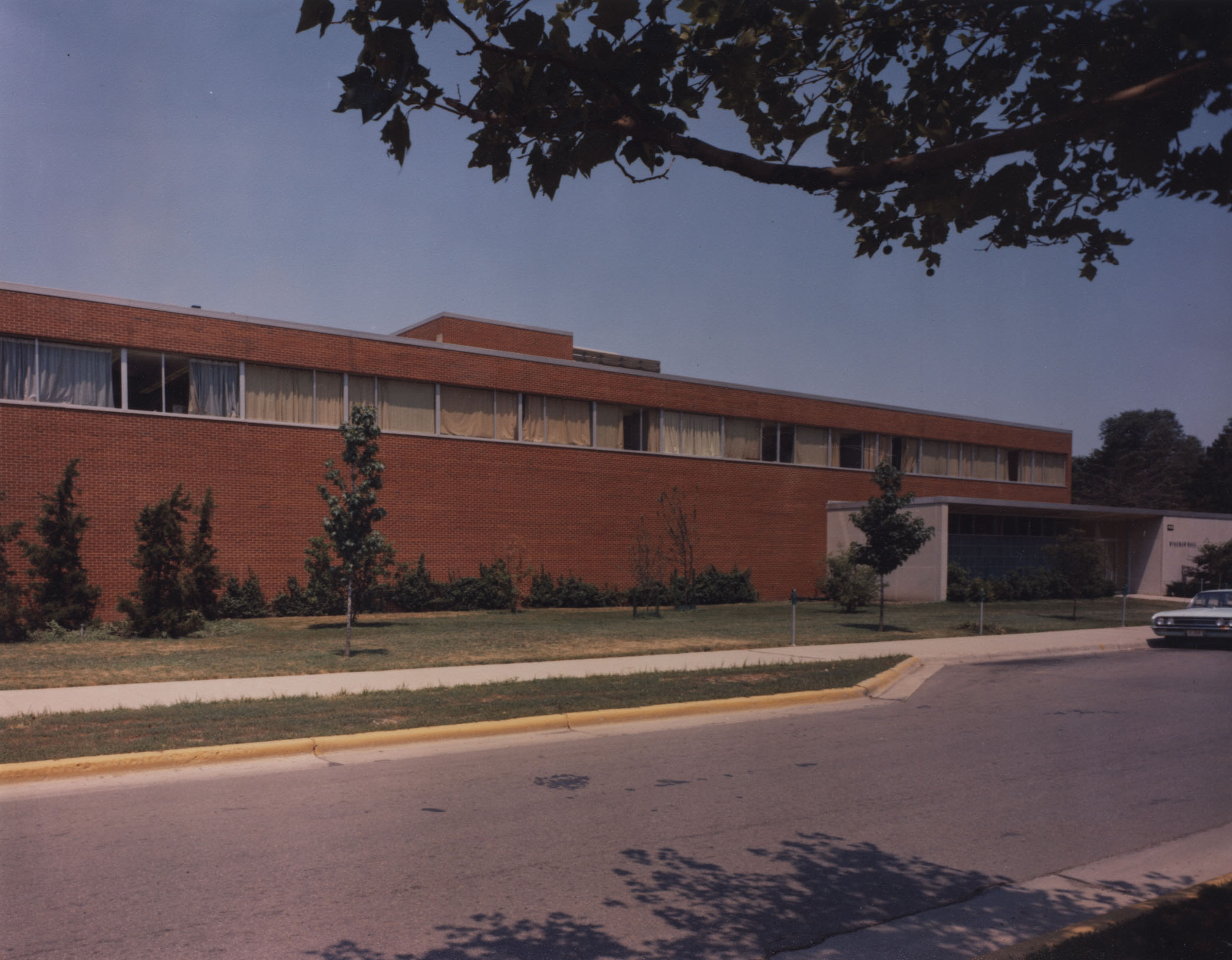
Wiseman Hall

Wiseman Hall, c.1970s

Wiseman Hall was built in 1960 and has had one addition. It serves as the major animal research facility of the College of Medicine. It was named for Bruce K. Wiseman in 1963.

Bruce Kenneth Wiseman (1896-1960) received his BS from Indiana University in 1926. He earned his M.D. from Indiana University in 1928. After an internship at Indianapolis City Hospital (1928-1930) he went to the Rockefeller Institute for Medical Research in New York, where his association with Drs. Florence Sabin and Charles Doan began. At the request of Doan, Wiseman came to OSU in 1931. He was an associate professor of medicine and associate director of medical research (1931-1935); Associate professor of medicine (1935-1938); Professor of medicine (1938-1960); Chair of the Department of Medicine (1944-1960); chief of staff of OSU Hospitals (1948-1960). Along with his colleague Doan, Wiseman made significant contributions in the field of hematology.

Hamilton Hall

Hamilton Hall was built in 1925. The building of Hamilton Hall brought the Colleges of Medicine and Dentistry to the campus from downtown locations acquired through the merger of Starling-Ohio Medical College in 1914. The building has had six additions. The first and second additions were built for dentistry. The fourth addition was an expansion of the library.

The north wing of Hamilton Hall was named the Emil Bozler Wing in 1989 to honor Dr. Bozler.

Hamilton Hall is named for John Waterman Hamilton, MD (1823-1898). Dr. Hamilton received his MD from Willoughby Medical College in 1847. He was a professor at Starling Medical College (1854-74). He founded Columbus Medical College in 1874 and served as professor (1876-1892) and dean (1891-1892). In 1886, along with Dr. W.B. Hawkes, he also founded Hawkes Hospital, later renamed Mt. Carmel Hospital.

Newton Hall

Newton Hall was built in 1969 and was named in honor of Mildred E. Newton. It serves as the home of the OSU College of Nursing.

Mildred Emily Newton (1901-1972) earned a Diploma from Truesdale Hospital School of Nursing ad a BS from Northwestern University both in 1924; a MA from the University of Southern California in 1932; and, a PhD in Education from Stanford University in 1949. Newton was Director of The Ohio State University School (now College) of Nursing from September 1951 until her retirement in July 1968, initiating many changes during these years. She was the first director to hold a doctoral degree and encouraged the recruitment of doctorally prepared faculty. The Bachelor of Science program in nursing received national accreditation within a year of her arrival and a Master of Science degree was started in 1953. She was instrumental in planning the School of Nursing Building which was later named in her honor.

Arthur G. James Cancer Hospital and Richard J. Solove Research Institute

Dr. James in front of Cancer Hospital, c. 1990

Dr. Arthur G. James believed all cancer would eventually be eradicated. That belief coupled with his dedication to the idea that cancer patients need separate, specialized care, led him to lobby, campaign, and fundraise for thirty-five years to build a cancer hospital in Ohio. The Arthur G. James Cancer Hospital and Research Institute opened at Ohio State on July 9, 1990 when it admitted its first patient. At the time of its construction, only three hospitals – Roswell Park in Buffalo, New York; M.D. Anderson in Houston, Texas; and Memorial Sloan-Kettering in New York City – had comparable resources. After a gift of $20 million from Richard J. Solove in 1999, the facility was renamed the Arthur G. James Cancer Hospital and Richard J. Solove Research Institute, but is commonly referred to as the James. The facility remains the only freestanding cancer hospital in Ohio to this day.

Arthur G. James was born in 1912. He received his B.A. in Arts and Sciences from OSU in 1934. He followed that with two more degrees: an M.D. and a M.S. in surgery, also from OSU and both received in 1937. He did his residency at OSU, after internships at the University of Chicago and Duke University, and joined the faculty in 1947 as an assistant professor in the Department of Surgery. He remained at OSU for the rest of his career (41 years), working his way up to full professor and chief of the Division of Surgical Oncology. James was also the first to hold the Lucius A. Wing Chair of Cancer Research and Therapy. For his efforts in establishing OSU’s cancer hospital, James was awarded the American Cancer Society’s Medal of Honor for Clinical Research. He also was a recipient of the 1991 Alumni Medalist Award from the OSU Alumni Association. James died at the age of 89 in 2001, after battling Parkinson’s Disease.

Richard J. Solove was born in 1925 and earned a degree in pharmacy from OSU in 1948. He later owned three Columbus drugstores before devoting himself fully to real-estate development in 1962. It was his relationship with James, who treated Solove’s father for cancer in the 1950s, that drew him to the cancer cause. In 1977, James asked him and other Columbus businessmen for help in pursuing a cancer hospital at Ohio State. Solove worked with then Gov. James Rhodes and the Ohio Legislature to secure funding for the hospital. He was a founding member of The James Foundation Board and served as its president for five years. Solove died in 2011.

Opticks

Featured work from our Rare Book Collection:

Sir Issac Newton
Opticks: or A Treatise of the Reflexions, Refractions, Inflexions and Colours of Light
London: S. Smith and B. Walford
1704

This book details Newton’s work in the field of opticks, the study of the behavior and properties of light including its interactions with matter and its detection by instruments. It is considered by some to be the one of the most influential works of science in history.

Local Nursing Legends

The Local Nursing Legends have made a significant contribution to the nursing profession and the health care of people in central Ohio. Pioneers in their field, these nurses were nominated by members of the central Ohio nursing community as those who provided exemplary service to this population and whose actions and lives can be seen as legendary.

Please visit the Local Nursing Legends digital exhibit at http://hsl.osu.edu/mhc/local-nursing-legends

House Call

House Call is a newsletter produced by the Medical Heritage Center (MHC). It has been in production since Winter 1998. Typically House Call is produced quarterly. It includes happenings of the MHC as well as historical articles related to people, places and activities in Central Ohio. All issues of House Call can be viewed at our website: https://hsl.osu.edu/service-areas/mhc/house-call-medical-heritage-center-newsletter

Collections Open

The Medical Heritage Center Collections reopen to the public today. Our hours are Mondays, Wednesdays, Fridays 10am-1pm and Tuesdays and Thursdays 1-4pm as well as by appointment.

Convertible Monaural Stethoscope

Convertible Monaural Stethoscope

Wood, Circa 1860

Artifact Collection, Medical Heritage Center

The stethoscope is an acoustic medical device for auscultation, or listening to the internal sounds of the body. It is used to listen to lung and heart sounds as well as to listen to intestines and blood flow in arteries and veins.

Initially heart sounds were auscultated by placing the ear directly on the chest of the patient. For the sake of convenience and propriety, in 1816 Dr. Rene Theophile Hyacinthe Laennec rolled up several sheets of paper and placed one end over the patient’s heart and the other end over his ear. Laennec was a skilled wood turner and later replaced the rolled paper with a wooden tube. For his invention of the stethoscope, Laennec is considered the father of chest medicine.

In the early 1850’s there was a rush of designs for a new stethoscope that used both ears. In 1851, Arthur Leared invented a binaural stethoscope, and in 1852 George Cammann perfected the design of it for commercial production.

Stethoscopes are often considered as a symbol of the doctor’s profession, as doctors are often seen or depicted with a stethoscope hanging around their neck.

Skin Grafting Instrument

Dr. Gilman Kirk
Skin Grafting Instrument
88mm mortar shell

This skin grafting instrument was made by Dr. Gilman Kirk during World War II from an 88mm mortar shell. The instruments supplied by the military did not work as well as Dr. Kirk would have liked, so he and a military engineer made this skin grafting instrument out of material that was available: an 88mm shell. This is an example of the ingenuity needed in battlefield medicine.

Older posts Newer posts