Year: 2012 (page 3 of 5)

Fry Hall

Fry Hall was built in 1951 as the Optometry Building and still serves as such. The name was changed to Fry Hall after Glenn Ansel Fry in 1983. The building has had one addition.

Glenn Ansel Fry (1908-1996) received an AB degree from Davidson College in 1929, and a MS and PhD from Duke University in 1933. Fry became director of the OSU College of Optometry in 1937 and remained here as a professor and major leader in the optometry program until 1966.

Atwell Hall

Atwell Hall was completed in 1971. The building was known as both the School of Allied Professions Building and the Allied Medical Professions Building until 2000 when it was officially named Robert J. Atwell Hall.

Robert James Atwell (1919-2006) received his BS in 1941 and his MD in 1944 from Duke University. He became a faculty member at OSU in 1950. He was Chief of Medical Services at the Ohio Tuberculosis Hospital in Means Hall and was the founding director of the OSU School of Allied Professions (SAMP). Atwell served as director of SAMP from 1971 to 1983.

Dodd Hall

Dodd Hall was built in 1961. When it was built it carried the name Ohio Rehabilitation Center but the official name was changed in 1963 to Dodd Hall after Verne A. Dodd.  The building has had one addition. Dodd Hall is the location of The Ohio State University Medical Center’s Inpatient Rehabilitation Services, a 60-bed inpatient facility providing the most comprehensive and recognized rehabilitation programming in the region.

Verne Adam Dodd (1881-1957) received his MD in 1903 from Ohio Medical University (OMU). He was a professor at OMU (1905-1907); Starling-Ohio Medical College (1907-1914); OSU (1914-1951). He served as Chief of Staff for Starling Loving Hospital (1921-48). Dodd was a beloved surgeon and teacher.

Cramblett Medical Clinic

Cramblett Medical Clinic, formerly University Hospitals Clinic, is a five-story building that serves as the site for many physician offices and outpatient services. The building was built in 1974 and is slated to be demolished in 2012 to make way for the new 20-story James Cancer Hospital & Solove Research Institute and Critical Care Expansion.

Henry Gaylord Cramblett (1929-) received his BS in 1950 from Mount Union College and his MD in 1953 from the University of Cincinnati. Cramblett came to OSU in 1966 as chairman of the Department of Medical Microbiology. He was Dean of the College of Medicine (1973-1980) and was vice president for health sciences (1980-1982). Cramblett was instrumental in the opening of the clinic facility in 1974 and was honored with it being named for him in 1999.

Tzagournis Medical Research Facility

The Tzagournis Medical Research Facility was officially named in 1999 after Dr. Manuel Tzagournis. This eight story facility houses generic research laboratories and support facilities.

Manuel Tzagournis (1934-) received his BS in 1956 and his MD in 1960 from OSU. While doing an internship at Philadelphia General Hospital Tzagournis became particularly interested in diabetes mellitus thus leading him to practice endocrinology. Tzagournis has held numerous positions at OSU including Assistant Dean for Research and Continuing Medical Education; Secretary of the Faculty of the College of Medicine; Associate Dean; Medical Director for OSU Hospitals; Acting Dean (1980); Dean (1981-1995); Vice President for Health Sciences (1994-2002); and Vice President and President of the University’s Managed Care System.

Starling Loving Hall

Originally built as the new Homeopathic Hospital in 1917, the building became a new hospital for the medical school after an addition in 1924 made it operational. The building was renamed Starling-Loving University Hospital in 1923 in honor of Mr. Lyne Starling (1784-1848), a founder of Columbus and benefactor of Starling Medical College and Dr. Starling Loving (1827-1911), dean of Starling Medical College (1880-1905).

By 1926, with the addition of three wings, the hospital housed 296 beds, an operating amphitheater, laboratories, a maternity department and an outpatient clinic. The main purpose was clinical teaching.

When The Ohio State University Hospital was built in the 1950′s, all hospital practices moved into it. Starling Loving University Hospital was renamed Starling Loving Hall on July 14, 1961. It no longer serves as a hospital facility but rather houses offices and classrooms. The original building has had 5 additions over the years.

The top of the building also features six gargoyles: rabbit, cow, monkey, pelican, cat and horse.

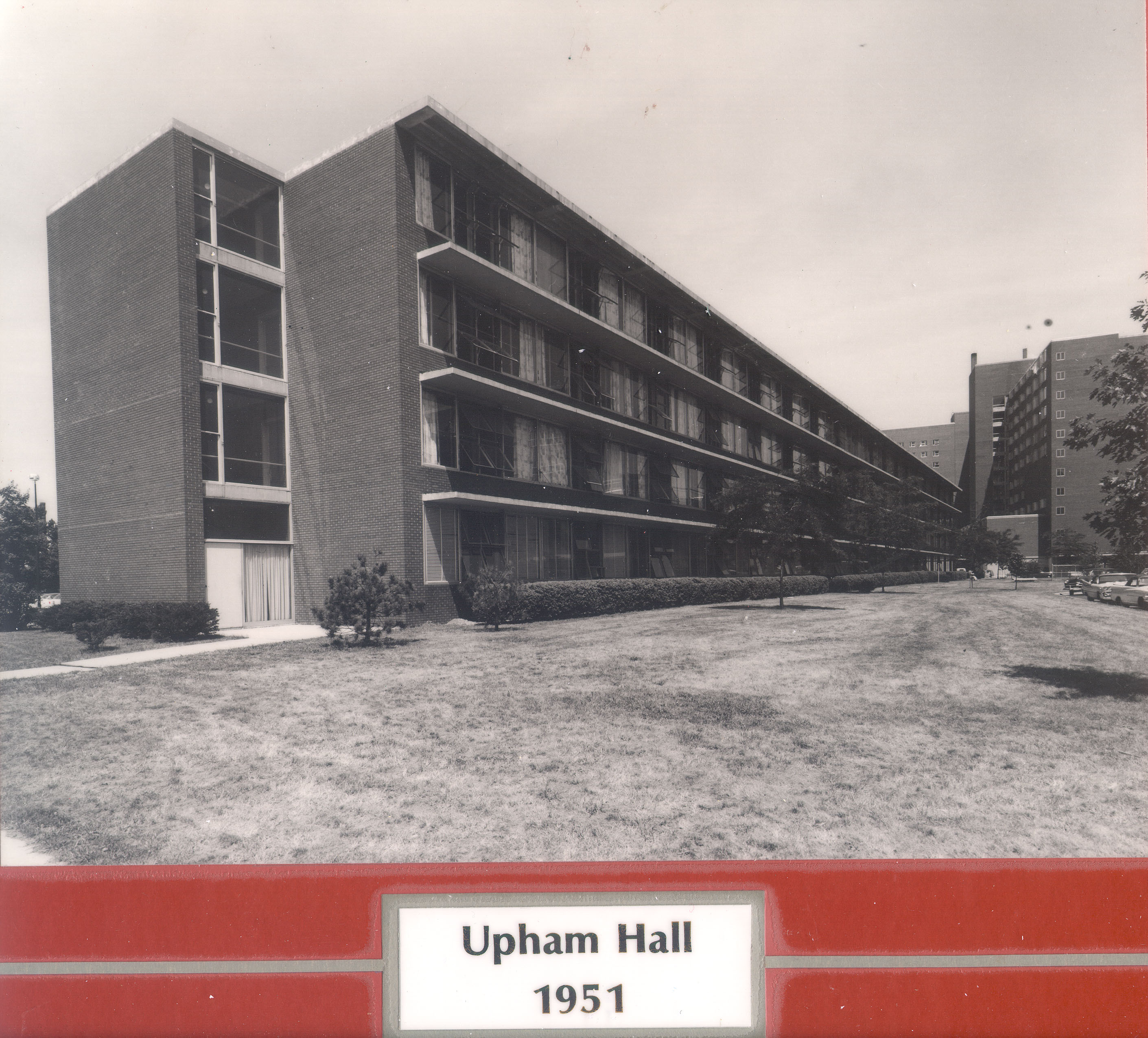
Upham Hall

Upham Hall was built in 1951. It was a reinforced concrete frame with brick exterior.  It consisted of a basement with four floors and a penthouse. The building had two additions. It was located where the OSU Harding Hospital and the Davis Heart and Lung Research Institute now stand on 12th ave. Upham Hall was used for psychiatric care. It was demolished in 1998.

John Howell Janeway Upham (1871-1960) received his BS (1891) and MD (1894) from the University of Pennsylvania. He was a professor at Starling Medical College (1897-1899), Ohio Medical University (1900-1902), Starling-Ohio Medical College (1907-1914), and Ohio State (1914-1941). He served as Dean of the OSU College of Medicine from 1928-1941.

2012 Annual James V. Warren Memorial Lecture

2012 Annual James V. Warren Memorial Lecture
Featuring
Diane L. Gorgas, MD
“Reflections from Haiti: A View from the Ground”

Haiti is a country torn by war, poverty and natural disaster. Dr. Gorgas will discuss her experiences in delivering medical care in this challenging setting along with some of the future directions for international health initiatives in the country.

Dr. Gorgas came to The Ohio State University in 1994 and has acted as Associate Residency Director and subsequently Residency Director for the Department of Emergency Medicine. She serves as an Associate Professor within the College of Medicine and works clinically in the Emergency Department at Ohio State’s Wexner Medical Center. She has written about her global health interests and challenges in a monthly column she authors in the Columbus Dispatch.

Her lecture will accompany the national traveling exhibit, Against the Odds: Making a Difference in Global Health, that will be on display at the Medical Heritage Center from May 7 through June 16, 2012. The exhibition is brought to you by the National Library of Medicine, National Institutes of Health and is free and open to the public.

Thursday, May 17, 2012
Reception at 4:30 pm; Lecture at 5 pm
OSU Health Sciences Library Medical Heritage Center (5th Floor)
Prior Hall | 376 West 10th Avenue, Columbus, OH
The Wexner Medical Center at The Ohio State University
FREE and open to the public
Parking: We suggest parking in the SAFEAUTO Hospitals Garage. Please visit http://medicalcenter.osu.edu/pdfs/maps/finding_prkng_pad.pdf for maps and parking information. Visit go.osu.edu/mhc or call (614) 292-9966 for event information.

Against the Odds: Making a Difference in Global Health Exhibit at the MHC

The Medical Heritage Center, in partnership with the Health Sciences Center for Global Health, is hosting the exhibit Against the Odds: Making a Difference in Global Health. The exhibit will run from May 7 through June 16, 2012. This exhibit is brought to you by the National Library of Medicine, National Institutes of Health, and the following is taken from the National Library of Medicine press release.

Against the Odds: Making a Difference in Global Health is a banner traveling exhibition highlighting the role of communities in improving health at home and all around the world. The exhibition explores the shared basic needs required for a good quality of life, including nutritious food and clean water, a safe place to live, and affordable health care.

Using historical and contemporary photographs, the banners tell stories of collaboration between families, scientists, advocates, governments, and international organizations, all taking up the challenge to prevent disease and improve medical care. The journey begins in Pholela, South Africa, where husband and wife team Sidney and Emily Kark developed a holistic approach to community health. Traveling on, the exhibition showcases the work of the Bangladesh Rural Advancement Committee to teach mothers across the country Oral Rehydration Therapy, a lifesaving treatment for childhood diarrhea.

Other destinations include Brazil, where the Movimento dos Trabalhadores Rurais Sem Terra (MST), or Landless Workers’ Movement is empowering poor citizens to begin subsistence farming on land left idle by agricultural corporations, and Central America, where the Pan American Health Organization launched Health as a Bridge to Peace to put an end to conflict and rebuild health care services.

As well as recent developments, the exhibition also focuses on historic campaigns that have changed today’s attitudes. The role of activists in the United States during the early years of the AIDS epidemic, for example, includes the work of the AIDS Coalition to Unleash Power (ACT UP) and the battles of Ryan White, the teenager who fought to attend school after contracting HIV through a blood transfusion.

This exhibition raises awareness of the sources and effects of health inequalities and invites each of us to join the global campaign for health and human rights. The experiences described constitute a legacy of success, often based on the simplest means. The exhibit’s message is, working together, we can make a world of difference.

Tooth Key

Tooth key
Metal and Wood
Circa 1820s
Artifact Collection, Gift of COSI, Medical Heritage Center

A tooth key also known as a dental key is an instrument that was used in dentistry to extract diseased teeth. Modeled after a door key, the tooth key was used by first inserting the instrument horizontally into the mouth, its claw tightened over a tooth and then rotated to loosen the tooth. The original design dating back to the 1700s featured a straight shaft, which caused it to exert pressure on the tooth next to the one being extracted. This led to a newer design in 1765 by Ferdinand Julius Leber where the shaft was slightly bent. The tooth key presented here is one of the newer designs with a slightly bent shaft.

Older posts Newer posts