
Voices in Humanism
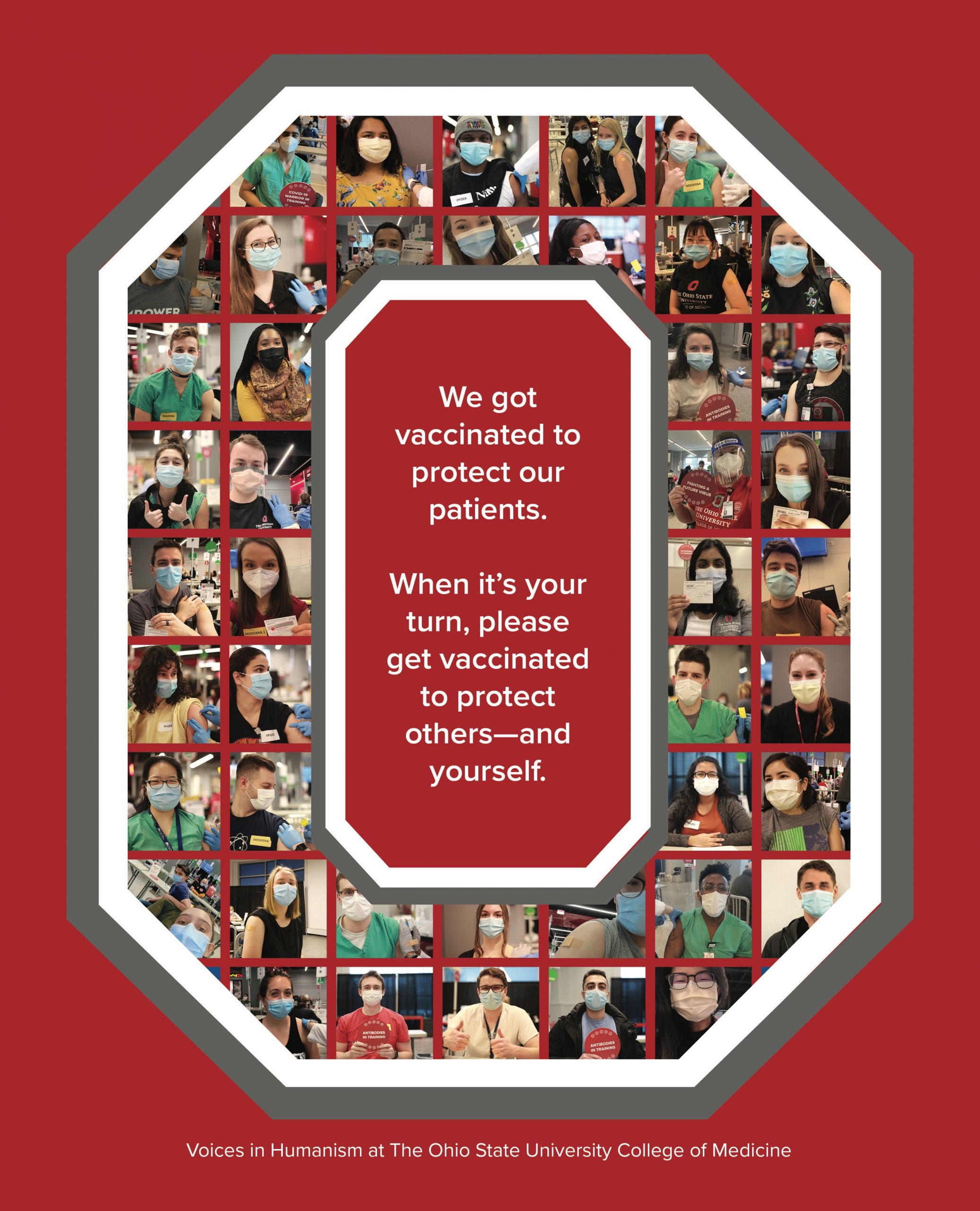
Get Vaccinated
Graphic/Layout/Design: Swee-Yang Ashley Yong
Photographers: Phillip Anjum and Maya Neyman
Voices in Humanism
Get Vaccinated
Graphic/Layout/Design: Swee-Yang Ashley Yong
Photographers: Phillip Anjum and Maya Neyman
Voices in Humanism
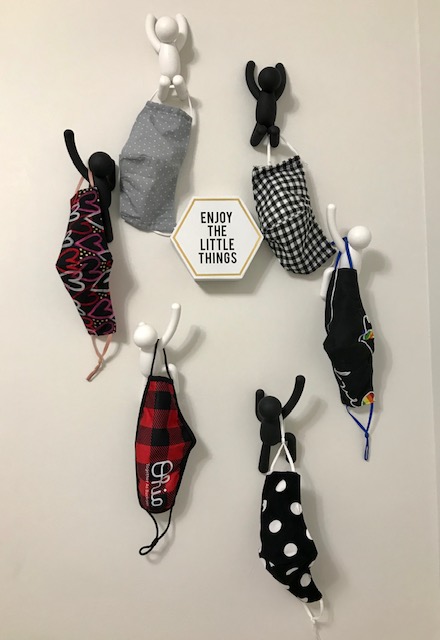
The Art of the Mask
….wash, rinse, dry, repeat!
Jody Glasser Sobol
Photographer
Medical Student Mom
Voices in Humanism Advisor
Voices in Humanism

“Hang on to your hat.
Hang on to your hope.
And wind the clock,
for tomorrow is another day.”
-E. B. White
Jody Glasser Sobol
Photographer
Medical Student Mom
Voices in Humanism Advisor
Voices in Humanism

Beth Steinberg, PhD(c), MS, RN, NEA-BC
Wexner Medical Center
“I knew I had to help”
Breath shortens. Joy diminishes. Worry ensues. Tension heightens. Sleep is interrupted. Appetite changes. The results are ill health.
While working as a bedside nurse, raising kids, going to graduate school, that feeling of being overwhelmed would strike and she took action to handle the emotions. She did breath work, yoga, and cleared her mind to calm herself.
Later as a nurse manager, director and then nurse administrator, she saw the stress levels of the nurses in her charge, and she said, “I knew I had to do something. I knew I had to help.” Noticing what the pressures were doing to the mental health of those in her charge is a bit like reading the stars to navigate; she knew what to look for and helped guide the nurses in ways to relax.
Beth Steinberg continues her own mindfulness and yoga practices as she plans, develops, implements, and researches programs that improve health through stress reduction at the Ohio State University Medical Center, while working with the Gabbe Health and Wellness Initiative, the Employee Resource Center, and Buckeye Paws, which is a therapy dog program for staff.
She employed the techniques she has practiced for years this very morning to prepare for a complex project. “I took a step back. Put down the work. Breathed. Cleared my mind. Then returned to the task,” she said.
“What the research shows is that methods such as yoga, breath work, and mindfulness training dramatically reduce stress, increase productivity and have positive effects on health conditions such as chronic pain, cancer, and cardiovascular disease,” Beth said. “We wanted to bring this right into the work place so that people could take just a few minutes to relax. We did it and have shown it has a real return on investment in terms of staff health and well-being.”
It was important for Beth that the programming be available at work as the energy spent during the shift left little reserve for efforts before or after. What may seem like a waste of precious work time to some has proven to actually save money by creating healthier professionals providing better care for patients.
With the Mindfulness in Motion program, inter-professional cohorts come together to learn the calming strategies. “We have doctors, and housekeepers, nurses, and respiratory therapists together. They relax and they learn from each other. The results are personal, but also enhance collaboration at the bedside,” Beth said.
The medical field deals with stress daily, but with the advent of COVID-19, the desperately ill patients and burnout symptoms surged.
Beth does not wait for disaster to render staff decimated. She keeps her antennae up to anticipate how she and the programming can circumvent trouble. She talks to people, asks questions, and finds solutions.
She observed how in the beginning of the pandemic, adrenaline and the work at hand kept everyone barreling through. She understood that level of exertion could not be sustained.
This is what she concluded. “After 10, 11 months, the exhaustion set in and people were working on their last fumes of energy. The toll mounted from working 16-hour shifts, dealing with PPE, people refusing to wear masks or believing COVID was not real, becoming not only a nurse but a caregiver, chaplain, and holding an iPad for final goodbyes.”
The need for programming was fast becoming a staff medical emergency and was met with a number of resources, one being the website WELLNESS TAB where two, five, and ten minute guided exercises can be employed.
For instance, the two-minute program includes receiving instructions for progressive relaxation of body parts. Beth said, “Sometimes we don’t even realize the extreme tension in our necks or backs. Also, we have lost the physical comfort of being able to gather or hug. On top of that toll, our personal lives may have been complicated with loss of loved ones and added responsibilities. In just a few minutes we can reset and build
our stamina.”
Brienne, Beth’s yellow lab, is a member of the Buckeye Paws staff therapy dog team. The well-trained dogs wear a grey harness with an OSU patch and they sport their ID credentials. The therapy dogs have been given medical clearance to provide important good health interventions, hugs and tail wags.
Hunter Jeffries, RN, BSN, CCRN, a nurse manager in the Medical Intensive Care Unit, uses a technique that Beth finds extremely therapeutic. She said, “Hunter really knows how to connect with people, to celebrate and recognize their specific accomplishments.”
Hunter recently sent an email to staff about a not particularly funny procedure: how to inflate a rectal tube properly. Beth described the email as both informative and also light-hearted and clever. She said she could not help but smile as she read it. She also described the virtual retirement plans Hunter is meticulously forming for a colleague and his admirable dedication while also having a young family at home. She sees
Hunter as a living example of resilience fostered by his care and concern for others.
Because Beth keeps an eye on the horizon, she knows that when the rush and work load of the pandemic eases there will be a let down and new measures must be taken.
“What we will see,” she said, “is people feeling a sense of loss of purpose. We need to consider ways for people to find joy in their work again. We have the data that our website and mindfulness activity tabs are reaching thousands. One of our goals coming very soon is using storytelling to offer meaning and understanding to our experiences.”
Beth’s passion is to help staff weather life and work’s often stormy seas. In nautical terms, she is a true navigator who manages the “point of sail” (the craft’s direction of travel in relation to true wind direction) to propel people forward in a healthy manner. She is in alignment with the words of Thomas Monson, a religious leader, who said, “We cannot control the wind, but we can adjust our sails.”
Patricia Wynn Brown
Writer and Performer
Medicine and the Arts Board
Author: ESSENTIAL STORIES: Medicine During COVID-19 and the Lives of Practitioners at the OSU Wexner Medical Center
Voices in Humanism
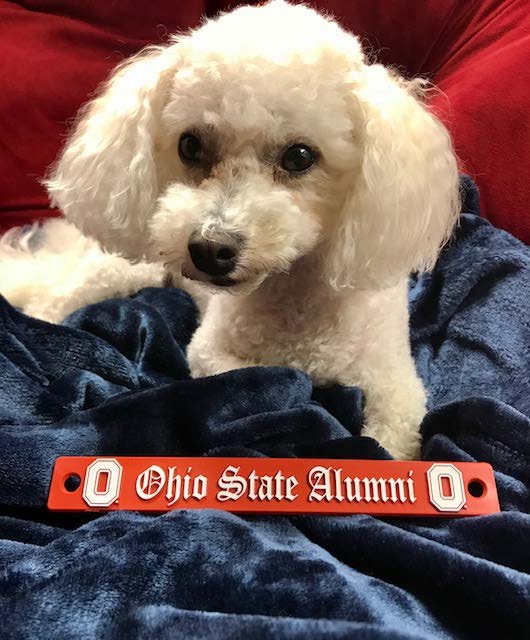
Wilbur granted himself the title of ‘Honorary Alum’ due to his
buckeye loyalty, devotion and apparel.
Jody Glasser Sobol
Photographer
Medical Student Mom
Voices in Humanism Advisor
Voices in Humanism

“I FELL IN LOVE WITH IT”
*Essential Stories: The practice of medicine during the pandemic*
Jessica Muñoz, 4th year medical student, The Ohio State University
This is some advice from fourth year medical student at The Ohio State University, Jessica Muñoz. When times are tough hold onto your dreams tightly. Find a support system via friends or family. Ask for help when you need it. Schedule workouts right onto your calendar and go to the place that gives your courage and strength.
That place for Jessica is home, West Chicago. She went there when she left medical school for a year preceded by too many family members dying. Her school challenges became overwhelming. She was sleep deprived, and feeling so inadequate, and showing the classic signs of “imposter syndrome.”
The pressures of medical school are well known but many times not expressed. In addition to the usual pains students suffer, Jessica had her whole family to consider. She was the first one in her immediate family to finish school. Her mother left school after third grade, her dad after
first. She will be the first doctor in her extended family. She is also writing a book about her life and vocation.
“I started reading Dr. Michele Harper’s book, THE BEAUTY IN BREAKING,” Jessica said, “and I was getting discouraged with my own writing. So I contacted her on her Instagram account.”
THE BEAUTY IN THE BREAKING is a memoir by an E.R. doctor and Jessica’s focus in her studies is Emergency Room work. Surprisingly, Dr. Harper responded and is now a mentor to Jessica.
“I fell in love with it,” Jessica said of Emergency Medicine. “You never know who will walk through the door and with what condition. I am very interested in the social side of medicine and want to know the person’s social history and understand their barriers to healthcare, I ask them important questions that sometimes go unasked due to bias or mistrust. The emergency department sets the tone for the rest of my patient’s care and their health outcomes. For many, this may be their first time seeing a doctor. We need to take advantage of this opportunity to get them the best care. In the ED we see the sickest of the sick, and often the most vulnerable. I see my job as finding ways to heal while keeping the patient and their family comfortable and safe.”
Jessica’s interest in people who are often overlooked connected her with third year medical student at OSU, Sheila Okere, who was starting a chapter of Physicians for Human Rights, and the sub group involving a relatively new field, Correctional Medicine, that is, treating incarcerated patients.
Calls and emails connected Sheila, Jessica and the entire group of 16 medical students to an advisor, Dr. Linda Stone, a former prison clinician, Annette Dominguez, and this writer who does programs at the prison.
The invitation then went to the warden at the Ohio Reformatory for Women, their medical staff, five female inmates, and five released women to join a zoom forum meeting periodically through the year. As this is a pandemic year and all classes and programming ceased at the prison, it was a wildly welcome invitation supported by an extraordinarily forward thinking warden, Teri Baldauf.
The HOUSE CALL first forum, as it is called, proved to be a big success. Then the organizers discussed the book THE BEAUTY IN BREAKING and how it would be a terrific forum book club style discussion. Thirty-five books were purchased for each of the forum participants with money raised on a social platform. Jessica was in communication with the New York Times best selling author, Dr. Harper, invited her, and the author joined the zoom HOUSE CALL forum. Dr. Harper noted on her Instagram page that the discussion was one of the highlights of her year.
Covid has proven to bring out the innovation in all of us out of necessity, but it also brings disappointment. Jessica lamented some of the drawbacks. “I had to give up a cancelled L.A. rotation. It is also wearing to do the residency interviews on zoom. One was six and a half hours long! Also, we may not have graduation in person in May. I have waited so long and worked so hard for that day.”
A plus in the interviews has been Jessica’s involvement with the prison HOUSE CALL group. “Everyone wants to know about this work because it is probably the only forum series of its kind anywhere.”
The gifts the forum have provided Jessica and all of the participants help salve the wounds of a pandemic year. There is a fruitful and enlightening exchange among all of the participants. Jessica’s future E.R. career is being shaped by this as well as her studies and rotations.
She said, “Trust is a big issue with people who are underserved and I see that in my own family. I hope in the forums and in my E.R. work that the people I meet see that I value them for who they are and I do not judge them for any of their past deeds. I want to do what I can to empower them and help our medical field reduce biases and pre-conceived perceptions.”
Jessica’s creed is this: “I always want to remember why I do what I love.”
Patricia Wynn Brown, MA
Writer and Performer
Medicine and the Arts Board
Author, Essential Stories: Medicine During COVID-19 and the Lives of Practitioners at the OSU Wexner Medical Center
Voices in Humanism
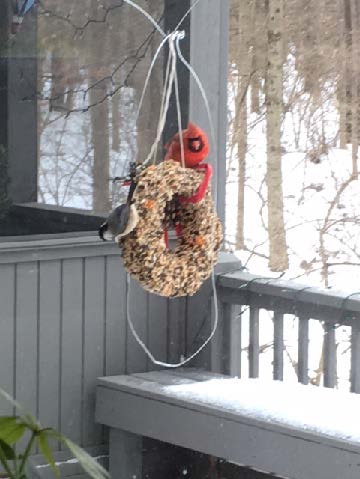
Birds with different feathers
do flock together especially on cold days
Laurence B. Stone, MA
Retired Director of the Ohio Judicial College
Graphic Designer: Voices in Humanism
Voices in Humanism

Flight
This work was created from glass recently rescued from St. Paul’s Lutheran Church (est. 1942).
Working with stained glass keeps me connected to the arts while serving as a family physician and medical educator.
Brian Bachelder, MD
Family Physician
Past President, Ohio Academy of Family Physicians
Glass Artist
Hometown: Mount Gilead, Ohio
Voices in Humanism
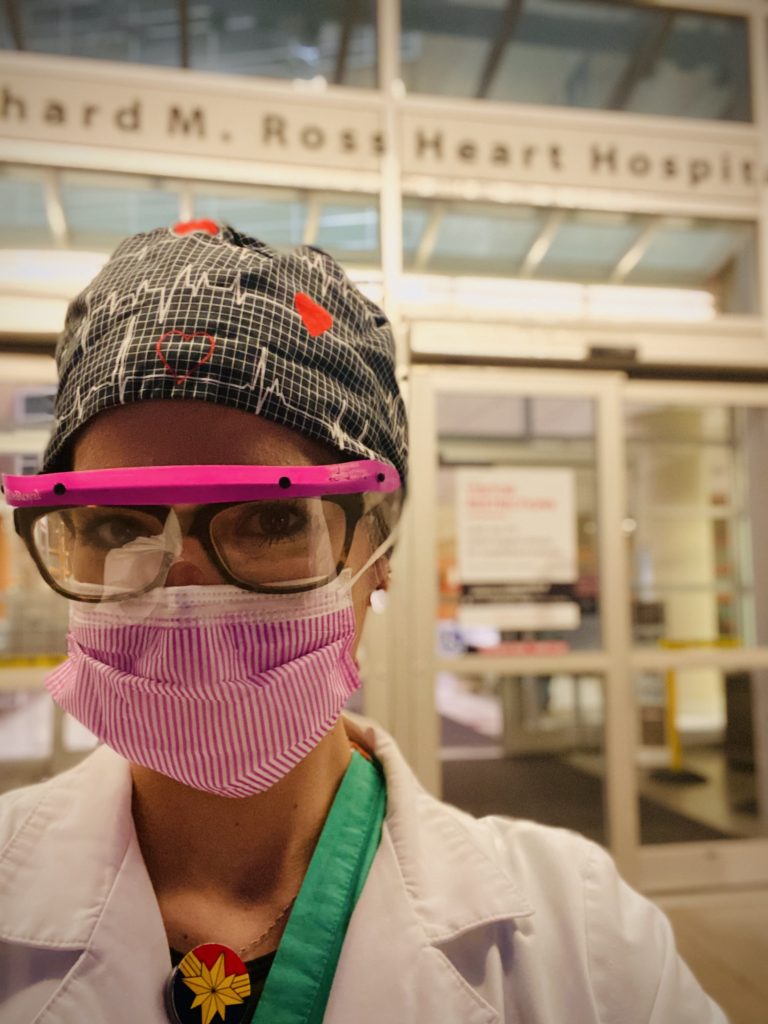
Antoinette J. Pusateri, MD
PGY-3 Department of Internal Medicine
President, Gold Humanism Honor Society Resident Chapter
OSU College of Medicine
#thisisourshot
“I want to tell and elevate our stories. Explain what our role is. Where we fit into this pandemic.”—Antoinette Pusateri, M.D., 3rd Year Internal Medicine Resident, The Ohio State University.
That is what Antoinette Pusateri said to the interviewer when asked about her #thisisourshot series on The Ohio State Internal Medicine Instagram account offering interviews, photos, and vignettes featuring the residents and their daily lives at the Ohio State University Hospitals.
The hashtag title is borrowed from the HAMILTON song, “My Shot.” The musical, according to Lin-Manuel Miranda, is about the fact that we only have one shot at life and everyone has something very important they can contribute and that path contains obstacles and setbacks.
I am not throwin’ away my shot
Hey yo, I’m just like my country
I’m young, scrappy and hungry
And I’m not throwin’ away my shot.” (Hamilton, “My Shot”, lyrics continue…)
Antoinette completed four episodes for the Instagram page that she was very excited about. “The residents just received their COVID vaccines and the interviews are raw and real. Two of them are a couple who are on the frontlines, one OBGYN and the other one Internal Medicine. They talk about how they help each other through,” Antoinette said. Another advantage of the popular Instagram site is to clear up misunderstandings about what residents actually do.
The interest in storytelling, narrative medicine, and broadcast journalism started with her parents, both high school teachers/coaches. “They emphasized the importance of the arts and I dabbled in everything. It was all about storytelling. When I was in high school I took an art history course in which our teacher Mrs. Rothwell offered insights into storytelling from unique perspectives,” explained Antoinette.
“Medicine IS a combination of science and the arts,” Antoinette believes, “and we are so lucky at OSU that art, professionalism, and humanism are all pillars of our medical curriculum.”
Having this art outlet via Instagram has been a boon to Antoinette’s own resilience. She said, “In February 2020, I was finishing the cardiac intensive care night team rotation working 80 hours a week. It was the hardest rotation, I thought, at the time. But then a number of us were headed out to breakfast and we glanced at the TV on our way out. That’s when we first heard about the Coronavirus. My biggest challenge was actually yet to come.”
Every burden, every disadvantage
I have learned to manage. I don’t have a gun to brandish
I walk these streets famished
The plan is to fan this spark into a flame
Antoinette has been on the frontlines of COVID19 pandemic and saw how the most vulnerable among us became its first victims. The murder of George Floyd ignited Antoinette’s outrage. She co-founded the “IDEA (Inclusion Diversity Equity and Advocacy) Council”, an organization of OSU residents and fellows dedicated to addressing racial and gender disparities in medicine for patients and colleagues alike, so that people from all backgrounds feel included, respected, and celebrated.
Don’t be shocked when your history book mentions me
I will lay down my life if it sets us free
Eventually, you’ll see my ascendancy.
She feels the fatigue from her work with COVID patients but her concern is for others too. Her spiritual life anchors her and she makes kindness gestures such as her work with the Gold Humanism Honor Society during the holidays.
“My moral compass, developed through my faith and education, has always led me in a direction of pursuing works that inspire and create social equity and justice,” Antoinette said. “In every phase of my life, as I learn more about history, injustices, and the world around me, my first priority is to work with others to be the change we seek. While we cannot change the world, we can change one person’s world.
“Being on the frontlines of the COVID19 pandemic plus witnessing the racial injustices and imbalances of the underserved, my residency includes social justice initiatives.”
I gotta holler just to be heard
With every word, I drop knowledge
“Here in the COVID and national crisis, it’s like we are all in a big ocean storm with high waves,” she said, “and I cannot see the others and whether they are sinking or swimming but I keep swimming and reaching out to them. I try to help by giving them voice to their self-sacrifice and work ethic. We have to help each other through this storm, there is sunshine on the other side!”
Patricia Wynn Brown
Writer and Performer
Medicine and the Arts Board
Author: ESSENTIAL STORIES: Medicine During COVID-19 and the Lives of Practitioners at The OSU Wexner
Medical Center
Voices in Humanism
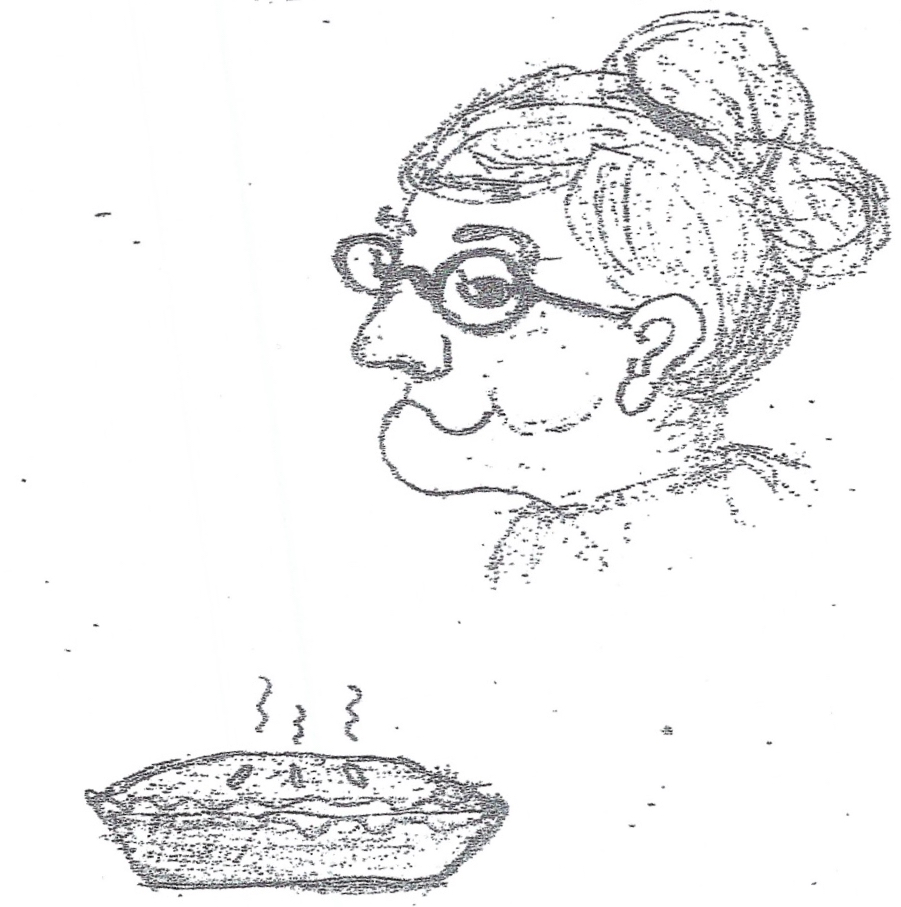
Mrs. Laudi’s Pies
Mrs. Laudi was a jolly old woman who loved to bake pies. She believed that every pie she made had a secret ingredient that could make anyone happy no matter what. Her pies quickly arose to stardom by word-of-mouth. They were both delicious to the taste and beautiful to behold. One day, there was a new king in the village. He swore that Mrs. Laudi’s pies could have no effect on him one way or another. He was a very angry man and felt that he could not be persuaded to change. He also was not one to enjoy the taste of sweet things period! The King went on to make many new laws as time went by and the people in the village suffered deeply. Some chose not to stay and went on to distant lands if they were able to escape the retaliation from the king and escape without being beheaded or worse. However, Mrs. Laudi was one of the ones who remained behind. She continuously tried to persuade the king that one bite of her pie would bring him happiness, fulfillment, and personal gain but, he was stubborn and continuously refused to taste it. One day, a terrible storm came, and depleted the villagers out of most if, not all of their food supply. Even many of the vegetables were uprooted. It was also during the fall season and the people in the village could not foresee the food supply being replenished anytime soon. Suddenly, Mrs. Laudi had an idea. If I could scrape up enough items and make a pie, she thought then I could make everyone in the village happy, including the King. Mrs. Laudi began by gathering muddy carrots, grass, flower seed and strawberries she had noticed, growing on a vine. In the distance she could see bees buzzing on honeycomb that had not been destroyed by the storm. She used the honey to sweeten the pie. For the crust, she had some leftover flour that she had stored in a barrel. For oil, she used a slice of bacon and the drippings left over from breakfast she had eaten prior to the start of storm. She began. In place of a rolling pin, she used an old glass pop bottle she found lying alongside the road. She mixed and assembled everything at once. Because there was no power, she used bricks and stones and sticks and created an oven. On top of the crust, she rubbed a small bit of oil to give the appearance of golden brown. People came from all over the village as the wind blew the scent of Mrs. Laudi’s freshly baked pie throughout the air. Mrs. Laudi began to sing and so did the villagers. The king came out of his palace to see what was going on. When he smelled the pies, he quickly demanded that they be given to him and that Mrs. Laudi would bake for him continually. This made the people angry but, there was nothing they could do. After all, the king’s army was bigger and stronger than they were. As Mrs. Laudi continued making her delicious pie all the villagers including Mrs. Laudi noticed that her king was becoming fatter and fatter, so fat that he would have tummy aches. This made the king angry so, he ordered Mrs. Laudi to leave the palace and she was thrown into prison at once. The people were happy because once again they could feed of the spoils of the land in their stomachs full. But they were saddened in their hearts because dear Mrs. Laudi was in jail. As Mrs. Laudi slept, her tears would meet underneath her chin and dampener her pillow. One night the guard said to her that if she would make him a pie, he would set her free. So, at midnight when the king was asleep the guard took Mrs. Laudi out of prison and to his home. She baked him one of the most delicious pies she had ever made. She gathered nuts and raisins and sugar, and a pinch of kindness. The guard ate to his heart’s content. He kept his word and put her on a horse and sent her away to a far and distant land. The people in the new village welcomed Mrs. Laudi with open arms and she made some of the best pies ever. When the new villagers heard what the old king had done, the new king summoned the old King to punish him and stand trial. The old king became very frightened and begged Mrs. Laudi to forgive him. He confessed that her pies were delicious, and that he felt happy when he ate them. Mrs. Laudi forgave the old king, and he was sentenced to gather all the ingredients for Mrs. Laudi’s pies and the villagers and everyone ate to their hearts content and passed her recipes down from generation to generations to come. Mrs. Laudi and the villagers lived happily ever after.
Cynthia Price
Writer, Poet, Lyricist, Mother
Retired from OSU College of Medicine 2018

© 2026 The Ohio State University - University Libraries
1858 Neil Avenue Mall, Columbus, OH 43210
Phone: (614) 292-OSUL (6785)
Request an alternate format of this page | Accessibility | Privacy Policy | Contact Us |

Recent Comments