Writing about Julia

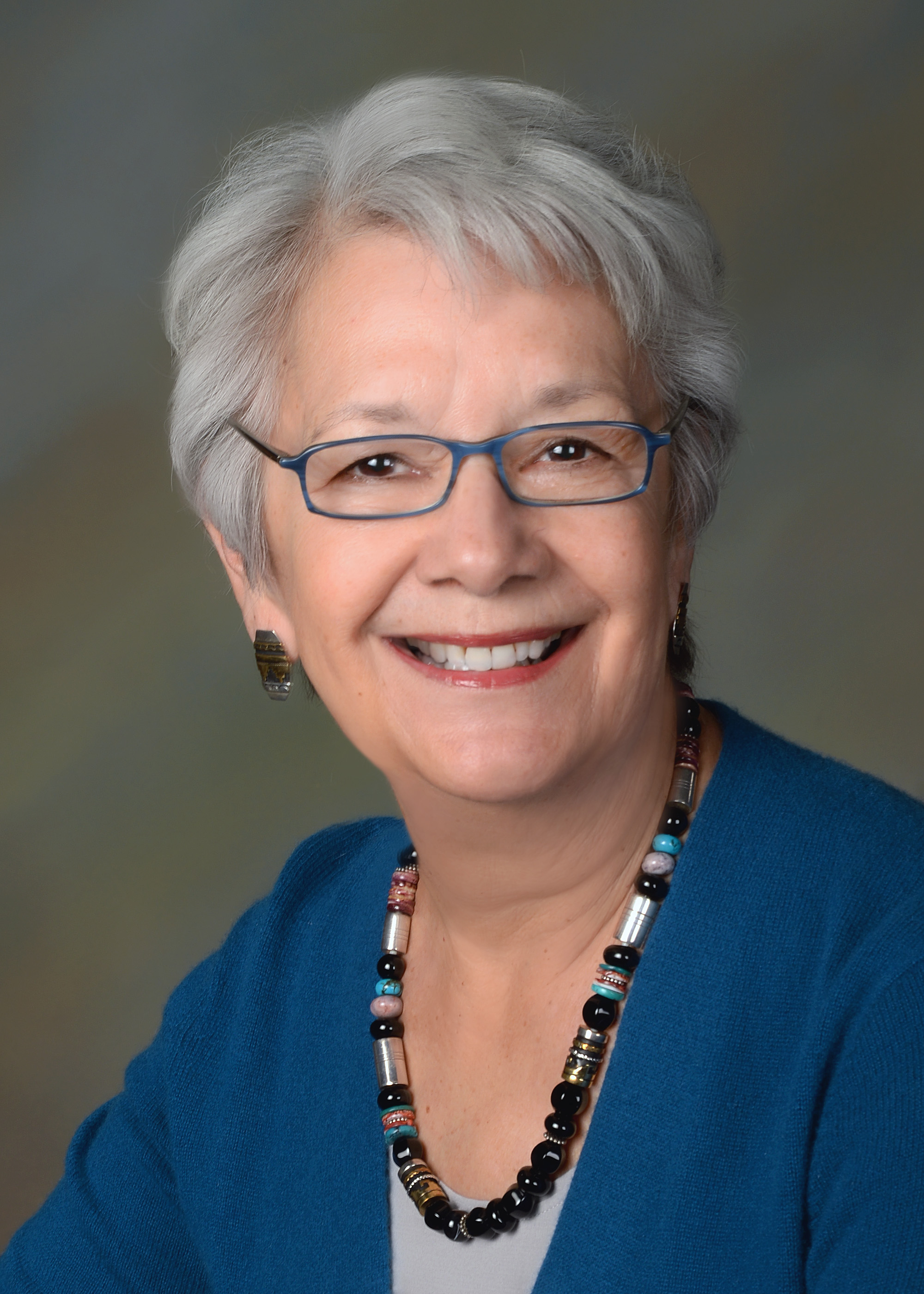
author photo

Vanessa Pérez. Photo courtesy of author. CC BY-NC-ND 2.0

by Vanessa Pérez

In the early morning hours of July 5, 1953, two New York City police officers spotted a figure on the ground near the corner of Fifth Avenue and 106th Street in East Harlem. As they approached, they saw the body of a woman with bronze-colored skin. Once a towering woman at five feet, ten inches, she now lay in the street, unconscious. They rushed her to Harlem Hospital, where she died shortly thereafter. The woman carried no handbag and had no identification on her. No one came to the morgue to claim her body. No missing person’s case fit her description. She was buried in the city’s Potter’s Field. One month later, the woman was identified as award-winning Puerto Rican poet Julia de Burgos. Her family and friends exhumed and repatriated her body.

When I began writing about Julia de Burgos, I hesitated to mention her notorious death, seeking to move away from the narratives of victimhood that have shrouded her life for more than half a century. I wanted to focus on her poetry, her activism for women’s rights, social justice and the independence of Puerto Rico, and her legacy. Most Puerto Ricans already know her story, and many both on the island and in New York have been captivated by her life. However, I soon realized the importance of recounting even the most difficult details as I introduced her to new audiences. Her migration experience and her death on the streets of New York capture the imaginations of readers everywhere. Becoming Julia de Burgos builds on recent approaches to her work that focus on movement, flow, and migration. This book proposes a new way of reading Burgos’s work, life, and legacy, focusing on the escape routes she created in her poetry to write herself out of the rigid confines of gender and cultural nationalism.

For those of you who are not familiar with Burgos, let me offer a brief biographical sketch. Julia Constanza Burgos García was born on 17 February 1914 in the town of Carolina, Puerto Rico, the eldest of Paula García de Burgos and Francisco Burgos Hans’s thirteen children. Julia was intimately familiar with struggle, hardship, and death. She watched six of her younger siblings die of malnutrition and other illnesses associated with poverty. She obtained a teaching certification, a two-year degree, from the University of Puerto Rico, but would only work as a teacher for a year. In 1934, she married Rubén Rodríguez Beauchamp who she divorced only three years later. As a divorced woman in a conservative Catholic society, Burgos found that gossip, speculation, and vicious rumors undermined her respectabil­ity. During this time, she wrote her first collection of poetry, Poemas exactos a mí misma (Poems to Myself), which she later considered juvenilia and never published. In those early years, she also wrote “Río Grande de Loíza,” which became one of her most well-known works and was later included in her first published collection, Poema en veinte surcos (Poem in Twenty Furrows, 1938). This early work explored social justice and feminist themes, which she would continue to write about throughout her life. In poems such as “Pentacromia” and “A Julia de Burgos” she would write about her frustration with the institution of marriage and the limited roles available to women. In “Pentacromia” she repeats in each of the six stanzas the line “Hoy, quiero ser hombre (Today, I want to be a man),” expressing her desire for greater freedom to travel, and be an active participant in the world. In the poem, “A Julia de Burgos” she voices her frustration with social expectations of femininity through a split or double consciousness, suggesting postmodernist ideas of identity as performance. The speaker dramatizes the conflict between her socially acceptable constructed identity and her inner voices as a woman artist, as can be noted in the lines below.

Tú en ti misma no mandas; a ti todos te mandan;

en ti mandan tu esposo, tus padres, tus parientes,

el cura, la modista, el teatro, el casino,

el auto, las alhajas, el banquete, el champán,

el cielo y el infierno, y el qué dirán social.


En mí no, que en mí manda mí solo corazón,

mi solo pensamiento; quien manda en mí soy yo.

Tú, flor de aristocracia; y yo flor del pueblo.

Tú en ti lo tienes todo y a todos se lo debes,

mientras que yo, mi nada a nadie se la debo.


(You in yourself rule not; you’re ruled by everyone;

in you your husband rules, your parents, relatives,

the priest, the dressmaker, the theater, the casino

the car, the jewels, the banquet, the champagne,

the heaven and the hell, and the what-will-they-say.


Not so in me, who am ruled only by my heart,

only by what I think; who me commands is me.

You, aristocratic blossom; and I plebian floret.

You have it all with you and you owe it all to all,

While I, my nothing to no one do I owe.)

These lines offer an example of her commitment to freedom from prescribed roles for women. Burgos wrote and published her second collection of poetry, Canción de la verdad sencilla (Song of the Simple Truth), in 1939. Her third and final collection of poetry, El mar y tú (The Sea and You), was published posthumously in 1954. In January 1940, Burgos left Puerto Rico for New York where she stayed for six month. She then moved to Havana where she lived for two years before returning to New York in 1942. Several factors influenced her decision to leave Puerto Rico in 1940. The turn in Puerto Rican politics away from the nationalist and independence movement was one of the reasons. Also, many Puerto Rican writers, artists and musicians left for New York in those years in search of a wider audience, publishing houses, recording studios and greater opportunities to continue to develop their craft. Julia de Burgos wanted to be a part of this.

From late 1942 until her death, Burgos lived in New York where she struggled to make a living as a writer. She wrote for the Spanish-language weekly Pueblos Hispanos from 1943 to 1944, further developing her political voice. However, her journalism shows her political commitment to radical democracy and the struggle for immigrant and Puerto Rican rights and her advocacy of solidarity with Harlem’s African American community. In addition, these writings as well as her poetry reveal her understanding of cultural identity as fluid and unbound by national territory. While in the hospital months before her death, she wrote her two final poems in English, “Farewell in Welfare Island,” and “The Sun in Welfare Island,” describing the condition of exile and her sense of seclusion and desolation. These poems can be read as precursors to the literature of Nuyorican and U.S. Latina/o writers of the 1970s in both theme and emotional intonation.

Becoming Julia de Burgos recuperates a savvy, ambitious and influential intellectual who was a creative force both on the island and in New York. She is claimed by later generations as a beloved and inspiring icon and a fierce ancestor. There are at least two historical moments where we see a renewed interest in Julia de Burgos’s life and work. The civil rights movement of the 1960s is one of those moments. The women’s movement of that era led to a renewed interest in the poet on the island by feminist writers, artists and literary critics. The Nuyorican Movement of the 1970s led to ethnic revitalization and search for a deeper understanding of Puerto Rican history and culture that so many New York Puerto Ricans were distanced from. This coincided with first translations of some of her poems into English. As Latina feminists sought for intellectual genealogies during the women of color movement, they reclaimed Julia de Burgos as an ancestor. Julia de Burgos is remembered, reinvented and invoked in the poetry, prose, and artwork of various New York Latino writers and visual artist such as Sandra María Esteves, Mariposa and Andrea Arroyo, just to name a few. She is inscribed in the neighborhood of El Barrio in the form of murals, a cultural center named in her honor, and a street named after her. Sixty years after Julia de Burgos was found unconscious on an El Barrio street corner, she now forms part of the neighborhood’s urban landscape and cultural mythology.

Vanessa Pérez is an Associate Professor of Puerto Rican and Latino Studies at City University of New York, Brooklyn College, and the editor of Hispanic Caribbean Literature of Migration: Narratives of Displacement. She serves as an associate investigator on the City University of New York-New York State Initiative on Emergent Bilinguals (CUNY-NYSIEB), a collaborative project of the Research Institute for the Study of Language in Urban Society (RISLUS) and the Ph.D. Program in Urban Education at the CUNY Graduate Center.


Writing for Mujeres Talk

by the Editorial Group

As an online venue dedicated to the publication of Latina, Chicana, and Native American Studies research, commentary, and creative work that is widely accessible to both specialist and non-specialist audiences, we’ve often been asked by potential authors to provide guidelines on how to write for this site. In answer to this request, we’d like to share our experience in writing and editing for this site, and provide a guide for authors.

The Academic Journal Article

Throughout one’s career, academics receive extensive training in how to write a scholarly article for publication in a peer-reviewed journal. That training begins with the assignment of the seminar paper in a graduate course and workshops on publishing in graduate school. As a new professor, one receives further training in the form of workshops, mentorship from senior faculty, actual peer review feedback on submissions, participation in peer reviewing the work of others, and the ongoing reading of academic journals and volumes. Through this process, one learns how to craft a publishable academic journal article appropriate to a specific field. As should be apparent, this doesn’t happen overnight. There is a learning curve. For this reason, we at Mujeres Talk are not surprised when we occasionally hear back from a potential author who we’ve invited to submit that, “I don’t know how to write in that format,” or “I don’t have time to learn how to do that.” The working conditions in higher education have, indeed, changed significantly, and it’s no surprise that many academics barely have time to do what is expected and required of them for their regular appointments, let alone a kind of writing that may have more limited impact on tenure and promotion than traditional forms of scholarly publication (books, journal articles).

The Online Academic Essay: Actual Experience

Yet, academics and non-academics alike do write for Mujeres Talk, and for a variety of reasons, including:

·      To make Latina and Native American Studies contributions to media and public policy discussions

·      Interest in online dialogue on topics of importance to academic and non-academic audiences

·      Contribute to public discussion of humanities, and research in ethnic studies

·      Promotion of a recent publication or film

·      Opportunity to analyze current events

·      Widely share “how-to” information and guidance

·      Interest in collaborating with others in co-authored pieces

·      Provide mentorship and support to Latinas and Native American women in academia

·      Report on events, conferences, lectures

·      Engage students in interactive assignments.

These wide-ranging reasons for interest in our site has meant that Mujeres Talk has published several different types of short essay – “Dichos” or advice for academics; commentary on current events; personal reflections on research, community work, or current events; research in brief; biographic profiles; analyses of film or literature; and book reviews. We’ve also published three different kinds of multimedia artifacts: slide shows, graphic book; and short video. Three of our authors have used Mujeres Talk for class assignments. In one case, faculty author Ella Diaz wrote about the visit of artist Ana Teresa Fernandez to her school and assigned students to comment on their engagement with this artist and her art. In another instance, faculty author Brenda Sendejo collaborated with students in her Latina/o and Latin American Spiritualities course to co-write a piece on identity, social justice, and spirituality. In a third example, faculty author Theresa Delgadillo wrote an essay on Latinas/os in a popular television program that she also assigned her class to write, and then invited the class to engage in online dialogue on their shared assignment.

Essays that first appeared on Mujeres Talk have been republished on sites such as Share INC/Domestic Violence, Texas Ed Equity, and Puerto Rico Today. Our modified form of peer review has been cited by the US Intellectual History website. And we have collaborated in simultaneous posts with the websites HASTAC, La Bloga, and Somebody’s Children. We do not keep count of the thousands of spams and random hits the site receives, but we do track the number of page views/reads for each new post, and these have steadily climbed and now range between 400 and 1000 per post. Our subscriber list has grown to 194. Anyone can comment on our site, and we’ve received multiple comments from across the country on posts. We notify our growing list of followers on Facebook and Twitter of new posts, as well as related news. Since 2011, we have published 121 essays or multimedia presentations on this site.

Benefits of Writing for Mujeres Talk or Another Online Venue

Both academic and community authors who have contributed to our site have recognized multiple benefits from this experience, including:

·      Learning how to write for online media

·      Publicizing one’s expertise

·      Enhancing one’s online research profile or that of one’s program, department, or school so that others interested in areas you research can easily find you

·      Getting early feedback on work-in-progress.

Authors retain the copyright to the work they publish on Mujeres Talk and, with citation, may reproduce their short form research or online essay in longer journal articles or scholarly manuscripts on their research, or in other kinds of print or online publications.

Tips for Writing for Mujeres Talk

For authors interested in multimedia submissions, we encourage you to research readily available software for making short videos, graphic books, and slide shows to share. For those of you interested in learning how to write the kind of short essay we usually publish, we offer the following tips and questions as a guide:

·      Our upper word limit is 1500, and that means you can only say one or two things well. Your topic can be big, but your insight must be focused.

·      Imagine your audience. Who are you writing to? Is it a group of close colleagues? A public lecture open to anyone at your university? A conference-like gathering of people in your field? Be sure your essay addresses that audience. And then remember that your friend brought along some folks who would also like to understand your work, so make sure a non-specialist can follow it.

·      Write yourself into the essay, making apparent your investment, interest, and/or personal experience with the topic. This is especially important if you are writing a personal reflection or personally inflected commentary. It might be important if you are writing a review, but this advice is less likely to apply to essays that present research in brief.

·      Be generous to other Latina/o and Native American scholars and students.

·      Pose a question in your essay. This is a good way to invite readers in to dialogue.

·      Provide citations, references, shout-outs, and links where appropriate.

·      Save some good stuff for the peer review journal article that will carry greater weight in tenure and promotion.

If you’re interested in writing commentary about a current event or reporting on a lecture, conference, or concert, you might begin a draft of your essay by jotting down some short answers to these questions:

·      What event are you interested in writing about?

·      Why is this event important to Mujeres Talk audiences?

·      Do you want readers to do something about this current event or do you want them to know something about this event? If you answer “do something” explain what and provide links. If you answer “know something” explain what, and include citations.

·      If there is currently public discussion about this event, what are the views currently circulating? How is yours different?

·      How did you become interested in this event? What personal experience do you have with this event?

If you’re interested in writing research in brief, consider which piece of your ongoing, original research you want to publish in this format. Like academic journals, we seek unpublished, original work. Unlike academic journals, we only publish in short format. Keeping that distinction in mind, consider writing about a concept in your research, or how that concept has been critically regarded, or one example of the kind of analysis you are engaging, or a small piece of your findings. The short form research essay will not be as extensive or as complete as the academic journal article, but it does need to be as rigorous and engaging as any more extended work.

Since this is a distillation of our experience, we thank all the women who have ever served on the  Editorial Group of Mujeres Talk and all the authors who have published on this site. A special thank you to Diana Rivera of Michigan State University who recently completed a one year term on our Editorial Group for her wise advice and guidance in creating mechanisms to ensure the continued success of the site.

Rafaela G. Castro (1943-2015): In Memoriam

photo of Rafaela G. Castro

Rafaela G. Castro. Photo courtesy of Castro Family. CC BY-NC-ND 2.0

by Roberto C. Delgadillo

I first met Rafaela G. Castro during the annual week long Guadalajara International Book Fair, better known as the FIL (from its Spanish name: Feria Internacional del Libro de Guadalajara), in early December 2000. The FIL is the most important publishing gathering in Ibero-America. Created 29 years ago by the University of Guadalajara, the FIL attracts academic, public, and school librarians and allows them to see and explore the books that form the core of major US based Spanish language library collections. The face-to-face interaction between librarians, publishers, and vendors result in better service and access to public and academic audiences. With business as one of its main goals, it is also a cultural festival in which literature plays a major role including a program where authors from all continents and languages participate, and a forum for the academic discussion of the major issues of our time. I was a part-time reference librarian assigned to the Hispanic Services Division of the Inglewood Public Library in Southern California. I was given the opportunity to attend and assist my then department head Adalin Torres, who kindly took the time to introduce me to librarians, publishers, vendors, and scholars I now consider friends and mentors. At the time I did not know Rafaela was a “luminary” among Chicana/o /Ethnic Studies Bibliographers. Her book Chicano Folklore: A Guide to the Folktales, Traditions, Rituals and Religious Practices of Mexican Americans is considered an excellent, and indispensable, starting point for scholars interested in examining terms associated with the Chicano experience, history, and customs.

I remember joining Rafaela for lunch that first time, along with UC Berkeley Ethnic Studies Selector/Liaison Susana Hinojosa, after Adalin mentioned my pursuit of a doctoral degree in Latin American history. I enjoyed the many anecdotes Rafaela and Susana shared, and regret that I did not meet with them — as I should have — for the next three successive FILs. At the time, I faced several educational and professional constraints, did not envision a career in academic librarianship, and yet for reasons too numerous to detail here I also did not have what it takes to establish a career as a professor of Latin American history. Nonetheless, throughout that time, Susana and Rafaela kept in touch and strongly encouraged me to switch to academic librarianship. I credit Susana for getting me into the UC system and Rafaela for directing me to UC Davis in particular after I finished my studies in 2004.

To say I was overwhelmed when I arrived at UC Davis in November 2005 would be an understatement. By then Rafaela had retired and was pursuing other professional and personal interests and yet she always made the time to speak to me whenever I had a question — or several, as was often the case. During our phone calls and visits at subsequent FILs, Rafaela taught me invaluable lessons: she made me particularly aware of the vulnerability and necessity of creating and constantly maintaining library collections that document the experience of America’s marginal cultures. Often it is only experienced librarians, archivists, and scholars who can truly understand the significance of such collections. Rafaela taught me that all too often such collections  are especially vulnerable to being undervalued. My success as a Chicana/o Studies Bibliographer is built upon Rafaela’s careful and thoughtful stewardship of her collections. Rafaela’s subject knowledge was, and remains, crucial to the delivery of effective library service, the preservation of these collections and the future viability of the library. She always reminded me that the deferral of timely selection and purchase of materials, lax security and a lapse in reliable service can quickly destroy unique resources such as Chicana/o Studies collections.

Rafaela G. Castro was born in Bakersfield, California but grew up in Arvin, a small agricultural town near Weedpatch Camp, the labor camp featured in John Steinbeck’s Grapes of Wrath. When she was ten years old her family moved to the San Francisco Bay Area where she lived most of her life. After spending two years in Brazil with the Peace Corps, in the mid-1960s, she returned home to start her education. Attending UC Berkeley, she received degrees in English Literature, Library Science, and Folklore.

Rafaela’s academic library career spanned over thirty years, at community college and university libraries, and in teaching courses on Ethnic Bibliography and Chicana/o Studies at UC Berkeley’s School of Library and Information Studies and Ethnic Studies Department. In between these various positions she also worked at DQ University and Adelante, Inc., a non-profit organization in Berkeley. She retired from Shields Library at the University of California, Davis in 2004.

After completing the writing of a master’s thesis she discovered the joy of writing and wrote articles for Chicana/o Studies and academic library professional journals. She also wrote entries for folklore and biographical encyclopedias. During the 1990s Rafaela wrote opinion columns on Mexican American culture for the San Francisco Chronicle, and she contributed to “Perspectives,” a public affairs commentary series, on KQED-FM.

I last saw Rafaela during a scheduled presentation at a local area bookstore for her collection of personal essays Provocaciones: Letters From the Prettiest Girl in Arvin. I was immediately struck by the number of similarities we shared in our childhood and professional lives. I smile to myself as I write these lines given that I am a Nicaraguan by birth, disabled, and male! I hesitate to discuss the book because that would require an entire essay altogether. I highly recommend it!! True to the book’s subtitle Rafaela was graceful, modest, beautiful, strong…and passionate about what she experienced after leaving Arvin.

The many lessons that Rafaela taught me came into sharp relief during the student occupation of the UC Davis University Library in January 2010. I recall thinking if Rafaela were there she would be at the library entrance to DEFEND student spaces on campus, and LEAD workshops, talks, discussion groups, and film screenings, to help PROTEST cuts to library funding, student co-ops, and public education. Instead I led students on tours of what I still consider Rafaela’s collections. I was amused at the praise I received for the collections and all the more so because the materials Rafaela gathered provide greater context for what the students were protesting at the time. During Rafaela’s career at UC Davis (1989-2004), she was instrumental in the acquisition of the Ada Sosa-Riddell Papers, the Mario Obledo Papers, the Cruz Reynoso Papers, and the Chicana/o Studies archives. According to one of our retired archivists, Rafela’s most important service to Special Collections was “her constant willingness to refer students to our collections. She directed a doctoral researcher to the Jack Forbes papers regarding the participation of Chicanos in the founding of DQU.” When I corrected the students by noting how these collections predated my arrival they left knowing the library and the legacy of Rafaela’s work created a community space they could claim as their own.

I feel honored to have known Rafaela, and will always be grateful for her mentorship. The Chicana/o Studies collections she built at the University Library continue to serve both students and the community as a whole. It is a privilege to build on her work and steward this collection for future students and researchers. Rafaela Castro, Presente!

Roberto C. Delgadillo is a Humanities and Social Sciences Librarian in Research Support Services at the UC Davis University Library.

Mujerista in Spirit: On Being a Latina Lapsed Catholic Researching Faith during Lent

author celebrating first communion

Sujey Vega’s First Communion Celebration. Personal files of author. CC BY-NC-ND 2.0

by Sujey Vega

It is Lent and so it is that time of year when my mother pleads, “Hija, go to church this Sunday.”  For years I have tried to make my mother understand that I no longer “go to church” by choice. My repeated efforts to attend Catholic mass as an adult have yielded only unease, a sense of acting out of unfathomable obligation. What I dare not tell her, however, is how much I actually miss it. How much I wish I could believe and truly engage the Holy Spirit that she, following in the steps of my querida abuelita, so wholeheartedly embraced. Like many families from Latin America, it was the women who carried on the lived religion in my family. I remember my abuelita’s wrinkled hands moving her rose petal rosary, her thumbnail rhythmically gliding the beads that after years of use still emitted the smell of roses. Indeed, the aroma of fresh flowers continues to remind me of my own days of “ofreciendo flores” or offering flowers to the Virgin. Growing up, we attended mass every Sunday. My amá had me in catechism, I was an altar girl and took confirmation classes, even though I was confirmed in Mexico at the tender age of two (because as a Mexican Catholic I had no choice).

As a young adult, I could not personally reconcile the directives of a parish priest who barred teen girls from wearing make-up to mass or the passive reception expected of religious women toward their ministerial leader, a male priest. My mother, my abuelita, the women of the faith were the ones solely responsible for maintaining the faith at home, and yet they were hardly ever recognized by the institutional church for their commitment. Moreover, the presence of the Holy Spirit was never felt in the pews listening to yet another lecture from the pulpit. I felt spiritual presence in warm embraces, Sunday carne asadas, and the sounds of familiar alabanzas (hymns) and none of these things were ever talked about during mass. I realized now that what I was feeling was what Mujerista Theology noted as lo cotidiano, or the every day lived religion. Even though I left the organized Church, I still find light and warmth in the way people gain spiritual comfort, healing, and belonging from their faith.

Much to my mother’s surprise, I study religion and its social impact on Latino immigrant communities. Much to my own surprise, I voluntarily chose this path. I can recall the first time I felt called to voluntarily step into a church for research purposes. In 2003, Chicago was the site of national tour of the Tilma de Tepeyac religious relic, a 17th century statue of the Virgin of Guadalupe carrying a glass-encased piece of the tilma. At Our Lady of Tepeyac Parish in the Little Village neighborhood Mexican Catholics knelt down at the pews to pray for hours. As I observed their prayer I could not help but feel moved. Moved not by the presence of the relic, but the power of faith. Watching old and young, male and female pray brought me to tears. I sat there wishing I could be the Catholic my own mother wished I was.

Not long after this moment in Chicago I realized that my being agnostic does not deter from my interests in faith and Latin@ communities. I may not necessarily agree with the tenets of most organized religion, but I can appreciate the value that lived religion has on strengthening people’s lives. For the populations I study, faith provides material and emotional stability in an otherwise unstable world. This might seem crass or reductionists, but for me (a non believer) it helps to situate how religious faith serves a purpose in people’s lives. In this way, I could study faith and its role in religious communities without necessarily getting into the politics of accuracy or ranking religious beliefs.

This finessing of skepticism with appreciation has been more than valuable in my current research project on Latino Mormons. This research began in 2006 when I met Veronica, the wife of a Mormon President in a store-front rama, or Mormon branch. Here close to a dozen families gathered every Sunday to testify to their faith as Latter Day Saints. I had never met a Latino LDS member, and to be frank, did not even know such a community existed. Latino Protestants of all sorts (Baptists, Jehovah’s, and Seventh-day Adventists) were in my periphery, but Latino Mormons were completely out of my realm of possibility. Veronica invited me to her home where we bonded over her delicious pozole.  Veronica recalled the story of her crossing into the United States with her children, “fue una aventura terrible pero para ellos yo se les hice ver divertido – como que todo estaba bien… Gracias a Dios estamos aqui, que si pasamos por todo fue porque El lo quiso asi que valoremos mas las cosas, lo que tenemos, nuestro hogar, la familia” [It was a terrible adventure, but for them [her children] I made it seem entertaining, like everything would be ok. Thank God we are here, what we went through was all because He wanted us to value things, value what we have, our home, and our family].  It was women like Veronica who solidified my own interests in faith and religion as a coping mechanism for Latino immigrants. Veronica courageously faced the crossing with her children. Terrified herself, she referenced the crossing as “una aventura” an adventure to compartmentalize the fear and transform it into excitement for her children. Since then, I have continued to address the role of faith and family in Latino Mormons. Currently I am sifting through archives, conducting oral histories, and attending church events/services to understand more fully how specifically the Church of Latter Day Saints is inclusive of its Latino converts, and how Latinos have, for almost a century now, found their own spiritual belonging as Mormons.

The researcher in me wants to probe the Mormon Church’s problematic vision of a “light-skinned” God speaking to and saving indigenous communities in the Americas. I want to remain aware that the Church can be welcoming to some while extremely inhospitable to queer and gender non-conforming members. I want to point to the juxtaposition of families encouraged to grow and produce the next generation of Mormons while Latina females continuously get labeled as over-reproductive burdens on society.  I want to, and I will, but I also have to be true to the members who do feel satisfaction, who are tremendously strengthened by their faith, who remake an otherwise predominately Anglo Church in their own image. Members like Josefina who noted, “In December I turn 89 years old…and the Relief Society still fortifies me, it gives me strength so that if I have live more months, well it helps me. The Relief Society is always helping you and renews you.” These women are claiming their own way to belong, and draw strength from their Church and the Relief Society. They are moved by el espiritu, and I cannot deny them that. I cannot forget how much I was moved during the a holiday performance when I did feel something, when I almost heard my own abuelita sing “os pido posada…”. I can’t help remember the other women of the Spanish Tabernacle choir whose arms wrapped me in an embrace when they found out I wanted to do a book about their lives. The women who all surrounded me trying to take pictures and encourage my work. The 92 year old elderly woman whose wrinkled hands held onto my own and asked me “estas en el facebook” so she could keep up with my work. Every woman wanted to take a picture, tell me their conversion story, and encourage their daughters to talk to me. I can’t but account for their narratives as well. As a feminist, non-Mormon, Women and Gender Studies professor, I’ve faced questions and skepticism about my research from the Mormon women I am researching. I want to remain open to their voices rather than rush to condemnation. Perhaps what I am actually doing, what drives this work, is the search to connect to my amá and abuelita, to their faith and their willingness to assert their own roles as Mujeristas, or women who lived their faith fully in their every day. So this Easter Lenten season I will go to church, but much to my mother’s chagrin it will be for research and not spiritual reasons.

References

Isasi-Díaz, Ada María. Mujerista Theology: A Theology for the Twenty-First Century. Maryknoll, NY: Orbis Books, 1996.

Sujey Vega is on the faculty at Arizona State University and a member of the Mujeres Talk Editorial Group.