Latinas/os and Corporate Mestizaje


by Carmen R. Lugo-Lugo and José Alamillo

En lo puro no hay futuro
la pureza está en la mezcla
en la mezcla de lo puro
que antes que puro fue mezcla.

“En lo puro no hay futuro,” Jarabe de Palo

[There is no future in that which is pure. / Purity comes from the mixing. / The mixing of that which is pure, / Because before it was pure, it was a mixture. “There is no Future in that which is Pure” Jarabe de Palo]

During the last two decades, Latinos and Latinas have achieved a modicum of recognition in U.S. mainstream culture, in part because of the marketing machine of corporate America. However, as Arlene Dávila (2001) proposed, the recognition that Latinos/as have achieved has been simultaneously and paradoxically accompanied by “a continued invisibility in US society” (3). Corporate spending and advertising directed at Latinos/as have grown at an annual average rate of more than 10 percent since 1998 and will continue to grow as census numbers reveal that Latinos now constitute the largest minority ethnic group (US Census, 2012). Given this new demographic reality suspiciously dubbed the “browning of America,” marketing officials are developing more sophisticated approaches to reach the Latino/a consumer replacing the crude and offensive images of the past that outraged Latino civil rights groups. The new images have been refined and repackaged to present Latinos/as less as a caricature and more as a seamless harmonious unified group. This contemporary construction of Latinidad by corporate America needs more critical interrogation amidst neoliberal policies and global economic forces that insist on merging the Latin American South with the Latino North to create the new (future) hybrid marketing, especially one geared toward mainstream non-Latino communities.

The process of intercultural borrowing/appropriation and racial mixture has a long, tormented history in the Americas, dating back to the European colonizations of Africa, Asia, and Latin America. This process has been known as syncretism, miscegenation, creolization, metis, transculturation, hybridity, and mestizaje. Because of their own colonial histories, many Latin American countries have adopted the ideology of cultural and racial mixing as a central tenet for their nation-building projects. Although some of those projects have transcended their countries of origin through the movement of immigrants, in the end, the US has never adopted or even seriously contemplated hybridity as part of its nation-formation processes.

At the same time, Chicano/a Studies scholars have critically interrogated the concept of “mestizaje” making a crucial distinction between its Mexican and Chicano nationalist configuration. In Mestizaje, Rafael Pérez-Torres argues that because of Chicana/os racialized experiences in the US context, “mestizaje” rises to the level of a counter discourse and practice that challenges dominant Chicano and American conceptions of white masculinity and heteronormative sexuality. While Pérez-Torres’ re-configures the term “mestizaje” with a critical edge, it does not prevent US advertisers and marketers from appropriating hybrid culture for economic gain.

Thus, the American marketplace has recently developed its own ideas about mestizaje and hybridity with the purpose of selling products, images, and ideologies to mainstream American audiences. These ideas are usually used in tandem with mainstream commodified constructions of Latinas/os, which are often presented as “mestiza/o” or “hybrid” constructions. This is happening at the same time that we are witnessing a major backlash against Latinos in virtue of a government-created hysteria about (Mexican/Latino) immigrants and immigration. We call this particular selling of ideas corporate mestizaje, not because we think this is a bonafide case of social or cultural syncretism, but because we want to call attention to a specific pattern where those doing advertising for US companies combine seemingly benign aspects of American and Latin American cultures in their selling of specific products (cars, food items, etc.). As an illustration, we offer the advertisement for a beer introduced by Miller Company in 2007, which used a particular kind of English-Spanish hybridity to market its new product. Though we only discuss this one example, we would like to call attention to the fact that this has been done pretty consistently during the last decade or so, as we have repeatedly witnessed the peddling of consumable “hybrid” images for the mainstream audiences.

Miller’s New Hybrid Beer

Milwaukee-based Miller Brewing. Co. has long been associated with white blue-collar America and sales have been declining for the past few decades. To reverse sagging beer sales, Miller decided to go “south of the border” to find inspiration for their new light beer called “Miller Chill” (Kesmodel, 2007). This lime and salt flavored beer was introduced in a television advertisement campaign called “Se Habla Chill” (translated as “We Speak Chill”). The “Miller Chill” beer was advertised as “an American take on the Mexican ‘chelada’” (translated as the cold one). The “chelada” emerged as a popular drink in Mexican beach resorts in the 1960s and it consists of beer, lime, salt, and ice in a salt-rimmed glass. According to one Miller spokesperson, “We call it a modern American take on a Mexican classic” (Lentini, 2007). Miller Chill was packaged in a lime green bottle with words “Inspired by a Mexican recipe with lime & salt” on the top, followed by green and silver modular Aztec-like design in the middle” with word “Chill” in bold letters, and “Chelada style” words at the bottom. One television commercial featured a close-up of the green bottle with bright colors and Latin music in the background. The Spanglish narration included such mock Spanish phrases as “Beerveza,” “It’s Muy Refreshing,” or “Viva Refreshment.” The Miller web site (www.millerchill.com) described the “hybrid” dimension of this new beer: “Refreshment takes on a whole new meaning south-of-the-border where the sun burns HOTTER and LONGER; where heat creeps into EVERYTHING from food to music to nightlife….Inspired by a Mexican recipe. Miller Chill is a unique, refreshing fusion of two cultures per 12oz serving.”

The Miller Chill advertising campaign uses the trope of “tropicalization” that refers to stereotypical Latino images, music, and characteristics that are defined as “tropical” and associated with representations of hotness, exotic, wild, and passionate peoples/things (Aparicio and Chavez-Silverman, 1997). Building upon Edward Said’s concept of “Orientalism,” Frances Aparicio and Susan Chavez-Silverman (1997) argue that “tropicalization” is formulated from an Anglo dominant perspective, it homogenizes culture to construct a “mythic idea of Latinidad based on….projections of fear.” (8). The bright colors, salsa music, and tropical fruit are “tropicalizing” references associated with Miller Chill’s “Beerveza” made with an “unexpected twist” and “brewed for a new level of refreshment.” In addition, when the website pitches their new beer as “unique, refreshing fusion of two cultures” it is combining a “traditional Mexican style” recipe with low-calorie beer to construct a “happy hybridity” discourse that appeals to mainstream consumers.

The problem with this particular celebration of “hybridity” has to do with its disengagement from reality. For instance, although we could interpret the use of English and Spanish along with the specific allusions to Mexico as a step toward acknowledging the long (if torturous) relationship between that country and the US, or the crossing over boundaries of specific cultural artifacts, we must keep in mind that this type of hybridity is not meant to extend beyond the advertising campaign. That is, we could argue that immigrant behavior does the same thing creating a hybridity in defying two nation states by simply crossing the border between them. But, we would be ignoring how the nation state has continued to intervene in the lives of migrants through surveillance, legislation, militarization, arrests, detention, and deportation. Moreover, the “fusion” of American and Mexican cultures as reflected in the new Miller Chill beer campaign is less an example of hybridity (cultural, social, or political) and more an example of market forces dictating trends in beer consumption based on perceived notions about consumer preference via the appropriation of certain cultural elements. As Miller’s chief marketing officer observed, “There’s clearly a move toward Latinization if you’ve been watching the American consumer” (Kesmodel, 2007).

We must also point out, that although we see this type of marketing campaign as directed to mainstream audiences, Latinos also watch and witness how these advertisements are seeking to peddle certain cultural elements associated with them. In fact, Latinos and Latinas are not passive consumers of marketing campaigns, and have had a long tradition of organized boycotts against products and social actors that promote anti-Latino agendas. In 2006, when immigrant rights activists in Chicago discovered that Republican Congressman James Sensenbrenner, author of the anti-immigrant bill, HR 4437 received political contributions from Miller Beer they threatened a national boycott of Miller beer products. Almost immediately, Miller conceded to organizers’ demands and put out a one page ad in a Spanish language newspaper proclaiming their opposition to HR 4437 and pledged their “support for the Hispanic community and the rights of immigrants” (Navarette, 2006). Although Miller was more concerned about declining profits than becoming a pro-immigrant company, organizers took advantage of this political moment to fight anti-immigration legislation but also proclaim that market inclusion should translate into political inclusion.

Conclusion: The Corporate Hybrid in Perspective

Corporate America has used a Latino hybrid trope to reach mainstream audiences and consumers, but this “cultural inclusion” has meant material exclusion for the large number of Latinos and Latinas. More to the point, mainstream America seems more at ease with “south of the border” things than people, as long as these things appear in and stay confined to their television, their films, and their advertisements. Corporate Mestizaje is an insidious practice that creates and deploys commercials like those of the Miller Chill, turning them into tools to ease the insecurities and fears of mainstream culture about an impending Latinization of the United States. However, the marketing of Latinidad has not effectively addressed the underprivileged circumstances of Latinos/as. In the end, these types of commercials say nothing about Latinos and everything about mainstream U.S. culture. After all, an accessible and re-imagined mestiza Latino/a “culture” (one without the reality of Latino/a people) is definitely more titillating and certainly less frightening. Jarabe de Palo’s lyrics in the opening epigraph become an ominous means of marketing, “there’s no future in purity,” and corporate America is cashing in on that.

Works Cited

Aparicio, Frances and Susana Chavez-Silverman. Tropicalizations: Transcultural Representations of Latinidad. Hanover, CT: University Press of New England, 1997.

Bhabha, Homi. The Location of Culture.  New York: Routledge, 1994.

Colker, Ruth. Hybrid: Bisexuals, Multiracials, and other Misfits under American Law. New York: New York University Press, 1996.

Dávila, Arlene. 2001. Latinos Inc.: The Marketing and Making of a People. Berkeley: University of California Press.

García Canclini, Nestor. Hybrid Cultures: Strategies for Entering and Leaving Modernity. Minneapolis: University of Minnesota Press, 1995.

Jarabe de Palo. 2001. “En lo puro no hay future.” De Vuelta y Vuelta. Emi Latin.

Kesmodel, David. “Miller asks, ‘Se Habla Chill?’ to keep U.S. Market Hopping; Brewer Hopes Lager With a Mexican Twist Can End Sales Slump.” Wall Street Journal. 12 Jan. 2007: B31.

Lentini, Nina. “Miller Draws Outside the Lines with New ‘Chill.” Media Post Publications. 9 Feb. 2007. 2 July, 2007. http://www.mediapost.com/publications/index.cfm?fuseaction=Articles.showArticle&art_aid=55265

McClain DaCosta, Kimberly.“Selling Mixedness: Marketing with Multiracial Identities.” Mixed Messages: Multiracial Identities in the Color Blind Era. Ed. David Brunsma. Boulder, CO: Lynne Rienner, 2006.

Navarette, Ruben. “Immigration Issue Brews Beer.” Hispanic Trends. June 2006: 35.

Pérez-Torres, Rafael. Mestizaje: Critical Uses of Race in Chicano Culture. Minneapolis: University of Minnesota Press, 2006

US Census. 2012. “Hispanic Origin.” http://www.census.gov/population/hispanic/data/2012.html.

Carmen R. Lugo-Lugo is an Associate Professor in the Department of Critical Culture, Gender, and Race Studies at Washington State University. Her research focuses on Latinos in the US, “the War on Terror,” and the representation of Latinas/os and other minorities in popular culture.  José Alamillo is a Professor of Chicana/o Studies at California State University, Channel Islands. Dr. Alamillo’s research focuses on the ways Mexican immigrants and Mexican Americans have used culture, leisure, and sports to build community and social networks to advance politically and economically in the United States. His current research project includes a transnational history of Mexican Americans in sports and the commercialization of Cinco de Mayo during the 20th century.

Immigration Policy in the US: It’s All About Race

by Tanya Golash-Boza

The current debate over immigration policy in the United States revolves around how many immigrants we should let in and what we should do about those immigrants that are here without authorization.

In the contemporary United States, it seems completely natural that we would enforce our borders and regulate the entry of people into this country. Many people believe that the failure to do this would result in complete chaos.

It is thus remarkable that, for the first one hundred years after the founding of the United States, there were no laws governing who could or could not enter into or remain in this country.  For the first one hundred and fifty years after the establishment of the United States in 1776, economic development in this country depended on immigration. The free movement of labor between Europe and the United States was essential to the economic growth and prosperity of the United States, particularly in the Northeast and Midwest.

Discussions over immigration restriction first became popular when large numbers of Chinese immigrants began to arrive in the United States during the 1848 Gold Rush.

The arrival of thousands of Chinese immigrants into California provoked nativist sentiments among whites and these sentiments eventually translated into public policy.

In 1875, the Page Act was passed, which prohibited the entry of “undesirable” immigrants. This law primarily was designed to prevent the entry of prostitutes and forced laborers from Asia, and effectively barred the entry of any Asian women into the United States for the next few decades.

Debates over immigration policy in the United States have always had racialized undertones – except perhaps when the laws were outright racist.  The first major piece of immigration legislation was the Chinese Exclusion Act, signed into law in 1882. In an essay titled “The Chinese Exclusion Example: Race, Immigration, and American Gatekeeping, 1882-1994,” Erika Lee argues that

“Chinese exclusion introduced a ‘gatekeeping’ ideology, politics, law, and culture that transformed the ways in which Americans viewed and thought about race, immigration, and the United States’ identity as a nation of immigration. It legalized and reinforced the need to restrict, exclude, and deport ‘undesirable’ and excludable immigrants.”

The Chinese Exclusion Act was overtly racist in that it targeted one specific group: Chinese laborers. In specifically excluding a group because of race and class, the Chinese Exclusion Act set the stage for U.S. immigration policy, which has both overt and covert racial and class biases.

The Chinese Exclusion Act initially only governed entry policies, but worries over fraud and illegal entry gave rise to the 1892 Geary Act and the 1893 McCreary Amendment, which required Chinese people who resided in the United States to possess proof of their lawful right to be in the United States. These “certificates of residence” were the first precursors to today’s legal permanent resident cards. Such documents were required only of the Chinese until 1928, when “immigrant identification cards” began to be issued to all arriving immigrants.

Nineteenth century immigration laws tended to focus on Asian immigrants. By the 1920s, however, the United States no longer depended on the large-scale influx of European labor. Technological advances, which reduced the need for labor, along with rising nativist sentiment in the context of wars with Europe led to increased support for immigration restrictions.

These sentiments translated into legislative action. The 1924 Johnson-Reed Act was the nation’s first comprehensive immigration law.  As Mae Ngai explains in Impossible Subjects, “It established for the first time numerical limits on immigration and a global racial and national hierarchy that favored some immigrants over others” (Ngai 2014: 3).

The quotas set forth in the 1924 Act were based on ideas of white superiority – particularly the superiority of Germans and people from the United Kingdom. Whereas 65,721 visas were allocated to people from Great Britain, Italians were only allocated 5,802 and the Turkish only 226. The quotas were ostensibly based on the national origins of US citizens in the 1890 Census, but they excluded people of African and Asian descent.

While Congress used quotas to exclude undesirable races from entering the country, the Courts ensured that those who were in the United States would not attain citizenship. In the early 1920s, the Supreme Court decided that Japanese and Indians in the United States were ineligible for citizenship

The restrictive quotas and laws prohibiting Asians from attaining citizenship were eventually lifted. Today, our immigration policies are ostensibly colorblind.

However, over 90 percent of immigrants in the United States today are non-white, meaning that laws that restrict or provide opportunities for immigrants will have racially disparate consequences.

A Congressional decision to provide avenues for legalization and citizenship for undocumented immigrants would go a long way towards reducing inequality between Latinos and whites insofar as about 75 percent of undocumented immigrants are from Latin America. In contrast, decisions to enhance immigration law enforcement would further restrict opportunities for Latinos insofar as 98 percent of people deported last year were from Latin America.

No matter what your opinion is on immigration law enforcement or immigrant legalization, there is no denying the fact that discussions about immigration in the United States are and have always been discussions about racial difference and racial equity.

Tanya Golash-Boza is a 2015 Contributing Blogger for Mujeres Talk. She is on the faculty of UC-Merced and has published books and articles on the topics of immigration, migration, race, racism, transnationalism, borders.

Topics for 2015

Happy New Year! We wish all of our readers the very best for the year ahead!

Last year we inaugurated a new feature of the Mujeres Talk site: Contributing Bloggers. We thank Kimberly Blaeser, Elena Herrada, and Linda Garcia Merchant for joining us in this project and for their important, moving, and thought-provoking essays in 2014. We hope that readers will continue to share this work long into the future with others through our online archive.

picture of Tanya Golash-Boza

Professor Tanya Golash-Boza

In 2015 we are happy to announce that we will be collaborating with bloggers Tanya Golash-Boza and Laura J. Briggs. Golash-Boza and Briggs are already established bloggers with their own websites whose commentary and essays are widely read. This year each will be sharing her work with our readers by posting select original new work to our site and her own website simultaneously. Golash-Boza’s academic blog site, Get a Life, PhD, has been online since 2010 and it is one that we’ve recommended to readers for some time since it offers great, practical “how to” advice for college professors including such topics as how to write a book proposal, revise an academic article, or organize work time in a semester. She also offers discussions about topics such as “How Long Can You Rely on Your Dissertation Adviser?” Tanya Golash-Boza also leads two other academic blog sites, Social Scientists for Comprehensive Immigration Reform and Are We There Yet? World Travels with Three Kids. An Associate Professor of Sociology at the University of

photo of Laura Briggs

Professor Laura J. Briggs

California Merced, Golash-Boza has published three books and numerous articles on immigration/migration, race/racism, blackness in Peru, and borders/transnationalism. Laura J. Briggs is Professor and Chair of Women, Gender, Sexuality Studies at UMass Amherst. A widely recognized historian of reproductive politics, Briggs has published two books, co-authored a third book, and has written numerous articles on empire/transnational history of the U.S. in Latin America; reproductive politics and race and sexuality; adoption; and immigration/migration. In 2012 she created the academic blog site Somebody’s Children: A Blog about Adoption, ART, and Reproductive Politics, where she offers incisive commentary informed by her extensive research. We look forward to sharing their work with Mujeres Talk readers in 2015.

We would also like to kick off this new year with an invitation to you, dear readers, to contribute short research essays, creative work, and research informed essays commenting on current events. We think it might be interesting this year to explore the uncommon and unlikely in our work and lives. To that end, and given the growth of both Latina/o Studies and Indigenous/Native American Studies in new directions and in new regions, we would like to invite submissions that explore uncommon or unlikely sites and topics in these fields. For instance, this might include discussions about Latinas/os in varied regions, consideration of the category of “Latina/o” in Europe, or work that takes up Latina/o participation in religions, groups, and organizations not typically associated with Latinas/os. It might also include discussion of new sociopolitical and activist movements in diverse parts of the world that relate to ethnic studies scholarship. It might be work about the unlikely places in which we find ourselves, the far-fetched places where ethnic studies work travels, our encounters with the unimaginable in literature and art, or wrestling with questionable policies and legal frameworks. Second, we would like to invite essays, research in brief, and commentary on the new questions and opportunities that these fields face in relation to traditional disciplines and similar inter-disciplinary fields; contemporary diversity programs in higher education; and the emergence of new teaching, research, and publishing technologies.

We will continue to welcome submissions on all topics relevant to our site, and we look forward to reading and publishing your work!

The Editorial Group of Mujeres Talk

Reports from NWSA “Feminist Transgressions” Conference

Photo by Susy Zepeda. CC BY-NC-ND.

Photo by Susy Zepeda. CC BY-NC-ND.

Feminisms in the World

by Susy Zepeda

In November 2014, I attended the National Women’s Studies Association conference, “Feminist Transgressions” in San Juan, Puerto Rico along with scholar-activists in the fields of women and gender studies, feminist studies, queer studies, and critical race studies. Critical discussions of transnational feminist methodology, a stellar plenary panel on “Imperial Politics,” and the reformulated practices of solidarity emerging through out the conference space made this gathering a particularly memorable one in terms of critical feminist history.

Perhaps the most vivid and relevant discussion to the current moment was an inspiring, yet extremely complicated and eye-opening discussion on the possibility of passing a Boycott, Divestment, and Sanctions resolution by NWSA members. There were several panels that offered space for critical discussion on the politics surrounding the underpinnings of this solidarity work, a key one being, “Solidarity Delegations to Palestine & Indigenous/Women of Color Feminists: Reflections, Impact and Assessment” featuring Rabab Ibrahim Abdulhadi, Angela Davis, Gina Dent, Beverly Guy-Sheftall, and Barbara Ransby as former participants in solidarity delegations to Palestine. Briefly mentioned, yet illuminating, was the need for collaboration among social movements based in different geopolitical locations to be more connected due to implicating imperial logics—particularly highlighted were the cases of Puerto Rican political prisoner Oscar López Rivera, and the targeted arrest and imprisonment of Rasmea Odeh[1], associate director of Arab American Action Network (AAAN), who has since been released due to mass protest and organizing.[2]

The plenary session titled, “The Imperial Politics of Nation-States: U.S., Israel, and Palestine,” featuring Chandra Talpade Mohanty as moderator, and Islah Jad, Rebecca Vilkomerson, and Angela Davis as panelists continued this critical discussion by involving over 2,000 NWSA members in the rethinking of critical feminist solidarity politics.  It was perhaps Rebecca Vilkomerson, from the organization Jewish Voice for Peace[3], whose disruption of whiteness through her own life testimony and activism that gave new life to a much-needed discussion on revised racial and solidarity politics in this organization. She questioned accusations of anti-Semitism while asking: who can speak for Palestine? Angela Davis echoed these critiques by suggesting we methodologically pay attention to the “intersectionality of resistances” as we contemplate how police in Oakland are trained by Israeli military.

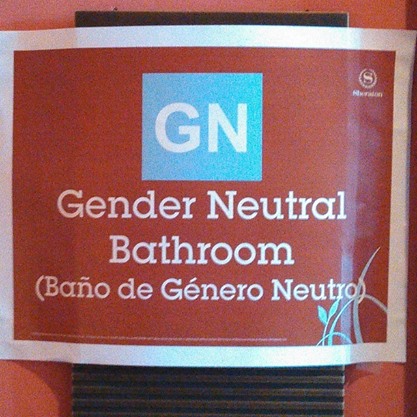
For a conference that has been widely critiqued for upholding white heteronormativity, and western-centered practices, among other injustices[4] it was great to walk into a space with gender neutral restrooms that read: “Baños de Género Neutro.”  This conference experience seems to be a reflection of changing energy and politics due to the leadership of radical women of color in the last decade or so in this feminist organizing space.[5]  The photo booths near the registration table were an ingenious part of this gathering to document the critical feminist gathering moments in San Juan, Puerto Rico.[6]

Theory and Activism

by Theresa Delgadillo

The NWSA Conference in San Juan, Puerto Rico drew over 2,000 participants and presented a special opportunity to learn more about feminist movements in Puerto Rico, but it was also a conference schedule filled with panels, workshops, roundtables, and discussions on feminist research around the globe. As outgoing NWSA President Yi-Chun Tricia Lin wrote in her welcome letter to the event: “the conference endeavors to take up the histories, geographies, affective dimensions, and political stakes of various feminist insubordinations in the spaces they occupy: intellectual and institutional, local and global, public and intimate, by choice and under duress.” The focus on “transgressions,” therefore, was an invitation to participate in analyzing actions and interventions of multiple kinds and in varied sites. The number of panels focused on Chicana and Latina Studies research seemed higher this year than in previous years, and so the conference presented an opportunity for networking both within and across fields. I took full advantage and attended, among others, a panel retrospectively examining the significance of the work of Barbara Smith (a co-author of the Combahee River Collective’s statement), a panel of women from the Puerto Rican island of Vieques (for many years, used by the U.S. for bombing practice) who have shifted into activism around economic opportunity in light of development trends on the island, Latina scholars presenting research on queer arts activism in Puerto Rico and Latina media pioneers in the U.S., and Asian American scholars examining affective labor and human rights discourses within Asian diasporas. NWSA was a place to engage with rich and interrelated work. At the 2014 American Studies Association conference it was reported at the evening keynote address that one session on the “keywords” trend in critical studies had proposed the elimination of “intersectionality” from the keywords vocabulary. However, at the NWSA conference the influence of the contributions of women color to critical theory were recognized and rigorously engaged across disciplines, geographies, and fields.

________________________________________________________________________

[1] For the words “Rasmea Odeh” please link: http://www.thenation.com/article/188033/will-rasmeah-odeh-go-prison-because-confession-obtained-through-torture#
[2] for the words “mass protest and organizing” please link: http://electronicintifada.net/blogs/nora-barrows-friedman/15-powerful-ways-student-activists-stood-palestine-2014
[3] for the words, “Jewish Voice for Peace” please link: http://jewishvoiceforpeace.org/
[4] Sandoval, Chela. (1990). “Feminism and Racism: A Report on the 1981 National Women’s Studies Association Conference.” Making Face, Making Soul: Haciendo Caras: Creative and Critical Perspectives by Women of Color. G. Anzaldúa. San Francisco, Aunt Lute.
[5] The 30th Annual NWSA Conference, “Difficult Dialogues,” with keynote speaker Angela Davis resonates this shift.
[6] Photos can be found the National Women’s Studies Association Facebook timeline.  Also, available is the bell hooks keynote at: http://www.nwsa.org/