Category Archives: Chicana and Chicano Studies

Collecting Memory: Chicana/o and Latina/o Lives Outside the Southwest

Documents from El Calendario Hispano de Michigan, from the Papers of Juana & Jesse Gonzales Held by Michigan State University Library

Documents from El Calendario Hispano de Michigan, from The Papers of Juana & Jesse Gonzales Held by Michigan State University Library

By Diana Rivera

Dr. Christine Marin’s (ASU) January essay here on Mujeres Talk brought attention to the work she and other Chicana/o and Latina/o archivists and librarians performed in building collections that document the history of our communities in the Southwestern US (21 January 2014). It brought to mind the fact that Mexican and Puerto Rican communities have also, for the past 100 years, been in areas beyond the Southwest and East Coast, including the Great Plains, the Pacific Northwest and in particular, the Great Lakes region. Their stories, their lives and sometimes their contributions have been documented through independent, government and academic narratives, reports, demographics, statistics and historical studies. Scholars such as Paul Schuster Taylor, Norman D. Humphrey and George T. Edson have written on Mexican migration and immigration to region while Lawrence R. Chenault, Clarence Senior and Abram J. Jaffe surveyed and recorded Puerto Rican migration early on. This work charted our migration routes, our living conditions and early settled-out communities. They also studied our labor and dependability patterns and sometimes touched on culture, tradition and history. None of these types of studies relied on the kept materials, keepsakes or oral histories of the Mexican and Puerto Rican communities. Instead, these reports and statistics provided a sanitized narrative of our growing presence in the early years.

Even though it should not fall only to Chicana/o or Latina/o librarians or archivists to build a Chicana/o-Latina/o Studies (CLS) collection, more often than not, it does. Regrettably, the number of Chicana/o and Latina/o graduates from Library & Information Science Degree Programs are not keeping up with a growing Latina/o  population in the US. Dr. Marin’s essay prompts the question: What is being done to preserve and conserve the history of Chicana/o and Latina/o communities not only in, but also OUTSIDE of the Southwest?

Internationally known Chicana/o-Latina/o Studies (CLS) librarians Dr. Christine Marin, Margo Gutierrez (UT-Austin), Lilly Castillo-Speed (UC Berkeley), Dr. Richard Chabran, Dr. Maria Teresa Marquez (UNM) and Nelida Perez (CUNY) laid the groundwork for me and my peers at libraries across the country to emulate. My predecessors, and some contemporaries, in libraries and archives who have built excellent collections have established a model that I have followed to develop and to build collections that document Chicana/o, Puerto Rican and Latina/o stories in the Great Lakes Region. These materials are now available for scholarly research, including government reports and academic work.

In a January comment on Dr. Marin’s essay here on Mujeres Talk, I noted that one of my first areas of responsibility as a new librarian was working with a small collection of maps stuck in the back of the Art Library at the Michigan State University Libraries (MSUL). As one of maybe two librarians of color there, I felt an affinity for this format, which seemed so out of place in a collection composed primarily of monographs. I was asked to take on Mexican Studies (mostly because I was of Mexican heritage) but went “rogue” by buying more titles on Chicana/o Studies than what was established in our collection development policy. In 1995, Chicana/o and Latina/o student protests on campus led to the university creation of a space honoring Cesar E. Chavez. The Cesar E. Chavez Collection is a multi-format and multidisciplinary collection on the life of Chavez, as well as the Mexican American and Puerto Rican presence and experience in the US.  With the assistance of Chicana/o and Puerto Rican students, we developed a healthy CLS collection unselfishly guided by Margo Gutierrez, the Mexican American and Latino Studies librarian and bibliographer at the UT Nettie Lee Benson Latin American Collection.

Our “multi-format” collection was initially a small collection of ephemeral vertical file material like flyers, brochures and newsclippings. It served a minimal role in the writing and teaching that students and faculty were doing on local and regional subjects in Chicana/o and Latina/o Studies. Instead, researchers were finding the histories, accounts and statistics in texts or in manuscript archives back in Texas, the rest of the Southwest and Mexico. There was little collected at MSUL that provided researchers with regionally unique or unpublished materials by organizations or individuals about local activities, including correspondences, speeches, pamphlets, agendas or meeting minutes. It was an apparent need and challenge to start archiving our history in  Michigan and the Great Lakes region. Although our language, culture and traditions pulled our hearts back to the Southwest, Mexico and Puerto Rico, our families, our memories and our stories began within the Great Lakes, Northeast or Great Plains regions. Now that we have more than a 100 year presence in these regions, it becomes more than important, actually critical to start gathering the histories and experiences of early Latina/o  communities in “el norte,” histories beyond the popularly understood geographic boundaries of “Aztlan” and Borinquen.

Collections of note that have included Chicana/o and Latina/o voices and materials are relatively new. These include the holdings of the University of Iowa Libraries Iowa’s Women’s Archives with the Mujeres Latinas project that includes the papers of 15 families dating from 1923, over 80 oral histories of Latinas/os, organizational records dating back to the 1960’s and other related collections; the University of Michigan Bentley Collection with a growing number of personal manuscript collections (6) and organizations (3); Hope College  (in Holland MI) with an early collection (1970s) of oral histories (many transcribed) and the MSUL  Jose F. Treviño Chicano/Latino Activism Collection with 18 manuscript collections (processed) with content dating to the 1940s. Our small vertical file at MSUL developed into the manuscript collections of donated papers of Mexican American community members in Michigan.  These collections now include photography, political buttons and other ephemera.

Although the manuscript collections donated by Michigan families are nowhere near the volume of those collections found in the Southwest (or now the Northeast at the CUNY-Hunter College Collection), they have provided a starting point for researchers focusing on Latina/os in the Great Lakes region to learn about the presence of Chicana/o and Latina/o  communities dating back to the early part of the 20th century.

Collections that encompass the range of eras, locations and subject matters that will provide a one-stop source for researchers inquiring about Latina/os in Michigan, Illinois, Ohio, Indiana or Wisconsin are hard to come by. However, we as librarians and archivists are at a pivotal point in time when the student activists, community leaders and closet archivists of the 1960’s no longer need or want their collections of papers, documents, newspaper clippings, pamphlets, scrapbooks, garage-printed-mimeograph machine of the ’60s chapbooks and publications, flyers, bumper stickers, buttons, posters and bandanas or t-shirts.  Some potential donors are not ready to entrust materials to an institution to which they have no history, affinity or connection.  Some are fearful that their long and carefully collected materials will be seen as unimportant or tossed. Others do not see their materials as important enough to donate or do not remember what is in their own collection that may unify or supplement the papers found in the collections of others.   And then some do not know how to approach an institution about archiving their materials or are confused about their ownership and access rights.

For academic or family archivists seeking a location to deposit or donate their teaching and research materials, or family papers consider these simple rules:

  1. Donate: Libraries and archives accept materials given to an institution. Once donated, materials become the property (except for the intellectual property rights / copyrights, which may be negotiated) of the institution.  A signed Gift Deed is important with the  conditions of ownership transfer and possible tax deduction opportunities clearly listed.
  2. Access and Restricted Access: Who can view materials, what they can view and when they can view them depends on the condition of the material, the institutions’ policies regarding use and duplication, the library speed in processing materials for public use, as well as any restrictions donors create on sealing sensitive materials for their and others’ protections for a specified number of years.
  3. Copyright: May be legally transferred to heirs or others.
  4. Inventory: The organization and inventory of donated materials is critically useful. It provides staff a useful guide to work from, limiting the number of hours required to process and make the manuscript collection available.
  5. Storage Expectations: The institution should re-house materials into acid-free, preservation quality boxes, folders, preservation sleeves (for fragile or aged material) and apply  appropriate curation methods.
  6. Monetary Donations: These are not a condition of having ones’ papers accepted by an archive. However, because many libraries and institutions are non-profit organizations, they might welcome any donation —  if one has the means — to be applied to the processing of donated materials.
  7. Find an Information Specialist: If you do not know of or can’t find an institution in your community to best help preserve and document our history, please do not throw it away. Please. Reach out to an information specialist (librarian, archivist or even a professor) for guidance, or even a  Mujeres Talk editor, for help on where to place potential material donations.

Diana Rivera is the Chicana/o Latina/o Studies Subject Specialist and Head of the Cesar E. Chavez Collection at the Michigan State University Libraries.
Review of Chopper! Chopper! Poetry from Bordered Lives

by Paloma Martinez-Cruz

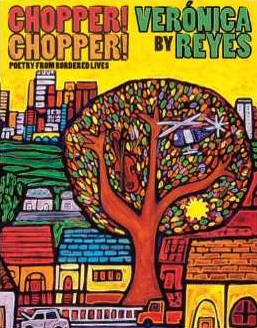
Verónica Reyes. Chopper! Chopper! Poetry from Bordered Lives. Pasadena, CA: Arktoi Books, 2013. 111 pages. ISBN 978-0-9890361-0-8. $18.95

chopperchopper coverI left my hometown of Los Angeles to attend college in the Bay Area, and then I left California altogether to attend graduate school in New York City. Many denizens of the San Francisco Bay and the five boroughs of New York City have no love for my birth town, so when people asked me where I was from, I felt shy about admitting I was from the place known as “72 suburbs in search of a city.”  One day a fellow student shared with me what he loved about it: “You can feel how it’s red and brown.” After he said this, I realized that he was right, and that so many of the quips about L.A. being anti-intellectual and superficial were, in truth, about the other L.A., the tinsel L.A. that eclipses our red and brown realities, until violence erupts in the streets, or Chicana feminist jota poets like Verónica Reyes sound the thunder of our lives in verse.

The poems in Chopper! Chopper!, Reyes’ first published collection, envision East L.A. as the continuity of Mexican experience, participating fully in an Americas-based spirituality that venerates the natural world.  As with physical sacred gatherings, the volume begins with a blessing.  The poem “Desert Rain: blessing the land” [sic] surveys the desert cityscape with devotion.

The agua took her back to her childhood in México

rain that blessed her alma como copal shrouding her skin

She inhaled the desert aroma over concrete, nopales,

and limones beneath splintered street telephone wires

Socorro breathed in once and inhaled México in East L.A.

While I am exhilarated by the red and brown affirmation of Mesoamerica in Los Angeles, some of the portraits of Chicana ethnicity in this volume echo others. From my perspective as a Latin American/Latina Studies scholar, I question what seems like a nostalgia that conflates spirit, nature, and nation. Although some of the poetic turns tended toward predictability, there is also much to recommend in this volume.  Reyes is at her best when she navigates the difficulty of voicing bicultural, transnational experience by moving in for the hyper close-up, telling us what she alone is capable of observing.  In “Theoretical Discourse over ‘Sopa’ (what does it really mean?),” she playfully employs academic jargon to try to make sense of a word that has multiple meanings.

All our lives we called it “sopa”

Differentiated “sopa” from fideo

            to estrellas or melones

labels for different pastas

titles to establish subjectivity

within the hegemonic world of pasta.

The poem concludes with the narrator and her sister agreeing to use the word sopa the same way that their mother had used it – to refer to Mexican rice – thereby legitimizing local, intimate knowledge over official language usage.

As in the postmodern approach to “sopa,” Reyes’ poetry consistently repositions authority so that cholos, jotas and bus patrons are key culture makers.  In “Super Queer,” the queer Chicana becomes a supernatural champion, managing to survive homophobia, bashing and “what you thought no human being can withstand.”  Where others are tempted to perceive marginalization or victimization, Reyes tells of pride and strength, urging the listener to “take off those silly straight lenses that skew your vision.”  In “El Bus,” the narrator is proud to announce, “I speak in bus routes,” which, as Angelenos and visitors to the city are aware, is a dialect spoken almost exclusively by the poorest of the poor.  In Reyes’ poem, the speaker claims “You got it, esa or ese, I know the system/It’s in my blood to travel the calles via el bus” as if to boast of royal lineage.  Reyes’ poems invert the parameters of social inclusion, so that queer and street folk decide who belongs, and misguided wearers of “silly straight lenses” and novice bus riders become the outlanders in need of charitable assistance.

Vehicles of surveillance and pesticide application populate Reyes’ poetic universe, producing a bellicose environment in which East L.A. residents are surrounded by drone-like aerial hostility.  “Green Helicopters” describes the apple-orchard helicopter that sprays toxins on the migrant workers, and “Chopper! Chopper!” depicts the play of young neighborhood children who turn the menacing sounds and lights of police helicopters into fantastic games.

The cops announced to the convict, “We know where you are.  We know…”

And Xochitl ran out of breath chasing the big white light piercing the darkness

She stopped and stared up at the helicopter slicing the chapopote sky for a moment

It was almost as if it were stuck like the mammoths, the saber-toothed tiger, the Chumash

woman whose bones remained deep underground until the archaeologist came

The people screamed and wailed to be set free from the tar that pulled them down

that swallowed them little by little as they struggled to get out from the bottom

Still the thick goo engulfed them hole suffocating their skin, filling their mouths

Xochitl’s brown eyes stared at the chopper swirling in East L.A.’s summer sky

But the helicopter broke free, pulled back its white light and flew away to the hill

Here, the child Xochitl plays under a tar firmament where the craft hovers like a relic from California’s Pleistocene epoch, witnessing centuries of ancestors struggle against asphyxiation across the sky: just another summer night in East L.A.

While most of Chopper! Chopper! must remain unexamined here, there can be no doubt that Reyes achieves what she sets out to do. In her poem “A Xicana Theorist,” her queer protagonist moves through a lesbian, Latina social space, and yet she poses the question, “Are we really safe?” The final verse reveals the highest potential that theoretical work can aspire to achieve.

She dances with the woman from the bar

She holds her gently around the waist

She leans her body closely into hers

She wants to cry and tell her she is hurt

…tell her she is tired of fighting

…tell her she feels alone and scared

She wants to heal her wounds

These last lines of “A Xicana Theorist” leave room for interpreting whether the wounds she wishes to heal belong to her or to her dance partner, and this blurring of bodily boundaries and subjects allows the reader to interpret a more expansive notion of selfhood that includes all the Latinas who are wearied by building their lives in spaces that are racially negative and sexually oppressive. The desire that is repeated in these last lines does not hone in on sexual appetite, which would make sense given the erotically charged environment of the bar, but rather emphasizes the act of telling. The telling is the medicine the poetic voice craves in order to heal wounds.

In the tar and asphalt prism of East L.A., Reyes’ poems unearth and celebrate centuries of red and brown truths. While some of the writing resorts to idealizing Mexico as a font of political and spiritual alignment, the collection convinces readers to rethink urban spaces and witness the cunning and courage that develop under a dome of both hyper vigilance and civil neglect.  In the midst of roaring engines, slicing blades and hostile surveillance lights, her courageous act of telling manages to cultivate a space of safety and healing: a place for pride to grow.

Paloma Martinez-Cruz, PhD, works in the areas of contemporary hemispheric cultural production, women of color feminism, performance and alternative epistemologies. She is the author of Women and Knowledge in Mesoamerica: From East L.A. to Anahuac (University of Arizona Press, 2011) and the translator of Ponciá Vicencio, the debut novel by Afro-Brazilian author Conceição Evaristo, about a young Afro-Brazilian woman’s journey from the land of her enslaved ancestors to the multiple dislocations produced by urban life. Martinez-Cruz is also the editor of Rebeldes: A Proyecto Latina Anthology, a collection of stories and art from 26 Latina women from the Midwest and beyond. Currently Martinez-Cruz is at work on a book publication examining the resistance fronts found in Chicano/a popular culture. [5/1/14 post updated to correct an editorial error]

Mexican Panda: My Short Life in Film School

by Linda Garcia Merchant

TITLE: Mexican Panda SCENE 1: EXTERIOR, SAN JUAN TEOTIHAUCÁN, MEXICO, PYRAMID OF THE SUN, POST NUCLEAR SPRING 2450AD, EARLY MORNING As the sun rises on a Post Nuclear Spring in 2450AD we see a wide tracking shot across the horizon of San Juan Teotihuacán Mexico with the Pyramid of the Sun in shadow. As the camera moves in on the dimly lit and foreboding pyramid we see the slight movement of Mexican grizzly bears at play. As the camera moves in we see they are not bears but Pandas. Three black and white Pandas chasing and catching a fourth black and tan Mexican Panda, beating it to death, then throwing the Panda off the Pyramid. The dead Panda lands on the ground at the feet of another black and tan Mexican Panda who has witnessed the murder. His eyes meet those of the three murdering Pandas now wiping the blood from their paws onto their fur. The three Pandas being to climb down the Pyramid towards Mexican Panda. He turns to run away from the Pyramid and into the forest.

Instructor: You said this is a fantasy? Me: Well yes and no. It’s an experimental fantasy with a moral lesson. The Pandas are a metaphor, you know symbolic of resistance to difference in the simple purity of their new world. Instructor: You should make them elephants. The Pandas. Make them elephants and it will work. Me: I can’t see elephants being able to climb or chase anything on a pyramid. Instructor: You did say it was experimental? You want us to suspend belief for your argument? Make them elephants. Me: I don’t understand why I need to do that. The Mexican Panda could exist if the post nuclear climate changed enough to create and support vegetation and atmosphere necessary for their survival. It is a hybridized creature born of the combination of Coati and grizzly bear, both existing in Mexico prior to the nuclear holocaust. It is probable even if it is experimental. Instructor: You have to consider your audience. I don’t understand Pandas with moral arguments. I understand Elephants.

While this conversation never actually happened during my time spent as a first year MFA in Film and Video at Columbia College in Chicago, many variations of it did. It was always the same, defending a script, a character, my choice of language, a setting, or even my moral arguments. I often felt like the fictional Mexican Panda character I’ve created above, similar to but definitely not the same as the other film school Pandas. I certainly experienced the same symbolic outcome as that of my Mexican Panda. The opportunity to get a teaching degree has been crushed and I have been hurled from the academic pyramid.

I remember getting the call about being accepted into the program; it came three days after my interview. It was 2008. I was in Austin, at Martha Cotera’s office/shrine to Chicana Feminism, scanning photographs for Sylvia Morales’ new film. The tone in my voice made Martha turn away from her desk to face me and, with a serious look on her face ask, “Is everything okay?” I told her the news: I had been accepted as a first year film student with a Follett Fellowship, the top prize for first year students which was full tuition for a year. That night we celebrated. When I called my momma in El Paso, she began to cry.

Two years earlier I had created Voces Primeras, a documentary film production company to capture the history of pioneering Latinas. I had made my first film about women I knew who had worked with mom in the movements, Mujeres de la Caucus Chicana (2007). I had spoken to everyone my mother knew about what I was doing. They all introduced me to other people from community organizations and universities. I learned about MALCS, NACCS and NWSA. It was at NWSA where I was introduced to the idea of going back to school and getting a terminal degree to be able to teach. It would be a way to engage and encourage other young people to want to do this work as I could not do it alone. I applied to Columbia College in Chicago because I liked the idea that I could bring my stories to a place that could teach me how to tell those stories on film. I wanted to be a great filmmaker and I was beginning to think that was possible.

Becoming a filmmaker is like learning another language. You master a language as you begin to think in that language. As a filmmaker, you learn to react to events and circumstances by assessing the scale of drama or how the dialogue or storyline will play out. Good filmmakers are always thinking about their stories. Great filmmakers live them. I had ideas about films I wanted to do and voiced these throughout my year in film school. I knew my skills in marketing and promotion would make distributing those films possible, but I also knew I needed to learn the language and processes of production. I defended my right to make the films I wanted, challenging every suggested change to my characters and their storylines. I do not recall hearing in any of the of the introductory sessions in graduate film school that defending my art was not allowed.

I lived for the conversations with my classmates, learning so much about the structure of writing scripts and creating shot lists. Teaching them about self promotion, helping them find locations in and around the city. We encouraged each other about character development and emotional arcs.  I can remember so many conversations from that year since first walking into the film school’s doors at 11th and Wabash. The conversation changed completely at the end of that first year, after my Focus Film review, a requirement to continue in the program that was critical of my independence and that ended with a recommendation that I leave the program.

It has been five years since I was dismissed. My classmates have produced their thesis films and I have gone to their screenings. I frequently walk past the building that marked my period of brief promise within the academy. I do not often enter and when I do I am always expecting someone to jump out at me and yell “GET OUT. That building continues to be a reminder of my failure to connect to a community and process required for teaching. It is a scar that sometimes opens, sometimes bleeds and never quite heals.

So in February of 2014, when I went to the first screening of The Black Sheep Roundtable, the Black Film Society’s (BFS) film about their Columbia College experience. I went to support their work. I thought, how brave to break the code of silence and speak to the challenging nature of film school. I was still afraid of that code. For five years I had not spoken publicly about that year. I was frightened, embarrassed, self conscious, self doubting, and thinking that these things had only happened to me.

As I watched these students sharing their pain, frustrations, and rejections I knew that if I would not reveal my own tragic journey, I would at least stand up and say how proud I was of their bravery. I shared enough to prompt the students to ask to hear my story and to include that interview in the final film. I said yes, praying on the train ride home that this was the right thing to do.

I went home and to the basement to open the plastic boxes marked “Columbia: Do Not Touch.”  At the very top of the neatly packed materials was my dismissal letter. I sat on the floor reading the letter, class notes, and then my final paper on the Virgen de Guadalupe as Oppressor in the film Maria Candelaria (Xochimilco) (1944).

I went to the interview with BFS student filmmakers a few days later with my letter and final paper, along with newspaper articles about my work, posters from festivals and screenings, some awards and a journal article I had written. All the things I had done while in school. The interview went quickly. I got more emotional and personal than I thought I would.
It would be a few weeks before the next screening of the newly edited film that would include my interview. During that time I thought about how completely that short year of school changed my life. A month after I was dismissed, I began working with Maria Cotera on Chicana Por Mi Raza. It would take another two years before I felt confident enough to take on making a narrative short and even then, the validation didn’t happen until in a critical scene I knew we had the money shot. I was sure then that one day I would be a great director.

I went to the screening of the final cut alone. My stomach in knots and my heart leaping from my chest, I walked into the packed theater and saw a number of faculty, the president of the college and the chairman of the department. I sat in the very last row, three seats from the exit. I was sitting next to one of the professors from the application interview. I heard nothing and felt even less. When the lights went down and the film began, my mouth began to water and I felt nauseous, but I stayed in that seat and willed myself to watch.

It got easier, each time I came on the screen, what I said was appropriate to the points being made. By the end of the film, all I could think was, what really smart choices the director made about all the contributions.

The lights came up, the students read a statement of suggestions for improvement, thanked everyone for coming and then had a Q&A. There were two screenings that night and people for the second screening were milling around the back doors waiting for the Q&A to end. The president spoke about diversity and that the bigger systemic issues needed to be addressed. The chairman said nothing. A few of the faculty offered solutions that included courses already being taught and a willingness to work with the students to make changes. I said nothing.

The faculty left, a few more came in, the professor sitting next to me said I had done a good job articulating my pain. I told him that it was hard and it still is. He patted my arm and smiled and said it was good to see me.

The second screening, also packed, included a lot more community members and students, and colleagues I had invited. During the Q&A one of those colleagues asked the BFS students how they knew of my story. Reina, the president of the BFS student group, pointed to me and asked if I would like to share. I said that an understanding about diversity did exist at the school and it came in the face of a black man, a white man and a white woman. I said that I learned how to write scripts and direct films from these three people, who were willing to have the hard conversations about process with me. I said what I’ve learned is still gospel and is what has enabled me to make at least one award winning narrative short.

Lots of friends and family and colleagues that have seen the film online have said how proud they are of me for finally speaking up about this. I have also learned that the embarrassment, failure and self doubt I felt were wasted emotions, as I did nothing wrong. I was vocal about defending my stories and art to a world that insisted I make films that only spoke to a broader, mainstream audience.

I really want to believe that Columbia College will listen to the voices of its black film students. I hope the lesson learned is that all art has equal value. I hope that the stories of film students of color and the body of work produced by filmmakers of color, is given the importance and attention that other filmmakers receive. The students of color pay no less tuition to attend these schools. Based on this fact alone their demands for equal resources has merit.

In a fair and level world the academic pyramid would see the tremendous potential of every filmmaker walking though those doors. Students, eager to learn about technique and craft to then apply that foundation to their stories. Stories cultivated from history and imagination and manner just waiting for a space to become real. Even if the world is not fair and level, the administration could create a space within the college that supports the talents of all of its students. How many truly great films and performances could come from a space where we are all equal, have value and can learn from each other?

Ultimately the academic pyramid can and will have to accommodate both this Mexican and the non-Mexican Panda. We can’t all be killed off or made in to elephants.

SCENE 2: EXTERIOR JUNGLE THREE DAYS LATER MID AFTERNOON
Mexican Panda, running and hiding for three days through the wilderness, comes upon a small break in the jungle, that ends by a small pool. He sees other black and white Pandas with cubs, some of which are black and tan like him. He watches for a very long time before coming closer to the small but happy group, some swimming in the pool, others cleaning fruit. A girl Panda sees him watching from a distance and motions him to come closer. She is smiling.

Linda Garcia Merchant is an independent filmmaker and digital media producer. She has created several short independent films both individually and in collaboration with others. A native of Chicago and life-long Midwestern Chicana, she  is a 2014 Contributing Blogger on Mujeres Talk.


From Repatriation to Representation: Latina/o Participation in Detroit Electoral Politics

by Elena Herrada

I am an elected member of the Detroit School Board under an emergency manager. I am also a candidate for Detroit’s 6th Representative District. Entering the race is a victory in itself. I am running without the giant funding the other candidates have, but I am running as an act of public service, to speak truth, to stand up for our elders who were intimidated out of public participation and remained private. It was during the late 1970s in the Chicano Boricua Studies classes at Wayne State University (CBS-WSU) in Detroit that classmates and I began to put together the story of this intimidation. We began to understand what happened to our families and why they acted as they did. This became essential to understanding where we are now and how it came to be that we have so little political power in Detroit and Michigan.

Mexicans began arriving in Detroit en masse around 1920 to respond to a call by Henry Ford’s auto plants. The promise of $5.00 per day and the chaos of the Mexican Revolution converged to send Mexicans north.  Approximately 15,000 Mexicans came to Detroit, including my grandparents. My grandfather married my grandmother, Elisa Hernandez Carranza in San Antonio Texas where she had been working as a governess for an American family who had brought her from Mexico to care for their children.  He worked on the railroad in New York and in Kansas and was drafted into World War I.

Here in Detroit, they started their family. My grandfather was fortunate to get hired by Ford, but with uncertain times, he was laid off in 1922. He worked odd jobs to support the growing family. When the Depression hit, as we have now learned, the welfare department came knocking on Mexican’s doors. Their four children were born in Detroit already when the deportations came.

Between 1929 and 1939, one million Mexicans – 60% of who were born in the US – were “repatriated.”  This is not the word for all; many who were born here and kicked out were depatriated, a word now used in our research of this sad period. This was done through a program cooked up  and never codified into law – to scapegoat a people and blame them – the most vulnerable and conspicuous (race, culture, language), rather than an economy built on a house of cards in a system riddled with contradiction and greed. A discussion for another time, but noteworthy here, is a comparison to today’s Detroit pensioners and the privatization of our city. Nearly identical play books were used for the hate mongering justification of removal of a people through state power and theft of pensions.  Racism is an essential for carrying off such a feat.

My family, like thousands of others, went back to Mexico. I have spent my life getting this story. Mexican Detroit was hardest hit between 1930 and 1932 because of industry recruitment in the better days of the early 1920s; so there were many to seek and many to deport.  It was when I was in the CBS-WSU program in the late 1970s that I learned about the repatriation from reading  Abraham Hoffman’s “Unwanted Mexican Americans.” When our little local Detroit Oral History Committee, made up of repatriados and descendants reached out to scholars Francisco Balderrama and Raymond Rodriguez, they came to Detroit for a book signing and then wrote a second edition with much of their research on Detroit included. 

We do not know how many of those repatriated returned.  We do know that many died along the way back and that many did not come back to Detroit; they went to other cities. Others returned during the Bracero Programs and found out then that they were US born repatriados. We lost track of thousands of our people in that decade and beyond. Children born here were not always told they were US citizens and lived their entire lives without ever claiming their birthright.

It was in the 1970s that the Chicano Movement gave rise to our pride. It was a time when we realized that our elders had been treated badly for things they did nothing to deserve and that our culture and language were to be embraced, not rejected. And it was a time for a new influx of Latina/os. In 1974, there were demands for bilingual education in the schools and Michigan passed the law for bilingual education.

Because we were based in an auto industry where no formal education was needed to make a good living, we had few Chicano or Latino people to fill the jobs of bilingual teachers and administrators. Detroit was considered the Promised Land because one could come here and change one’s life without changing one’s class. Thus, we had few college grads that could be teachers. Chicanos/as arrived in Detroit from Texas, California and New Mexico to fill the need. The 60s and 70s in Detroit, like the rest of the world, ushered in a new day for many oppressed peoples. Latinos here saw the passage of the Bilingual Education Act, the creation of new community based organizations run for and by Latinos and the creation of Latino en Marcha, later to become CBS-WSU. Many of today’s agency directors came through this important leadership/ academic program.

Among the organizations that came into existence in a heavily Mexican and Latino populated southwest Detroit were:  LASED (Latin Americans for Social and Economic Development), SER, (Service, Employment, Rehabilitation), CHASS Clinic (Community Health and Social Services) and Latino Family Services.

LASED was created as an incubator to start other projects. Its mission was to get Latinos included in positions where we had previously been excluded: government, civil service and education. It was the primary advocacy agency that sued the State Department of Education for failure to provide language instruction to Spanish speaking students, thus ushering in bilingual education. There was an active Brown Beret chapter here as well as a thriving UFW boycott office. The UAW was a strong supporter of the farm workers, so our autoworker parents were part of the growing UFW movement for justice in the fields. We were part of a movement that uplifted us; no more hiding who we were.

At the same time these organizations were forming, another community organization formed called Southwest Mental Health (SMH), now known as Southwest Solutions (SS). Its director, unlike the Latino agencies, was and is non-Latino. It is important, also to note that most of the people who started these organizations in the 70s are still there, either as board members or as directors. In 1979 SMH began to expand its mission into housing. It has since acquired hundreds of properties located in the Latino community and again expanded its mission far beyond mental health. It includes its own housing office, real estate corporation, construction company, its own mortgage lender and educational contracts and has also expanded into health care, having opened its own clinic in SW Detroit.

An elder activist in our community, Sister Consuelo Alcala asked me to look into why the Latino agencies were losing so much ground to SS. She had been part of the creation of the agencies and was concerned that the existing Latino agencies were receiving very little funding now from their traditional sources: the United Way of Southeastern Michigan, the Neighborhood Opportunity Fund, etc. While the buildings and the organizations still exist, they are shadows of their former selves. The services once offered by LaSED, CHASS, SER, Latino Family Services all are now offered by the mega non-profit Southwest Solutions, who are also the largest landlord in the community.

I set out to interview the directors of the agencies, not sure how to approach an issue which many in our community had quietly complained about for years. We decided the best way to present our findings was to hold a hearing on the issue of hegemony in SW Detroit. This is where we learned how much influence the philanthropic world truly wields in Detroit and its negative impact on the Latino community as well as its impact on our ability to get our own people elected to office.

Our first Detroit Latin/o elected to office was Representative Belda Garza D-8th District in 1998. She was a determined political outsider who won, making history for Detroit. Her second term she ran unopposed, but the third term she was beat by a non-Latino, followed by his staff person who were both term-limited. The now heir apparent in the race is also non-Latina/o. Lots more money than our community has ever seen is in the mix now. Very little is left of public life in Detroit. As we speak, our trash pick up has been privatized, our water is about to be seized and pensions are up for grabs. The Detroit News reported that the heads of the foundations that rule Detroit met with the bankruptcy judge but because they are private entities, they do not have to report what they talked about. Our lives. Privatized. I mention this because our political races have been privatized; the non profits  (banks in drag) control all public life.

My first action as an elected school board member was to stop the efforts of the non-profits that went to city council and asked them to abolish the school board and put it under mayoral control, the first move before dismantling public education and parceling it out to charter schools. Jones Day, a bankruptcy law firm has replaced the government in Detroit; there is a  possibility of taking away Detroiters’ pensions to pay illegal swap loans to the banks it represents. I am running as an act of public service. To speak truth, to stand up for our elders who were intimidated out of public participation. Entering the race is a victory in itself, a victory of embracing public participation.


[1]  B alderamma, Francisco E, and Raymond Rodriguez.  Decade of Betrayal: Mexican Repatriation in the 1930s. Albuquerque: University of New

Mexico Press, 2006. 

Elena Herrada  is a lifelong, second and one half generation Detroiter and daughter of a repatriado family (Detroit-Aguas Calientes-Detroit). Herrada is the daughter, granddaughter and mother of auto workers and an urban activist, critic and feminist. She is a co-founder of Fronteras Norteñas, an organization which chronicles the life of Mexicans in Michigan and a co-founder of Centro Obrero de Detroit, an immigrant rights organization formed in 2006. Herrada teaches at Wayne County Community College, volunteers with LASED ( Latin Americans for Social and Economic Development) teaching ESL and worker rights. She is currently running for State Representative in House District 6 on a platform of defense of public education and freedom from emergency managers for all communities of color and the restoration of their voting rights.