Category Archives: Chicana and Chicano Studies

What the Film “Latino Americans” Offers and Misses

Orozco, Cynthia02

By Dr. Cynthia E. Orozco

Kudos to all the people who developed the PBS six part Latino Americans (2013) film series. The lenses of race, class, nationality, transnationalism and citizenship are successfully woven throughout six different eras. Despite the inclusive voices of Chicana and Latina historians Vicki L. Ruiz, Maria Cristina Garcia and Virginia Sánchez-Korrol, and despite excellent stories about women like Apolinaria Lorenzana, Rita Moreno, Dolores Huerta, Julia Alvarez, Gloria Estefan, and Maria Elena Salinas, the film series lacks a focused lens on gender and sexuality throughout the film. The problems of sexism, heterosexism and homophobia are ignored.

I will look at each episode highlighting key aspects of each episode and offer ideas as to what could have been included. Educators may supplement their teaching accordingly.

Episode 1: “Foreigners in Their Own Land” (1565-1880) provides a broad sweep though most attention is to post-1836. A focus on 1492 to 1821 or 1848 would have been more appropriate. The “Spanish colonial era” included Spanish presence in twenty-five states of the current U.S. and key civil settlements. Their interaction with Indian nations is essential in accounting for the pandemic that European disease brought to the Americas; Spanish genocide of Indians; Spanish slavery (encomienda system); mestizaje as well as the foundational race/caste/gendered/sexed status of Spanish, mestizo, caste and Indian peoples; and sexual violence. “Our” Spanish lands were Indian homelands.

Episode 2: “Empire of Dreams” (1880-1942) should have been two episodes. This episode provides excellent treatment of the Spanish American War and U.S. incorporation of Puerto Rico, the Mexican Revolution and resulting immigration to the U.S., and deportation of Mexican descent people in the 1930s. An 1898-1941 episode is needed to address the rise of racial segregation, the struggle for women’s suffrage, the rise of the Mexican American civil rights movement, and school desegregation cases in the 1920s and 30s. Adelina Otero Warren, suffragist and Congressional candidate is missed as was Concha Ortiz y Pino, state legislator in New Mexico in the 1930s.

Episode 3: “War and Peace” (1942 to 1954) addresses the “birth” of the Mexican American Civil Rights Movement, the rise of Dr. Hector Garcia, the Bracero Program, Operation Wetback, and Rosita the Riveter. World War II is the focus so as to provide redress for what filmmaker Ken Burns did not do in his PBS World War II series. In fact, this six part series resulted from numerous Latino and Latina protests of Burns’ film. Yet, the Mexican American Civil Rights Movement did not just emerge from World War II, the American GI Forum, and Dr. Hector Garcia. Instead, a focus on World War I is needed to explain this historical development that includes LULAC and activist/lawyer Alonso S. Perales. Garcia was a LULACer and without LULAC there would be no American G.I. Forum. Civil rights activism in the 1920s and the 1930s, including significant political activism by Ladies LULAC and in New Mexico is unfortunately ignored. Moreover, a Latina/o film focus on World War II must mention U.S. Senator Dennis Chavez and the Federal Employment Practices Commission (FEPC), the first federal civil rights agency which outlawed racially-defined wages for people of Mexican descent and Puerto Ricans.

Episode 4: “New Latinos” (1946-1965) is excellent. It addresses the second major migration of Puerto Ricans to the U.S. due to Operation Bootstrap; reveals the welcome of Cubans by anti-Communist U.S. forces; the rise of Herman Badillo, Puerto Rican Congressman; and the arrival of Dominicans in the U.S. due to the dictatorship in their country. The film mentions how women took on gender-prescribed employment. Birth control experimentation on Puerto Rican women is excluded from Latino Americans as is any mention of the Daughters of Bilitis, the first out lesbian organization.

Episode 5: “Prejudice and Pride” (1965-1980) focuses on the rise of the Chicano Movement.  Much like the 1996 documentary Chicano! the focus here is on regional movements and well-known male leaders although Latino Americans also includes Willie Velasquez. Attention to movement machismo/sexism/homophobia is, however, ignored as is the rise of Latina feminism. How are we to explain the rise of Latinas in the 1970s including Supreme Court Justice Sotomayor without this? No Stonewall Uprising either.

Episode 6: “Peril and Promise” (1980-1910) covers the second wave of Cuban immigration; the arrival of Guatemalans, El Salvadorans, and Nicaraguans; and the diaspora of Latina/os into every U.S. state. Likewise it shows the rise of English-only efforts and anti-Latina/o immigrant sentiment/policies. Linda Chavez, Republican, speaks favorably toward immigrants and Dreamers. Feminist moments and LGBT activism are ignored.

The year is 2013; filmmakers must account for sexism and homophobia in the history of communities of color. These added lenses would have made a good film great.

Dr. Cynthia E. Orozco is Chair of History, Humanities and Social Sciences at ENMU Ruidoso. She is the author of No Mexicans, Women or Dogs Allowed: The Rise of the Mexican American Civil Rights Movement; associate editor of Latinas in the United States: An Historical Encyclopedia; co-editor of Mexican Americans in Texas History; author of 80 articles in the New Handbook of Texas; and author of over 50 newspaper articles and letters. She is also co-founder of the Chicana Caucus in the National Association for Chicana and Chicano Studies and the daughter of Mexican immigrants.


The Goal is Simple: Protect, Conserve and Archive the Chicano/a and Latino/a Experience in the Southwest

2011 photo "Miner Mural, Detail (Superior, Arizona)" by Cobalt123

2011 photo “Miner Mural, Detail (Superior, Arizona)” by Cobalt123

By Dr. Christine Marin

Chicano and/or Mexican American student activism during the era of the Chicano Civil Rights Movement was the “mother” of that creation known in 1969-1970 as Chicano Studies Collections, usually housed in university library departments called Ethnic Studies or Archives and Special Collections. Since then, the southwestern states of Arizona, California, Colorado, New Mexico, and Texas have seen the rising interest in the research and scholarship of Chicana/o, Mexican American, Hispanic, and Latina/o students and faculty, and others of course, who continue to press their libraries to collect and house primary and secondary sources in Chicana/o and Latina/o Studies. For example, the Chicano/a Research Collection at the Hayden Library at Arizona State University; the Nettie Lee Benson Latin American Collection at the Library, University of Texas-Austin; the Chicano Studies Library at the University of California-Berkeley; the Chicano Studies Research Library in Los Angeles; and the California Ethnic and Multicultural Archives at the University of California-Santa Barbara have enjoyed great success in the decades following the Chicano Civil Rights Movement.

Archivists at Chicana/o and Latina/o repositories and university libraries seek to document and protect the rights of these cultural communities by capturing their collective memories. Through these efforts, we work to ensure access to Hispanic/Mexican/Mexican American and Latina/o histories and expand future opportunities. We work, in short, to preserve these legacies for students, faculty, researchers, writers, and scholars today and in the future. It is easy to understand why it is the duty of the archivist to value and appreciate the complexity and diversity of Mexicana/o and Latina/o communities and to collect, preserve, and make accessible materials that are representative of their culture and history. Materials acquired are often unique, specialized or one-of-a-kind. For example, they might be rare legal or business documents in Spanish; or written letters that describe life experiences across the U.S.-Mexico border; or marriage, school or religious documents of the late 1890s or early 1900s. They are to be preserved for use today and also for future generations of researchers. They are to be protected from theft, physical damage, or deterioration. It stands to reason that Chicana/o and Latina/o archival repositories are now the intellectual gate-keepers of cultural knowledge with archivists playing a significant role in their university’s ability to attract and retain Latina/o faculty and students.

At the Society of American Archivists’ (SAA) Annual Meeting at the University of California in Los Angeles in 2003, a pre-conference event titled Memoria, Voz y Patrimonio (Memory, Voice and Heritage) challenged participants to consider their roles as archivists and representatives of local communities in Chicana/o and Latina/o Studies. The gathering addressed questions about the acquisition, preservation, and maintenance of archival materials in light of new technologies in archiving Latina/o history, identity, and spirit. Those present discussed the importance of preserving primary sources in print, but also addressed the necessity of preserving and archiving films, photographs, ephemera, broadsides (posters), videos, cassette tapes, and reel-to-reel tapes.  This work requires archivists to learn new technologies, and in 2003 those at the SAA pre-conference were coping with new challenges in using computers, electronic databases and records, and other new technologies — all so that they could teach patrons and students how to access information in their archival repositories. Those of us working in Chicana/o and Latina/o archival repositories or libraries learn to interweave our duties and responsibilities in collection development, reference services, outreach, research, publishing, and service. This interdependence represents the highest level of professionalism in the work of an archivist, historian, or librarian. The 2003 SAA pre-conference made it clear, too, that financial and human resources are important tools in calling attention to the importance of Chicana/o and Latina/o archives and libraries in the southwestern region and elsewhere. That point is still important to consider today in these times of lean archives and library budgets.

Chicana/o and Latina/o archivists take very seriously their role in supporting repositories and libraries and in ensuring access to collections that house the cultural achievements and records of contributions to state and regional development of Chicana/o and Latina/o communities. They work with potential donors, community activists, labor organizers, teachers, educators, entrepreneurs, performing artists, writers, historians, and others whose personal archives provide meaning and context to their own legacies.

Many archivists work with local high schools and programs aimed at increasing the admission rates of Latina/o students to community colleges or universities and their success in higher education. A case in point: an archivist at an Arizona university provides workshops on oral history and methodology and helps high school teachers learn how to train students in capturing the stories and narratives of Latina/o and Chicana/o community members. The completed oral histories or filmed documentaries produced by these students and gathered by the teacher are placed in the university library’s Chicana/o and Latina/o archival repository where they are accessible to researchers and others with an interest in that community’s history. In so doing, high school students gain a better understanding of how and why their research becomes an important resource for others. Another archivist might provide orientations or tours of a Chicana/o and Latina/o archival repository to high school students as a way for them to understand the importance of using the resources in a university library and archives.  In 2004, the Society of American Archivists (SAA) conducted the “Archival Census and Education Needs Survey in the United States.”[1] At least 108 Latina/o or Hispanic SAA members reported that they “learned about the value of archives from using them.”  Perhaps these archivists were exposed to archival repositories as high school students and grew to understand the role they would play in their own experiences as college and university students. Today, our work with K-12 students may spur them on to want to become archivists in a Chicana/o and Latina/o collections.

There are new challenges, however, on the western horizons of Chicana/o and Latina/o history and its archives that may impact their continued availability to researchers. These new challenges are not merely financial ones. Instead, they are political challenges to Chicana/o and Latina/o communities that are also linked to the work of the archivists. In 2010, for example, new controversy and tensions surrounding Chicana/o Studies and recent legislation in Arizona makes archivists question their work in a southern Arizona high school district. Arizona’s state superintendent of public instruction said the Mexican American Studies (MAS) program taught in the public high school in an urban center violated a state law banning courses that “promote resentment toward another race or class.”[2] The school district appealed and in late 2011, a state administrative law judge affirmed the decision and the MAS program was eliminated from the public school curriculum. Elimination of a high school curriculum not only makes it more difficult for students to be successful at a community college or university level, but it also curtails a successful collaboration between the university library and high schools in collecting archival materials.

In 2010, political tensions in the Chicana/o and Latina/o communities of Arizona surrounding immigration laws began anew. Individuals of Mexican or Latina/o heritage currently represent over thirty percent of Arizona’s citizens.[3] They make important contributions to Arizona in many ways. Arizona’s history is rich in cultural diversity and its history must be preserved in order to enable as complete an understanding of the state as much as possible, yet these new tensions impact the collection of primary source materials, relationships with donors, and funding or endowment projects to preserve individual and family archives. Would monetary donations for the preservation of Chicana/o and Latina/o collections need to be returned? Are Chicana/o and Latina/o Studies programs, courses and archives all at risk? Is financial support for and use of Chicana/o and Latina/o archival repositories at these university or community college libraries also at risk?

The political ramifications of questions like these impact a wider range of constituents,  archivists and major university libraries outside the state of Arizona. These risks have been met with another wave of Chicana/o and Latina/o student and faculty activism that has created fresh  support for new Chicana/o and Latina/o archival repositories and programs and for new positions and appointments at major university libraries. For example, in the summer of 2010, the Chicana/o archival collection  “Unidos Por La Causa: the Chicana and Chicano Experience in San Diego,” made its debut in the San Diego State University Library.[4] This Chicana and Chicano Studies Archive was created through the efforts of a committee of librarians, archivists, library staff, professors, and community activists. In another example, the California State University at Los Angeles (CSULA) Library recently celebrated the establishment of the East Los Angeles Archives to “advance scholarship in Chicano/Latino studies and Los Angeles history through the collection of primary research materials.” Other university libraries are seeking Chicana/o and Latina/o archivists to fill newly created academic positions and appointments. Their main responsibilities are to begin and build new Chicana/o and Latina/o archives in folklore, music, rare books, and manuscripts. We can see this at the University of Texas-Pan American, which offers a new archivist opportunities to engage in research and writing and to develop manuscript collections that focus on Latina/os, Border Studies, and Mexican folklore. The University of North Texas Libraries in Denton sought a Latina/o archivist to coordinate with a high-level university library administrator in acquiring new Chicana/o and Latina/o archival collections. The Mexican Studies Institute opened at the City University of New York (CUNY) with a goal of establishing Mexican, Mexican American, and Chicana/o Studies courses in New York City high schools. A Latino/a archivist or librarian will most likely assist faculty in the creation and implementation of this endeavor and begin to collect books and materials for the Institute.

At the 2012 Annual Meeting of the Society of American Archivists in San Diego, titled  “Beyond Borders,” Latina/o archivists engaged in discussions and presentations about the importance of collecting the experiences of Latinas whose stories continue to remain invisible or ignored; the collection of  Spanish-language primary sources to tell the history of the American West and Mexico; and the  importance of collaboration between archivists on both sides of the U.S.-Mexico border in order to gather research on the experiences of undocumented Mexicans in today’s politically-charged borderlands environment, one that views Mexican immigrants unfavorably.

Archivists are guided by professional core values and codes of ethics that outline their professional responsibilities. These include collection of a “diversity of viewpoints on social, political, and intellectual issues, as represented…in archival records.”[5] That is our commitment, because we know that the public will benefit from the knowledge and insight generated through study of these materials.


[1] Beaumont, Nancy P, and Victoria I. Walch. Archival Census and Education Needs Survey in the United States, 2004. Ann Arbor, MI: Inter-university Consortium for Political and Social Research [distributor], 2005. Internet resource.  [2] Grado, Gary. “Arizona’s Ethnic Studies Attorneys Use TUSD Officials’ Words Against Them.” Arizona Capitol Times [Phoenix, AZ] 22 Nov 2011.  [3] http://quickfacts.census.gov/qfd/states/04000.html  [4] “A New Chicana/o Archive at SDSU: Unidos Por La Causa.” La Prensa San Diego [San Diego, CA] 08 Oct 2010: 8.  [5] http://www2.archivists.org/statements/saa-core-values-statement-and-code-of-ethics

Dr. Christine Marin is a Professor Emeritus of Arizona State University where she led the Chicano/a Research Collection in the Department of Archives and Special Collections at the Hayden Library.

Renewal at Mujeres Talk

September 30, 2013

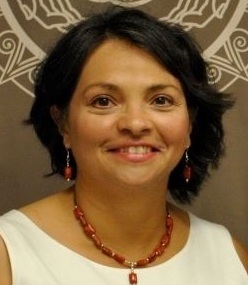
We have news of departures and changes at MT to share with our readers today. We hope you will join us in thanking Sara A. Ramírez, Elena Gutiérrez and Ella Díaz for their service!

Our extremely talented Co-Editor/Moderator from 2012-2013 Sara A. Ramírez is stepping down from this role. A graduate student in Ethnic Studies at UC-Berkeley, Sara will be devoting her time and energy this academic year to work on her dissertation, which promises to be a smart, ambitious, and innovative contribution to Ethnic and Gender Studies. While we will all dearly miss working with Sara, we are excited for her that she has reached this stage in her work and wish her wonderful and inspired writing days ahead. If we were thinking only of ourselves, we might be tempted to say that her departure is not good news, but knowing how long and hard Sara has worked to make it to dissertation stage we share her joy in taking this next step. We hope she knows that she can continue to rely on all of us for support in her journey.

Since joining the Mujeres Talk Editorial Collective last year, Sara A. Ramírez has been a phenomenal contributor and collaborator. As both a lead editor and a second reader, she has corresponded with authors and solicited and/or reviewed no less than eight essays during this past year. Her commitment, dedication and collaborative skills impressed us all as exceptional, especially for a young scholar. We know that these will serve her well in her future career in academia. Sara always brought new ideas to our editorial discussions and successfully followed through on them. She was responsible and forthright in consulting with colleagues on the Collective when thorny issues surfaced. She deftly managed to incorporate varied feedback into editing suggestions to authors. Sara is a terrific editor, both careful and caring in her comments to authors. Most importantly, in her every action Sara conveyed her strong feminist ethics to build, contribute, and deepen opportunities for Chicana, Latina, and Native American women, queer and transgender folks in the academy. For these reasons, we want to take this moment to publicly thank Sara A. Ramírez for her exceptional service to Mujeres Talk and MALCS.

A second member of our Editorial Collective is also moving on to an exciting new project. Associate Professor Elena Gutiérrez is leaving Mujeres Talk to take on leadership responsibilities on another digital project: the Reproductive Justice Virtual Library. On the Mujeres Talk Editorial Collective, Elena reviewed submissions, contributed to discussions about our editorial guidelines, solicited essays for the site, and wrote an excellent essay for Mujeres Talk on the anniversary of Roe v. Wade earlier this year. Elena will be curating the Reproductive Justice Virtual Library site with movement activists and scholars across the nation. We have no doubt that Elena’s many talents in editing and writing will make RJVL a great site. We are excited about this new site, which expands the digital and online presence of women of color even further, so we wish Elena Gutiérrez every success in this exciting new endeavor!

Ella Díaz, who has contributed several excellent essays to Mujeres Talk on adjunct faculty, Latina art, sexuality and politics, mentoring, and the importance of digital publication for women of color, and who has also been a careful, generous, and keen reviewer of submissions to Mujeres Talk, will return to her earlier role as an occasional contributor to Mujeres Talk rather than a regular member of the Editorial Collective. Readers may remember that Ella joined the Collective earlier this year and contributed to the further development of editorial policy guidelines for this unique format. Ella’s enthusiasm and energy as well as her expertise in art and performance and excellent collaborative and critical skills will continue to make a valuable contribution to Mujeres Talk in this more limited role. We also wish her every success in her continued role on the MALCS Coordinating Committee and in her academic career — students at Cornell are lucky to have Ella as a professor!

Finally, we’d like to announce that Mujeres Talk will become an independent website as of October 2013! Look for an announcement of our new site soon! We plan to be up and running later this month and will be returning to our previous biweekly publication on Mondays. We developed Mujeres Talk as a project within MALCS to serve the mission and goals of the organization in an online format. In any growth process there are transitions and transformations. We have determined that continuing to grow and evolve Mujeres Talk and its capabilities will be best accomplished as a site independent of MALCS. We support the principles and goals of MALCS as we continue to build space for Chicanas, Latinas, and Native American women in the academy. We have put forward a proposal for preserving a digital archive of our site from its inception in January 2011 through today, September 2013, to the MALCS national leadership. We hope that our regular readers will continue to contribute to and follow the site. We are excited to embark on this new journey with you and your support!

Theresa Delgadillo
Inés Hernandez-Avila
Felicity Amaya Schaeffer
Elena Gutiérrez
Lucila Ek
Lourdes Alberto
Ella Díaz

Comment(s):

  1. Anonymous    October 8, 2013 at 7:17 PM

    Dr. Diaz’ article both impressed me and saddened me, as I remember well my first three years as Lecturer(hired in a tenure-track position), 5 years as Assistant Prof, 21 years as a Lecturer(with employment security). People gave me much advice, but I could not lfollow it. I had a destiny to fulfill. Me and a large number of other people, faculty, staff, and students,working in UC System set out to transform it. Were we demented? Did we make a difference? I have no answers, but would do it all over again if I could. In the academic world, everything is negotiable. ASR

  2. Sara A. Ramírez    October 11, 2013 at 1:57 PM

    Thank you to the MT Collective for being such fantastic mujeres with whom to work. My experience with MT–especially under the guidance of Theresa Delgadillo and Seline Szkupinski Quiroga–has helped me to understand the complexities of feminist editorial work. Many thanks for this wonderful opportunity.

  3. Theresa Delgadillo, Co-Editor/Moderator    October 12, 2013 at 11:54 AM

    Many thanks to the many who have emailed us personally to express your continued support for Mujeres Talk as an independent site — we’re looking forward to continuing to hear from and work with all!

Latina/o Futures, Literatures, and Necessary Tensions

April 15, 2013

"2009-12-04 JJAY -27" by Aloucha from Flickr.

“2009-12-04 JJAY -27” by Aloucha from Flickr.

by Susan C. Méndez

Recently, I attended John Jay College of Criminal Justice’s 1st Biennial Latina/o Literary Theory & Criticism Conference entitled, “Haciendo Caminos: Mapping the Futures of U.S. Latina/o Literatures.” The conference organizers Richard Perez and Belinda Linn Rincón did a phenomenal job of arranging provocative keynote addresses by Ramón Saldívar, José Esteban Muñoz, Mary Pat Brady, and Silvio Torres-Saillant. They also assembled two days of panels on Latina/o literatures. For a conference-goer such as myself, who always has a hard time finding the one-to perhaps-three panels that actually pertain to what she researches and/or teaches at every literature conference she attends, this event was a veritable cornucopia of literary insights. As a former co-chair conference organizer for MELUS 2010, I could especially appreciate all the hard work and dedication that it took, on the parts of Perez and Rincón and their support staff, to pull off such an endeavor.

Now to turn to the ideas presented at the conference; first, let me state a disclaimer that these summaries derive from my personal and admittedly incomplete notes as a single conference participant. Please forgive any unintentional inaccuracies. Ramón Saldívar set the tone of the conference with his key note address which examined the role of speculative realism in the future of Latina/o literatures. He offered a framework for understanding how the past and the future are more intimately connected than we may think. Saldívar asserted that for Latinas/os, our relationship to the future should be to realize the history not made. Speculative realist texts can act as a set of alternative thought experiments in order to create a new imaginary for the Latina/o community.

The next day, José Esteban Muñoz and Mary Pat Brady delivered powerful meditations linking politics and art. In their presentations, there was an uneasiness stated about hyphenated identities and other identity labels such as “Hispanic” and “Latina/o”; subsequently, Muñoz suggested returning to the label “Brown.” According to my notes, Muñoz explains that in “Brownness,” there is no ranking of “Brown” individuals or conditions; there is just the grounded experience of being “Brown” based on a shared sense of harm and yet flourishing as well. I particularly liked this idea about identity because it seemed to fit so well with feminist organizations like MALCS, where we have always stressed an non-hierarchical, heterogeneous inclusion of all women who share in the grounded experience of being from or connected to the Latina/o or Latin American community or world regions, and this experience is often rooted in a history of political and social oppression but is also marked by cultural flourishing and expression as women. Aesthetic practices and places can serve in the rehearsal of this identity, allowing Latinas/os to be who we want to be in the world. For Brady and Muñoz, this led to a consideration of recent reflections on “failure” by Halberstam and others, as well as recent discussions of “negative aesthetics in art” for understanding queer Latina/o literature and performance.

Lastly, there was the closing keynote address and conversation where Silvio Torres-Saillant posed the following questions to authors Helena María Viramontes and Ernesto Quiñonez: How does one study Latina/o literature without relying on literalization? Do critics do enough to emphasize the art of literature? How do we get students to do the artistic work? These questions caused quite a stir for the panelists and the audience. Several scholars contested the implied sentiment that current scholar-teachers are not getting their students to appreciate Latina/o literature as art. The writers, including author Angie Cruz from the audience, expressed interest in the feminist and other readings of their work by literary scholars. Sadly, I missed how the chaotic stir of discussion at this last session concluded; I had my own stirring chaos to contend with in visiting my dad and brother that last night in New York before I had to return home early the next day.

Putting the rich ideas of this conference aside for a moment, this last session emphasized the types of heated yet productive discussions that happened throughout the conference. These moments seemed to happen for two reasons: generational and gender gaps. In one roundtable conversation, a senior Latina/o literature scholar took offense with the assertion that critical studies of Latina/o literature did not flourish until the late 1980s, a perspective that overlooks earlier critical work. In another instance, following a reading of Pedro Monge’s “Lagrimas del alma” (a short play about the aftermath of the flight of Pedro Pan for one Cuban-American family), another debate occurred over what language the play should be performed in: English, Spanish, or a mix of both. Many audience members expressed the view that use of both languages seemed to be realistic and audience-friendly. However, one participant, an older gentleman, favored a seemingly purist view of language: a play by a Cuban man about Cuban history should be in Spanish. At still another panel, a scholar took issue with the frequent teaching of Junot Díaz’s The Brief Wondrous Life of Oscar Wao (2007) as a feminist text. The rich discussion on all sides of this issue among the audience included more than one participant explaining how Oscar Wao is about much more than Yunior trying to score “pussy.” It escaped these audience members’ attention that by using words such as “pussy” in their discussion, they were not doing much to advance their assertion of feminism in this text. In this way, my feminist training, which is reinforced daily through my work with MALCS, reminds me of the importance of not only what I am talking about but also of how I am talking about the subject-matter at hand. “Pussy” only invokes a colonial and patriarchal legacy of violence that reduces targeted women and their communities to be mere objects and not the true subjects that they are. “Pussy” does little to flesh out a study of feminist agency, collaboration, and societal transformation in almost any work.

The take-away from all these passionate discussions is the need to keep having these important conversations about the history of Latina/o Literary Studies, language, and gender. We need to have these arguments, to be reminded of the importance of this history and these concepts, amongst our own community members engaged in Latina/o Literary and cultural production. Asking these questions of each other in our continued work and study should be a first and foremost concern for everyone involved. We need to keep each other honest and knowledgeable about our work always and most significantly before we present our work in more general venues and conferences. In this way, the new ideas, arguments, and theories presented at conferences such as this one are not the only benefit to be had; these other meaningful discussions maintain the field in a healthy state of self-awareness. Hence, conferences devoted to any facet of Latina/o Studies are crucial, should be strongly supported, and the organizers of such events deserve to be recognized for their substantial service to the professional community.

Susan C. Méndez is an Assistant Professor in the Department of English & Theatre and the Department of Latin American & Women’s Studies at the University of Scranton. She teaches courses on Multi-Ethnic American Literature and Women’s Studies. Primarily, she conducts research on novels written by Latino/a authors. Méndez is a 2011-2013 At Large Representative of MALCS.