Page 32 of 34

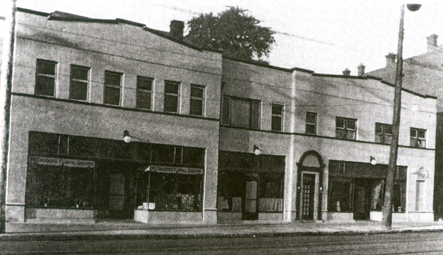
Columbus Radium Hospital

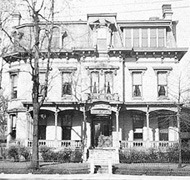
Columbus Radium Hospital, c. 1920s

Columbus Radium Hospital began in 1920 on the site previously occupied by Protestant Hospital. Bed capacity was 25 with approximately 6 beds for emergency. Its goal was to be the only free clinic of its kind between New York and Chicago. Drs. Edward Reinhert, U. K. Essington, E. H. Chapen and R. R. Kahle made up the staff. They treated patients with radium and provided x-ray observations. In 1938 this hospital became Doctors Hospital.

St. Marys of the Springs

St. Marys of the Springs

St. Marys of the Springs

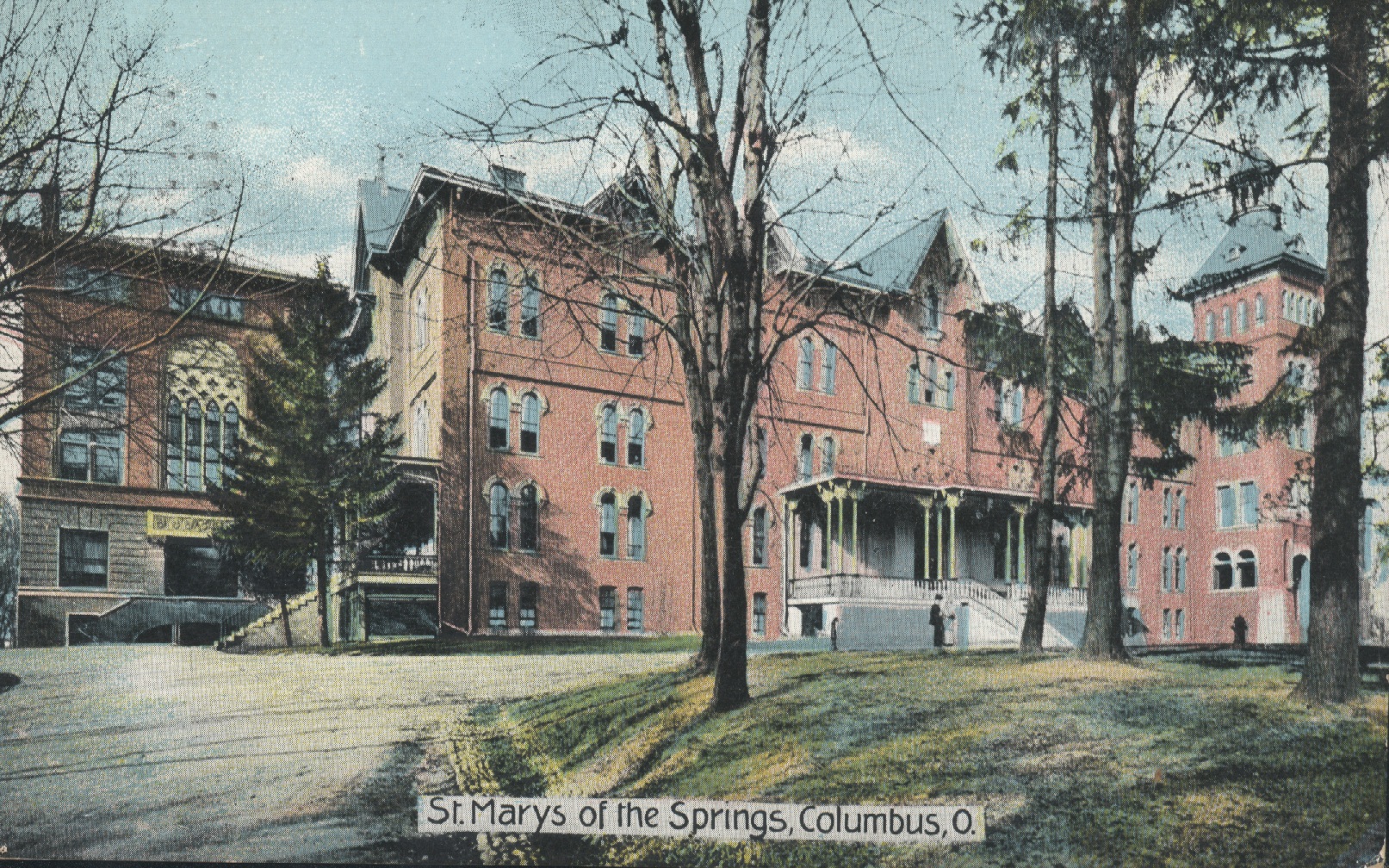
In 1830 four members of the Dominicans started St. Mary’s Academy, one of the first Catholic schools in Ohio. This Academy offered education to pioneer children of Catholics and non-Catholics.

In 1866, a devastating fire consumed the St. Mary’s Academy buildings. The sisters occupied borrowed space for two years until Theodore Leonard, a Columbus businessman who had five daughters to educate, offered the sisters land and bricks on his old brickyard if they would build an academy in Columbus. The sisters founded St. Mary’s Academy in Columbus in 1868. Bishop Rosecrans suggested the name change to St. Mary of the Springs to reflect the preponderance of natural springs on the property. The Academy operated in its new Columbus location until its closing in 1966.

In addition to the Academy, the Dominican Sisters founded and implemented plans to establish the College of Saint Mary of the Springs, the predecessor to Ohio Dominican University, in 1911. The College of Saint Mary of the Springs formally opened in 1924, as a Catholic women’s college in Columbus, Ohio. In 1964, the College allowed men to enroll. Then in 1968 the College of Saint Mary of the Springs became Ohio Dominican College. Due to increased growth, Ohio Dominican College became Ohio Dominican University in 2002.

McKinley Hospital

McKinley Hospital opened in March 1921 in the former Neil-Dennison home, located along North Park Street. The typical room had brown mahogany furniture, which replaced the traditional white hospital furniture. The hospital had 50 single patient rooms. The six-story building was designed after the “ward-less” concept, which was intended to make patients and visitors feel like they had entered a well-conducted home.

Lawrence Hospital

Lawrence Hospital, c.1915

In 1899 Lawrence Hospital opened its doors for the treatment of diseases peculiar to women especially cases requiring recourse to surgery. Three years after opening, the hospital began treating men and children as well to offset costs. The hospital was located on East Town Street, in close proximity to St. Francis Hospital, in an old home purchased by Dr. Lawrence. Supported by several businessmen, the hospital provided charity service to about 50 percent of their clients. The original Lawrence Hospital closed its doors in 1921 and moved its services to McKinley Hospital located on East Broad Street between Grant and Cleveland Avenues. Over 7,000 patients were seen and 5,000 major operations were performed during its 21 years of service with only 41 mortalities.

Frank H. Netter, MD

Frank H. Netter, MD is recognized as the foremost medical illustrator of the human body and how it works. Netter was born in New York on April 25, 1906. In high school he obtained a scholarship to study at the National Academy of Design. After further studying at the Art Students League of New York and with private teachers, he began a commercial art career. He quickly achieved success and was doing work for the Saturday Evening Post and The New York Times. At the urging of his family, Netter gave up art and studied to be a surgeon at New York University.

Netter found that it was easier for him to take notes in pictures; and, soon faculty members recognized his artistic talents, and Netter began to pay for part of his medical education by illustrating lectures and textbooks. Netter graduated in 1931 opening a private surgical practice. He continued to accept art commissions to make money until his practice got off the ground. Through his art career he was making more money than through his surgical practice, so he gave up the practice.

In 1938 Netter was hired by the CIBA Pharmaceutical Company to work on a promotional flyer for a heart medication. He designed a folder cut in the shape of and elaborately depicting a heart, which was sent to physicians. Many doctors wrote back asking for more heart flyers without the advertising copy. Netter went on to design similar product advertisements depicting other organs. When that project ended, Netter was commissioned to prepare small folders of pathology plates later collected into the first CIBA Collection of Medical Illustrations. Netter went on to illustrate a series of atlases that became his life’s work. They are a group of volumes individually devoted to each organ system, which cover human anatomy, embryology, physiology, pathology, and pertinent clinical features of the diseases arising in each system. Into his eighth decade, Netter continued to create medical illustrations, it is said that his portfolio includes over 4,000 works. Netter died September 17, 1991 but his work lives on in books and electronic forms that continue to educate healthcare professionals worldwide.

The Medical Heritage Center rare book collection contains three of Netter’s works: The Ciba Collection of Medical Illustrations (1948); A Compilation of Paintings on the Normal and Pathologic Anatomy of the Nervous System (1958); and, The Vital Organs in Hypertension (1968).

Hawkes Hospital of Mt. Carmel

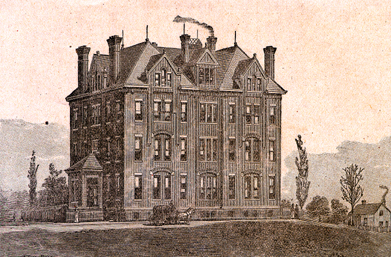
Hawkes Hospital, 1886-1889

Hawkes Hospital of Mt. Carmel was founded by Dr. W. B. Hawkes in 1885. He donated the lot, 150 feet square, and gave $10,000 in United States Government bonds. Before the building was completed Dr. Hawkes died, and Dr. John W. Hamilton (1823-1898) completed the work. The hospital was located on West Street and Davis Avenue.

Dr. Hamilton secured the services of the Sisters of the Holy Cross and Mother Angela, and formally opened the Hospital on July 5, 1856.

The first addition to the hospital was made in 1891. At that time the building was enlarged to make room for more patients.

The corner-stone for this building was blessed by Bishop Watterson on May 31, 1891.

In 1906 a second building adjoining the old one was started. It contained a chapel and 120 additional private rooms for patients. It was on the 20th anniversary of the founding of the hospital that Bishop Hartley broke ground for this wing.

Another building, consisting of 120 rooms, with recreation halls, library and three classrooms, was erected, and opened on February 2, 1921. This was the home for the student nurses. In 1934, on a lot to the west of the hospital, and connected with the hospital, a building for convenience of the Sisters was erected. It was a gift of Mrs. Neill Darrow.

The Training School for Nurses was opened on September 15, 1903. The first graduates received their diplomas in 1906. Eight Sisters were included in the class. The Training School was affiliated with the New York Board of Regents in 1922, and with Western Reserve in Cleveland in 1928. In 1934, there were 114 nurses and 26 Sisters on the service roll of the hospital.

The hospital was one of the first to meet the requirements of the American College of Surgeons in 1919 and was recognized as a Class A hospital. In 1934, it was equipped to take care of 239 patients, including 25 bassinets. The hospital was operated in connection with the Columbus Medical College (1876-1892).

Alpha Hospital

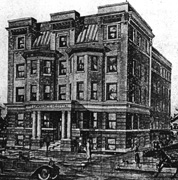
Alpha Hospital and Professional Building, c. 1920s

Alpha Hospital and Professional Building was built in 1920. Located on the corner of 17th and Long Street, this hospital was established by Dr. William Method and Dr. R. M. Tribbitt for the African-American community. It cost $23,000 to erect and functioned as a private institution.

Female Graduates of The Ohio State University and its Predecessor Schools


Mabel Roe Codding Clovis, First Female OSU College of Medicine Graduate

There is no known record about The Ohio State University and its predecessor schools (Willoughby Medical College, Columbus Medical College, Ohio Medical University, Starling Medical College, and Starling-Ohio Medical College) stand on admitting women as students, but they must have been open to it as these schools did have female graduates. The exception to this is Willoughby Medical College, in operation from 1834-1847, that did not have any female students.

Starling Medical College (SMC), in operation from 1846-1907, graduated two women. These female graduates were Sarah R. Hall in 1880 and Elizabeth M. Bull in 1907. SMC had no female professors.

Columbus Medical College (CMC), in operation from 1876 to 1892, graduated three women. These female graduates were Miss M. S. Gilmore in 1883, Harriet L. Henderson in 1884, and Miss Aggie M. Eigholz in 1886. CMC had no female professors.

Ohio Medical University (OMU), in operation from 1892 to 1907, graduated 30 women. The first was Marinda Emolyn Blackburn in 1893. OMU had one female faculty member: Leona Ferguson Barnes, M.D., who served as Demonstrator of Anatomy from 1898-1899 and graduated from the University in 1895.

Starling-Ohio Medical College (SOMC), in operation from 1907-1914, graduated six women. The first two were Mabel S. Richards and Bessie Lucretia Sweet in 1908. SOMC had no female faculty members.

The Ohio State University College of Medicine founded in 1914 had in its first 20 years 55 female graduates. The first was Mabel Roe Codding Clovis in 1915. The first female faculty member was Vera McCoy Masters, B.Sc., M.A., who was an Instructor of Bacteriology from 1917-1921, then an Assistant Professor from 1921-1924.

2011 Nursing History Lecture

Speaker Joan Pryor-McCann, PhD, will present “Florence Nightingale: Her Life, Her Legacy” at the annual Friends of Nursing History lecture on Thursday (April 28). The talk will discuss Florence Nightingale’s personal motivation to become a nursing leader and the changes in nursing and health care that have occurred as a result of Nightingale’s work.

A reception will be held at 4 p.m. with the lecture at 4:30 p.m. in the Ross Heart Hospital Auditorium. This event is co-provided by the Medical Heritage Center Friends of Nursing History Steering Committee and Ohio Nurses Foundation. One continuing education credit will be awarded to nurses. This event is free and open to the public. Call 292-9966 for additional event information.


Letter from the Archives

Below is the transcription from a letter in the Richard L. Meiling, MD Collection.

Mr. John W. Galbreath

October 13, 1971

Dear John:

Again, my deep appreciation for the kind invitation to attend the World Series game on Tuesday in Pittsburgh. It was indeed a most enjoyable day and I was happy that I could be present when Pittsburgh won.

This was my first World Series game, and both Liz and I spoke about the events some 11 years ago when you were so kind as to invite me to accompany Liz as her obstetrician to the game. I’m still most pleased that we didn’t make the trip 11 years ago–that all came out well–and that I finally, in 1971, saw Pittsburgh again in the World Series. We will be pulling for them to take the Series this weekend.

Sincerely,

Richard L. Meiling, M.D.

« Older posts Newer posts »