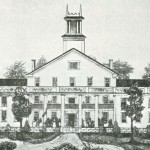
The Ohio State University College of Medicine traces its origins to 1834 with the founding of Willoughby University of Lake Erie. In 1834 Dr. George W. Card and Dr. John M. Henderson founded Willoughby University of Lake Erie in honor of their friend Dr. Westel Willoughby. Drs. Card and Henderson believed Willoughby’s name would give prestige to the university and would aid in securing teachers and students. Willoughby University operated in Willoughby, Ohio until 1846. Willoughby Medical University of Lake Erie had approximately 618 graduates.
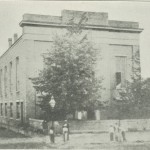
In 1846 Willoughby University moved to Columbus and the name changed to Willoughby Medical College of Columbus. The session of 1847-48 opened under the new name and the college was located in a building on the northwest corner of Gay and High Streets. The building was not adequate, but before the session was completed Mr. Lyne Starling, an attorney in Columbus and well connected with the older established families, offered to give money to erect a proper building. Willoughby Medical College of Columbus continued less than one complete session and had no graduates.
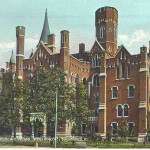
An entirely new charter was secured for the medical school, which, out of gratitude to the donor, was called Starling Medical College (SMC). The majority of the trustees, faculty, and students connected with Willoughby Medical College moved to SMC. SMC was located in downtown Columbus in a shared building with St. Francis Hospital, about two-thirds of the building was assigned to the hospital. During the sixty years under this name the College graduated 2,600 students.
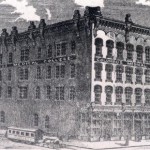
In 1875 a sharp dispute arose about making Dr. James Fairchild Baldwin professor of physiology at SMC. Dr. Baldwin seemed to some of the faculty well-suited for the job, but Dr. Starling Loving and the administration thought otherwise. Dr. Howard Jones of Circleville was chosen instead. As a result of this defeat, Drs. John W. Hamilton, D. N. Kinsman, H. C. Pearce and Davis Halderman resigned and organized Columbus Medical College (CMC) in 1876. During the first seven years the College was conducted in the Sessions Block of High Street. In 1882 Dr. W. B. Hawkes gave four lots on Columbus’ west side and $10,000 toward a hospital to serve the CMC. In 1886 the Hawkes Hospital of Mt. Carmel was erected. About 500 students graduated from CMC.
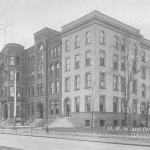
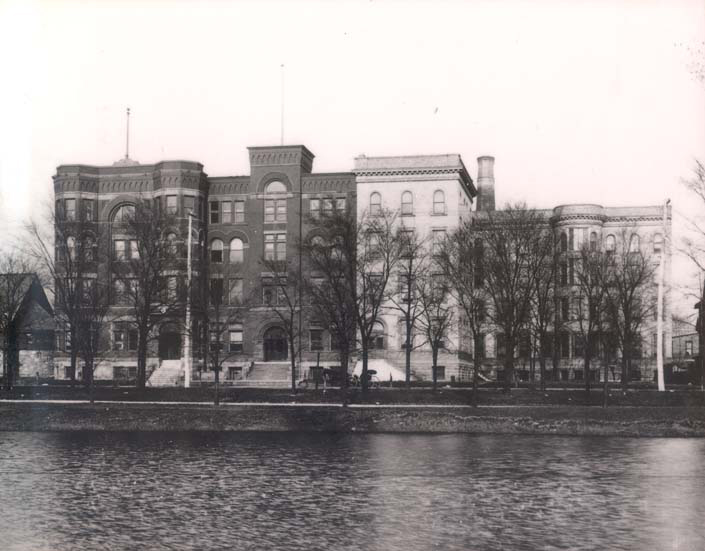
Carrying with it its hospital facilities, CMC was merged into SMC, but some of the faculty could not go along with the merger and joined Dr. Baldwin and others in the organization of the Ohio Medical University (OMU). In 1890 the Ohio Medical University was chartered; the first class session was in 1892. It was located on Park Street across from Goodale Park and operated until 1907. It had colleges of medicine, dentistry and pharmacy, with a charter enabling it to establish a department of midwifery and a school for the training of nurses. From its inception the University adopted the recitation plan of instruction with modifications to suit the subject, and gave clinical work and laboratory exercises prominent places in its courses. Besides erecting large and spacious buildings for the several departments the University donated the ground upon which the Protestant Hospital Association erected a substantial hospital building; the hospital and university cooperating in promoting the welfare of each other. OMU had about 1,200 graduates.
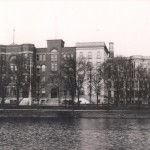
During the winter of 1906-1907 the trustees of the Starling Medical College and of the Ohio Medical University, recognizing the great advantages that would accrue to the cause of education and to the entire medical profession by union and co-operation, transferred the property and equities of these two corporations to a Board of their own selection with power to incorporate a new college. This action was taken March 13, 1907, the name agreed upon, Starling-Ohio Medical College (SOMC), being a happy combination of the names of the only medical colleges in central Ohio at the time of the union. The new corporation included a Medical College, a Dental College and a Pharmacy College, designated as Departments. There were 303 graduates while SOMC was in operation.
There was a vision of greater things for both SOMC and The Ohio State University when Dr. William Oxley Thompson, president of OSU, was elected president of the SOMC. Property difficulties were ultimately overcome, and the Legislature authorized, in a bill introduced by Senator E. G. Lloyd, the creation in the Ohio State University not only of a College of Medicine, but also of a College of Dentistry.
At the May, 1913, meeting of the Trustees of the Ohio State University, President Thompson presented a proposal from the trustees of SOMC to transfer the real and personal property of that institution to them, provided they would maintain colleges of medicine and dentistry, accept the students in medicine, dentistry, and pharmacy with the rank and standing as certified by the proper officers of SOMC and take the necessary steps to protect the professional rights of the alumni, receiving and preserving the necessary records and papers. A supplementary proposition was later received, offering to turn over, in addition to the properties, case on hand, after payment of all bills— a balance estimated at $12,000.
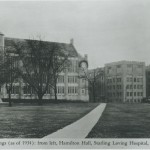
These propositions were accepted in January 1914, by the trustees, who adopted resolutions establishing the College of Medicine and the College of Dentistry. The property, which was transferred in March, consisted of two lots and a college and hospital building on Park Street, subject to a lease by the Protestant Hospital Association, and three lots on State Street, on which the Starling Medical College/St. Francis Hospital building was located, besides all chattel and personal property. Dr. W. J. Means was elected dean of the College of Medicine, which included departments in anatomy, pathology and bacteriology, bio-chemistry, physiology, therapeutics, surgery, medicine and clinical medicine, obstetrics, and surgical specialties. Twenty-four salaried professors and assistants were appointed, together with a faculty of 66 local physicians of honorary service. For the Protestant and St. Francis Hospitals, internes, clinical teachers, and clerks were provided, as well as a pharmacist and clerk for each of the hospital dispensaries.
-
-
Willoughby University of Lake Erie, c. 1834
-
-
Willoughby Medical College of Columbus, 1846
-
-
Columbus Medical College, c. 1883
-
-
St. Francis Hospital and Starling Medical College, c. 1865
-
-
Ohio Medical University
-
-
Starling-Ohio Medical College
-
-
OSU





Recent Comments