Category: Hospitals (page 2 of 4)

Grant Hospital

Grant Hospital

Dr. James F. Baldwin began Grant Hospital in 1900 as a private hospital to serve the growing middle class in Columbus. Three additions were added to the original building from 1904 to 1914. By 1904, Grant Hospital was considered the largest private hospital in the world with a bed count of 303.

*Part one of a seven part series highlighting the history of Columbus medical centers.

OSU Harding Hospital

OSU Harding Hospital was built in 1991 and houses clinical inpatient, outpatient, partial, and research facilities. It is located at 1670 Upham Drive and has seven stories.

In 1916, George T. Harding II, MD, founded a hospital in Worthington, Ohio, and the Harding name has been synonymous with leadership in mental health care and education ever since. In 1999 Ohio State and Harding Hospital united their services and moved the hospital facility to the OSU campus.

Today, OSU Harding Hospital offers the only academic program in central Ohio providing child, adolescent, adult and geriatric inpatient services.

Starling Loving Hall

Originally built as the new Homeopathic Hospital in 1917, the building became a new hospital for the medical school after an addition in 1924 made it operational. The building was renamed Starling-Loving University Hospital in 1923 in honor of Mr. Lyne Starling (1784-1848), a founder of Columbus and benefactor of Starling Medical College and Dr. Starling Loving (1827-1911), dean of Starling Medical College (1880-1905).

By 1926, with the addition of three wings, the hospital housed 296 beds, an operating amphitheater, laboratories, a maternity department and an outpatient clinic. The main purpose was clinical teaching.

When The Ohio State University Hospital was built in the 1950′s, all hospital practices moved into it. Starling Loving University Hospital was renamed Starling Loving Hall on July 14, 1961. It no longer serves as a hospital facility but rather houses offices and classrooms. The original building has had 5 additions over the years.

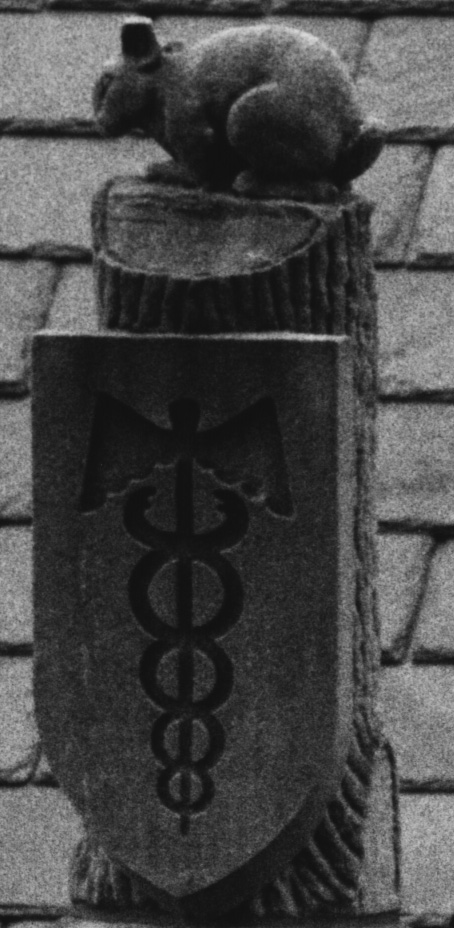
The top of the building also features six gargoyles: rabbit, cow, monkey, pelican, cat and horse.

Arthur G. James Cancer Hospital and Richard J. Solove Research Institute

Dr. James in front of Cancer Hospital, c. 1990

Dr. Arthur G. James believed all cancer would eventually be eradicated. That belief coupled with his dedication to the idea that cancer patients need separate, specialized care, led him to lobby, campaign, and fundraise for thirty-five years to build a cancer hospital in Ohio. The Arthur G. James Cancer Hospital and Research Institute opened at Ohio State on July 9, 1990 when it admitted its first patient. At the time of its construction, only three hospitals – Roswell Park in Buffalo, New York; M.D. Anderson in Houston, Texas; and Memorial Sloan-Kettering in New York City – had comparable resources. After a gift of $20 million from Richard J. Solove in 1999, the facility was renamed the Arthur G. James Cancer Hospital and Richard J. Solove Research Institute, but is commonly referred to as the James. The facility remains the only freestanding cancer hospital in Ohio to this day.

Arthur G. James was born in 1912. He received his B.A. in Arts and Sciences from OSU in 1934. He followed that with two more degrees: an M.D. and a M.S. in surgery, also from OSU and both received in 1937. He did his residency at OSU, after internships at the University of Chicago and Duke University, and joined the faculty in 1947 as an assistant professor in the Department of Surgery. He remained at OSU for the rest of his career (41 years), working his way up to full professor and chief of the Division of Surgical Oncology. James was also the first to hold the Lucius A. Wing Chair of Cancer Research and Therapy. For his efforts in establishing OSU’s cancer hospital, James was awarded the American Cancer Society’s Medal of Honor for Clinical Research. He also was a recipient of the 1991 Alumni Medalist Award from the OSU Alumni Association. James died at the age of 89 in 2001, after battling Parkinson’s Disease.

Richard J. Solove was born in 1925 and earned a degree in pharmacy from OSU in 1948. He later owned three Columbus drugstores before devoting himself fully to real-estate development in 1962. It was his relationship with James, who treated Solove’s father for cancer in the 1950s, that drew him to the cancer cause. In 1977, James asked him and other Columbus businessmen for help in pursuing a cancer hospital at Ohio State. Solove worked with then Gov. James Rhodes and the Ohio Legislature to secure funding for the hospital. He was a founding member of The James Foundation Board and served as its president for five years. Solove died in 2011.

Other Hospitals

We have found evidence of the existence of the following hospitals but have yet to find extensive details concerning their history. If you have information about any of these hospitals, we would love to hear from you. Please contact us by leaving a comment.

Beacon Light Home and Hospital stood at 34 West First Avenue.

Bellevue Private Hospital (or Bellevue Lying-In Hospital) was located at 21 East Beck Street.

Dr. Turney Hospital once stood at 164 North 22nd Street.

Emergency Hospital was operated by Columbus Emergency Hospital Company from 1908-1909 and was located at 398 East Town Street.

Francis Willard Hospital was once found at 338 West 7th Avenue.

Maternity Hospital for Women was located at 1007 East Oak Street.

Red Cross Hospital was suggested in 1898 as a non-sectarian facility to treat soldiers and to abolish prejudicial feelings.

Sanor Private Eye, Ear, Nose, and Throat Hospital was once located at 206 East Town Street.

The Sixth Avenue Homeopathic Hospital, located at 310 West 6th Avenue was organized on May 23, 1899, by D. J. Ryan and R. O. Keiser. Homeopathic physician Willard B. Carpenter was an associate owner.

Starling-Loving University Hospital

Bunny Gargoyle

In 1917, the Ohio State University Board of Trustees announced that the abandoned homeopathy building would be incorporated into a new hospital for the medical school. A modified English Tudor addition to the homeopathic building made the hospital operational in 1924. The building was renamed Starling-Loving University Hospital in honor of Mr. Starling, a community leader and benefactor of Starling Medical College and Dr. Loving, dean of the OSU Medical School (1880-1905).

By 1926, with the addition of three wings, the hospital housed 296 beds, an operating amphitheater, laboratories, a maternity department and an outpatient clinic. The main purpose was clinical teaching.

When The Ohio State University Hospital was built in the 1950’s, all hospital practices moved into it. Starling-Loving University Hospital was renamed Starling Loving Hall on July 14, 1961. It no longer serves as a hospital facility but rather houses offices and classrooms. The original building has had 5 additions over the years.

The building also features six gargoyles: bunny, cow, monkey, pelican, cat and horse.

St. Ann’s Hospital

St. Ann’s was founded in 1908 as a home for infants and unwed mothers. The original building was located at Bryden Road and Kelton Avenue. By the 1920’s the hospital had gradually converted to a maternity hospital, as home deliveries became less frequent. In 1950, 40 maternity beds and 20 gynecologic beds were available in the remodeled facilities.

The hospital still exists and is now Mount Carmel St. Ann’s. It is located at 500 South Cleveland Avenue.

St. Francis Hospital

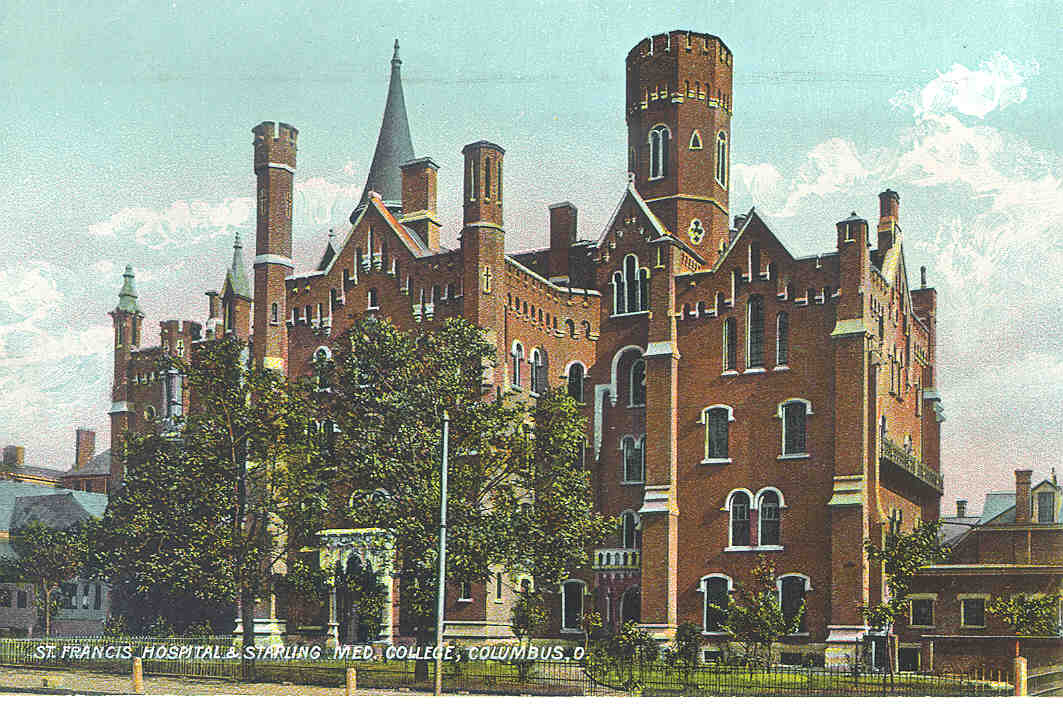
St. Francis Hospital and Starling Medical College, c. 1865

Built in 1847 at 311 East State Street, this Norman Gothic structure was the first combined medical school and hospital in the United States (St. Francis Hospital/Starling Medical College). Initially lacking funding to complete the hospital part of the building, Dr. Richard L. Howard, a Starling Medical College trustee, provided money to open the “Howard Infirmary.” Unfortunately, managing this facility proved to be overwhelming. The infirmary closed in the 1850s.

Because of the lack of medical facilities in Columbus, local physicians organized a move to bring a group of nuns to the Columbus community to serve as health care workers in 1861. In February 1865, a 99-year lease was granted to the Sisters of the Poor of St. Francis to operate St. Francis Hospital.

Homeopathy Hospital


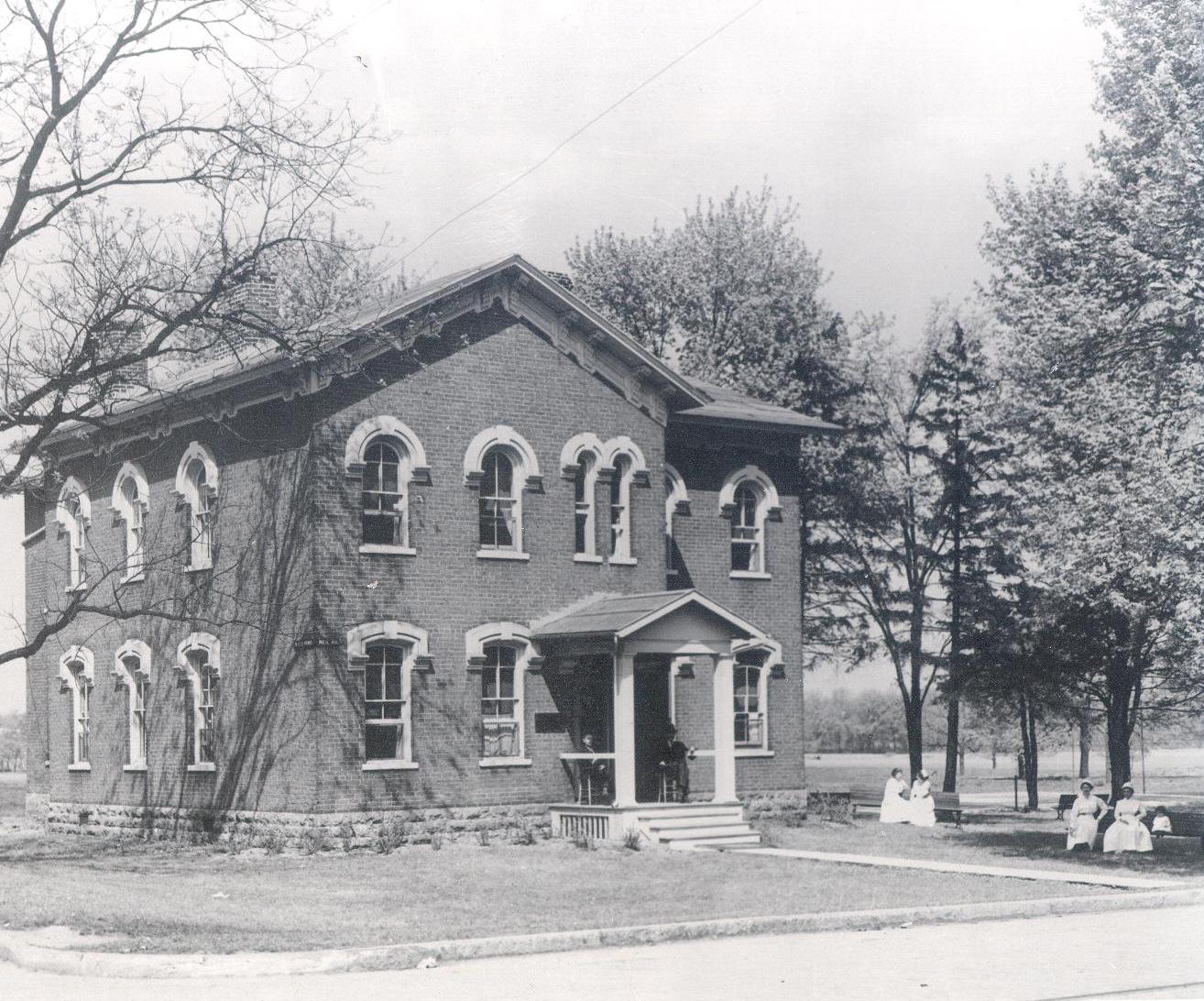
Homeopathic Hospital, circa 1914

Homeopathy is a form of what is now called alternative medicine that attempts to treat patients with heavily diluted preparations. The first homeopathic schools in the United States opened in 1830. By 1900, there were 22 homeopathic colleges and 15,000 practitioners in the United States. From its inception, however, homeopathy was criticized by mainstream science and the last school in the U.S. exclusively teaching homeopathy closed in 1920.

The Ohio State University had a College of Homeopathic Medicine. It was in operation from 1914 to 1922. The Homeopathic Hospital, stood on the corner of 10th and Neil Avenues (the present location of Newton Hall), originally served as a dormitory and was converted to clinical use as the Hospital in 1914. This was the first hospital on campus and, by 1921, there had been a total of 20,000 bed days and over 3,800 outpatients and 1,800 inpatients served by this facility. The Hospital was staffed by nurses with Jessie Harrod as chief nurse and a staff consisting of an assistant at night, a teacher of surgical nursing, a house physician, and eight student nurses. Starling-Loving University Hospital (now known as Starling Loving Hall) was built in 1917 to replace the Homeopathic Hospital on 10th and Neil. In 1922, after the University Board of Trustees voted to stop operating two colleges of medicine and the college of homeopathic medicine was discontinued, Starling-Loving University Hospital served as the main hospital on campus. The Homeopathic Hospital on the corner of 10th and Neil served as Children’s Hospital.


Sandel Chiropractic Hospital

Located at 1466 Northwest Boulevard, this hospital was touted as the only foot hospital of its kind in the United States. Established and built by Dr. R. Kenneth Sandel in 1950, the one-floor structure was equipped for the practice of chiropody and minor foot surgery, with a surgical unit and convalescent rooms. There was a waiting room, two equipped treatments rooms and a consultation room adjacent to a private office. Two recovery rooms for patients desiring complete rest following surgery were located in one corridor. Across the rear of the corridor was a surgical room for minor operations of the feet.

Older posts Newer posts