

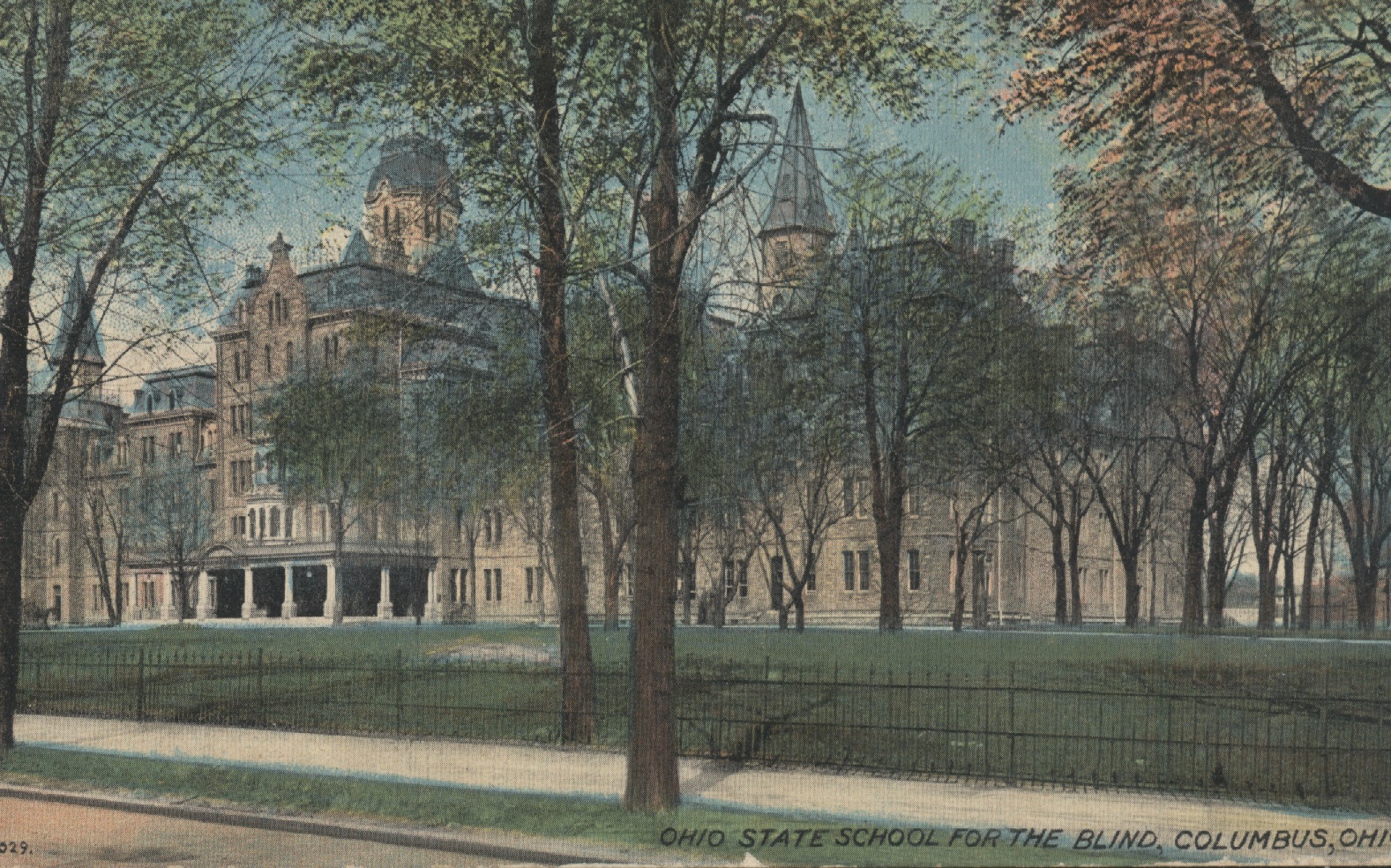
The Ohio Institution for the Education of the Blind (AKA Ohio State School for the Blind)
The following is an excerpt about the Institution from The Second Blessing: Columbus Medicine and Health, The Early Years by Charles F. Wooley and Barbara A. Van Brimmer. Copies of these books are available for purchase from the Medical Heritage Center for $45 (plus applicable sales tax).
At the first session of the influential Ohio physician’ meeting held in Columbus in 1835 – the Medical Convention of Ohio – a resolution was adopted “that Dr. Daniel Drake be requested to deliver an address on the subject of the Instruction of the Blind, tomorrow (Wednesday) evening, at half past 6 o’clock, and that both houses of the Legislature of Ohio be respectfully invited to attend.” Drake fulfilled his task and the General Assembly appointed a commission to collect information relative to the education of the blind. The group consisted of the Reverend James Hoge, Columbus minister; N.H. Swayne, a Columbus lawyer; and Dr. William Awl. Their report was a comprehensive and persuasive document. The act establishing the Ohio Institution for the Education of the Blind was passed April 3, 1837.
The first trustees of the institution were N.H. Swayne, William Awl, and the Reverend James Hoge; the physician was Dr. R. L. Howard. Located on East Main Street, the institute opened in October 1839 and soon gained a reputation as a progressive school with many successful alumni that provided pupils and training in a number of areas and disciplines. In 1873 Governor Tod appointed Dr. Awl as a physician to the blind asylum, a position he held until his death in 1876.
The annual reports placed emphasis on the history of such institutions and the instruction of the blind according to the standards of the day. Dr. Howard wrote the physicians’ and oculist’s reports in the annual reports; in the twelfth annual report he noted that many of the pupils never enjoyed good health. He examined the eyes of all the pupils in 1848 and found three cases of cataract; in 1849 he operated on four individuals with cataracts. Chronic disease remained prevalent among the residents, and one death from pulmonary consumption occurred in a twenty-four year-old after a long and prolonged illness.

Recent Comments