Category: General (page 3 of 3)

Taking our show on the road with ODEE’s iTunes U Bootcamp in Cupertino, CA

Last week, I teamed up with the Office of Distance Education and eLearning (ODEE) to provide copyright assistance to OSU faculty and staff participating in ODEE’s Digital First iTunes U Bootcamp, which took place at Apple’s corporate headquarters in Cupertino, CA. Over the course of four days, I had a blast learning the ins and outs of the iTunes U platform, researching the always-interesting copyright queries that seem to crop up especially in relation to distance education, and getting to know my fellow Buckeyes along with our gracious hosts from Apple.

Group photo of OSU faculty and staff at Apple Headquarters

Ohio State University faculty and staff (including yours truly) outside Apple corporate headquarters.
Photo via Kevin Kula (@KulaOSU)

Rest assured, you don’t need to travel to California for copyright assistance if you’re developing an online course. With holidays coming to an end and faraway bootcamps concluded, your roaming copyright mavens have returned to Thompson Library. Feel free to give us a call, drop by our office, or we’d be happy to pay you a visit. If you’re looking for copyright information of the self-serve variety, many of our resources are also available online.

Copyright resources for distance education


________________________________________________________________________________________

By Jessica Meindertsma, Rights Management Specialist at the Copyright Resources Center, The Ohio State University Libraries


Articles of interest: January-June 2014

This post highlights citations for recent scholarly articles with a focus on copyright, especially as it pertains to libraries, higher education, and scholarly communication. Articles were selected according to the following criteria: scholarly/peer-reviewed, English language, published within the past six months, and subject matter pertaining to copyright and libraries, higher education, or scholarly communication. Links to the full-text articles are provided when available; [OSU full text] links will connect authenticated users through The Ohio State University Libraries, while [OA full text] links point to an open access version of the article that should be available to all users.

Did we miss an interesting article? Please share the citation in the comments!

Library services

Crews, K. D. (2014). Copyright and universities: Legal compliance or advancement of scholarship? The growth of copyright. IPRinfo Magazine, 2, 14-15. [OA full text]

Gilliland, A. T., & Bradigan, P. S. (2014). Copyright information queries in the health sciences: trends and implications from the Ohio State University. Journal Of The Medical Library Association102(2), 114-117. doi:10.3163/1536-5050.102.2.011 [OSU full text]

Gore, H. (2014). Massive open online courses (MOOCs) and their impact on academic library services: Exploring the issues and challenges. New Review of Academic Librarianship20(1), 4-28. doi:10.1080/13614533.2013.851609 [OA full text]

Myers, C. S. (2014). Answering copyright questions at the reference desk: A guide for academic librarians. Reference Librarian55(1), 49-73. doi:10.1080/02763877.2014.856260 [OSU full text]

Library policies & procedures

Bowen, T., Calter, M., Lee, F., & Parang, E. (2014). Using computing power to replace lawyers: Advances in licensing and access. Serials Librarian66(1-4), 232-240. doi:10.1080/0361526X.2014.881221 [OSU full text]

Clark, A., & Chawner, B. (2014). Enclosing the public domain: The restriction of public domain books in a digital environment. First Monday19(6), 6. doi:10.5210/fm.v19i6.4975 [OA full text]

Dryden, J. (2014). The role of copyright in selection for digitization. American Archivist77(1), 64-95. [OA full text]

Dygert, C., & Langendorfer, J. M. (2014). Fundamentals of e-resource licensing. Serials Librarian66(1-4), 289-297. doi:10.1080/0361526X.2014.881236 [OSU full text]

Simon, J. C. (2014). E-book purchasing best practices for academic libraries. Journal of Electronic Resources Librarianship26(1), 68-77. doi:10.1080/1941126X.2014.878640 [OSU full text]

Legislation

Michael, G. J. (2014). Politics and Rulemaking at the Copyright Office. Journal of Information Technology & Politics11(1), 64-81. doi:10.1080/19331681.2013.872073 [OSU full text]

Muhammad Waris, B. (2014). National Library of Pakistan as Legal Depository. Pakistan Library & Information Science Journal45(1), 18-23. [OSU full text]

Nsibirwa, Z., Hoskins, R., & Stilwell, C. (2014). Building the South African nation through legal deposit: The impact of legislation on preservation of digital materials. African Journal of Library, Archives & Information Science24(1), 53-65. [OSU full text]

Publishing & scholarly communication

Björk, B., Laakso, M., Welling, P., & Paetau, P. (2014). Anatomy of green open access. Journal of the Association for Information Science & Technology65(2), 237-250. doi:10.1002/asi.22963 [OA full text]

Cheng, W., Ren, S., & Rousseau, R. (2014). Digital publishing and China’s core scientific journals: A position paper. Scientometrics98(1), 11-22. doi:10.1007/s11192-012-0873-8 [OA full text]

Ludewig, K. (2014). MedOANet: The Copyright and OA Landscape in Mediterranean Europe. Liber Quarterly: The Journal of European Research Libraries23(3), 187-200. [OA full text]

Lwoga, E., & Questier, F. (2014). Faculty adoption and usage behaviour of open access scholarly communication in health science universities. New Library World115(3/4), 116-139. doi:10.1108/NLW-01-2014-0006 [OSU full text]

Melero, R. R., Rodríguez-Gairín, J. M., Abad-García, F. F., & Abadal, E. E. (2014). Journal author rights and self-archiving: The case of Spanish journals. Learned Publishing27(2), 107-120. doi:10.1087/20140205 [OSU full text]

Updated 8/8/2014 with K. D. Crews article. 

———————————————————————————————————————————————————————-

By Jessica Meindertsma, Rights Management Specialist at the Copyright Resources Center, The Ohio State University Libraries

Open access and “A Subversive Proposal”

In 2012, The Ohio State University Libraries adopted the Faculty Open Access Resolution, which requires Ohio State Libraries’ faculty to grant the University a license to make their scholarly articles openly accessible.  The goal of this initiative, and open access in general, is to increase the accessibility of research so that others can easily make use of it. According to Peter Suber, open access works are “digital, online, free of charge, and free of most copyright and licensing restrictions.” While free of many restrictions, open access works are still protected by copyright law; publicly available does not mean copyright free.

An important contributor to the open access movement is Stevan Harnad.  In 1994, Harnad posted a message to a discussion list on electronic journals hosted by the Virginia Polytechnic Institute.  Harnad’s message, titled “A Subversive Proposal”, suggested that researchers should make their papers freely available.  The message sparked significant discussion and Harnad is now credited with initiating the concept of self-archiving.  In 1995, Harnad’s original message and the email discussion it provoked were collected into a book: Scholarly Journals at the Crossroads: A Subversive Proposal for Electronic Publishing.  The full copy of that book is available through HathiTrust, under an open-access, Google digitized license. In honor of the proposal’s twentieth anniversary, Richard Poynder posted an interview with Harnad titled “The Subversive Proposal at 20”, which looks back at the proposal’s impact and discusses the development of the open access movement.

Scholarly articles are increasingly available as open access documents.  Learn more about open access on the Copyright Resources Center’s open access page, or by reading other articles tagged “open access” on the Copyright Corner Blog.

—————————————————————————————————————————————————————

Marc Jaffy is a practicum student at the OSU Libraries Copyright Resources Center and is currently a Masters student at the Kent State University, School of Library and Information Science

Opening the vaults: Organizations make a multitude of digital images available

In an encouraging trend towards lowering barriers for the use of third party materials, some institutions are implementing policies to make portions of their digital collections available for certain uses without requiring permission or payment of a fee.

The Wellcome Library  has applied the Creative Commons Attribution (CC-BY) license to 100,000 digital images “including manuscripts, paintings, etchings, early photography and advertisements” from their collection of cultural objects related to the history of medicine. Under this license, anyone may freely download, reproduce, distribute, remix, and edit the images for any purpose, including commercial uses, as long as the Wellcome Library is credited as the source.

The Metropolitan Museum of Art announced a new initiative called Open Access for Scholarly Content (OASC) that makes many digital images of public domain materials from the museum’s collection available for scholarly use without requiring fees or additional permissions. Under the museum’s terms and conditions, anyone may download and use images identified as OASC for personal use, educational use, and scholarly publications in all media, such as journal articles, conference presentations, and documentary films. The museum’s Frequently Asked Questions about OASC provide an explanation on what exactly they mean by scholarly content, in what contexts the license applies, and how to find, download and cite images included in OASC.

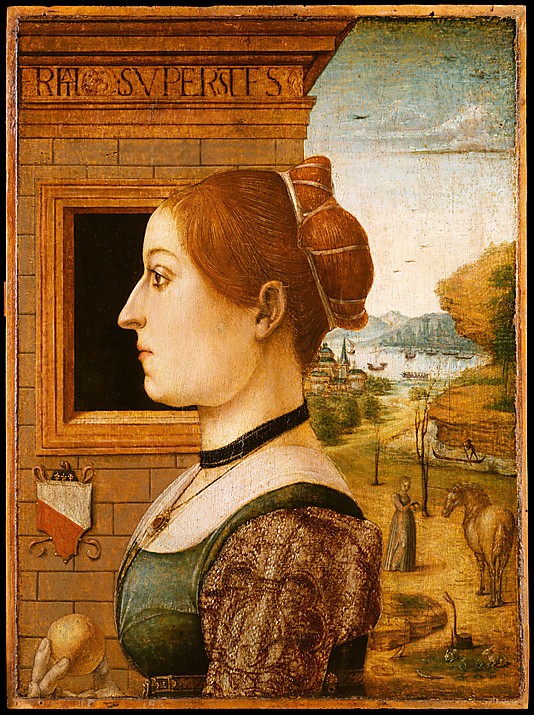
Portrait of a Woman, possibly Ginevra d'Antonio Lupari Gozzadini from The Metropolitan Museum of Art

Portrait of a Woman, possibly Ginevra d’Antonio Lupari Gozzadini by Maestro delle Storie del Pane
The Metropolitan Museum of Art,
Robert Lehman Collection, 1975

Notably, the Wellcome Library and the Metropolitan Museum of Art initiatives encompass only digital images of those works in their collections that are presumed to be in the public domain. While there is an argument to be made that faithful reproductions of public domain works do not receive a separate copyright and belong to the public domain as well, many institutions implement restrictive policies and leverage licensing fees on reproductions of public domain works. Some institutions make explicit claims to rights, while others disguise the claims in reproduction fees assuming most patrons are unlikely to recognize the difference or object if they do. Applying a Creative Commons license to images, or another free license for clearly defined uses, is a step in the right direction and can reassure scholars, teachers, and students who might otherwise shy away from the cost of paid licenses or not feel confident relying on fair use.

Taking a different approach to licensing content for wider use,  Getty Images unveiled a new “embed feature” that allows users to add select images from the Getty Images stock photography collections to websites and social media posts with no further permission or fees necessary. Users obtain a snippet of HTML code which they may use to share the image elsewhere on the web via an “embedded viewer” (see: the instructions for use from Getty Images). The content must remain on Getty Images’ servers and cannot be edited or resized.* The embedded viewer enables Getty Images to gather data about embedded content on users’ sites and monetize images by placing advertisements through the embedded viewer. Furthermore, the embedded viewer may only be used for the purposes detailed in the terms and conditions. Users may embed images for editorial purposes, “meaning relating to events that are newsworthy or of public interest,” but not for commercial purposes. This would likely include many noncommercial, educational purposes.

The available content and the approach to sharing by Getty Images are distinct from those of Wellcome Trust and the Metropolitan Museum of Art in a few key ways. First, Getty Images is licensing the use of more obviously copyrighted works, as compared to the reproductions of public domain materials made available by the other two organizations. Secondly, the material from Getty Images is only available for online use; presentations, print materials, and other offline uses are not covered by this license. The online-only presence also enables Getty Images to remove content at their discretion and without warning, as detailed in their terms of use. Images downloaded under the terms set by the Wellcome Trust or the Metropolitan Museum of Art may be used continually under the terms of those licenses. However, users should always review the current terms and conditions for any provider and the current availability of a particular image before any new use, as online content is frequently subject to change.

Overall, these licensing options provide more opportunities for the public to use material that might otherwise be restricted by fees or ambiguous rights. As always, be sure that you read, understand, and save a copy of the license terms before moving forward. If you have any questions about making use of the new licensing options for these institutions or navigating copyright for another use of third party images, please contact the University Libraries’ Copyright Resources Center.  Our guide to copyright and using images also provides more information on this topic in general.

*Note: I intended to include images in this post from each of the licensed collections under discussion, but Getty Images’ embed code does not seem to function with our blog layout, and the licensing terms prevent me from fixing it by tinkering with the code.
———————————————————————————————————————————————————————-

By Jessica Meindertsma, Rights Management Specialist at the Copyright Resources Center, The Ohio State University Libraries

Calling all copyright activists

Copyright Week is here! If you think fair use, the public domain, the right of first sale, and open access are the bee’s knees, congratulations – you’re on your way to the rank of copyright activist. Join up with activist veteran EFF for a week of discussion on key principles to guide copyright policy.

Not sure why you should care? Keep your ear to the ground this week and learn a thing or two about current copyright issues. You just might be a copyright convert by week’s end. For starters:

It’s no longer the case that copyright is only a concern if you run the kind of company that has its own theme parks. Instead, copyright policy can have an effect on any user posting to her favorite sites, sharing videos she’s captured or photos she’s taken. It can affect your basic freedom to tinker, make, and repair your stuff. – Copyright Week: Taking Copyright Back by the Electronic Frontier Foundation (EFF)

So if you have something to say, ponder, or posit, dust off your soapbox and speak out for copyright on your choice of social media (hashtag #copyrightweek) or engage in spirited discussion with whoever’s handy about the future of copyright (hint: classmates, coworkers, friends, neighbors, and telemarketers are all worthy targets).

You won’t be alone. Look for our tweets (@OSUCopyright) all week long on a range of copyright issues– topics for each day are listed below. Happy Copyright Week!

Copyright Week: January 13-18

Monday Jan 13 – Transparency
Copyright policy must be set through a participatory, democratic and transparent process. It should never be decided through back room deals or secret international agreements.

Tuesday Jan 14 – Building and Defending a Robust Public Domain
The public domain is our cultural commons and a public trust. Copyright policy should seek to promote, and never diminish, this crucial resource.

Wednesday Jan 15 – Open Access
The results of publicly funded research should be made freely available to the public online, to be fully used by anyone, anywhere, anytime.

Thursday Jan 16 – You Bought it, You Own It
Copyright policy should foster the freedom to truly own your stuff: to tinker with it, repair it, reuse it, recycle it, read or watch or launch it on any device, lend it, and then give it away (or re-sell it) when you’re done.

Friday Jan 17 – Fair Use Rights
For copyright to achieve its purpose of encouraging creativity and innovation, it must preserve and promote ample breathing space for unexpected and innovative uses.

Saturday Jan 18 – Getting Copyright Right
A free and open Internet is essential infrastructure, fostering speech, activism, new creativity and new business models for artists, authors, musicians and other creators. It must never be sacrificed in the name of copyright enforcement.

_______________________________________________________________________________________________________

By Jessica Meindertsma, Rights Management Specialist at the Copyright Resources Center, The Ohio State University Libraries
January 28 is Data Privacy Day, 2011

January 28, 2011 is Data Privacy Day.  Sponsored by a variety of businesses, universities, not-for profit organizations, and governmental entities, the purpose of Data Privacy Day is to encourage dialogue about “digital lives in a networked world.”  Privacy is on many people’s minds right now, as we grapple with the often-conflicting desires to reveal and conceal information about ourselves online.

Here are some recent news items about privacy, plus resources that I consult regularly for information:

Here at OSU, the Office of the CIO has resources about privacy, security, and safe computing at Buckeye Secure.

Recently, there was an interesting investigative piece in the Wall Street Journal on personal data sharing from smartphone apps.  One of the offenders they single out Pandora, one of the most popular apps  (and one I use heavily, sigh).

On Wednesday, January 26, Facebook announced that it can now be used completely via https for additional privacy and security.  Also, in some cases, it will start requiring social authentication through identifying people in photographs rather than through the more commonly-used captchas.  

The International Association of Privacy Professionals  has a Knowledge Center with many links and articles about privacy.  It’s a good place to get some background reading or keep up with the latest information on the subject.

Daniel Solove  is one of my favorite writers about privacy and the law.  Two of his recent books, Understanding Privacy and The Future of Reputation: Gossip, Rumor and Privacy on the Internet are thoughtful and accessible to the non-lawyer.  He will publish Nothing to Hide: The False Tradeoff Between Privacy and Security this year.

Jonathan Zittrain’s The Future of the Internet and How to Stop It addresses privacy and more in his discussion about how to preserve the generativity of the Internet.  Zittrain’s blog  is also a good source for commentary on privacy issues in the news.  Zittrain is a professor at Harvard Law School, but much of his work has a heavy technical and social orientation.

Happy Birthday, EFF

This month, the Electronic Frontier Foundation celebrated its 20th birthday  The Foundation does very important, interesting policy and legal work in the areas of free speech, innovation, intellectual property, global issues, transparency, and privacy in the electronic age.  This cartoon by Nina Paley shows, concisely and in graphical form, what the EFF is all about.

[youtube]http://www.youtube.com/watch?v=W04LFvH1K8Y[/youtube]  
Newer posts