La Cholita de Guadalupe

Image of Virgin of Guadalupe as young contemporary woman in neighborhood.

La Cholita de Guadalupe. By Lizeth Gutierrez, Maria Saucedo, Silvia Garcia, Kayla Potts. Used with permission of the authors. Reuse of this image without the express permission of the authors is prohibited. All rights reserved (CC license does not apply to this image).

by Lizeth Gutierrez, Maria Saucedo, Silvia Garcia, Kayla Potts

When my colleagues and I were thinking about powerful images that represented today’s young Chicana we were very inspired by both Alma López [1] and Yolanda M. López’s [2] work with La Virgen de Guadalupe. Both artists redefined Chicana sexuality in powerful ways by reframing La Virgen; a significant cultural and religious iconography in the Chicana/o community, as a woman who is interpreted and experienced in various ways. Along with them we were also drawn to Sandra Cisneros’ essay “Guadalupe the Sex Goddess.” [3]  In her writing, Cisneros offers us a revolutionary understanding of our own sexual power as women. Through their work we were encouraged to think critically about our own unique relationship with La Virgen de Guadalupe.

Our individual relationships with La Virgen inspired this collective project because we realized we had a lot more similarities than differences in how we relate to her and each other. For instance, Lizeth is not very religious, but La Virgen holds symbolic value to how she has come to understand her femininity as a site of empowerment. She had to distance herself from her mother and grandmother’s conceptions of a “good” woman to make sense of her own sexuality. Similarly, Silvia and Maria grew up viewing La Virgen as a symbol of appropriate women behavior. Women are supposed to be docile and pure, especially in the eyes of Catholicism and Mexican culture. Both Maria and Silvia, however, have reclaimed La Virgen by challenging the typical portrayals of womanhood as submissive and passive. They embraced her as a strong figure that is not afraid to claim public space and speak her mind. Kayla sees La Virgen as a symbol of female empowerment because women’s bodies are sacred and sexual. We refuse to have vergüenza of our bodies, our sexualities, and our womanhood; we are beautiful women inside and out.

This project brings together two significant images of womanhood in our community; La Virgen de Guadalupe and the chola. Cholas are often perceived as a threat in our communities because of their political gender performances that re-signify sexuality. In bringing these two symbols of womanhood together we wanted to name ourselves within our communities. We wanted to contest the boundaries of femininity that are imposed on us each and every day. Women have been relegated to the domestic sphere in order to ensure that their role as mothers and wives in patriarchal culture function to affirm narratives of hyper-masculinity and heteronormative values of the heterosexual family. “The Cholita de Guadalupe” is our sitio that has allowed us to create a lengua that speaks about Chicana womanhood in empowering ways.[4] Her attitude of toughness is a fundamental mechanism of survival. Our survival. And it is through our toughness that we reclaim our femininity, our relationship with La Virgen, and our survival in academia.

While many may be curious as to why we have decided to use specific symbols in our work, we believe it is more powerful to leave our art open to interpretation. We do not feel it is necessary to unpack all the elements of the image because every symbol can mean different things for different people. The beauty of art is that it can speak to people in various ways, and it is precisely that ambiguity that we believe allows for a more inclusive conversation about religious identity, womanhood, and sexuality.

Some background information about this project: We worked on a beautiful painting together as part of our final group project for our Comparative Ethnic Studies course: “La Chicana in U.S. Society.” We wanted to draw attention to the ways family, religion (Marianismo), gender performances, and machismo (to name a few), shape and discipline constructions of womanhood in Chicana/o culture.[5] Our image reclaims the Virgin Mary as a chola; she is our “La Cholita de Guadalupe.” Inspired by a number of Chicana scholars and Chicana artists, we wanted to explore political identity from a Chicana feminist perspective in order to complicate the ways culture, religion, patriarchy, and the heteronormative Mexican family influence Chicana sexuality, as both a site of systematic oppression and a political space of discovery and resistance. Our work aims to incite a critical discussion on sexuality as both a political site and a politicized choice, especially for first generation Chicanas in higher education. The materials used were tempura paint, fabric paint, and bandana fabric. We, who worked really hard on this project, are all Chicanas, and are committed to our communities, especially on our campus.

References

[1] Alma Lopez, “Our Lady,” 1999 (Special thanks to Raquel Salinas & Raquel Gutierrez).
[2] Yolanda Lopez, Portrait of the Artist as the Virgen of Guadalupe, 1978.
[3] Sandra Cisneros, “Guadalupe the Sex Goddess,” 1996.
[4] Emma Pérez, “Sexuality and Discourse: Notes From a Chicana Survivor,” 1991.
[5] Cherrie Moraga, “From a Long Line of Vendidas: Chicanas and Feminism,” 1983.

Lizeth Gutierrez is a Ph.D. student in the American Studies program at Washington State University. She researches representations in popular culture of gendered and raced Latinidades and is particularly interested in the commercialization of mainstream Latinidad in relation to U.S. discourses on second-class citizenship.

Silvia Garcia is a senior at Washington State University and is currently majoring in general studies, but hopes to finish her mechanical engineering degree.

Maria Saucedo is a spring 2014 graduate from Washington State University. She completed her Bachelors of Arts in Comparative Ethnic Studies and was the Chair/Coalition for Women Students at the Women’s Resource Center.

Kayla Potts is a junior at Washington State University and is majoring in Women Studies with a minor in Psychology. 
Central American Migrant Minors: Sentimental Stories or People with Human Rights?

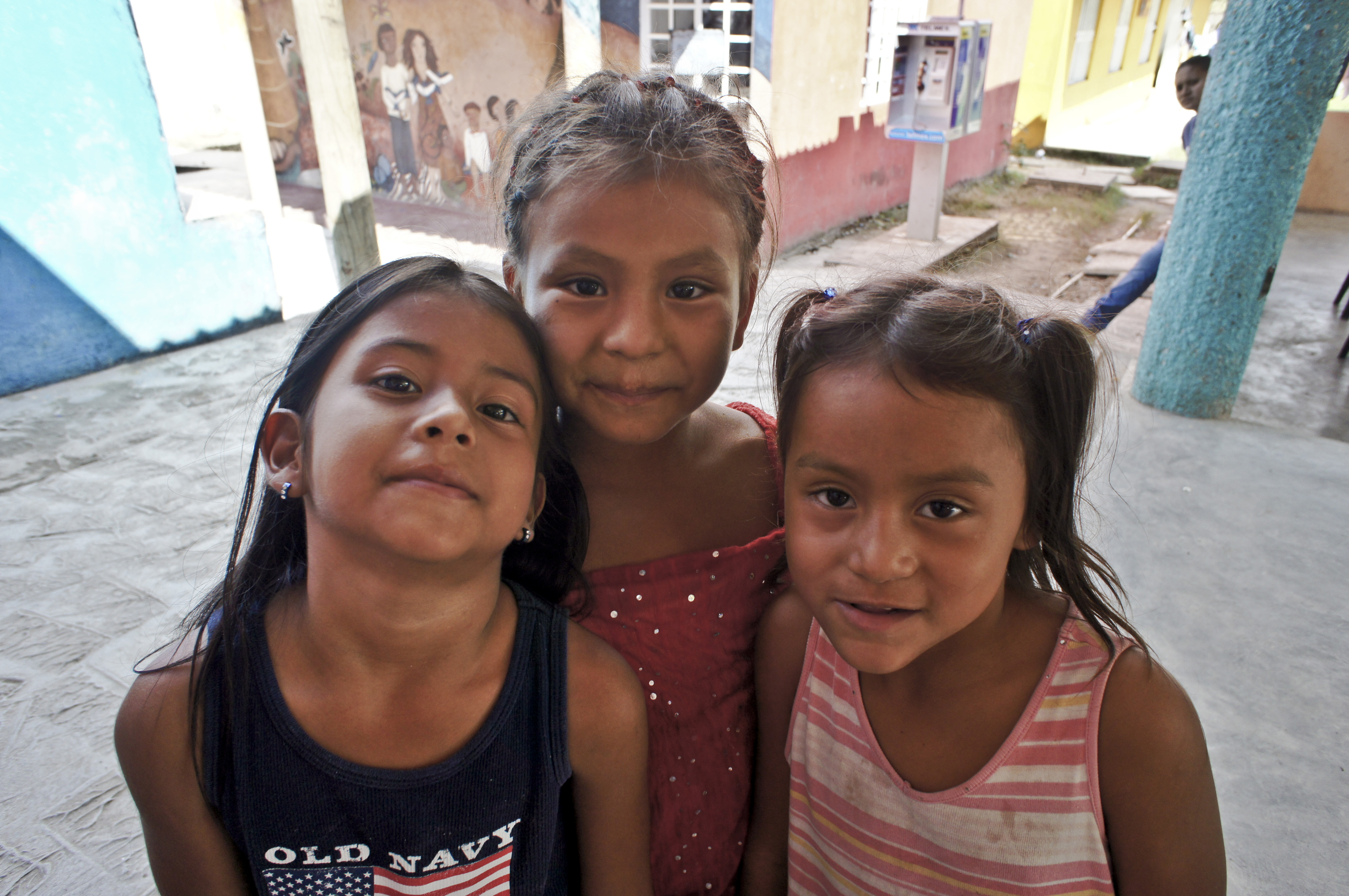
Girls at Tenosique Migrant Shelter. Photo by Víctor M. Espinosa. CC BY-NC-ND.

Girls at Tenosique Migrant Shelter. Photo by Víctor M. Espinosa. CC BY-NC-ND.

By Ana Elena Puga

What do we make of a photo of a two-year-old Honduran baby with a bandaged leg stump, the consequence of an accident on the freight train that he and his migrant mother were riding? Or the news stories about the 12-year-old Ecuadorean girl who hung herself in the shower after her attempt to reunite with her family was foiled by the arrest of her guide?

These past few months anyone in the United States who follows the news has seen a torrent of stories and images detailing the suffering of Latin American migrant minors who are brought here by their parents, or who come on their own in an attempt to work, reunite with family, or seek political asylum. As an academic who spent the last year conducting research in Mexican shelters and other facilities that help migrants, I am struck by how few people in the United States make the connection between their own comforts and the pain of others.

Every time I see a Fruit of the Loom ad, for instance, I think of the young woman I spoke to with blisters on her feet from walking for days from the Mexico-Guatemalan border to reach a shelter in Arriaga, Chiapas. In El Salvador she had left her village for a larger city to work in a Fruit of the Loom factory, sewing together my brand of underwear. She earned just enough money to stay alive and keep working, but not enough to feed, clothe, and educate her children. Having uprooted herself once for the sake of work made it easier for her to uproot herself again in hopes of an even better wage in the United States proper – instead of its exploitative outpost abroad. That six-pack of women’s underwear I can buy at Walmart for under $10 depends on the labor of people who are already working for us, even before they physically arrive on U.S. soil.

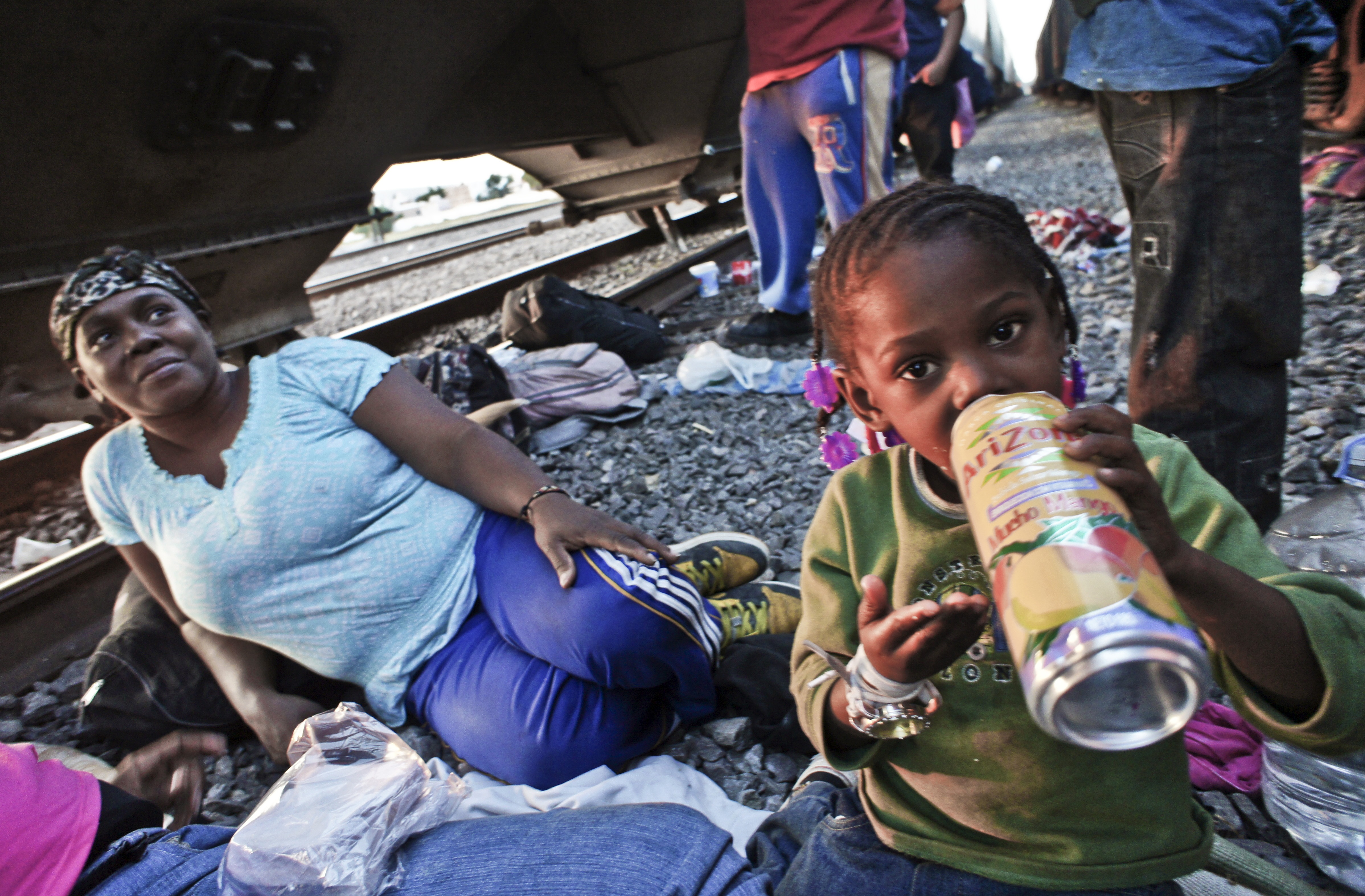
Family at Train in Celaya, Guanajuato. Photo by Víctor M. Espinosa. CC BY-NC-ND

Family at Train in Celaya, Guanajuato. Photo by Víctor M. Espinosa. CC BY-NC-ND

Emotional reactions to this year’s rise in the number of undocumented children apprehended at the U.S.-Mexico border often take one of two forms: sentimental-but-useless compassion or angry rejection. My dentist’s receptionist, like many well-intentioned people, lamented, “It just tears my heart up. I wish I could adopt them all.” Gut-twisting images and horror stories sometimes lead us to drown out the migrant experience in our own tears.

At the other extreme, The New York Times reported that protesters in Murrieta, California, shouted “Go home!” at migrant mothers and children on buses. Protesters opposed to a proposed shelter in Vassar, Michigan, presumably felt so threatened by the migrants that some of them reportedly carried semiautomatic rifles and handguns.

Even President Barack Obama adopted a stern tone: “Do not send your children to the border. If they do make it, they’ll get sent back. More importantly, they may not make it.” It’s difficult to imagine Central American parents hearing this on the news and saying, “OK, since you asked so nicely, I’ll just accept that it’s my lot in life to stay here with my kids, no matter how bad the poverty or the violence gets.” And what about the many minors who don’t ask permission before they hit the road? When we blame the parents, we ignore that most Central American mothers and fathers are doing the best they can to cope with global economic forces and structural violence that leave them on the short end of the neoliberal stick.

Central America is not an isolated, distant region of the world where the United States and its citizens bear little responsibility. Many books have been written on the long, nasty history of U.S. intervention in the region. To recall just a few highlights: in 1954 the CIA sponsored a coup in Guatemala on behalf of the United Fruit Company that destroyed a democratically elected government and plunged the country into decades of genocidal military rule; in the 1980s, the United States funded the Salvadoran military during that country’s civil war, despite the military’s links to right-wing death squads in the service of a tiny upper-class elite; in the wake of the 2009 coup that ousted President Manuel Zelaya from Honduras, the United States provided funding for the police force of Zelaya’s successor, Porfirio Lobo Sosa, despite his ties to the coup leaders and his shaky human rights record.

Not to mention that our consumer demand for illegal drugs fuels violent organized crime networks throughout the hemisphere, some of which also specialize in the human trafficking of Central American minors.

Children Playing at Tenosique Migrant Shelter. Photo by Víctor M. Espinosa. CC BY-NC-ND

Children Playing at Tenosique Migrant Shelter. Photo by Víctor M. Espinosa. CC BY-NC-ND

The United States can pressure Mexico to attempt to seal its southern border with Guatemala, but as Father Alejandro Solalinde, the director of a shelter for migrants in Ixtepec, Oaxaca reminded me, “People will migrate when they have to regardless of what governments try to decide for them, whether they pass immigration reform or build more walls.”

What if we were to think of undocumented migrant children neither as the heart-string tugging heroes of (let’s face it) entertaining melodramas featuring poor innocent, vulnerable children on dangerous adventures nor as the germ-ridden children of villainous criminals invading our country (depending on your point of view). What if we expend more of our energy on figuring out how to respect their rights? The Obama administration’s recent decision to interview some Honduran minors in their home country to determine whether they qualify for refugee status will not provide a perfect solution, since few children are likely to meet the stringent qualifications for a very limited number of visas. But at least it conceives of children less as objects of our own love or hate and more as persons with human rights under international law, persons for whom we bear an undeniable responsibility.

Ana Elena Puga is an Associate Professor in the Departments of Theatre and Spanish & Portuguese at The Ohio State University. She is working on a book, Staging Migrant Suffering: Melodrama in Latin American and Latino Activism, with sociologist Víctor M. Espinosa. Their 2013-14 research in Mexico was supported by a Fulbright fellowship.

“Presumed Incompetent” and Fight the Tower

presumed incompetentDr. Ramona Fernandez

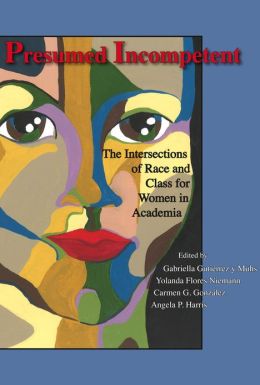
Since the publication of  Presumed Incompetent: The Intersections of Race and Class for Women (PI) edited by Gabriella Gutiérrez y Muhs, Yolanda Flores Niemann, Carmen G. González, and Angela P. Harris in late 2012, a quiet storm is gathering on the edges of academia. The book and subsequent Berkeley conference gave isolated women of color in academia impetus to step forward. Reading Presumed Incompetent is painful, so painful and so familiar many of us have to take it in small doses.

The truth is, academia is not a way station where rationality overcomes prejudice, but a site for the enactment of oppression essentially no different from any location. Under the rubric of what we assume is an honorable profession dedicated to making the world a better place, all the irrational competition and hatred that is race, gender, class (and the host of –isms which help prop up these central three) remains at the center of the intellectual project. Presumed Incompetent gathers together more than 500 pages of documentation of discrimination against women of color in academia. As stereotypical oppression after oppression is revealed in this collection, the reader is overwhelmed by the inevitable conclusion that not much has changed in this supposedly post-racial world. Many of us have been suffering in relative silence, believing that the treatment we have been receiving was unique and somehow pinpointed real faults of our own. Now, it is both liberating and frightening to realize that our sisters have been enduring similar treatment and worse.

As the stories poured out in response to the volume, it became clear that there was a need both to continue documenting them and to create a movement. The book has caused so many of us to come out of the woodwork, expounding our similar stories, that two law journals have made a coordinated effort to gather subsequent stories together.  Both the Berkeley Journal of Gender, Law & Justice and the Seattle Journal of Social Justice are publishing issues devoted to follow-up on Presumed Incompetent. fight the towerThe revelations in PI have inspired a movement which is coalescing around a site created by Kieu-Linh Caroline Valverde, herself one of the most courageous survivors. Her battle for tenure damaged her health to the point she lost her unborn child and was clinically dead for ninety minutes before being resuscitated. The details of her story can be found in the Fall/Winter 2013 issue of the Seattle Journal for Social Justice along with the details of my own journey. Her site, Fight the Tower, will continue documenting stories and pressing for the kind of change we need in order to remake academia into a place where we do not have to be ten times as competent just to survive.

My own story includes the ridiculous fight for tenure I had to endure because of the veto of one Dean. Despite passing muster through all the relevant committees, this Dean refused to support my tenure bid twice, reluctantly not standing in my way the third time. By the time I was finally tenured, I had endured damage to my health and professional confidence. And before I had regained my footing, I found myself the sole caregiver for my handicapped and elderly mother while also undergoing a transplant operation. Every time I was poised to regain my former health and momentum, either the continuing abuse of my institution or my health problems surfaced in such a way that I found it literally impossible to walk or talk the path I knew was my destiny. Instead of perceiving me as the treasure I am, complicated institutional politics continued to bludgeon me with ridiculous assumptions about my work and health. Collapsing in the department office and being transported by ambulance to the hospital only increased the abuse. Ironically, one of my most vivid nightmares came true: I would almost expire right in front of the eyes of my “colleagues” who didn’t care enough to check whether I was dead or alive. “My” institution has lost all moral authority over me as a result of this litany of absurdities, and I consider myself a free agent living inside the mouth of the monster.

Women of color all over the nation are waking up to the struggles we have in front of us for the foreseeable future, realizing that academia is another battleground where we must continue to fight for recognition and respect. Academia is not for the feint of heart because it has long propped up all the elements of oppression in a complicated alliance with the powers that be. Our inclusion has tested its foundations and its foundations have been found wanting. We should never assume we are living in an ivory tower from which we can leverage social change: the ivory tower is allied with an abusive social structure, props it up in formal and informal practices and itself needs to be resisted. The stories emerging in the aftermath of Presumed Incompetent are stories of multiply valenced oppressions which enter our bodies, causing permanent disabilities which further weaken our efforts to fight the tower.

Research has demonstrated that oppression causes a host of chronic illnesses which are then used as excuses for further oppression and, for some, result in the end of their careers. The increased demands for work product created by neoliberalism since the middle of the twentieth century have increased productivity in every job sector without subsequent compensation. Academia has not been immune to this global trend, but the toll it has taken on those of us who are not enfranchised is huge. Those in the majority may produce adequately but for those of us not accepted inside academia as legitimate, no amount of production or excellence will suffice. The pressures create impossible demands, demands we seek to fulfill at the risk of permanent damage to our physical and psychological well-being. Wed to these demands are constant criticism born out of prejudice and hatred, born out of the simple fact that few in the majority have truly internalized their own pronouncements about equality and justice.

PI points out that “Betrayal of women faculty of color is also the betrayal of explicitly stated institutional values and goals within higher education in the United States” (Collin 302). We know that silence in an indication of abuse; the publication of this volume and its subsequent collections represent an end to the silence and a cry for action. Part of that action recognizes that those who should stand beside us, our fellow women of color, are sometimes among those actively complicit in our oppression. For this reason and many others, it is critical that all of us speak truth to power as often and as loudly as possible. Latinas are the most underrepresented cohort in academia. That will not change without tremendous effort. We must learn to ally ourselves, and we must do so in an organized fashion with a cohort of other women of color who are willing to be part of an effective resistance movement, a movement which is organized, courageous and committed to changing academia as just one of the many steps we need to take to change our world.

Works Cited

Collin, Robin Morris. “Book Review of Presumed Incompetent: The Intersection of Race and    Class for Women in Academia.” Seattle Journal for Social Justice 12.2 (2013): 301–317. Print.

Gutiérrez y Muhs, Gabriella et al., eds. Presumed Incompetent: The Intersections of Race and Class for Women in Academia. Boulder, Colo: University Press of Colorado, 2012. Print.

Dr. Ramona Fernandez is an Associate Professor who has taught at the college level for forty four years and is a graduate of The History of Consciousness Program at the University of California, Santa Cruz. Her book, Imagining Literacy: Rhizomes of Knowledge in American Culture and Literature was a finalist for the Frederick W. Ness award from the Association of Colleges and Universities and is now available in a Kindle version. She is gratified beyond measure to be part of the Presumed Incompetent movement.

Dichos for Success While in College a Long Way From Home

by Sara A. Ramirez

It’s been over a decade since I left my childhood home in Dallas, Texas, to pursue a bachelor’s degree at the University of Notre Dame. And it has almost been a decade since I graduated from there. Although I was the first in my family to leave home for college, I was certainly not the first out of that group to leave a place I understood as “home.” I am the daughter and granddaughter of Mexican immigrants. My people are migratory people. We have been moving for centuries, and I’ve learned to appreciate my nomadic status as part of my life path.

One of the Chicanas whose writings have helped me understand “home” differently is Gloria Anzaldúa, who professes, “[I]n leaving home I did not lose touch with my origins because lo mexicano is in my system. I am turtle, wherever I go I carry ‘home’ on my back.” I haven’t lived in Dallas since I was 18, but “home” has been with me when I lived in other places like South Bend, Indiana; Oakland, California; San Antonio, Texas; and even London, England.

Since I left, I’ve met lots of Latinas—who like me—have chosen to attend college a long ways from home. I’ve consulted with one of them, Sonia I. Valencia, to offer you some dichos. Sonia is originally from Orange, California, and has also relocated to three cities away from home to pursue her bachelor’s, master’s, and now doctoral degrees. I hope the following tips help you on your journey as you leave one of the first places you’ve called “home” and come to know the home you carry on your back.

“La/El que nace para maceta del corredor no sale.”

This dicho encourages you to break out of the maceta (the plant pot). Like a healthy plant, you are bound to blossom. Imagine your consciousness to be like roots that—as you experience and learn more—grow longer and deeper into the pot in which you’ve grown comfortable. You will likely get the feeling that the pot isn’t for you anymore. Allow your roots, your leaves, your flowers to keep growing beyond the pot, off the porch, past the sidewalk, and as far as you can go.

This growth may happen in lots of different ways. For instance, many of us who are the first in our families to go to university believe we should pursue majors that will make our families happy, so that one day they can proudly tell la comadre that you’re a doctora, an abogada, or an ingeniera. But just as you made the decision to leave the place you call home, you will recognize the importance of continuing to pave and follow your own path. Anzaldúa writes, “I had to leave home so I could find myself, find my own intrinsic nature buried under the personality that had been imposed on me.” Let yourself fall in love with subjects outside of what is considered traditional. Take a Women’s Studies class or an Ethnic Studies class when you get the chance. When you’re at the campus bookstore, check out what other professors are having their students read. If the books seem interesting, get the book and/or jot down the name of the class and/or professor. Google their faculty profile, and try to take a class with them in the future.

Remember, you won’t know what’s “out there” or “in here” (*points to heart*) until you venture off the path you think you’re supposed to follow.

“No hay mal por que bien no venga.”

But while you’re out there reaching far beyond your comfy plant pot, you will stumble and sometimes fall. Although you may proceed with caution, some things will not go as you planned. This dicho is for those times. Loosely translated, it means, “No bad will come without good.” I have heard this dicho not only from my parents but also from my beloved Chicana mentors, and I live by it.

When something goes wrong, try to remember that there is a silver lining to every cloud. There will likely be times when you will remember the dicho above and then ask, “What good could possibly come of this?” When that question comes up, consider any lessons you may have learned or how this “bad” incident will direct you to a different path that could possibly be good. When I was a senior at Notre Dame, I applied to various doctoral programs in English and two M.A. programs in English  I was accepted only to the Master’s programs, one of which was at Notre Dame and the other was in San Antonio. Going to San Antonio was the best thing that could have ever happened to me; this is where I met three Chican@ mentors, who helped me come to consciousness as a Chicana feminist. It was they who encouraged me to pursue Chican@ Studies or Women’s Studies for my doctorate. With their guidance, I was accepted to five of the eight doctoral programs I applied to the second time around. Of course, I cried when I didn’t get into the other programs, but I had to remind myself, “No hay mal por que bien no venga.” When one door shuts, another one opens, and here I am.

“La sangre te hace pariente, pero la lealtad entre amig@s te hace familia.”

To help you see the “bien” in the dicho above, you’ll need social support. For many, family is important, but don’t believe that that’s all you have. There are people outside of your family who can and will care about you as much as (and sometimes more than) those with whom you grew up. As this dicho indicates, “blood” makes you relatives, but loyalty between friends makes you family.

Learn “to make familia from scratch” even when your relatives are close. This means forming bonds with the people who are around you at school. Get to know the student organizations on campus. Type in “student organizations” (sometimes called “Student Activities” or “Student Life”) into your school’s homepage search bar to learn about what’s out there. Pay attention to flyers put up on student bulletin boards to find out when their meetings are, and attend! If you don’t see an organization that reflects your interests, ask one of the staff at the Student Activities office how to create your own.

Creating community is essential to not only your college experience but also your life experience. A lot of times we’re told to seek out people who are unlike us so that we can learn from them and they can learn from us, and that’s important. It’s equally significant, however, to seek out people who will understand you (e.g., your humor) and share your interests (e.g., your love for cumbia, your disdain for homophobia and sexism). You’ll need a support system during rough times, which might happen when you miss your loved ones or when you get your first C.

Special thanks to Luz Ponce de Chihuahua, México, who directed me to these dichos.

Sara A. Ramírez is a Ph.D. Candidate in Ethnic Studies at the University of California, Berkeley. She is also part of the Third Woman Press Collective and an adjunct instructor in Women’s Studies at the University of Texas at San Antonio.