
Category Archives: Uncategorized

Unveiling the Secret to Tenure Expectations

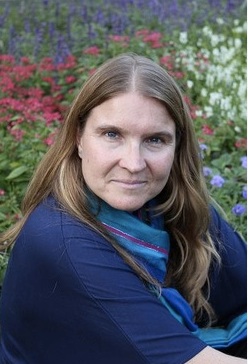
picture of Tanya Golash-Boza

Professor Tanya Golash-Boza

Tanya Golash-Boza (2015 Mujeres Talk Contributing Blogger)

Imagine this: Your first year on the tenure-track, you sit down with your department chair and ask him what the expectations for tenure are. He hands you a written document that indicates that you have to publish six articles, and that you must be first author on at least four. He provides you with a list of acceptable journals and makes it clear that this is the hurdle you have to cross for tenure. You meet with other senior colleagues in your department and across the university, and everyone agrees on the research component of the tenure expectations. You know exactly what you need to do and the only thing left to figure out is how to do it.

This situation, for better or for worse, is remarkably uncommon. Most new faculty members are never told exactly what they need for tenure. Senior colleagues are reluctant to give an exact number of how many articles you need to publish, whether you need articles in addition to a book, which journals are considered important, whether or not you need a major grant, and whether or not book reviews, conference presentations, and book chapters in edited volumes count for anything. Your senior colleagues are most likely to tell you that the tenure expectations are individualized and that a wide variety of portfolios can make an excellent tenure case. They will likely tell you that they are looking for a research profile that demonstrates excellence and an upward trajectory.

As a new faculty member at a research institution, I found this very frustrating. I thought to myself: why can’t they just tell me what I need to do so that I can do it? If you are in this sort of situation, where you are not clear on what the expectations are, one thing is certain: it is in your interest to find out anyway. How do you do that?

It turns out that there are a number of ways for you to figure out what a solid tenure case would look like. You just need to approach this as you would any other research project: ask around, investigate, and look at a variety of cases. Here are four strategies for you to figure out what your research portfolio should look like.

A pen resting on top of an open journal with writing faintly apparent.

On the importance of asking for clarity regarding tenure expectations. Photo by Sebastien Wiertz. CC BY 2.0

  • Ask around at your institution. In your first semester, you should meet with your department chair and with your faculty mentor. Ask both of them to give you advice on what the publication expectations are. They might be vague, but they will communicate something to you. You also can ask other colleagues around the institution, especially if you can find people who have served on the campus Promotion and Tenure committees.
  • Look at the CVs of people recently promoted in your department. If there is anyone who has been promoted in the past five years in your department, you should look at their CV and figure out what they needed to get tenure. Tenure expectations are a moving target, so the more recent candidates are a better comparison case than your older colleagues. You may even be able to ask recently tenured colleagues to share their tenure materials with you so that you can see exactly how they put their case together.
  • Look at the CVs of people recently promoted at other comparable institutions. Most departments post their faculty members’ CVs online. And, since promotion and tenure require updating the CV, most recently tenured faculty have updated CVs online. Look at several CVs of people who were recently tenured in your field and figure out what they had that allowed them to make a compelling tenure case. If no one has been tenured recently in your own department, this strategy can be particularly helpful.
  • Develop your own expectations, and share them with a trusted mentor. After you have compiled all of this information, use it to make explicit expectations for yourself. Suppose, after this research, you determine that you would need a book published at a university press, two single-authored articles in top tier peer-reviewed journals, one co-authored peer-reviewed articles, and at least six conference presentations. Take this information back to your department chair and your mentor and ask them if that would make a reasonable tenure case in your department. Tell them that you have set these goals for yourself, and that you would like their feedback on your goals. Their responses should be enlightening.

This last step is very important. Senior faculty are often reluctant to tell you exactly what you need because they don’t want to be wrong, but also because they do not want you to limit your options. If, however, you decide for yourself what your goals are and make it clear that you want their feedback, they likely will be willing to provide it.

The quest for tenure can be stressful, and the lack of clear expectations makes it more so. Figuring out what the expectations are yourself can be one step towards achieving clarity for yourself, and, in the process, to relieving some of the stress.

Tanya Golash-Boza is a Mujeres Talk 2015 Contributing Blogger. Her academic blog site, Get a Life, PhD, has been online since 2010 and offers “how to” advice for college professors on topics such as how to write a book proposal, revise an academic article, or organize work time in a semester. Dr. Tanya Golash-Boza also leads two other academic blog sites, Social Scientists for Comprehensive Immigration Reform and Are We There Yet? World Travels with Three Kids. An Associate Professor of Sociology at the University of California Merced, Golash-Boza is the author of four books: Due Process Denied (2012), Immigration Nation (2012), Yo Soy Negro: Blackness in Peru (2011), and Race and Racisms: A Critical Approach (2014). She has also written for Al Jazeera, The Nation, and Counterpunch. She has  a new book out in December: Deported: Immigrant Policing, Disposable Labor and Global Capitalism.

Latinas and Tenure in the Seventies: A Testimonial

February 11, 2013

Flower among the Spines by raelb. Flickr/Creative Commons License.

Flower among the Spines by raelb. Flickr/Creative Commons License.

by Eliana Rivero

Once upon a time there were no Latinas tenured in the Arizona university system, from Tucson to Tempe to Flagstaff. This lasted until 1973, when it was my good (mis?)fortune to confront the system and see how things worked.

I had prepared diligently, and then some. When I submitted my tenure file in the spring of that year, I had one monograph in print published in Spain, one coedited critical edition by Oxford University Press, eight articles in reputable journals, several conference papers delivered, very good teaching evaluations, and quite a bit of professional service. Since the year before, I had been meeting with a group of faculty women who formed a caucus to look into our status on campus at the University of Arizona; this group would go on to form the first Women’s Studies program in the state. I remember one male colleague in French stopping me in the hall to inquire: “Why Women Studies? Why not Men Studies?”  I laughed then, since I could not have known how my tenure case and the subsequent struggle would be seen first as waged by a woman, and second, by a Latina who was trying to obtain job permanence as a Latin-Americanist in the United States.

My case passed the scrutiny of a departmental committee (admittedly with some grumblings from traditional scholars, all men), and then went on to the Dean’s office for review. There my troubles began: I was called to the College of Arts and Sciences office and literally put on the carpet by the Dean, a Harvard alumnus whom (I would find out later) had been “informed” by some older colleagues at a Harvard alumni party that my work was dubious in nature and provenance. My publications were all right, but nobody knew if I had written them by myself or with help from some ghost writer, perhaps my dissertation director (!). Furthermore, my field (Latin American contemporary literature, mostly poetry) was not that important in the scheme of things.

Thus spoke the Dean: “Consider yourself lucky that we have to award you tenure, because a letter should have been sent to you a year ago indicating trouble with your CV, and it wasn’t. However, you will not be promoted to associate professor. Your title will be lecturer.”

I was speechless. I left the office, went home, got into bed, and pulled the covers over my head. How could that be?  Where was justice?  Two days later, I found out that the colleague who had asked me in the hall about the feasibility of Men Studies was promoted to associate professor with tenure, despite having fewer years in rank, not having a book in print, and having been hired in the position of lecturer as an ABD a year after me. The department head of Romance Languages explained to me that since the promoted colleague was in a less popular field—French Canadian literature—and I was in Spanish, they needed his services more than mine in Arizona (!!).

I consulted with my colleagues in the women’s studies group, received their moral support, hired a lawyer (who had just won a case of gender discrimination in the state), and filed a formal grievance with the Civil Rights Division of the Department of Education in Washington DC.  Everyone on campus was amazed:  “She called in the Feds!”  I heard whispered behind my back.  A team of investigators came to campus, and after many interviews and much examining of files and almost a whole academic year, I was given a letter with what they called the “right to sue”: yes, they had found evidence that I had been discriminated against for reasons of gender and ethnicity. It helped that a young teaching assistant (also a Harvard alumnus) told me, and later testified, that he had overheard the conversation between one of my older colleagues and the Dean in which they trashed my work, and conjectured about the authorship of my publications. That colleague was opposed to granting me tenure because according to him, Latin American literature was not a departmental priority, nor a well-respected field of research (after all, he couldn’t read more than thirty pages in García Márquez´Cien años de soledad without getting utterly bored!). At the time, out of twenty-five faculty in my department, there were only two women besides me: one was semiretired at 78 years of age, and the other was tenured but in the more acceptable field of medieval studies and linguistics. Neither was interested in women’s issues: I heard the older one say at a faculty party that she preferred to speak to men because “ladies only talk about their babies.”

It was in the spring semester of 1974 that the Dean was removed from office and another head of department was named. I received a letter from the President of the University with a new contract as associate professor with tenure, and a substantial salary increase. Both the new dean and the acting department head called me in and offered verbal apologies. But the title of lecturer for the academic year 1973-74 is still on my record, as a testimonial to that annus horribilis in which they tried unsuccessfully to hold a Latina scholar back.

Oddly enough, the only other Latina who received tenure in the Arizona system around that time was another Cuban-born woman in Flagstaff. But it would be at least five more years until the first Chicana PhD would be hired by the English department here in Tucson. She was tenured six years later, and I—already a full professor with a very substantial CV—sat on the Dean’s committee that examined her case.

It all seems incredible now, but so were the early seventies. At present, at least in my field, the tenure process for Latinas is an easier road than the one I had to travel. In 2013, there are eight tenured women scholars in my department (one Chilena, one Chicana, one Puertorriqueña, one Mejicana, one Argentina, two Brasileñas, one Española, one AngloAmericana). Three more Chicanas are untenured lecturers. We still have some way to go!

Eliana Rivero is Professor Emerita of the Spanish and Portuguese Department of The University of Arizona. During her 45 year career at the U of A, she was also affiliate faculty in Latin American Studies, Mexican American Studies, and Women’s Studies. Her current research focuses on Cuban American women writers and her recent poems and short stories appear in the online Spanish literary magazine LABRAPALABRA.

Comment(s):

Mari Castaneda    February 25, 2013 at 9:01 AM
querida Eliana, thank you so much for sharing your story! It’s amazing how stories like these still abound though… I know several Latinas that were recently denied tenure and also questioned about the quality/authenticity of their work. Indeed, there’s still more work to do! But you were a trailblazer, and we wouldn’t be where we are today if it wasn’t for mujeres like you – gracias!!

Latinas/os in Film and Television?

March 19, 2012

By Susan Mendez    

            Another Oscar season has come and gone and for anyone interested in the representation of people of color in mainstream visual culture or the dramatic arts, it has been a disappointing season once again. This year, the talk was all about how The Help was the controversial film to watch. Yes, this movie did provide the only two African-American actors/actresses up for awards in this year’s Oscar season, but the reality is that the roles that they played were ones of domestic servants. And the larger reality is that The Help was most likely the best choice for finding meaty, starring roles for these actresses. African-American actors and actresses have long dealt with the challenge of making stereotypical near racist roles and stories compelling and worthwhile. This problematic position just highlights the lack of interesting, complex roles for African-American actors and actresses due to the economic reality of supply and demand. Stereotypical stories of hardship are what people will pay to see; thus, they are what movie production companies will financially back. Recently, the backstory on the difficulties that George Lucas had in getting his movie RedTails made became public knowledge as part of the publicity for this film. Red Tails, not the first movie to honor the Tuskegee Airmen and featuring a near-all African-American cast, still faced so many obstacles in production that not even having the name George Lucas attached to the project was enough to get investors. Finally, Lucas became the main financial backer himself. Yet, with all these very public and well-known problems facing the African-American community in getting proper representation in the mainstream visual culture or the dramatic arts, I cannot help but think that the Latina/o community has much work to do even to get to this public and problematic stage in the world of mainstream visual culture.      

            When I think of recent mainstream films that highlight the Latina/o experience in the United States, I come up with a very short list. This is possibly because I do not get to teach visual cultural texts often in my classes so the impetus to keep abreast of the latest films is not great in my work. Also, I live and work in a relatively small and not so-diverse town so even just flipping through the local news or arts paper will not keep me up-to-date on Latina/o film. The latest mainstream film related to the Latina/o experience that I can remember was the release of the action parody Machete (2010) with its very clear political commentary on the immigration issue. But other than that film, in the recent past, these are the films that I can recall: QuinceañeraAngel RodriguezWashington HeightsRaising Victor VargasA Day Without a Mexican, El Cantante, Maid in ManhattanGirlfightSelena, Mi Vida LocaThree Burials of Melquiades EstradaPiñero, LonestarAmerican MeMi FamiliaStar Maps, SalsaLa BambaBorn in East L.A., Stand and Deliver, El Norte, and Zoot Suit. These are the movies that I can remember either easily seeing in the theatres or getting a copy of at a local store; this is not meant to be a comprehensive list at all. But even in this sampling of mainstream films that highlight the Latina/o experience in the United States, one can see two patterns: the emphasis on the Chicana/o community in the southwest and the Dominican/Puerto Rican communities in the northeast and the general lack of commercial and/or critical success.  The end result is a grouping of films that do not cover the diversity of the Latina/o community in the United States and that are not successful in any common measurable way. Yet, this discussion, this well-founded lament for complex and diverse roles and stories for the Latina/o community is not as public as it is for African-American community. Why is this so? Furthermore, few recent Oscar seasons have included Latina/o actors, actresses, or films that focus on the Latina/o experience in the United States, with the notable exception of Demián Bichir’s Best Actor nomination this year for A Better Life. It seems that we as a community are behind in having these significant discussions, questions, and concerns brought into the public light. Independent film endeavors and projects are fantastic and worthwhile in getting more critical representations of the Latina/o community circulating, but it is important not to undervalue mainstream visual culture. This is the arena in which various representations of the Latina/o community are easily proliferated and become accessible. This arena includes the world of television but even here, the number and variety of shows and roles that feature Latinas/os and their stories have been disappointing. Television shows such as I Love Lucy, Chico and the ManI Married DoraResurrection BoulevardGeorge LopezCane, and Ugly Betty have been pivotal in gaining representation for Latinas/os, but these stories, for the most part, do not stray far from familiar tales of exotic entertainment or hardshipThe majority of the United States population learns of the different communities within this nation from the world of television and mainstream film. Therefore, the same questions and concerns that dominate the African-American community in the realm of visual culture need to have a central and public presence for the Latina/o community as well.      

Susan Mendez is on the faculty of the University of Scranton and serves as an At-Large Representative of MALCS. 

Comments:

Mujeres Talk Moderator  June 2, 2012 at 6:38 AM

Your blog essay is a also a resource on Latina/o film and television programs. Has anyone written about Resurrection Boulevard? It was a fascinating drama that provided Elizabeth Peña with a meaty part.

Spilling the Beans: Mujeres Talk Can Be a Virtual Public Sphere

by Ella Diaz

In the first two months of 2012, there are already major crises facing Latina/o and Chicana/o communities. From Alabama’s HB56, which makes all civic participation illegal for undocumented children and their parents, to Arizona’s recent “confiscating” of certain books from public schools, the pursuit of life, liberty, and happiness in the U.S. is looking kind of bleak. If you have 35 minutes, you should listen to the first portion of the January 27, 2012 episode of This American Life, titled “Reap What You Sow.” They do an excellent job of talking about HB56 on the street level and frontlines of law enforcement.

On the MALCS listerv, we send out many emails updating each other on the status of certain legislation and movements against Latinas/os. We also update each other on general news from our campuses and professions, or ask for specific help on projects. But perhaps it’s Mujeres Talk –our blog—that can provide us with a virtual public sphere, a place that each of us may enter and speak with one another openly about many of the topics we raise in our emails. There are so many important circumstances we are facing in our schools, jobs, communities, and families. What is a major issue that you are currently facing? In 2012, what do you find to be the #1 crisis we need to confront?

For me, the next year will prove to be one of the most significant for the 21st century. We are in a political and mainstream cultural moment that will continue to push us farther away from our stories, the lives we live that make us tell them, and, as writer Wally Lamb entitled his second novel, from what we know is true. Theoretical frameworks that are not grounded in our narratives are ahistorical; and by “our narratives,” I mean the testimonios, poems, plays, fictions, and “autobioethnographies” (to use Norma Cantu’s term) that create our individual and collective memory. It is my opinion that one cannot understand Borderland Theory without knowledge of the 1845 and 1848 annexations of northern Mexico in to the U.S. Likewise, oppositional consciousness and the decolonial imaginary are also not possible without knowing the migrant chains of mujeres across geopolitical borders, historical revolutions, and tactics for survival under state policies of the twentieth- now twenty-first century. Theoretical frameworks not grounded in our narratives help create a reality that makes Shakespeare’s The Tempest a banned/confiscated text in Arizona and Helena Viramontes’s “The Moths” pornography. I am not undercutting the value of the theory and critical lenses we use to more clearly interpret our cultural production in relation to larger systems of power and the global economy. I am merely stating that theory and narrative aren’t mutually exclusive. We have to decide if, in addition to scholars, we are also story-tellers who listen, remember, and retell the stories that built the fields of Chicana/o and Latina/o Studies. That is my biggest concern, and I would love to know what others think and if they agree or disagree. What is your #1 concern going forward into March 2012?

Ella Diaz is a Visiting Faculty member at the San Francisco Art Institute. Her Ph.D. in American Studies is from the College of William and Mary. Diaz is an At Large Representative of MALCS.