
Category Archives: Inequality

“Presumed Incompetent” and Fight the Tower

presumed incompetentDr. Ramona Fernandez

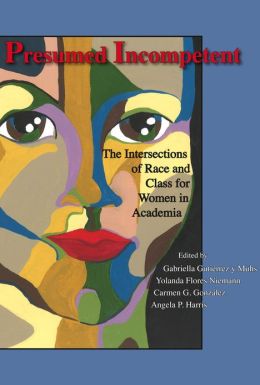
Since the publication of  Presumed Incompetent: The Intersections of Race and Class for Women (PI) edited by Gabriella Gutiérrez y Muhs, Yolanda Flores Niemann, Carmen G. González, and Angela P. Harris in late 2012, a quiet storm is gathering on the edges of academia. The book and subsequent Berkeley conference gave isolated women of color in academia impetus to step forward. Reading Presumed Incompetent is painful, so painful and so familiar many of us have to take it in small doses.

The truth is, academia is not a way station where rationality overcomes prejudice, but a site for the enactment of oppression essentially no different from any location. Under the rubric of what we assume is an honorable profession dedicated to making the world a better place, all the irrational competition and hatred that is race, gender, class (and the host of –isms which help prop up these central three) remains at the center of the intellectual project. Presumed Incompetent gathers together more than 500 pages of documentation of discrimination against women of color in academia. As stereotypical oppression after oppression is revealed in this collection, the reader is overwhelmed by the inevitable conclusion that not much has changed in this supposedly post-racial world. Many of us have been suffering in relative silence, believing that the treatment we have been receiving was unique and somehow pinpointed real faults of our own. Now, it is both liberating and frightening to realize that our sisters have been enduring similar treatment and worse.

As the stories poured out in response to the volume, it became clear that there was a need both to continue documenting them and to create a movement. The book has caused so many of us to come out of the woodwork, expounding our similar stories, that two law journals have made a coordinated effort to gather subsequent stories together.  Both the Berkeley Journal of Gender, Law & Justice and the Seattle Journal of Social Justice are publishing issues devoted to follow-up on Presumed Incompetent. fight the towerThe revelations in PI have inspired a movement which is coalescing around a site created by Kieu-Linh Caroline Valverde, herself one of the most courageous survivors. Her battle for tenure damaged her health to the point she lost her unborn child and was clinically dead for ninety minutes before being resuscitated. The details of her story can be found in the Fall/Winter 2013 issue of the Seattle Journal for Social Justice along with the details of my own journey. Her site, Fight the Tower, will continue documenting stories and pressing for the kind of change we need in order to remake academia into a place where we do not have to be ten times as competent just to survive.

My own story includes the ridiculous fight for tenure I had to endure because of the veto of one Dean. Despite passing muster through all the relevant committees, this Dean refused to support my tenure bid twice, reluctantly not standing in my way the third time. By the time I was finally tenured, I had endured damage to my health and professional confidence. And before I had regained my footing, I found myself the sole caregiver for my handicapped and elderly mother while also undergoing a transplant operation. Every time I was poised to regain my former health and momentum, either the continuing abuse of my institution or my health problems surfaced in such a way that I found it literally impossible to walk or talk the path I knew was my destiny. Instead of perceiving me as the treasure I am, complicated institutional politics continued to bludgeon me with ridiculous assumptions about my work and health. Collapsing in the department office and being transported by ambulance to the hospital only increased the abuse. Ironically, one of my most vivid nightmares came true: I would almost expire right in front of the eyes of my “colleagues” who didn’t care enough to check whether I was dead or alive. “My” institution has lost all moral authority over me as a result of this litany of absurdities, and I consider myself a free agent living inside the mouth of the monster.

Women of color all over the nation are waking up to the struggles we have in front of us for the foreseeable future, realizing that academia is another battleground where we must continue to fight for recognition and respect. Academia is not for the feint of heart because it has long propped up all the elements of oppression in a complicated alliance with the powers that be. Our inclusion has tested its foundations and its foundations have been found wanting. We should never assume we are living in an ivory tower from which we can leverage social change: the ivory tower is allied with an abusive social structure, props it up in formal and informal practices and itself needs to be resisted. The stories emerging in the aftermath of Presumed Incompetent are stories of multiply valenced oppressions which enter our bodies, causing permanent disabilities which further weaken our efforts to fight the tower.

Research has demonstrated that oppression causes a host of chronic illnesses which are then used as excuses for further oppression and, for some, result in the end of their careers. The increased demands for work product created by neoliberalism since the middle of the twentieth century have increased productivity in every job sector without subsequent compensation. Academia has not been immune to this global trend, but the toll it has taken on those of us who are not enfranchised is huge. Those in the majority may produce adequately but for those of us not accepted inside academia as legitimate, no amount of production or excellence will suffice. The pressures create impossible demands, demands we seek to fulfill at the risk of permanent damage to our physical and psychological well-being. Wed to these demands are constant criticism born out of prejudice and hatred, born out of the simple fact that few in the majority have truly internalized their own pronouncements about equality and justice.

PI points out that “Betrayal of women faculty of color is also the betrayal of explicitly stated institutional values and goals within higher education in the United States” (Collin 302). We know that silence in an indication of abuse; the publication of this volume and its subsequent collections represent an end to the silence and a cry for action. Part of that action recognizes that those who should stand beside us, our fellow women of color, are sometimes among those actively complicit in our oppression. For this reason and many others, it is critical that all of us speak truth to power as often and as loudly as possible. Latinas are the most underrepresented cohort in academia. That will not change without tremendous effort. We must learn to ally ourselves, and we must do so in an organized fashion with a cohort of other women of color who are willing to be part of an effective resistance movement, a movement which is organized, courageous and committed to changing academia as just one of the many steps we need to take to change our world.

Works Cited

Collin, Robin Morris. “Book Review of Presumed Incompetent: The Intersection of Race and    Class for Women in Academia.” Seattle Journal for Social Justice 12.2 (2013): 301–317. Print.

Gutiérrez y Muhs, Gabriella et al., eds. Presumed Incompetent: The Intersections of Race and Class for Women in Academia. Boulder, Colo: University Press of Colorado, 2012. Print.

Dr. Ramona Fernandez is an Associate Professor who has taught at the college level for forty four years and is a graduate of The History of Consciousness Program at the University of California, Santa Cruz. Her book, Imagining Literacy: Rhizomes of Knowledge in American Culture and Literature was a finalist for the Frederick W. Ness award from the Association of Colleges and Universities and is now available in a Kindle version. She is gratified beyond measure to be part of the Presumed Incompetent movement.
Temporary Labor, Temporary Lives

June 10, 2013

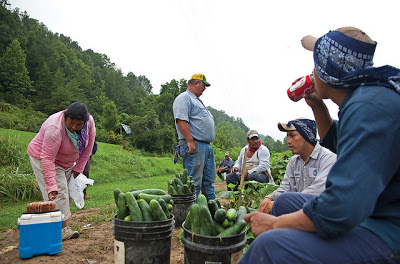
Photo by Laura Elizabeth Pohl. Flickr/Creative Commons License.

Photo by Laura Elizabeth Pohl. Flickr/Creative Commons License.

By Theresa Delgadillo

“In my mind, slavery has not yet disappeared. And in this case, we the Mexican agricultural workers are the slaves. I want to say to all of the employers that we are not machines. And I want them to consider, for just a moment, that the money they have is thanks to the work of all the Mexican agricultural workers who come to Canada to work.”

– Mexican agricultural contract worker in El Contrato (2003)

Advocates of U.S. immigration reform have long cited the importance of immigrant labor in making our daily meals possible. Immigrant labor drives all aspects of agricultural production in the U.S. — picking, packing and delivering to our local markets the vegetables and fruits we eat as well as slaughtering and processing the poultry and meats we consume. Yet, what we overlook when we focus on how much agricultural labor rests on immigrant shoulders is the wealth, income and economies the workers also produce. In Min Sook Lee’s 2003 film El Contrato, viewers hear how small family farms grew into major industries through the use of Mexican agricultural contract workers. But viewers also hear the male workers, who are at the center of this film, speak about the pain of their ordinary family and social life disrupted, their isolation and their powerlessness life as contract workers to improve the conditions of their labor. The film also shows us their efforts to support each other.

Since visas for temporary contract labor, skilled labor, and the temporary status of millions is on the table in the current immigration debate in the U.S., those interested in immigration reform might be interested in viewing Lee’s film to consider how guest worker programs affect all those involved, but also to learn about the historic and economic contributions of immigrant workers. For me, El Contrato drives a home a point that many would prefer to forget: immigrants are people, embedded in social as well as economic networks. El Contrato shows us men who are not able to both live and work among their families and social networks, but instead must forego life for work. Their labor, nonetheless, contributes to two economies: Canadian and Mexican. Though El Contrato addresses a Canadian/Mexican context, viewers might consider that the men’s voices in this film and their expressions of desire for a fuller family are sentiments shared by immigrants in the U.S. Today, we again revisit the debate between prioritizing family and social relationships in U.S. immigration law over that of worker supply and between inclusion of new immigrants via citizenship or forms of legal second-class status.

Filmmaker Min Sook Lee is at work on another film, Migrant Dreams, that focuses on women contract workers in Canada. The trailer promises even more intimate glimpses into the lives of contract workers, yet because these aspects of life are absent from El Contrato I wonder about the sources of this gendered difference — were these aspects of men’s lives not available to the woman filmmaker or a sign of the difference in men’s and women’s immigrant experience? Something to consider when Migrant Dreams is completed and published. In the meantime, view El Contrato in full online at the Canadian Film Board’s website.


Theresa Delgadillo is a Co-Editor/Moderator of Mujeres Talk and an Assistant Professor of Comparative Studies at The Ohio State University.

Latinas and Tenure in the Seventies: A Testimonial

February 11, 2013

Flower among the Spines by raelb. Flickr/Creative Commons License.

Flower among the Spines by raelb. Flickr/Creative Commons License.

by Eliana Rivero

Once upon a time there were no Latinas tenured in the Arizona university system, from Tucson to Tempe to Flagstaff. This lasted until 1973, when it was my good (mis?)fortune to confront the system and see how things worked.

I had prepared diligently, and then some. When I submitted my tenure file in the spring of that year, I had one monograph in print published in Spain, one coedited critical edition by Oxford University Press, eight articles in reputable journals, several conference papers delivered, very good teaching evaluations, and quite a bit of professional service. Since the year before, I had been meeting with a group of faculty women who formed a caucus to look into our status on campus at the University of Arizona; this group would go on to form the first Women’s Studies program in the state. I remember one male colleague in French stopping me in the hall to inquire: “Why Women Studies? Why not Men Studies?”  I laughed then, since I could not have known how my tenure case and the subsequent struggle would be seen first as waged by a woman, and second, by a Latina who was trying to obtain job permanence as a Latin-Americanist in the United States.

My case passed the scrutiny of a departmental committee (admittedly with some grumblings from traditional scholars, all men), and then went on to the Dean’s office for review. There my troubles began: I was called to the College of Arts and Sciences office and literally put on the carpet by the Dean, a Harvard alumnus whom (I would find out later) had been “informed” by some older colleagues at a Harvard alumni party that my work was dubious in nature and provenance. My publications were all right, but nobody knew if I had written them by myself or with help from some ghost writer, perhaps my dissertation director (!). Furthermore, my field (Latin American contemporary literature, mostly poetry) was not that important in the scheme of things.

Thus spoke the Dean: “Consider yourself lucky that we have to award you tenure, because a letter should have been sent to you a year ago indicating trouble with your CV, and it wasn’t. However, you will not be promoted to associate professor. Your title will be lecturer.”

I was speechless. I left the office, went home, got into bed, and pulled the covers over my head. How could that be?  Where was justice?  Two days later, I found out that the colleague who had asked me in the hall about the feasibility of Men Studies was promoted to associate professor with tenure, despite having fewer years in rank, not having a book in print, and having been hired in the position of lecturer as an ABD a year after me. The department head of Romance Languages explained to me that since the promoted colleague was in a less popular field—French Canadian literature—and I was in Spanish, they needed his services more than mine in Arizona (!!).

I consulted with my colleagues in the women’s studies group, received their moral support, hired a lawyer (who had just won a case of gender discrimination in the state), and filed a formal grievance with the Civil Rights Division of the Department of Education in Washington DC.  Everyone on campus was amazed:  “She called in the Feds!”  I heard whispered behind my back.  A team of investigators came to campus, and after many interviews and much examining of files and almost a whole academic year, I was given a letter with what they called the “right to sue”: yes, they had found evidence that I had been discriminated against for reasons of gender and ethnicity. It helped that a young teaching assistant (also a Harvard alumnus) told me, and later testified, that he had overheard the conversation between one of my older colleagues and the Dean in which they trashed my work, and conjectured about the authorship of my publications. That colleague was opposed to granting me tenure because according to him, Latin American literature was not a departmental priority, nor a well-respected field of research (after all, he couldn’t read more than thirty pages in García Márquez´Cien años de soledad without getting utterly bored!). At the time, out of twenty-five faculty in my department, there were only two women besides me: one was semiretired at 78 years of age, and the other was tenured but in the more acceptable field of medieval studies and linguistics. Neither was interested in women’s issues: I heard the older one say at a faculty party that she preferred to speak to men because “ladies only talk about their babies.”

It was in the spring semester of 1974 that the Dean was removed from office and another head of department was named. I received a letter from the President of the University with a new contract as associate professor with tenure, and a substantial salary increase. Both the new dean and the acting department head called me in and offered verbal apologies. But the title of lecturer for the academic year 1973-74 is still on my record, as a testimonial to that annus horribilis in which they tried unsuccessfully to hold a Latina scholar back.

Oddly enough, the only other Latina who received tenure in the Arizona system around that time was another Cuban-born woman in Flagstaff. But it would be at least five more years until the first Chicana PhD would be hired by the English department here in Tucson. She was tenured six years later, and I—already a full professor with a very substantial CV—sat on the Dean’s committee that examined her case.

It all seems incredible now, but so were the early seventies. At present, at least in my field, the tenure process for Latinas is an easier road than the one I had to travel. In 2013, there are eight tenured women scholars in my department (one Chilena, one Chicana, one Puertorriqueña, one Mejicana, one Argentina, two Brasileñas, one Española, one AngloAmericana). Three more Chicanas are untenured lecturers. We still have some way to go!

Eliana Rivero is Professor Emerita of the Spanish and Portuguese Department of The University of Arizona. During her 45 year career at the U of A, she was also affiliate faculty in Latin American Studies, Mexican American Studies, and Women’s Studies. Her current research focuses on Cuban American women writers and her recent poems and short stories appear in the online Spanish literary magazine LABRAPALABRA.

Comment(s):

Mari Castaneda    February 25, 2013 at 9:01 AM
querida Eliana, thank you so much for sharing your story! It’s amazing how stories like these still abound though… I know several Latinas that were recently denied tenure and also questioned about the quality/authenticity of their work. Indeed, there’s still more work to do! But you were a trailblazer, and we wouldn’t be where we are today if it wasn’t for mujeres like you – gracias!!

Latinas and Roe v. Wade

January 21, 2013

Photo by We Are Woman, Aug 25, 2012, Flickr/Creative Commons License.

Photo by We Are Woman, Aug 25, 2012, Flickr/Creative Commons License.

By Elena R. Gutiérrez

“Our lives begin to end the day we become silent about things that matter.” MLK

In watching the unfolding online celebration of the fortieth anniversary of Roe v Wade  (January 22, 2013), it is undeniable that the voices of women of color have been present and impactful in changing the landscape of abortion organizing over the past four decades. While Planned Parenthood’s decision to step away from the pro-choice framework may be the most recent indicator that the mainstream reproductive rights movement has finally understood that for most women terminating a pregnancy is anything but a “choice,” I have been struck by several articles and blogs, more than ever before written by Latinas, commenting upon what this landmark legislation currently means for our communities.[1]

It is not that this is a new occurrence—Latinas have advocated for issues of reproductive health, including pregnancy termination, for longer than Roe v. Wade has been in existence. However, it has been refreshing to read a number of public opinions and perspectives that directly engage how and why abortion is significant in Latina lives; although all authors inevitably point out that what is popularly perceived as open access to abortion in the United States is hardly the reality for most Latinas. As one “Anonymous- Reproductive Justice Advocate” notes: “The legality of Roe v. Wade does not reflect our country’s culture where sex education is often times limited to abstinence-only, access to birth control and abortions services is disproportionate, and interactions perpetuate slut-bashing where sexually-active youth are labeled as ‘too sexual.'”[2]

While the anonymity of the author may signal how much further we have to go in creating social safety for the one in three women who have abortions, especially those who are young, her insights indicate how the politics of abortion go beyond legal access to the actual medical procedure and speak to the broader cultural context and economic circumstances within which women live. As reproductive justice advocates have argued for decades, it is only within this broader framework that we can speak about the significance of Roe v. Wade for Latinas.

The importance of financial access to abortion has in fact become memorialized internationally in the life of Rosie Jimenez, who is commonly believed to be the first known death by illegal abortion after the passage of the Hyde Amendment in 1977.  Hyde cut off Medicaid funding for abortion to women on public assistance — women who by the government’s own definition cannot afford health care. Rosaura (Rosie) Jimenez, was a mother and college student living in McAllen, Texas, in the late 1970s.  The daughter of Mexican migrant farm-workers, Rosie was a single mother raising her 5-year-old daughter and also a student six months away from her teaching credential.

In her final semester of school, Rosie realized that she was once again pregnant. However, too financially strapped to pay for a safe and legal procedure at a clinic, she found a cheaper alternative. She ended up going to an illegal abortionist who used unsterilized instruments to complete her surgery. Within a week, Rosie suffered a painful death from an infection that ravaged her body. A $700 scholarship check was found in her purse when she died on October 3, 1977, at the age of 27. She could have used her college money for safe abortion care at a clinic, but she was saving it for her education.

Although it is almost thirty-five years after the death of Rosie Jimenez, the recently published commentary on Roe’s anniversary echo a reality that is still very common for Latinas in the US. In fact, more women than ever since the legalization of abortion will find themselves in the circumstances faced by Rosie Jimenez should they face an unintended pregnancy.[3] More Latinas (37 percent) are uninsured than women of any other racial or ethnic group, and more than a quarter of Latinas live in poverty.[4]  Despite the fact that they are also more likely to live in areas with poor access to family planning services, Latinas have abortions at disproportionate rates; with estimates of between 17-20% of women in the U.S. having abortions being Latina.[5] When we take into account the circumstances of newly immigrant Latinas, who have little financial and social assistance and may fear deportation, or dealing with providers who do not speak Spanish, the circumstances are even more challenging.

These numbers show that Catholic or not, Latinas do have abortions, not because they are making that “choice,” but for many, because the circumstances of their lives may offer no other choice. Moreover, current research suggests than rather than being staunchly against it, Latinos hold compassionate views about abortion.[6] But perhaps what is most notable at this particular moment is that Latinas continue to be at the forefront of reproductive health and justice organizing. From working for legal and policy change to providing health care and participating in grassroots mobilization, for over forty years these advocates have insisted that true reproductive “choice” necessitates an understanding of the many factors that impact women’s reproductive options.

While access to the termination of a pregnancy through legal abortion is critical, it is insufficient. True reproductive justice efforts must also strive to create a society in which any person has the freedom and resources to not have a child, or to have as many as they want. All people have the right to parent the children they have with full access to the social resources necessary to raise them in safe and healthy environments, without fear of violence from individuals or intervention by the government. This includes making assistive reproductive technologies available, funding education, investing in health care reform for all, ensuring food safety and security and prioritizing the unification of our families. That we guarantee all of these options for all people regardless of race, class, gender, sexuality, or physical ability, is fundamental to creating true reproductive justice.

If you would like to learn more about Latinas and abortion, reproductive justice or efforts to end the Hyde Amendment:

1. Join the Strong Families tweet: What has Roe v. Wade meant for communities of color? Jan 22nd, 9am #Roeat40 #Roeat40chat

2. Participate in a “Talking About Abortion” e-LOLA (Latinas Organizing for Leadership and Advocacy) hosted by the National Latina Institute for Reproductive Health (Jan. 22-23; offered in English and Spanish)

3.  If you can’t make the training above, you can refer to many bi-lingual fact sheets and policy analyses offered by the NLIRH at: www.latinainstitute.org/issues/abortion-access.

4. Find out about the abortion laws in your state, and the existence of an abortion fund (check out http://www.fundabortionnow.org/). These are the folks who will be able to assist someone in your area if needed and are a great resource.

5.  Find out if there is a reproductive justice organization in your state.  Volunteer, recommend, donate and keep connected to the issues.


Elena R. Gutiérrez is Associate Professor of Gender and Women’s Studies and Latin American and Latino Studies at the University of Illinois, Chicago. She is the author of Fertile Matters: The Politics of Mexican-origin Women’s Reproduction, co-author of Undivided Rights: Women of Color Organize for Reproductive Justice, and is a member of the Mujeres Talk Editorial Colectiva.


[1] For example: Strong Families, Still Wading: Forty Years of Resistence, Resilience and Reclamation in Communities of Color, www.reproductivejusticeblog.org, California Latinas for Reproductive Justice http: //www.californialatinas.org/a-young-latinas-reflection-on-choice; “Latino Attitudes on Abortion: Roe v Wade 40 years later. 1/17/13 www.hispanicallyspeakingnews.com/latino-daily-news/details

[2]  Anonymous, “A Young Latina’s Reflection on Choice,” California Latinas for Reproductive Justice http://www.californialatinas.org/a-young-latinas-reflection-on-choice)
[3] The Guttmacher Institute recently reported that during 2011 and 2012 more abortion restrictions were enacted in U.S. states than in at any other previous years. 2011 marked a record high, with 92 pieces of legislation being passed throughout the country. Guttmacher Institute, “2012 Saw Second-Highest Number of Abortion Restrictions Ever,” guttmacher.org.media/inthenews/2013/01/02/index.html. 1/2/13.
[4] Hope Gillette, “Cervical Cancer Awareness: Latinas At Greater Risk, ‘Third Most Likely Group To Die Of The Disease.” Huffington Post Online 1/14/2013.
[5] National Latina Institute for Reproductive Health. (2004) “Latinas and Abortion Access: Issue Brief,” latinainstitute.org/sites/default/files/publications/AbortionIssueBrief.pdf.

[6] National Latina Institute for Reproductive Health. (2011). “Latino Abortion Attitude Polling” http://latinainstitute.org/publications/Poll-Latino-Voters-Hold-Compassionate-Views-on-Abortion

Comment(s):
Felicity Amaya Schaeffer    January 25, 2013 at 5:29 AM

Thank you Elena for such a timely and powerful post. You remind us of the limits of liberal “rights” frameworks in erasing the barriers faced by poor women of color. People like to blame women’s “cultural” silence about sex in the family as the ultimate barrier to them seeking legal abortions, erasing the entire structure of poverty and lack of healthcare access. Another aspect of reproductive justice we need to fight against is the insidious way undocumented migrant parents are increasingly losing their children to child services and foster care. They are increasingly constructed as irresponsible parents – simply due to the fact that they do not speak English and because of the “risks” posed by being undocumented, which of course means today that they are likely to face prison time, detention, and deportation. Thank you for your post!