Category Archives: History

From Repatriation to Representation: Latina/o Participation in Detroit Electoral Politics

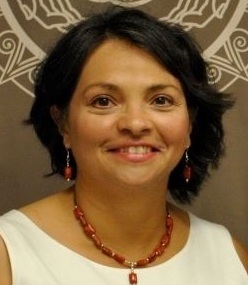
by Elena Herrada

I am an elected member of the Detroit School Board under an emergency manager. I am also a candidate for Detroit’s 6th Representative District. Entering the race is a victory in itself. I am running without the giant funding the other candidates have, but I am running as an act of public service, to speak truth, to stand up for our elders who were intimidated out of public participation and remained private. It was during the late 1970s in the Chicano Boricua Studies classes at Wayne State University (CBS-WSU) in Detroit that classmates and I began to put together the story of this intimidation. We began to understand what happened to our families and why they acted as they did. This became essential to understanding where we are now and how it came to be that we have so little political power in Detroit and Michigan.

Mexicans began arriving in Detroit en masse around 1920 to respond to a call by Henry Ford’s auto plants. The promise of $5.00 per day and the chaos of the Mexican Revolution converged to send Mexicans north.  Approximately 15,000 Mexicans came to Detroit, including my grandparents. My grandfather married my grandmother, Elisa Hernandez Carranza in San Antonio Texas where she had been working as a governess for an American family who had brought her from Mexico to care for their children.  He worked on the railroad in New York and in Kansas and was drafted into World War I.

Here in Detroit, they started their family. My grandfather was fortunate to get hired by Ford, but with uncertain times, he was laid off in 1922. He worked odd jobs to support the growing family. When the Depression hit, as we have now learned, the welfare department came knocking on Mexican’s doors. Their four children were born in Detroit already when the deportations came.

Between 1929 and 1939, one million Mexicans – 60% of who were born in the US – were “repatriated.”  This is not the word for all; many who were born here and kicked out were depatriated, a word now used in our research of this sad period. This was done through a program cooked up  and never codified into law – to scapegoat a people and blame them – the most vulnerable and conspicuous (race, culture, language), rather than an economy built on a house of cards in a system riddled with contradiction and greed. A discussion for another time, but noteworthy here, is a comparison to today’s Detroit pensioners and the privatization of our city. Nearly identical play books were used for the hate mongering justification of removal of a people through state power and theft of pensions.  Racism is an essential for carrying off such a feat.

My family, like thousands of others, went back to Mexico. I have spent my life getting this story. Mexican Detroit was hardest hit between 1930 and 1932 because of industry recruitment in the better days of the early 1920s; so there were many to seek and many to deport.  It was when I was in the CBS-WSU program in the late 1970s that I learned about the repatriation from reading  Abraham Hoffman’s “Unwanted Mexican Americans.” When our little local Detroit Oral History Committee, made up of repatriados and descendants reached out to scholars Francisco Balderrama and Raymond Rodriguez, they came to Detroit for a book signing and then wrote a second edition with much of their research on Detroit included. 

We do not know how many of those repatriated returned.  We do know that many died along the way back and that many did not come back to Detroit; they went to other cities. Others returned during the Bracero Programs and found out then that they were US born repatriados. We lost track of thousands of our people in that decade and beyond. Children born here were not always told they were US citizens and lived their entire lives without ever claiming their birthright.

It was in the 1970s that the Chicano Movement gave rise to our pride. It was a time when we realized that our elders had been treated badly for things they did nothing to deserve and that our culture and language were to be embraced, not rejected. And it was a time for a new influx of Latina/os. In 1974, there were demands for bilingual education in the schools and Michigan passed the law for bilingual education.

Because we were based in an auto industry where no formal education was needed to make a good living, we had few Chicano or Latino people to fill the jobs of bilingual teachers and administrators. Detroit was considered the Promised Land because one could come here and change one’s life without changing one’s class. Thus, we had few college grads that could be teachers. Chicanos/as arrived in Detroit from Texas, California and New Mexico to fill the need. The 60s and 70s in Detroit, like the rest of the world, ushered in a new day for many oppressed peoples. Latinos here saw the passage of the Bilingual Education Act, the creation of new community based organizations run for and by Latinos and the creation of Latino en Marcha, later to become CBS-WSU. Many of today’s agency directors came through this important leadership/ academic program.

Among the organizations that came into existence in a heavily Mexican and Latino populated southwest Detroit were:  LASED (Latin Americans for Social and Economic Development), SER, (Service, Employment, Rehabilitation), CHASS Clinic (Community Health and Social Services) and Latino Family Services.

LASED was created as an incubator to start other projects. Its mission was to get Latinos included in positions where we had previously been excluded: government, civil service and education. It was the primary advocacy agency that sued the State Department of Education for failure to provide language instruction to Spanish speaking students, thus ushering in bilingual education. There was an active Brown Beret chapter here as well as a thriving UFW boycott office. The UAW was a strong supporter of the farm workers, so our autoworker parents were part of the growing UFW movement for justice in the fields. We were part of a movement that uplifted us; no more hiding who we were.

At the same time these organizations were forming, another community organization formed called Southwest Mental Health (SMH), now known as Southwest Solutions (SS). Its director, unlike the Latino agencies, was and is non-Latino. It is important, also to note that most of the people who started these organizations in the 70s are still there, either as board members or as directors. In 1979 SMH began to expand its mission into housing. It has since acquired hundreds of properties located in the Latino community and again expanded its mission far beyond mental health. It includes its own housing office, real estate corporation, construction company, its own mortgage lender and educational contracts and has also expanded into health care, having opened its own clinic in SW Detroit.

An elder activist in our community, Sister Consuelo Alcala asked me to look into why the Latino agencies were losing so much ground to SS. She had been part of the creation of the agencies and was concerned that the existing Latino agencies were receiving very little funding now from their traditional sources: the United Way of Southeastern Michigan, the Neighborhood Opportunity Fund, etc. While the buildings and the organizations still exist, they are shadows of their former selves. The services once offered by LaSED, CHASS, SER, Latino Family Services all are now offered by the mega non-profit Southwest Solutions, who are also the largest landlord in the community.

I set out to interview the directors of the agencies, not sure how to approach an issue which many in our community had quietly complained about for years. We decided the best way to present our findings was to hold a hearing on the issue of hegemony in SW Detroit. This is where we learned how much influence the philanthropic world truly wields in Detroit and its negative impact on the Latino community as well as its impact on our ability to get our own people elected to office.

Our first Detroit Latin/o elected to office was Representative Belda Garza D-8th District in 1998. She was a determined political outsider who won, making history for Detroit. Her second term she ran unopposed, but the third term she was beat by a non-Latino, followed by his staff person who were both term-limited. The now heir apparent in the race is also non-Latina/o. Lots more money than our community has ever seen is in the mix now. Very little is left of public life in Detroit. As we speak, our trash pick up has been privatized, our water is about to be seized and pensions are up for grabs. The Detroit News reported that the heads of the foundations that rule Detroit met with the bankruptcy judge but because they are private entities, they do not have to report what they talked about. Our lives. Privatized. I mention this because our political races have been privatized; the non profits  (banks in drag) control all public life.

My first action as an elected school board member was to stop the efforts of the non-profits that went to city council and asked them to abolish the school board and put it under mayoral control, the first move before dismantling public education and parceling it out to charter schools. Jones Day, a bankruptcy law firm has replaced the government in Detroit; there is a  possibility of taking away Detroiters’ pensions to pay illegal swap loans to the banks it represents. I am running as an act of public service. To speak truth, to stand up for our elders who were intimidated out of public participation. Entering the race is a victory in itself, a victory of embracing public participation.


[1]  B alderamma, Francisco E, and Raymond Rodriguez.  Decade of Betrayal: Mexican Repatriation in the 1930s. Albuquerque: University of New

Mexico Press, 2006. 

Elena Herrada  is a lifelong, second and one half generation Detroiter and daughter of a repatriado family (Detroit-Aguas Calientes-Detroit). Herrada is the daughter, granddaughter and mother of auto workers and an urban activist, critic and feminist. She is a co-founder of Fronteras Norteñas, an organization which chronicles the life of Mexicans in Michigan and a co-founder of Centro Obrero de Detroit, an immigrant rights organization formed in 2006. Herrada teaches at Wayne County Community College, volunteers with LASED ( Latin Americans for Social and Economic Development) teaching ESL and worker rights. She is currently running for State Representative in House District 6 on a platform of defense of public education and freedom from emergency managers for all communities of color and the restoration of their voting rights.
María Teresa Márquez and CHICLE: The First Chicana/o Electronic Mailing List

By Miguel Juárez

These days we take e-mail and electronic lists for granted, but imagine a world where there is no e-mail or exchange of information like we have now?  That was the world for Humanities Librarian María Teresa Márquez at the University of New Mexico (UNM) Zimmerman Library and creator of CHICLE, the first Chicana/o electronic mailing list created in 1991, to focus on Latino literature and later on the social sciences. [1] Other Chicano/Latino listservs include Roberto Vásquez’s Lared Latina of the Intermountain Southwest (Lared-L) [2] created in 1996, and Roberto Calderon’s Historia-L, created in March 2003. [3] These electronic lists were influential in expanding communication and opportunities among Chicanas/os. CHICLE, nevertheless, deserves wider recognition as a pioneering effort whose importance has been overlooked.

In many instances the Internet revolution was shepherded by librarians in their institutions. Libraries and librarians were early adopters of this new technology. Márquez used computers and e-mail in her work in the Government Information Department at UNM. However, it was in the Library and Information Science Program at California State University, Fullerton, where she first learned about and used computers in a federally-funded program in the 1970s that sought to increase the number of Mexican American librarians. At the University of Illinois at Urbana-Champaign, Márquez earned a Certificate of Advanced Study in the Graduate School of Library and Information Science, where she learned more about computers and databases.

In April 1991, Márquez attended the Nineteenth Annual Conference (Los Dos Méxicos) of the National Association of [Chicana and ] Chicano Studies (NACS) in Hermosillo, Sonora, México. One of the panels, moderated by Professor Francisco Lomelí, University of California, Santa Barbara, presented papers on “Literatura Chicana.”  While discussing the topic, scholars raised problems encountered in communicating with each other and in sharing information on new publications and current research. Márquez volunteered to create a listserv or electronic mailing list and explained how it could be of use in keeping scholars informed. At UNM, she developed the list and Professor Erlinda V. Gonzales-Berry, then a faculty member in the UNM Spanish Department, coined its name-CHICLE (which translates into gum in Spanish). CHICLE stood for Chicana/Chicano Literature Exchange.

According to Márquez, most faculty members were not willing to join CHICLE, citing no experience with computers nor did they wish to consider its potential use in academic work. Yet, Márquez launched CHICLE with eight subscribers. She attended numerous academic conferences to distribute fliers and talk to people about the list and recruit subscribers. Furthermore, she attempted to impress upon her listeners the need to be at the forefront of technology, but Márquez said she had few takers. Believing in the importance of the list and in this new form of communication, she persevered and she states: “One day, all of a sudden, membership went up to 800!” As more institutions and faculty members started using computers, the list exploded in the number of subscribers.

The idea for the list evolved from Márquez’s work in a library setting that was used to basically communicating internally. At first Márquez sent out all of the information on the list because she had most of it. She would use librarian’s tools and lists of new books, information of upcoming conferences, calls for papers, and articles that would be of interest, but she received very little in return. The list was limited to her contributions in its early years. Later, as the number of subscribers in the social sciences increased the list moved away from literature. Numerous topics were discussed over the list’s ten–year history (1991-2001), but eventually its popularity led to its demise. Subscribers often stated that the list contained too much information and was time consuming.

Among the active subscribers to CHICLE was archivist Dorinda Moreno, [4] who later went on to work with Lared as well as with Dr. Robert Calderón‘s Historia-L. Moreno contributed history-related information. In contrast to Márquez’s effort, Calderón changed his list to a closed list with a finite number of subscribers where he posted items of interest to the Chicano/a academic community, as opposed to CHICLE which was an open forum. [5] Initially CHICLE was designed as an open forum to encourage broad participation. Dr. Tey Mariana Nunn, now Director and Chief Curator of the Art Museum and Visual Arts Program at the National Hispanic Cultural Center Art Museum in Albuquerque, played a large role in promoting the list in its early days. Nunn was a graduate work-study student. Additionally, Renee Stephens, now at San Francisco State University, then a graduate work-study student at UNM, was also editor for the list, a task inherited from Janice Gould. All these women were instrumental in the success of CHICLE. Eventually, the expansion of the Internet eclipsed Chicana/o listservs.

When CHICLE began, Márquez acted as the sole moderator, but over time, as it gained popularity, she trained students to run it. The popular list existed until her funding to hire work-study students ran out. Her institution was reluctant to provide further support. CHICLE was not considered an appropriate academic part of Márquez’s professional responsibilities. Management of the list competed with duties at the library and as subscriptions grew, it became overwhelming and difficult. Márquez who often managed the list on her own time, stated she would have continued the list but that  it would have required more energy than she was willing to invest. When Márquez decided it was time to move on and discontinue the list, she approached the UNM Technical Center to store the CHICLE files. The Center claimed it did not have sufficient storage space for her files. As news of CHICLE’s imminent shutdown spread, people volunteered to keep the list going but were deterred by the amount of work entailed.

Dr. Diana I. Rios, who has a joint appointment in the Department of Communication and El Instituto at the University of Connecticut among others, made attempts to create an archive of CHICLE.  She made copies of conversations via cut and paste. There were attempts to incorporate CHICLE into another list but Ríos did not want that to happen. Eventually, Latino literary blogs such as Pluma Fronteriza [6] and La Bloga [7] emerged to continue where CHICLE left off.

After CHICLE, Márquez took her energy and enthusiasm in supporting Latina/o students and created a program called CHIPOTLE. [8] She used CHIPOTLE to familiarize Chicana/o rural students with the academic environment and to reach out to surrounding communities. Via grant and affiliated department funded sponsorship, Márquez would take posters and boxes of books by Chicana/Chicano writers to give to students when she visited Hispanic-dominate schools. As part of CHIPOTLE, she created a forum to bring Latina/o speakers into the library and encouraged Latina/o students to utilize the research resources available to them. She directed two programs funded by Rudolfo Anaya: Premío Aztlán and Critica Nueva. Premío Aztlán recognized emerging Chicana/o writers and Critica Nueva was an award honoring the foremost scholars who produced a body of literary criticism based on Chicana/o literature. For many years, Márquez was the only Latina librarian at the University of New Mexico University Libraries. Presently, she is an Associate Professor Emerita. No Latina/o librarians have been hired since her retirement.

In the era of search engines, web browsers, blogs, wiki’s, intranets, and social media, it is important to recognize the efforts of a pioneering Chicana librarian and a pioneering electronic list that was a unique cultural creation. It was given life by so many who read it, posted on it, and worked on it. CHICLE brought many voices together and established a foundation for the future. As Márquez stated, “CHICLE was the catalyst for many things.” [9]

[1] María Teresa Márquez, interview by the author, Albuquerque, April 28, 2007.  [2] Lared Latina of the Intermountain Southwest, was established in the Spring of 1996 by Roberto Vásquez, as a World Wide Web Forum, for the purpose of disseminating socio-political, cultural, educational, and economic information about Latinos in the Albuquerque/Santa Fe Metro area and the Intermountain Region which includes Metropolitan Areas such as the Salt Lake City/Ogden region, Denver, Phoenix, Tucson, Boise, Las Vegas and Reno, Nevada, accessed January 30, 2014: http://www.lared-latina.com/bio.html.  [3] Dr. Roberto R. Calderón, interview by the author, College Station, Texas, December 20, 2007. Historia-l, focused on Chicano/a history, started as “96SERADC” with 200 subscribers in May 1996 and continued through October 1997. Originally housed at the University of Washington, it helped mobilize the first Immigrant Rights March on Washington, D.C., held on Saturday, October 12, 1996. The march had upwards of 50,000 participants, half of whom were Latina/o college students from across the country. The listserv list then changed venues and was housed at the University of California at Riverside becoming “2000SERADC,” from November 1997 through August 1999, at which point the listserv list was discontinued. This twice-named listserv list project lasted three-and-a-half-years. [4] Dorinda Moreno, Chicano/native Apache (Mother, Grandmother, Great Grandmother) has worked bridging Elders, Women of Color, Inter-generational networks and alliances, with a focus on non-racist, non-sexist (LGBT community), non-toxic–Chicano/a, Mexicano/a, Latino/a, Indigenous communities, projects and networks that give voice to under-represented groups and enable feminist empowerment through social change networks and innovations. As an early Web pioneer and archivist, she has been actively using the Internet since 1973. [5] Calderón interview.  [6] Pluma Fronteriza began as a printed newsletter, then became a blog and currently has a companion site on Facebook:  Accessed February 8, 2014: http://plumafronteriza.blogspot.com/  [7] La Bloga hosts various bloggers who write on Latino/a literature.  Accessed February 8, 2014: http://labloga.blogspot.com/  [8] According to the Memidex Online Dictionary and Thesaurus, Chipotle comes from the Nahuatl word chilpoctli meaning “smoked chili pepper” is a smoke-dried jalapeño, accessed January 30, 2014, http://www.memidex.com/chipotles. [9] Márquez interview.

Miguel Juárez is a doctoral student in Borderlands History at the University of Texas at El Paso (UTEP). He has a Masters in Library Science (MLS) degree from the State University of New York at Buffalo and a Masters of Arts (MA) in Border History from UTEP. In 1997, he published the book: Colors on Desert Walls: the Murals of El Paso (Texas Western Press). Miguel has curated numerous exhibits, as well as written articles in academic journals, newsletters, and newspapers focusing on librarianship, archives, and the cultural arts. From 1998 to 2008, Miguel worked as an academic librarian at the following institutions and centers: State University of New York at Buffalo; Center for Creative Photography at the University of Arizona; Texas A&M in College Station, TX; and the Chicano Studies Research Center (CSRC) at UCLA. He is also co-editor with Rebecca Hankins of the upcoming book Where Are All the Librarians of Color? The Experiences of People of Color in Academia, part of the Series on Critical Multiculturalism in Information Studies of Litwin Books. The author would like to thank María Teresa Márquez, Dr. Roberto Calderón, Dorinda Moreno, Dr. Tey Mariana Nunn, Renee Stephens, Rebecca Hankins and Dr. Diana Ríos for making suggestions and recommendations for this article. This work is part of a larger body of research on Chicana/o electronic and digital projects during the advent of the Internet.

We Need Documentaries About Latina Americans, Too

Chicana Power by Flickr User Kris Kables

Chicana Power by Flickr User Kris Kables, CC BY-NC-SA 2.0

By Miroslava Chávez-García

A few months ago, while I screened Sylvia Morales’s La Chicana (1979), a film about the historical and contemporary roles of Mexican and Mexican American women in the United States, it hit me that before this film no one had pieced together a comprehensive look at the continuities between Chicanas and Mexicanas on both sides of the U.S.-Mexico border. Sitting in my class, along with ninety of my students, I realized that Morales was among the first to create a documentary on the lives of women of Mexican- and indigenous-descent as they shaped and influenced the histories of their families, communities and societies through the eighteenth, nineteenth and twentieth centuries. It also struck me that no one had done anything similar since then. Morales’s follow up thirty years later, A Crushing Love (2009), for instance, focused primarily on a smaller group of Chicanas. Today, we have yet to see a comprehensive film tracing women’s roles and relations in areas of the economy and polity as well as in the cultural and social life of Spanish-speaking peoples. In my view, this is a sad commentary on the state of Chicana and Mexicana history in film.

Unfortunately, the PBS Latino Americans (2013) series does little to rectify the gaping hole in the filmic representation of Chicanas, Mexicanas and Mexican American women, particularly in the first two episodes. It is true that women are mentioned and do appear in the Latino Americans series, but it is as members of the elite or as “women worthies.”  Seldom are the ordinary women’s lives rendered in a way that gives us a sense of what their lives were like in the nineteenth or early twentieth century. Moreover, in no instance do the early episodes in the series focus on the role of gender and sexuality in shaping conquest and colonization – a theme explored by many historians of Spanish-speaking women in the eighteenth and nineteenth century. Antonia Castañeda for instance, has described vividly the ways in which Spanish soldiers’ rape of California Indian women was part and parcel of the Spanish Crown’s attempt to retake control of its northern territory. Those same acts of war, however, nearly threatened the entire enterprise when California Indians launched repeated reprisals against the indignities suffered by their communities. Gender, as many scholars now agree, was pivotal to many other areas of life, including family and community formation, inheritance, and family networks as well migration and immigration. However, the film granted little attention to the ways in which ideas about men and women’s roles in their families, communities and societies influenced Spanish-speaking communities.

As a historian, I recognize that Latino Americans addresses many of the themes I cover in my Chicana and Chicano Studies introductory courses, and does so in a way appealing to a general audience. I enjoyed, for instance, learning about the personal experiences of repatriation as told through the eyes of the woman whose family was returned in 1935 when she was a young girl. I found her story heart breaking and not just because she — along with up to 500,000 peoples of Mexican-descent – were forced to go to a country many of them had never known before, but also because of her mother’s earlier death to tuberculosis, a disease that ravaged Mexicanos living in Los Angeles at the time. Motherless and now landless, she and her family were forced to come to terms with survival. I was left wondering as to how the loss of her mother had re-arranged their family dynamics and how it impacted her in the long term. While we learned that she left school to help her father, we know less about how that experience shaped her future as a young woman coming of age in Mexico and later, the United States.

I note these gaps not to blast the “failures” of the Latino Americans series, but rather to remind us and everybody else that we – as members of the public — still have little understanding of the ways in which gender and sexuality shaped Spanish-speaking communities in the U.S. Southwest. What we need is a richly textured, nuanced and in-depth filmic representation of Chicanas, Mexicanas and Mexican American women in the past and present. We currently lack representations of Latinas in all their diversity, including regional, racial/ethnic and class status. Such representations are long overdue. It is my hope that the Latino Americans series has inspired others to take a long look at the role and relations of mujeres shaping their families and communities as well as the larger society. These are stories that still need to be told.

Dr. Miroslava Chávez-García is a Professor in the Department of Chicano Studies at the University of California, Santa Barbara. Chávez-García is the author of States of Delinquency: Race and Science in the Making of California’s Juvenile Justice System (Berkeley: University of California Press, 2012) and Negotiating Conquest: Gender and Power in California, 1770s to 1880s(Tucson: University of Arizona Press, 2006).

What the Film “Latino Americans” Offers and Misses

Orozco, Cynthia02

By Dr. Cynthia E. Orozco

Kudos to all the people who developed the PBS six part Latino Americans (2013) film series. The lenses of race, class, nationality, transnationalism and citizenship are successfully woven throughout six different eras. Despite the inclusive voices of Chicana and Latina historians Vicki L. Ruiz, Maria Cristina Garcia and Virginia Sánchez-Korrol, and despite excellent stories about women like Apolinaria Lorenzana, Rita Moreno, Dolores Huerta, Julia Alvarez, Gloria Estefan, and Maria Elena Salinas, the film series lacks a focused lens on gender and sexuality throughout the film. The problems of sexism, heterosexism and homophobia are ignored.

I will look at each episode highlighting key aspects of each episode and offer ideas as to what could have been included. Educators may supplement their teaching accordingly.

Episode 1: “Foreigners in Their Own Land” (1565-1880) provides a broad sweep though most attention is to post-1836. A focus on 1492 to 1821 or 1848 would have been more appropriate. The “Spanish colonial era” included Spanish presence in twenty-five states of the current U.S. and key civil settlements. Their interaction with Indian nations is essential in accounting for the pandemic that European disease brought to the Americas; Spanish genocide of Indians; Spanish slavery (encomienda system); mestizaje as well as the foundational race/caste/gendered/sexed status of Spanish, mestizo, caste and Indian peoples; and sexual violence. “Our” Spanish lands were Indian homelands.

Episode 2: “Empire of Dreams” (1880-1942) should have been two episodes. This episode provides excellent treatment of the Spanish American War and U.S. incorporation of Puerto Rico, the Mexican Revolution and resulting immigration to the U.S., and deportation of Mexican descent people in the 1930s. An 1898-1941 episode is needed to address the rise of racial segregation, the struggle for women’s suffrage, the rise of the Mexican American civil rights movement, and school desegregation cases in the 1920s and 30s. Adelina Otero Warren, suffragist and Congressional candidate is missed as was Concha Ortiz y Pino, state legislator in New Mexico in the 1930s.

Episode 3: “War and Peace” (1942 to 1954) addresses the “birth” of the Mexican American Civil Rights Movement, the rise of Dr. Hector Garcia, the Bracero Program, Operation Wetback, and Rosita the Riveter. World War II is the focus so as to provide redress for what filmmaker Ken Burns did not do in his PBS World War II series. In fact, this six part series resulted from numerous Latino and Latina protests of Burns’ film. Yet, the Mexican American Civil Rights Movement did not just emerge from World War II, the American GI Forum, and Dr. Hector Garcia. Instead, a focus on World War I is needed to explain this historical development that includes LULAC and activist/lawyer Alonso S. Perales. Garcia was a LULACer and without LULAC there would be no American G.I. Forum. Civil rights activism in the 1920s and the 1930s, including significant political activism by Ladies LULAC and in New Mexico is unfortunately ignored. Moreover, a Latina/o film focus on World War II must mention U.S. Senator Dennis Chavez and the Federal Employment Practices Commission (FEPC), the first federal civil rights agency which outlawed racially-defined wages for people of Mexican descent and Puerto Ricans.

Episode 4: “New Latinos” (1946-1965) is excellent. It addresses the second major migration of Puerto Ricans to the U.S. due to Operation Bootstrap; reveals the welcome of Cubans by anti-Communist U.S. forces; the rise of Herman Badillo, Puerto Rican Congressman; and the arrival of Dominicans in the U.S. due to the dictatorship in their country. The film mentions how women took on gender-prescribed employment. Birth control experimentation on Puerto Rican women is excluded from Latino Americans as is any mention of the Daughters of Bilitis, the first out lesbian organization.

Episode 5: “Prejudice and Pride” (1965-1980) focuses on the rise of the Chicano Movement.  Much like the 1996 documentary Chicano! the focus here is on regional movements and well-known male leaders although Latino Americans also includes Willie Velasquez. Attention to movement machismo/sexism/homophobia is, however, ignored as is the rise of Latina feminism. How are we to explain the rise of Latinas in the 1970s including Supreme Court Justice Sotomayor without this? No Stonewall Uprising either.

Episode 6: “Peril and Promise” (1980-1910) covers the second wave of Cuban immigration; the arrival of Guatemalans, El Salvadorans, and Nicaraguans; and the diaspora of Latina/os into every U.S. state. Likewise it shows the rise of English-only efforts and anti-Latina/o immigrant sentiment/policies. Linda Chavez, Republican, speaks favorably toward immigrants and Dreamers. Feminist moments and LGBT activism are ignored.

The year is 2013; filmmakers must account for sexism and homophobia in the history of communities of color. These added lenses would have made a good film great.

Dr. Cynthia E. Orozco is Chair of History, Humanities and Social Sciences at ENMU Ruidoso. She is the author of No Mexicans, Women or Dogs Allowed: The Rise of the Mexican American Civil Rights Movement; associate editor of Latinas in the United States: An Historical Encyclopedia; co-editor of Mexican Americans in Texas History; author of 80 articles in the New Handbook of Texas; and author of over 50 newspaper articles and letters. She is also co-founder of the Chicana Caucus in the National Association for Chicana and Chicano Studies and the daughter of Mexican immigrants.