Category Archives: Education

Reflections on Language and Identity

"Zine Study XIV: [language]" Photo by Flickr user Shawn Econo. CC BY-NC-SA 2.0
“Zine Study XIV: [language]” Photo by Flickr user Shawn Econo. CC BY-NC-SA 2.0

 by Lucila D. Ek

When my ten-year old niece was a toddler, my mother taught her to say the parts of the body in Yucatec Maya. My niece repeated the words that my mother slowly and carefully pronounced. My mother would then quiz her: “¿Dónde está tu chi?” and my niece would point to her mouth. “¿Dónde está tu pool?” and my niece would point to her head. They played this game repeatedly.  While I was glad that my mother was trying to teach her these words, as a bilingual education scholar, I knew that memorizing isolated words and phrases was not enough for my niece to acquire our Mayan language. After all, my sisters and I never really learned to speak Maya despite hearing it spoken by our parents and adult relatives who spoke it with each other. We did learn some vocabulary but cannot carry on a conversation in our heritage language. As kids growing up in Los Angeles in the 1970’s and ‘80’s, my sisters and I spoke Spanish at home and in our community while English dominated at school. There really were no resources to help us develop and maintain Maya.

I used to think that my sisters and I didn’t learn Maya because we grew up in the United States. However, the lack of support for developing and maintaining heritage languages was the same in Mexico, as my cousins who grew up and still live there did not learn to speak it either. In our native Mexico, Yucatec Maya, like many indigenous tongues, has low prestige and its speakers are stigmatized. In our pueblo, Spanish is the dominant language in town life and the language of instruction in school. The loss of Yucatec Maya in my family both in the U.S. and in Mexico is distressing because identity and culture are inextricably connected to language as Chicana feminist scholar Gloria Anzaldúa so profoundly claimed, “I am my language.” She was referring to the Spanish of the Southwest found in her native Texas, yet her assertion applies to all languages and their varieties.

Many scholars from multiple disciplines have shown that language is inextricably linked to our notions of who we are and to how we signal our identities in our everyday lives. For example, anthro-political linguist Ana Celia Zentella demonstrates how English and Spanish and their varieties are used by Nuyorican youth to signal various identities. Linguistic anthropologist Norma Gonzalez’ research on Mexican origin women and children in Tucson emphasizes the links among language, emotion and identity. My own work emphasizes youth’s use of Central American varieties of Spanish for maintaining and practicing Guatemalan and Salvadoran culture in Los Angeles. These are a few of many studies that underscore the language-identity connection.

Seeing that her daughters have lost their Mayan language, my mother struggles to keep that from happening to her granddaughter. Yet, the threat is not only to Yucatec Maya but also to Spanish, our family’s other native language. For my sisters and I, developing and maintaining Spanish was challenging enough given that there was no bilingual education program in our K-12 schooling. Then (as now), English-only ideologies and policies created a context that was hostile to the development and maintenance of languages other than English, particularly Spanish. Among immigrants in the U.S., the heritage language is lost by the third generation—unless there is some sort of intervention/maintenance effort. Knowing the propensity toward language loss, my family and I were determined that my niece be bi/multilingual. Indeed, my niece’s first language is Spanish. Both sides of her family agreed that they would speak to her and expect her to respond in Spanish.  Spanish-speaking family members include four grandparents whose dominant language is Spanish, as well as her two parents and three aunts whose first language in Spanish. Furthermore, my niece has attended a dual language program since kindergarten. In addition, she has spent two-three weeks in Yucatan every year since she was five. Nevertheless, today in the fifth grade, she is defaulting more and more to English.

No, en español no, Tía,” she pleads.

Sí en español, dímelo en español,” I tell her.

“¿Por qué?” she asks.

Porque español es el idioma de mi corazón.” I respond. “Y tú eres my corazón.”

She beams.

By connecting her to Spanish and to my heart, I emphasize the emotive dimensions of language and identity. To be a tía to my sobrinita must be done in the language best suited to express the love that I feel for her. However, the Spanish that my family and I speak is not “standard” or academic Spanish. Rather, when I am being most myself, my Spanish includes English words, phrases, and loan words, and sometimes even a Mayan phrase or two. As Ana Celia Zentella has shown, code switching is a complex identity signaling and identity building practice by bi/multilinguals. She argues for an acceptance and validation of bi/multilinguals’ linguistic realities and calls out the “bilingual language patrol” who attempt to police and contain Latina/o languages. Patrolling and policing Latino/a ways of speaking further stigmatizes certain varieties of Spanish contributing to language-identity shame and loss.

I bring these deeply personal linguistic experiences to my work as a bilingual teacher educator in San Antonio. I start by interrogating what we think of as “correct” or “good” Spanish, the kind that the Real Academia Española, would approve of. I share my stories of language and identity loss with my Latina/o students, many of whom have similar experiences. They share their experiences in Spanish courses that dubbed their Spanish—and by extension, them–as inferior. Given the hostility and violence that their non-standard ways of speaking elicited, these teacher candidates are caught in a bind: How do they accept and validate their students’ Spanish while at the same time teach them the more prestigious, academic variety? How do they accept and validate their own Spanish which they’ve pegged “mocho,” “pocho,” “pobre,” “incorrecto”? They must learn to first accept, validate and feel proud of their Spanish so that they can teach their students (and their children) to love their languages and themselves. It’s not an easy process given the continuing English-only, anti-immigrant, anti-Latino/a ideologies that are rampant in the U.S. but together we can continue to resist these beliefs and practices so that my niece and other Latina/o children do not suffer needless loss of their languages and identities.

References

Anzaldúa, G. (2007). Borderlands La Frontera: The New Mestiza (3rd ed.). San Francisco, CA:  Aunt Lute Books.

Ek, L. D. (2010). Language and identity of immigrant Central American Pentecostal youth in Southern California. In N. Cantú & M. Franquiz (Eds.), Inside the Latin@ Experience: A

Latino Studies Reader. (pp. 129-147). New York: Palgrave Macmillan.

González, N. (2001). I Am My Language: Discourses of Women and Children in the Borderlands. Tucson: The University of Arizona Press.

Zentella, A. C. (1997). Growing up Bilingual: Puerto Rican Children in New York. Malden, MA: Blackwell Publishers.

Lucila D. Ek was born in Yucatan, Mexico and immigrated to the U.S. at the age of four. She attended public schools from K-12th grade in Los Angeles, California. Before earning her PhD in Urban Education from UCLA, she was a bilingual-bicultural elementary teacher in the Los Angeles Unified School District. Currently, she is an Associate Professor in Bicultural-Bilingual Studies at the University of Texas at San Antonio. Her research centers on the language and literacy of Chicana/os and Latina/os, and bilingual teacher education. Her work has been published in Anthropology & Education Quarterly, International Multilingual Research Journal, Bilingual Research Journal, and the High School Journal.

Enriching our Educational Advocacy for Latino Students and the Community

Public Meeting in Texas on HB5.

Public Meeting in Texas on HB5.

by Maricela Oliva

Those of us involved in education have for years focused on school achievement or college success, foci that are conceptualized in terms of lower (K-12) or higher (post-secondary) education. I propose that we need to evolve and enrich our educational advocacy from a school or college issue to one that re-imagines educational success as a P-16 endeavor. This seems easy enough to do, but I argue that it is actually more difficult because it requires our involvement in efforts to impact educational achievement with cross-level and systemic rather than level-focused interventions. These broader interventions require collaboration and interdisciplinary boundary-spanning work. Furthermore, necessary and cross-level systemic change is best achieved with the participation not only of individuals and groups working on issues from the inside of key educational organizations but also of allies working from outside them, in the broader community.

An illustrative example for those of us in Texas is the HB 5 statute that passed the Texas Legislature in Spring 2013. This bill packaged two large objectives in one instrument: a reduction of testing at the school level (as advocated by school level educators and scholars) and a change in the high school preparation curriculum. Changes to the curriculum eliminated the common high school preparation curriculum while putting in place a foundational curriculum for all with additional voluntary endorsements that schools could also offer their students (multidisciplinary, arts, STEM, other). The statute had multiple stakeholders of support: teachers, school-level scholars, technical-vocational educators, corporations, employers, and a Republican governor. Higher education was not among those supporting changes in the curriculum. Focusing on college readiness, the Commissioner of Higher Education actually argued against changes in the high school preparation curriculum because of the negative impact on the college readiness of all, especially Latino students.

Paradoxically, educators at both lower and higher education argued that their opposite views reflected concern for the well-being of students. How can this be so? Advocates and detractors of the bill were looking at it from their unique perspective and often failed to see the issue or concern from the level different from their own. In other words, school advocates did not understand or think the higher education critiques important enough to hold back their support of the bill. From the higher education side, Higher Education Commissioner Paredes was not able to convince supporters that they might be helping themselves in terms of testing reduction but hurting themselves by eroding college readiness and access for students.

Bill sponsors were smart, in my view, to package the two issues (testing reduction and curricular change) in the same bill. They anticipated that supporters of the testing issue would overwhelm critics of the curricular change issue; indeed, this is what happened. School-level educators were so keen on getting the school testing reduced that they did not listen to or hear concerns from higher education about the new high school graduation requirements. For example, they did not hear that 8th graders from low-income and first generation families might not select the high school curriculum that would be in their long-term best interest and that would promote their readiness for college. They did not pay attention to concerns that high achieving graduates in the foundational curriculum would no longer be eligible for Texas’s automatic college admissions program for students in the top ten percent of their graduating class, undermining a program that has enabled access to elite state universities for new students, including Latina/o students. They did not pay attention to the fact that colleges and universities would still look most favorably on students who demonstrate traditional college-readiness, nor to others’ equity concerns given that not all schools would be able to offer all of the voluntary endorsements. In the end, bill sponsors with sleight of hand, managed to create a scenario that almost guarantees that in the future, fewer Latino students will be college ready and college admitted to an institution of choice when they graduate high school. If young people and their families are allowed to pick their high school curriculum in 8th grade, quite a few may not understand the consequence of choosing a curriculum that makes room for employment in high school rather than college ready courses, one that allows them to avoid Algebra II rather than challenge themselves with rigorous coursework to make themselves an attractive applicant when they apply to college, etc. Since the various curricula are often incommensurate, young people will find it difficult to recover from the wrong choice once they later better understand its impact on their college access and readiness.

I recently sat in on a conference session in which school counselors and other school level educational personnel learned about and asked how to implement HB 5. School curriculum directors and higher education admissions officers made up a panel that presented their view of how HB 5 would impact their work. My understanding of what I saw and heard in that session is that implementation will be very complicated at the school level. Furthermore, those districts and schools in which personnel already have a handle on facilitating college readiness (i.e., those with a college-going culture) will do their best to implement the unfunded mandate in ways that anticipate students’ mistakes and that leave their college readiness options open until students fully understand the impact of their decisions. They plan to do this with face to face meetings with each individual child and their parents to explain the curricula and what they mean. However, at schools with overwhelming counselor-to-student ratios, such as at schools that are majority minority or that do not have a college-going culture, it was not clear that they could be so effective. Students there, the ones that we already have the biggest challenge getting to college, probably will not get this high level interaction as they choose their high school curriculum. For us in Texas, the largest and fastest-growing group in the school pipeline is Latino students, who are now the most at risk from these curricular changes.

How could this happen in Texas, a relatively policy savvy environment in which we already recognize the importance of promoting college-going among Latinos and where we have long acknowledged the importance of Latino youth to the future well-being of the state (see Closing the Gaps). This happened because first, analysts focused on issues at K-12 or post-secondary levels of education and did not have a sufficiently developed P-16 view of the issues that impact our community. Second, conservative policy-makers packaged the two issues in the same bill so that concerns about proposed changes to the high school preparation curriculum would be overwhelmed by support for testing reduction. And it worked.  So now, is it possible to “make a silk purse out of [the] pig’s ear” that is, potentially, the curricular part of HB 5?

Those of us in education and community advocacy have learned to be vigilant about what happens with schools and to better understand the need to talk to young people in concrete ways about the school to college pathway. In San Antonio, the Intercultural Development Research Association (IDRA) had already created OurSchool Portal (http://www.idra.org/ourschool/) as a program that allows parents and families to understand educational impacts and outcomes at area high schools. The intent was to help parents and families advocate for changes that would improve children’s educational success and college readiness. At the state level, the Texas Higher Education Coordinating Board created Compare College Texas (http://comparecollegetx.com/) so that families and prospective college students can look for institutions that are a good fit for their needs and interests. Nationally, The College Board has created a comprehensive online program for exploring colleges and college choice throughout the US. BigFuture (https://bigfuture.collegeboard.org/) encourages children and parents to explore their options early and together. In this way, parents can be part of the college readiness and choice process, even if they did not themselves go to college. A few weeks ago in March, the College Board also announced that they are giving four test report waivers to low-income high achieving students to encourage them to apply to four colleges, which is likely to improve college fit and student success. The College Board has made other changes recently to encourage more low-income and minority students to prepare for college and apply to institutions that meet their needs. Research has shown that highly prepared young women, Latina/o and other minority students sometimes do not apply to selective colleges even when they are well prepared to succeed there. This can limit not only their college options but prospects for future professional success.

So what is my take-away from this discussion and the HB 5 illustration? To better serve Latina/o and other community youth, we need to develop our understanding of how school issues impact college readiness and success. As a post-secondary educator, I am making time to study how local schools provide adult guidance for college to their students. In this way, I walk my talk by learning how I can be an effective partner to schools in my area, in order to promote college-going for Latino and other youth.

Can you take on an initiative in your area to promote student success along the school to college/university pathway?  Whether we are school or college educators, doing so will require that we study and learn more about the educational level that is different from the one in which we now work or in which we were trained. If we do, we can be better advocates for the educational success of our youth. Only our future depends on it.

References: Texas Higher Education Coordinating Board (2000). Closing the Gaps: The Texas Higher Education Plan. Austin: THECB.

A native of Texas from the Rio Grande Valley, Dr. Maricela Oliva is Associate Professor of Higher Education at the University of Texas at San Antonio. Her scholarly work focuses on issues impacting college access for students; namely, policy, race, class, first generation status, and school-university linkages. She is a member of the Association for the Study of Higher Education and the American Educational Research Association. With AERA she has served on national conference planning committees for Divisions J (Higher Education) and L (Policy) and was elected Council Member At Large for the 1800-member Division J (Postsecondary). Dr. Oliva serves or has served on four journal Editorial Boards, including The Review of Higher Education, International Journal of Qualitative Studies in Education, Journal of Hispanic Higher Education, and the Journal of Research on Leadership Education. She has published articles and chapters as well as a book, Leadership for Social Justice: Making Revolutions in Education, now in its second edition. She currently serves as an elected member of the Academic Assembly Council of The College Board.

Challenging the Latina/o Achievement Gaps—Let’s Begin By Making School Relevant to Their Community, Their Culture and Their Lives

March 18, 2013

By Grace C. Huerta, Ph.D.

A 2013 study recently published by the National Assessment of Educational Progress, shows that reading scores among Latina/o middle-level students remain below the average of their white peers in such states as California, Florida, Illinois, New York, Texas and Washington. In fact, over the course of 30 years, Latina/o students in junior and senior high schools continue to see declines in academic achievement, standardized test scores, graduation rates and college attendance (Gándara, 2010).

What is this data really telling us? What is happening in our communities and public schools that keep this fast-growing minority group from closing the achievement gap and moving forward to college?

Undergraduate students from The Evergreen State College, sought to answer these questions as they conducted community-based interdisciplinary research in the town of Salish, Washington (a pseudonym) during the fall and winter of 2012-13. Our undergraduates, many of whom are bilingual, first generation minority students themselves, discovered that such questions are difficult to answer without understanding the larger context of a community.

Small Town, Big Changes
By visiting Salish’s city center, historical museum, industries, schools, tribal lands, churches, and health authority, undergraduates explored the history, culture, labor, and education in a Pacific Northwest town who has undergone demographic change—change that mirrors the ongoing struggles encountered by immigrants across America.

Salish’s economy was based on logging, shellfish harvesting and salmon fishing. These industries are now in decline due to international outsourcing, company restructuring, and the enforcement of tribal fishing treaties. Struggling against poverty, today Salish’s largest employers include the local casino and a subsidiary wood product company. Other seasonal industries have emerged, such as salal harvesting (floral greens), wreathe-making, oyster harvesting and tree planting, all of which draw a Mexican and Guatemalan labor force. These immigrants now have children attending the Salish public schools.

Learning A Community—Undergraduates at Work
Evergreen College students were eager to learn about Salish, a community they bypass on the way to weekends in Seattle or to the capital, Olympia. Given Salish’s invisibility, faculty identified this as an important site for a field-based study.

Using qualitative research methods, undergraduates analyzed historical documents, conducted observations, interviewed and videotaped immigrant advocates, educators, and Latina/o families and students. Evergreen students also tutored English language learners (ELLs), cooked meals for the homeless, supported a clothing bank, assisted in an adult literacy program and mentored alternative high school students.

The majority of our college students chose to mentor Latino/a and ELLs in four K-12 public schools. They volunteered at one dual language elementary school, a middle school, a junior high school and a comprehensive high school whose students included Mexican, Euro-Americans, Guatemalan and Native American students.

Undergraduates tutored elementary students who received content area instruction in Spanish and English. They worked with a faculty of elementary bilingual teachers who utilized student-centered and culturally relevant pedagogy. During their weekly school visits, Evergreen students observed a rich cross-cultural learning environment where languages, family traditions, histories and the arts held equal value along-side math, science, and state standards. By implementing a dual language program, these K-5 students were engaged by a curriculum and pedagogy that resonated with their lives (Brown-Jeffy & Cooper, 2011).

Our undergraduates also met elementary bilingual school staff who were concerned with issues central to the immigrant community. For example, school advocates, educators and immigration lawyers from Seattle organized a community workshop regarding “The Dream Act” and immigration policy in the run-up to the 2012 presidential election. Respectful of the families and their children’s needs, the workshop was presented and translated into three languages, Spanish, English and a Mayan dialect, Mam. At least 100 family and community members were in attendance at the elementary school. The undergraduates later recognized the importance of these collective educational efforts to support the concerns of the larger community.

Scratched Surfaces—Struggles at the Secondary Level
In contrast, our observations at the secondary school differed significantly from those at the elementary level. Gaining entrée into the predominately English-only, Salish High School was particularly challenging. Teachers explained they were too busy to accommodate our weekly visits. For those undergraduates who were able to observe ELL classrooms, they noted a predominant use of worksheets, homework assignments from other classes, with little culturally relevant content available to them. The teens often chatted amongst themselves, which later called into question the rigor of instruction they received. As our undergraduates collected data, it became apparent there were a number of variables that impacted ELL academic achievement in grades 8-12.

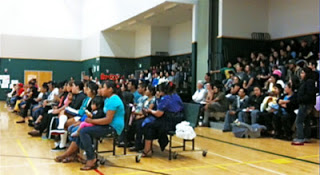
Figure 1.“The Dream Act” Community Information Meeting at Salish Elementary.

Figure 1.“The Dream Act” Community Information Meeting at Salish Elementary.

The college students noted how the popular media depicts minority students being saved by “supermen or women” who romantically buck the system in private or charter schools. And yet, our students reported in their interviews with faculty that they felt demoralized by the pressures they faced, such as the emphasis on standardized testing and the lack of resources. It was clear that the secondary ELL teachers had few opportunities for professional development and collaboration. Faculty isolation resulted in collateral damage where the teachers internalized these pressures, adopted low expectations, and essentialized ELLs as illiterate and incapable of any deep cognitive understanding. It was apparent to the Evergreen students that such cultural deficit thinking did little to help empower the high school students.

Our undergraduates also observed some educators who resisted external support, such as the tutoring or mentoring, fearing this would take time away from standardized test preparation. The introduction of culturally relevant pedagogy or dual language activities was rejected at the secondary level. Ironically, these were the same practices that proved to be successful at Salish’s dual language elementary school.

While secondary teachers emphasized content area instruction, our undergrads noted that the curriculum did not motivate ELLs. A common philosophical stance taken by educational administrators emphasized colorblindness. They were not interested in program models that affirmed diversity, such as through dual language classes, or the creation of supervised spaces for youth to develop a sense of belonging (Gándara, 2010; Slavin & Cheung, 2005).

Such initiatives were perceived to agitate students rather than empower them to critically think for themselves. When Evergreen students asked to take part in organizing a Latina/o cultural club, educators initially questioned why was there a need for such an organization? An administrator asked, “We don’t want to segregate students. Why couldn’t we have one big group that can get along?” At yet, it was at this time that our undergraduates dug in their heels, and became even more committed to attending after school mentoring sessions.

Over the course of a month, we saw the high school Latina/o Culture Club (a term generated and agreed upon by the youth) meetings increase from three students to five students, to 11 students, and to 15 students. Interestingly, some of the students who attended the club planning meetings were Euro-American youth who hold long-term cross-cultural friendships with their Latina/o peers. It was these same students who met while attending Salish’s dual language elementary school many years ago. A sense of school attachment and sense of belonging established through the extracurricular club seemed to lift student engagement. In fact, the teens were amazed to learn that our undergraduates attended a collage that was only 15-20 minutes away.

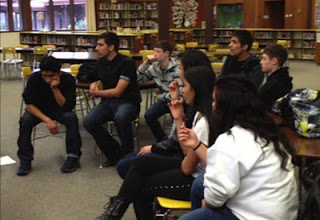
Figure 2. High school Latina/o Culture Club members enjoy some dulce while recollecting their days in a dual language elementary school.

Figure 2. High school Latina/o Culture Club members enjoy some dulce while recollecting their days in a dual language elementary school.

Meanwhile, without school funding, the club struggled to identify an adviser. As a result, the official status of the club remains uncertain. However, one science teacher visited a club meeting. She was visibly surprised to see sophomores, juniors, and seniors working side by side with college students, as they created art projects about their cultural backgrounds. One teen described how the club, with new friendships with the college students, shared laughter, conversation, and music and brought, “Relief from the stress of the day.”

Not a Panacea, But a Start
While our Evergreen students will continue to take part in the Latina/o club, as well as tutor in the dual language elementary school throughout the 2013 academic year, these initiatives alone are not a panacea for closing the achievement gap. But what we can say is there is a yearning, a need for connection to one another, to family, to culture. It is this lack of connection between communities and the institutional structures and practices of schooling which cause students to disengage from a system that often marginalizes them. The nurturing, affirming cultural practices evident in elementary settings are mostly absent from such as Salish High, whose families barely fit into the town’s history, culture, and fragmented economy.

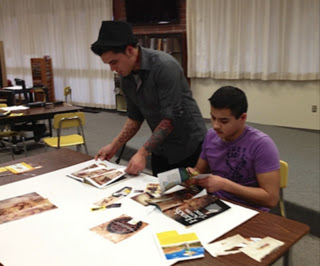
Figure 3. Salish High School student works on his culture poster board with an undergraduate mentor from The Evergreen State College.

Figure 3. Salish High School student works on his culture poster board with an undergraduate mentor from The Evergreen State College.

It can be said through our initial fieldwork in the Salish schools that standardized tests scores just scratch the surface when addressing the educational inequities Latina/o students face. Similar outcomes are evident among secondary Latino/a students and ELLs nationwide as they experience inequitable access to core and advanced placement curriculum (Huerta, 2009). These students remain essentially parked in low-level classes, where a scripted and irrelevant curriculum are taught by a teacher workforce with low morale, with no opportunity for ongoing professional development and collaboration (Fry, 2004). Traditional high school program models, leaves little hope for disrupting the patterns of low academic achievement, graduation rates and college attendance among Latina/o students.

That said, our research does show how we can make some strides. When our undergraduates talked to Latina/o teenagers, they found that the youth wanted dual language instruction in their schools beyond the elementary level. The teens wanted a club to study culture and to learn about college. They were interested in the politics of “The Dream Act” and the possibilities for new immigration policies.

But space must be made within the community and schools for such engagement to take place. While the Salish community has taken steps in this direction, a systemic K-12 effort to disrupt what is not working in the public schools must be confronted. Collaboration with local advocates and mentors remains an approach that offers support to schools uncertain how to meet the needs of diverse communities such as Salish.

References

Brown-Jeffy, S. and Cooper, J. (2011). “Toward A Conceptual Framework of Culturally Relevant Pedagogy: An Overview of The Conceptual and Theoretical Literature.” Teacher Education Quarterly, Winter, 65-84.

Fry, R. (2004). Latino Youth Finishing College: The Role of Selective Pathways. Washington, DC: Pew Hispanic Center. Available: http://pewhispanic.org/reports/report.php?ReportID=30

Gándara P. (2010). “The Latino Education Crisis.” Educational Leadership, 67, (5), 24-30.

Huerta, G. (2009). Educational Foundations: Diverse Histories, Diverse Perspectives. Kentucky: Wadsworth.

National Assessment of Educational Progress. (2013). Mega-States: An Analysis of Student Performance in the Five Most Heavily Populated States in the Nation.Washington D.C.: National Center for Educational Statistics, U.S. Dept. of Education.

Slavin, R. and Cheung, A. (2005). “A Synthesis of Research on Language of Reading Instruction for English Language Learners.” Review of Educational Research, 75, 247–284.

Dr. Grace Huerta is a faculty member at The Evergreen State College in Olympia, WA. Previously, she was an Associate Professor at Utah State University. She earned her Ph.D. in Educational Leadership and Policy Studies from Arizona State University and completed her undergraduate work at the University of Southern California. Her areas of research include multicultural education, qualitative research methodology and secondary ESL/bilingual education. She is the author of the book Educational Foundations; Diverse Histories, Diverse Perspectives.

Comment(s):

Caty Escobar    April 6, 2013 at 6:54 PM

Great post! This really made me reflect on my own experiences in school and how I saw my community collaborate. I grew up in Maryland and in my elementary school there was a large Latino population. My mother felt very involved in my school life because there were interpreters available on-site, at PTA meetings, and during parent-teacher conferences. At times, the school would put together programs that targeted Latino families so that teachers could better understand their students’ family life and culture. I too had many resources available in elementary school that eventually vanished when I entered middle school and high school. My perspective on this poor transition is that because educators believe that a child’s early school years are the most important for development, more support should be provided during these years. Also, because there are less educators and counselors of an ethnic background in schools students’ opinions and voices are not heard. I believe change should occur within the educational system first to encourage multicultural discipline, bilingual education, and cultural services to students and parents. Your research shows that change is difficult when teachers are reluctant to cooperate and when resources are low. What these undergraduate students have done thus far is phenomenal and proof that mentoring is also needed in schools.

Latinas and Tenure in the Seventies: A Testimonial

February 11, 2013

Flower among the Spines by raelb. Flickr/Creative Commons License.

Flower among the Spines by raelb. Flickr/Creative Commons License.

by Eliana Rivero

Once upon a time there were no Latinas tenured in the Arizona university system, from Tucson to Tempe to Flagstaff. This lasted until 1973, when it was my good (mis?)fortune to confront the system and see how things worked.

I had prepared diligently, and then some. When I submitted my tenure file in the spring of that year, I had one monograph in print published in Spain, one coedited critical edition by Oxford University Press, eight articles in reputable journals, several conference papers delivered, very good teaching evaluations, and quite a bit of professional service. Since the year before, I had been meeting with a group of faculty women who formed a caucus to look into our status on campus at the University of Arizona; this group would go on to form the first Women’s Studies program in the state. I remember one male colleague in French stopping me in the hall to inquire: “Why Women Studies? Why not Men Studies?”  I laughed then, since I could not have known how my tenure case and the subsequent struggle would be seen first as waged by a woman, and second, by a Latina who was trying to obtain job permanence as a Latin-Americanist in the United States.

My case passed the scrutiny of a departmental committee (admittedly with some grumblings from traditional scholars, all men), and then went on to the Dean’s office for review. There my troubles began: I was called to the College of Arts and Sciences office and literally put on the carpet by the Dean, a Harvard alumnus whom (I would find out later) had been “informed” by some older colleagues at a Harvard alumni party that my work was dubious in nature and provenance. My publications were all right, but nobody knew if I had written them by myself or with help from some ghost writer, perhaps my dissertation director (!). Furthermore, my field (Latin American contemporary literature, mostly poetry) was not that important in the scheme of things.

Thus spoke the Dean: “Consider yourself lucky that we have to award you tenure, because a letter should have been sent to you a year ago indicating trouble with your CV, and it wasn’t. However, you will not be promoted to associate professor. Your title will be lecturer.”

I was speechless. I left the office, went home, got into bed, and pulled the covers over my head. How could that be?  Where was justice?  Two days later, I found out that the colleague who had asked me in the hall about the feasibility of Men Studies was promoted to associate professor with tenure, despite having fewer years in rank, not having a book in print, and having been hired in the position of lecturer as an ABD a year after me. The department head of Romance Languages explained to me that since the promoted colleague was in a less popular field—French Canadian literature—and I was in Spanish, they needed his services more than mine in Arizona (!!).

I consulted with my colleagues in the women’s studies group, received their moral support, hired a lawyer (who had just won a case of gender discrimination in the state), and filed a formal grievance with the Civil Rights Division of the Department of Education in Washington DC.  Everyone on campus was amazed:  “She called in the Feds!”  I heard whispered behind my back.  A team of investigators came to campus, and after many interviews and much examining of files and almost a whole academic year, I was given a letter with what they called the “right to sue”: yes, they had found evidence that I had been discriminated against for reasons of gender and ethnicity. It helped that a young teaching assistant (also a Harvard alumnus) told me, and later testified, that he had overheard the conversation between one of my older colleagues and the Dean in which they trashed my work, and conjectured about the authorship of my publications. That colleague was opposed to granting me tenure because according to him, Latin American literature was not a departmental priority, nor a well-respected field of research (after all, he couldn’t read more than thirty pages in García Márquez´Cien años de soledad without getting utterly bored!). At the time, out of twenty-five faculty in my department, there were only two women besides me: one was semiretired at 78 years of age, and the other was tenured but in the more acceptable field of medieval studies and linguistics. Neither was interested in women’s issues: I heard the older one say at a faculty party that she preferred to speak to men because “ladies only talk about their babies.”

It was in the spring semester of 1974 that the Dean was removed from office and another head of department was named. I received a letter from the President of the University with a new contract as associate professor with tenure, and a substantial salary increase. Both the new dean and the acting department head called me in and offered verbal apologies. But the title of lecturer for the academic year 1973-74 is still on my record, as a testimonial to that annus horribilis in which they tried unsuccessfully to hold a Latina scholar back.

Oddly enough, the only other Latina who received tenure in the Arizona system around that time was another Cuban-born woman in Flagstaff. But it would be at least five more years until the first Chicana PhD would be hired by the English department here in Tucson. She was tenured six years later, and I—already a full professor with a very substantial CV—sat on the Dean’s committee that examined her case.

It all seems incredible now, but so were the early seventies. At present, at least in my field, the tenure process for Latinas is an easier road than the one I had to travel. In 2013, there are eight tenured women scholars in my department (one Chilena, one Chicana, one Puertorriqueña, one Mejicana, one Argentina, two Brasileñas, one Española, one AngloAmericana). Three more Chicanas are untenured lecturers. We still have some way to go!

Eliana Rivero is Professor Emerita of the Spanish and Portuguese Department of The University of Arizona. During her 45 year career at the U of A, she was also affiliate faculty in Latin American Studies, Mexican American Studies, and Women’s Studies. Her current research focuses on Cuban American women writers and her recent poems and short stories appear in the online Spanish literary magazine LABRAPALABRA.

Comment(s):

Mari Castaneda    February 25, 2013 at 9:01 AM
querida Eliana, thank you so much for sharing your story! It’s amazing how stories like these still abound though… I know several Latinas that were recently denied tenure and also questioned about the quality/authenticity of their work. Indeed, there’s still more work to do! But you were a trailblazer, and we wouldn’t be where we are today if it wasn’t for mujeres like you – gracias!!