Category: Centennial (page 2 of 5)

Manuel Tzagournis

Manuel Tzagournis

Manuel Tzagournis

Manuel Tzagournis (1934-) received his BS in 1956 and his MD in 1960 from OSU. While doing an internship at Philadelphia General Hospital, Tzagournis became particularly interested in diabetes mellitus thus leading him to practice endocrinology. Tzagournis has held numerous positions at OSU including Assistant Dean for Research and Continuing Medical Education; Secretary of the Faculty of the College of Medicine; Associate Dean; Medical Director for OSU Hospitals; Acting Dean (1980); Dean (1981-1995); Vice President for Health Sciences (1994-2002); and Vice President and President of the University’s Managed Care System.

Tzagournis was a long serving and successful dean and during his tenure he became the single best known representative of the Ohio State University College of Medicine programs in communications with the public and around campus.

From 1982 until 1996, Tzagournis was the NIH principal investigator for the General Clinical Research Center for the Ohio State University College of Medicine. In this role, he was responsible for the research productivity of a unit that housed patients being studied for special research programs, often with metabolic evaluation as a major part of the research.

Tzagournis is also known for having produced resolution in the dispute about the practice plan and for maintaining a widespread relationship with alumni as well as practicing physicians.

The Tzagournis Medical Research Facility was officially named in 1999 after Dr. Manuel Tzagournis. This eight story facility houses generic research laboratories and support facilities.

Remembrances by Rena Edwards Daily Coppess

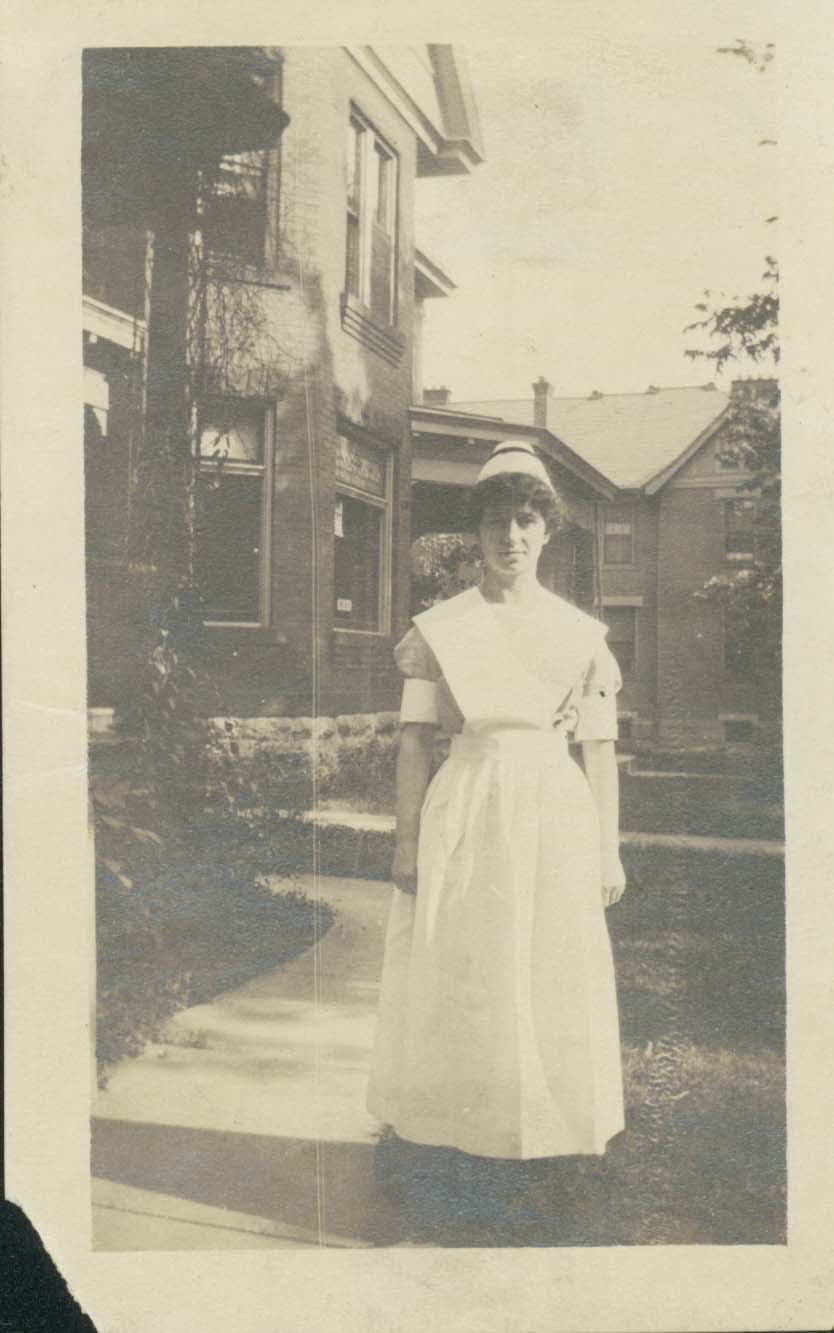
Nora Ellen Turner, 1917 Student

Nora Ellen Turner, 1917 Student

The following information about the uniform, cap, and pin of The Ohio State University School of Nursing was written by Rena Edwards Daily Coppess, one of the students from the first graduating class of 1917.

The Uniform

Every institution has a beginning and a past, and in its past its traditions are formed.  As the years pass and changes and progress take place, only those who belong to the past remember its humble beginnings and the reasons for the traditions.  Such is the story of the uniform, the cap, and the pin of the School of Nursing of The Ohio State University.

When the school was established and opened in 1914, such problems as the choice of the uniform and the cap had to be considered.  Three patterns for the uniform were chosen, by those in charge from which to make a selection.  Two of the patterns had long sleeves and high necks.  The other was the blue chambray under dress with a large, white crossover collar, short sleeves with white cuffs and the white apron gathered full on the band and fastened in the back with two buttons.

Hoping to choose a uniform that would stand the test of time with its changes in styles, the decision was a difficult one to make.  In those days when such problems arose, Dr. Thompson, the beloved president of the University was consulted.  After careful consideration of the styles presented, Dr. Thompson chose the one described for its comfort and practicality.

In 1914 we were just emerging from the Victorian era and had not yet reached the roaring 20’s so the unmentionables were an important part of the uniform.  No lady should ever lift or turn a male patient without some protection, and a corset with stays was the garment worn, for in those days no one ever heard of the good old two way stretch.  Summer and winter, regardless of the all-enveloping white apron, a petticoat must be worn, and worn in such a way that it never peeked below the hem of the uniform which came just to the shoe tops.  The discipline for the infraction of this rule was usually the loss of those two precious hours off duty.  Black, high top shoes and black cotton hose completed the uniform.  In the spring of 1916, upon the request of students, we were permitted to wear white shoes and white hose from May until September.  There is no record when the continuous use of white hose and shoes became part of the uniform.

In 1950 or 1951, by action of the faculty of the School of Nursing, some changes were made in the uniforms.  A pale blue flytex material was chosen rather than the blue chambray, because of fading and worn look of the chambray after much usage.

The turnover collar and shawl effect fichu was also adopted at this time, for by removing the fichu and apron, the street attire of the student was more appropriate for attending classes on the campus.  One small change was made in the apron – a third button was added to the band.


The Cap

The cap of the School of Nursing of the Ohio State University was designed by Miss Jessie Harrod, first superintendent of the School.  It was her desire to have a cap that would be becoming to all who would wear it, be easily laundered and easily kept in place on the head to add to the dignity of the wearer.

The hair was to be dressed with a knot or a roll in the back and the cap kept in place with a small hat pin.  Many of the students invented their own cap holders by using rubber bands which held the cap in place even more securely than the pin, although the pin still had to be in evidence.  Miss Harrod designed well, for at that time, no one ever though that in a few short years short hair would be vogue, and the cap still lends itself attractively to either style of hair dress.

Because of the standards of State registration were set up, the recognized probation period for nurses in training was three months.  The tradition of capping exercises had not been established, and when we completed our probation, we were called into Miss Harrod’s office.  Before giving us the cap, she explained its significance and we were instructed to always wear it with dignity and honor.  The nurse did not easily forget for the greatest misfortune that could befall her was to have her cap taken away for a period of time.  Our real capping exercise took place later in the nurses’ home when we received the congratulations of our classmates.

We received our narrow and wide black velvet bands in much the same way; with the kindly words of advice, and admonition to always remember our obligation to our profession and our responsibility in assuming our position in the training school to which the band entitled us.

Some of the uniqueness of the cap may have been lost through the passing years yet it still retains its simple dignity.


The Pin

The original pin of the School of Nursing is different from the one now worn by the graduates.  When the plans for the first graduation were being made in the fall of 1917, the choice of a pin was given much consideration.  The students who were to graduate felt they should have some voice in choosing the pin they were to wear.  It must be remembered that this was long before Student Councils and student governments were formed, but no council meetings could have functioned more effectively then some of our off-duty meetings.  Quite frequently Miss Harrod, the Superintendent of the School or one of the supervisors entered into our discussions.

Two or three pins had been considered but they followed the popular style of that day, being gold embossed with enamel.  When the choice Miss Harrod made did not meet our approval, she went to Dr. Thompson.  It was his opinion that the nurses should make the choice, provided that the pin could be worn with dignity and be representative of the University.  He also stipulated that the class which would graduate the following year should be consulted.

After numerous sessions and many catalogues, the nurses chose a maltese cross, centered by the seal of the University, and bearing the letters H.T.S. (Homeopathic Training School) and the date of graduation.

In 1922, when the Homeopathic College was disbanded by the Board of Trustees of the University and the present college established on the campus, Dr. McCampbell, dean of the Medical School, recommended that the pin be changed.  The records do not show who made the choice, but the pin, having the semblance of a cross, circled by a wreath, and centered with the motif elements of the University and bearing the name Starling Loving was the one chosen.  Later, when the School of Nursing was established, the letter was changed to “School of Nursing – The Ohio State University”.  This is the pin which most graduates wear now.

Ernest Johnson

Ernest Johnson

Ernest Johnson

Ernest Johnson, MD (1924-) is known for having created the premier program in Physical Medicine and Rehabilitation in America in 1963 at Ohio State. Dr. Johnson has also actively educated institutions regarding the importance of wheel chair accessibility and opportunities for the disabled. He was responsible for having led the entire campus in becoming user-friendly for wheel chairs. In 1992 he was the first physician to receive the Henry Betts Award for Rehabilitation; it is usually awarded to a famous public spokesperson for the disabled.

Dr. Johnson also served as editor of the Journal of The Ohio State University College of Medicine. Issues of this Journal are available for viewing in the Medical Heritage Center.

Henry G. Cramblett

Henry Cramblett

Henry Cramblett

Henry Gaylord Cramblett (1929-) received his BS in 1950 from Mount Union College and his MD in 1953 from the University of Cincinnati. Cramblett came to OSU in 1966 as chairman of the Department of Medical Microbiology. He was Dean of the College of Medicine (1973-1980) and was vice president for health sciences (1980-1982). Cramblett was instrumental in the opening of the clinic facility in 1974 and was honored with it being named for him in 1999 (the building was demolished in 2012).

Robert J. Atwell

Robert Atwell

Robert Atwell

Robert James Atwell (1919-2006) received his BS in 1941 and his MD in 1944 from Duke University. He became a faculty member at OSU in 1950. He was Chief of Medical Services at the Ohio Tuberculosis Hospital in Means Hall and was the founding director of the OSU School of Allied Professions (SAMP). Atwell served as director of SAMP from 1971 to 1983.

Atwell Hall was completed in 1971. The building was known as both the School of Allied Professions Building and the Allied Medical Professions Building until 2000 when it was officially named Robert J. Atwell Hall.

Carl O. Boucher Prosthodontic Conference

The Carl O. Boucher Prosthodontic Conference was established in 1966 to provide continuing education in the art, science and practice of Prosthodontics. It is dedicated as a living tribute to Dr. Carl O. Boucher, who devoted himself to the advancement of Prosthodontics and the teaching of all who desire to advance their knowledge in this discipline of dentistry.

The Medical Heritage Center has an archival collection of brochures from the annual meeting. The finding aid for the collection can be viewed at https://hsl.osu.edu/mhc/pdf/carl-o-boucher-prosthodontic-conference-brochure-collection

School of Nursing Building

Newton  Hall

On February 14, 1969 the School of Nursing building was dedicated. It was officially named Mildred E. Newton Hall on September 8, 1972. Mildred Emily Newton (1901-1972) earned a Diploma from Truesdale Hospital School of Nursing and a BS from Northwestern University both in 1924; a MA from the University of Southern California in 1932; and, a PhD in Education from Stanford University in 1949. Newton was Director of The Ohio State University School of Nursing from September 1951 until her retirement in July 1968, initiating many changes during these years. She was the first director to hold a doctoral degree and encouraged the recruitment of doctorally prepared faculty. The Bachelor of Science program in nursing received national accreditation within a year of her arrival and a Master of Science degree was started in 1953. She was instrumental in planning the School of Nursing Building which was named in her honor.

John A. Prior

John A. Prior

John A. Prior

John A. Prior (1913-1992) received his BA and MD degrees from The Ohio State University, where his father was professor of civil engineering. After internship at Grant Hospital he was a resident and fellow in pulmonary disease in Cincinnati, and soon became recognized in the area of chest disease. He was President of the Ohio Trudeau Society with research interest in tuberculosis and in histoplasmosis. Prior was not only chair of the committee that was responsible for the design of the health sciences library – renamed the John A. Prior Health Sciences Library in his honor on September 1, 1988 and renamed the John A. Prior Hall in 2011 after a two floor expansion – but also instrumental in the development of the Allied Medical Professions Program, the Pulmonary program, and the consolidation of the Ohio Tuberculosis Hospital at OSU. He was one of the motivating forces for OMEN (Ohio Medical Education Network) and for continuing education.

The Medical Heritage Center has an archival collection about Dr. Prior and the finding aid for that can be viewed at https://hsl.osu.edu/mhc/pdf/john-prior-md-collection.

Charles F. Wooley

Charles F. Wooley

Charles F. Wooley

Charles F. Wooley (1929-2008) was one of the earliest full time academicians in the Division of Cardiovascular Medicine and was Director of the Cardiology Catheterization Laboratory (1963-1971). After establishing the Overstreet Cardiovascular Teaching and Research Laboratory, Wooley served as its Director from 1982 to 1991. Notable contributions from this lab were the studies of left bundle branch block which became the basis for biventricular pacing, aortic physiology and pathology, connective tissue disorders, and his family study.

Early on, prior to most contemporary cardiologists, Wooley became interested in pacemakers and electrophysiologic studies. These early EP studies defined mechanisms of atrial arrhythmias and atrial conduction disorders (he was one of the first to do such studies). He was an expert in angiography of valvular and congenital heart disease, including some innovative studies with upright posture. He also pioneered intracardiac sound and hifidelity pressure recordings.

Wooley’s major areas of interest were mitral and tricuspid disease, mitral valve prolapse and MVP syndrome (for which he developed the definitive classification and disease mechanisms), function and disorders of the aorta, cardiovascular manifestations of connective tissue disorders, and his family with familial cardiomyopathy – the studies of which evolved over 35 years (1st publication in 1972) and eventually defined the natural history, genetic basis, pathology, and therapy. This study identified the appearance of hereditary disease in middle life and its progression from arrhythmia to muscle disease.

After retirement in 1992, he remained active in the Division of Cardiovascular Medicine. As his interest in medical history grew in the 1990’s, he along with others developed the Medical Heritage Center at The Ohio State University Health Sciences Library in 1997.

In the last half of his academic career, Wooley became a world renowned historian. Wooley’s interest in the historical aspects of mitral valve prolapse began with realization that MVP was not a new disease. DaCosta’s original work during the Civil War in which he described midsystolic clicks in “disabled” soldiers led Wooley to uncover the MVP story. Wooley wrote nearly twenty papers on this story and compiled them in his book, “The Irritable Heart of Soldiers and the Origins of Angelo-American Cardiology” published in 2002. He was also the author of “Academic Heritage: The Transmission of Excellence” (1992), “The Second Blessing: Columbus Medicine and Health The Early Years” (2006) and countless articles and papers.

The MHC also sells copies of some of his publications: https://hsl.osu.edu/dept/medical-heritage-center/publications-and-scholarship-0

James V. Warren

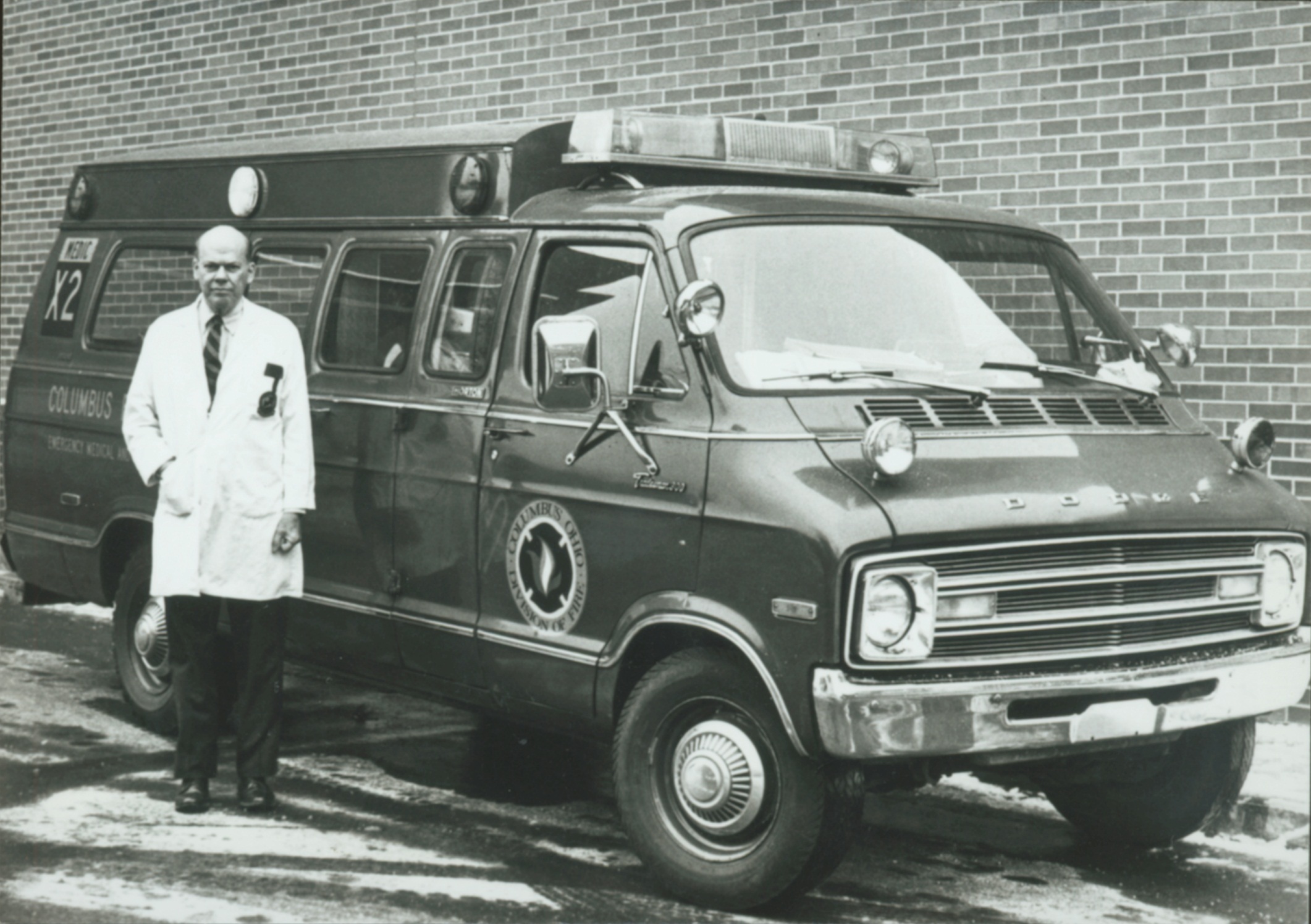
James Warren with the Heartmobile

James Warren with the Heartmobile

James Vaughn Warren (1915-1990) was an internationally renowned cardiologist and the former Chair of Medicine at The Ohio State University from 1961-1979.

Warren graduated from The Ohio State University in 1935 with a B.A. in chemistry and from Harvard Medical School in 1939 with his medical degree. He served in residency at Peter Bent Brigham Hospital in Boston and later taught medicine at Emory University Medical School, Duke University Medical School, University of Texas Medical School and The Ohio State University.

Warren gained worldwide recognition for 50 years of work in cardiovascular research and for his important contributions to the understanding and prevention of sudden cardiac death. He authored many scientific and educational publications dealing mostly with congestive heart failure and blood flow. He was one of the first physicians to use cardiac catheterization for diagnosing heart problems and helped to define the mechanisms of congestive heart failure. In 1988 he was honored by the Columbus USA Association in his native city of Columbus for his creation of the Heartmobile, a coronary emergency unit that is credited with saving thousands of lives in the city.

The Medical Heritage Center has an archival collection about Dr. Warren and the finding aid for it can be viewed at https://hsl.osu.edu/mhc/pdf/dr-james-v-and-gloria-k-warren-collection.

Older posts Newer posts