
Tag Archives: Carmen R. Lugo-Lugo

Of Puerto Rico, Perfumes and Colonies

by Carmen R. Lugo-Lugo

It was circa 1983, when I was a junior high student in the public school system in Puerto Rico, that I experienced one of my first deep contemplations about Puerto Rico’s political status by way of an exchange between a teacher and a classmate. The exchange was in Spanish, of course, so before I actually delve into the tale, I need to explain the “punch line” (in my opinion, the biggest disadvantage of translation). Mainly, in Spanish, the word for colony, “colonia,” is also the word for cologne. Understanding the nuances of this story, and why I found it so meaningful, is contingent upon understanding this homophone.

The Story

My eighth grade Social Studies teacher, I will call her here Miss Vilas, was a young woman fresh out of college, who came to work every morning on the back of a black Harley Davidson driven by her boyfriend, at a time when young women did not have “boyfriends,” did not ride in motorcycles, and definitely did not ride in their boyfriend’s motorcycle.  But she didn’t seem to care about societal expectations, and that translated to her work in the classroom. Always eager to teach us a few things about Puerto Rican society beyond what was stipulated in our curriculum, Miss Vilas was a good teacher, and her willingness to step out of boundaries appealed to my inquisitive mind. One day, out of the blue she began a discussion about the political status of the island, an event completely out of the ordinary, for up to that moment, the political status of Puerto Rico had been presented to us, not discussed in class. The Estado Libre Asociado or ELA (that is the Commonwealth status) was always taken for granted in the curriculum, and if anything, up to that particular day, I was under the impression that the ELA would always be an immutable and permanent fixture in the island’s government.

Our extraordinary discussion soon generated what seemed an extraordinary reaction. Upon hearing the name “Estado Libre Asociado,” “Bill,” one of my most articulate classmates, scoffed loudly and rolled his eyes, while playing air drums with his pencils to a tune only he could hear. Bill’s reaction made Miss Vilas stop dead in her tracks and look at him, intently, with a mysterious, undecipherable smile. Bill, still playing air drums, had closed his eyes, completely unaware of our teacher’s penetrating gaze until she finally asked: “why such a strong reaction, Bill?” Bill responded (without missing a beat with the pencils and with a mysterious smile of his own) that the ELA was nothing but a colony (“el ELA no es nada más que una colonia, Missis,” he quipped). The rest of us gasped in collective unison, but Miss Vilas quickly but firmly shot back: “colonia no, perfume” (which roughly translates as “not cologne, but perfume”). Her smile was intact.

The Lesson

The majority of us understood her point: perfumes are supposed to be of better quality than colognes, which are generally less expensive. Many of us laughed at her response, while Bill seemed to be taken aback by it—his air drumming stopped altogether, his smile turned into a frown. I laughed with the majority of my classmates, but I had to process what that really meant. Was she defending the political status of the island? I may have looked at it as a permanent fixture, but even I knew that the ELA was nothing if not flawed. This exchange between my teacher and my classmate stayed with me long after I graduated from junior high, from high school, and from college, and through my years as a graduate student and now as an academic. After all, Miss Vilas was not the only one on the island who thought that the Commonwealth was indeed not a form of cheap cologne but a fine bottled-up perfume.

The Take Away

Thirty years later, I now see Miss Vilas’ witty response to Bill not necessarily as a defense of the Commonwealth status, but as a tactic for dealing with a taxing situation (i.e., an unresolved political status that has lasted for half a millenium) by exerting some agency against its overwhelming weight. She was, in a perhaps awkward way, redefining her subject position (and by extension the subject position of all of us in her classroom, for we were all Puerto Ricans) vis-à-vis the US: in the end she did not want to be seen as (nor did she want to be) the subject of a cheap colonial configuration, to be sure. Miss Vilas’ way of engaging with the Commonwealth taught me an enduring lesson: regardless of the position from which they may advocate a particular political view, Puerto Ricans are painfully aware of the Commonwealth and its impacts, and do what they can to negotiate their location within it. It was also telling that even though we had never been formally taught about colonies as such, we still knew, as thirteen-year-olds, that the word (especially as it was being used by our classmate Bill) was meant as an insult, and a clear indictment of the island’s government. Our collective gasp reflected how much we knew, at such a young age, about colonies and about insults.  That the status of the island could be articulated as an insult, and thus something to be wielded in order to put people (us!) down, was a major insight to me that day.

In retrospect, the fact that I remember this particular exchange so vividly is indicative of how ingrained and even traumatic notions of Puerto Rico’s status can be. My recollection of the exchange often returns in my musings about the island, as it was around that time that I began to consciously process and sift through ideologies about its political status.  The exchange between my teacher and my classmate ultimately taught me that, as a Puerto Rican, I should learn to simultaneously deal with sensibilities that metaphorically articulate Puerto Rico’s status as a “cologne,” and those that articulate it as a “perfume.” The biggest insight for me now, however, after years of studying, thinking and writing about Puerto Rico’s political status, is that, although the island may actually be a little more than cologne, in the end, it is all colony. From the government to the educational system. From the economy to its daily diversions and entertainments. From the unemployment rate to the ever-expanding Diaspora (of which I have been a member for 20 years now). From every institution to every minute aspect of life. All colony. Then (when I was in school learning about the ELA), and now (as I continue the struggle to envision a future for Puerto Rico beyond the ELA).

Carmen R. Lugo-Lugo is an Associate Professor in the Department of Critical Culture, Gender, and Race Studies at Washington State University. Her current research is on Latinos in the US, “the War on Terror,” and popular culture. She is a member of the Mujeres Talk Editorial Group.
Bang Bang

by Carmen R. Lugo-Lugo

[O]ne can never assume that anything one does, and especially the moral and political position one takes, is innocent and does not need to be interrogated for complicity.   —Barbara Applebaum

          I think love is an imperative. It obligates you. —Marisa de los Santos

Once, confessing to a colleague that I was going to attend a J.Lo. concert, she looked at me and without missing a beat simply said: “We all have our weaknesses. And that’s fine.” I can’t even begin to explain how grateful to her I was for saying that. Although I understand that it is practically impossible to lead a purely and unadulterated politically-sound existence, sometimes I struggle with the simple things. Like popular culture. I wish I were that person who could never be enticed by cool performers with a connection to Puerto Rico, or by overly processed and packaged images of gorgeous Latinas in the media, or by the incessant spectacle of reality television. Or scripted TV. Or B movies. Definitely B movies. I also wish I were too together to be seduced by songs with problematic lyrics and weird videos. But alas, those are only wishes, and I am not that person. The truth is that more frequently than I would care to admit, I find myself immersed in all of it, even as I dutifully try to resist its lure. I have had certain levels of success in my attempts at resistance, but at the end of the day, and to reiterate, I am not the person that I wish I were. I tend to get enthralled by all sorts of images, lyrics, and performers that taunt my politics and academic training, which is to say, I become enthralled by all sorts of things that shouldn’t appeal to me. And as a professor of ethnic studies and gender, this can lead to a distressing struggle, because I do know better. Of course, given what I do for a living, I have been able to work through some of my “weaknesses” by studying and analyzing them and by writing academic pieces about them: the ultimate means of intellectual penance we academics have at our disposal. But the fact remains, I still fall for problematic performers, shows, marketing campaigns, and songs.

Case in Point:

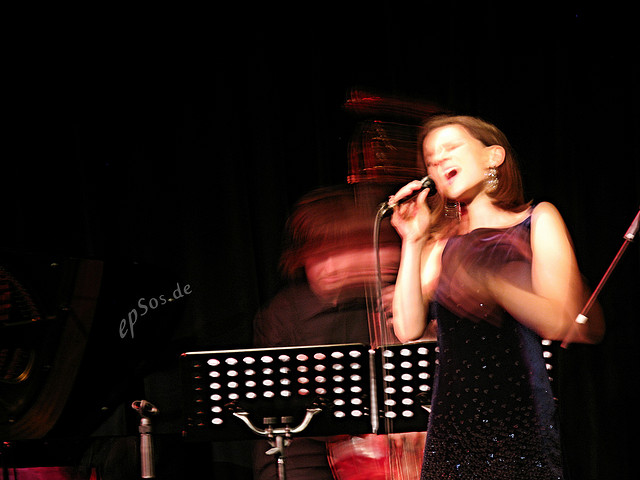
In 2005, Mexican American actor Michael Peña formed a rock band that he named Nico Vega (after his mom, Nicolasa). Last year, the band did a cover of the song “Bang Bang,” originally sung by Nancy Sinatra. The song should trouble anyone with a basic understanding of gender relations and violence against women. It should also alarm anyone with a pulse, as its literal meaning walks a very fine line between being politically objectionable and being downright wrong. Just to give you an idea, here are the first 8 lines of the song: “I was five and he was six/We rode on horses made of sticks/He wore black and I wore white/He would always win the fight/ Bang bang, he shot me down/Bang bang, I hit the ground/Bang bang, that awful sound/Bang bang, my baby shot me down.” The last four lines, the ones with the bangs become the chorus for the song, so before you begin to wonder whether the song gets any better after those lines, I will earnestly and promptly answer, no it does not. Not only that, but here I am about to tell you why I find the song metaphorically compelling. See, weakness through and through.

First Bang:

I have been haunted by this song since I first heard Nico Vega’s lead singer Aja Volkman sing it a few months back. It was as if I could actually hear the sound of each bang as she sang it.  Almost as if I could feel each bang against my skin and my heart even though I have never been shot in my life. The song affected me, there is no other way to explain it. So in trying to answer Applebaum’s call to interrogate complicity, I asked myself why. After pondering that for a while, this is my answer.

I am a Latina lesbian. Hardly much of an answer, right?  But as I thought about it, being shot down (metaphorically, of course) by men who should have loved me and had my back is a fairly familiar feeling. Friends and family members alike. Of course, women have done their part too, especially women protecting those men, and I suppose I will eventually find a song for them as well. But for now, there is this: each bang in the song feels real because it symbolizes rejection, abandonment, and contempt. That is to say, each bang represents the violence of neglect (bang bang, he shot me down), of the spoken word (bang bang, I hit the ground), and of silence (bang bang, that awful sound). Each bang is a reminder of a person who has chosen not to acknowledge me and my life, leaving me on the ground to pick up the pieces (bang bang, my baby shot me down).

Final Bang:

I am not trying to justify being affected by the song. I am, however, trying to exact my penance and work through why I am affected by it. I know I am taking a risk by writing this piece, for I may be seen as romanticizing a decidedly violent narrative. But I am only trying to explain (perhaps to myself) why I have developed a soft spot for a song so distastefully against my politics. I am writing this because as Isabel Allende tells us, writing is a “journey into memory and the soul.” And also, because as Audre Lorde warned, “only one thing is more frightening than speaking your truth, and that is not speaking.”  I am writing this because I loved those men, friends and family, who have, for all intents and purposes, disowned me. I still love them, and to paraphrase Marisa de los Santos, as an imperative, love obligates me. It obligates me to think and to write. But it also obligates me to maintain my integrity and remain true to my compass, even if as Applebaum suggests, my compass may be complicit in my weakness for popular culture. I will finish this short writing by sharing the song’s last two verses, the least violent ones, yet, the ones that hurt the most: “He didn’t even say goodbye. He didn’t take the time to lie.” And suddenly, my weakness for popular culture doesn’t seem so daunting, because as problematic as it may be, it can also help me articulate my pain.

Carmen R. Lugo-Lugo is an Associate Professor in the Department of Critical Culture, Gender, and Race Studies at Washington State University. She engages in research involving Latinos in the US, “the War on Terror,” US/Puerto Rico relations, and popular culture. She is a co-editor of A New Kind of Containment: “The War on Terror,” Race, and Sexuality, and a co-author of Containing (Un)American Bodies: Race, Sexuality and Post 9/11 Constructions of Citizenship, both published by Rodopi Press in 2009 and 2010 respectively. With C. Richard King and Mary K. Bloodsworth-Lugo, she  is co-author of Animating Difference: Race, Gender, and Sexuality in Contemporary Films for Children, published in 2010 by Rowman and Littlefield.