Category Archives: Social Justice

Central American Migrant Minors: Sentimental Stories or People with Human Rights?

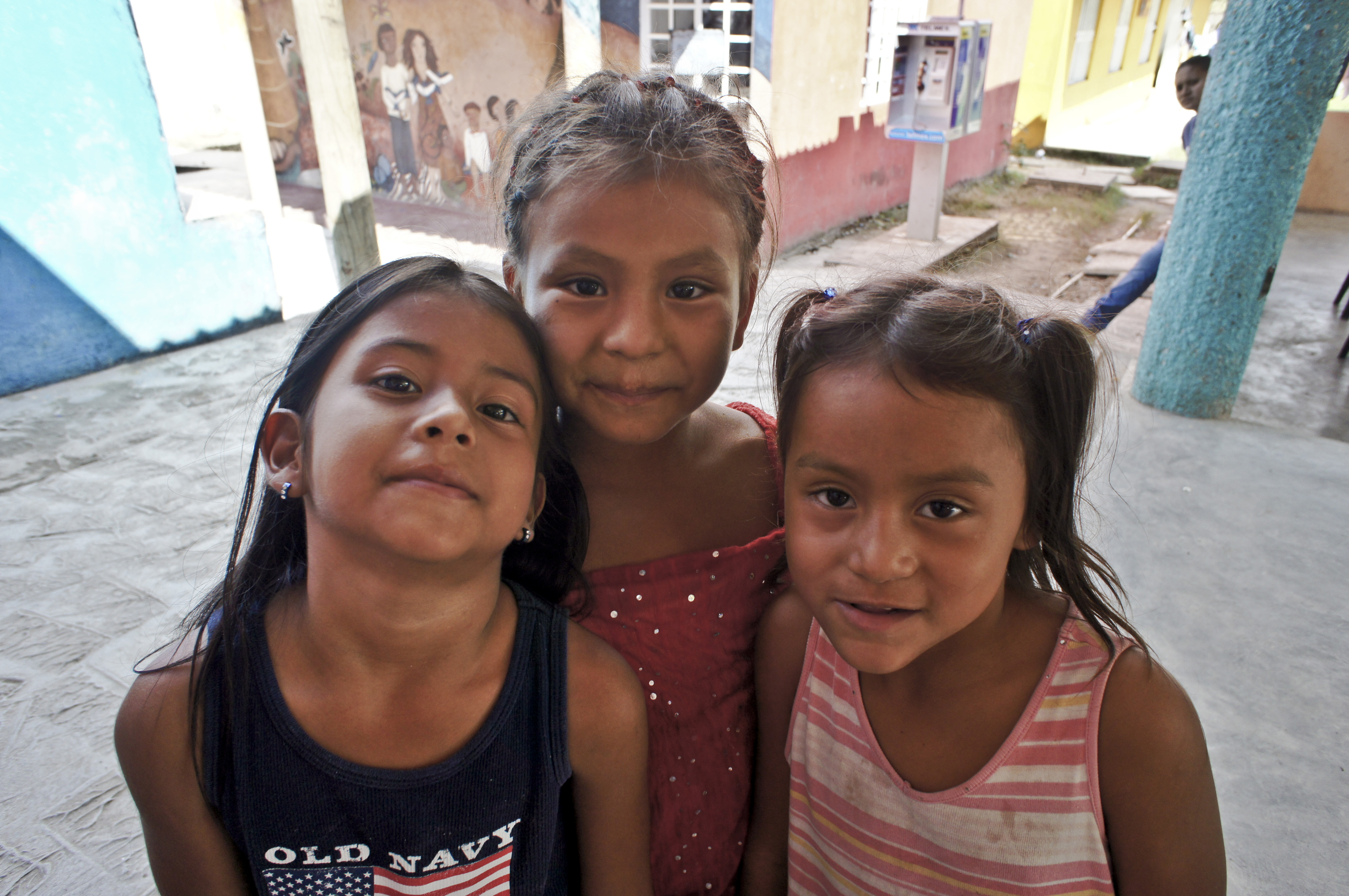
Girls at Tenosique Migrant Shelter. Photo by Víctor M. Espinosa. CC BY-NC-ND.

Girls at Tenosique Migrant Shelter. Photo by Víctor M. Espinosa. CC BY-NC-ND.

By Ana Elena Puga

What do we make of a photo of a two-year-old Honduran baby with a bandaged leg stump, the consequence of an accident on the freight train that he and his migrant mother were riding? Or the news stories about the 12-year-old Ecuadorean girl who hung herself in the shower after her attempt to reunite with her family was foiled by the arrest of her guide?

These past few months anyone in the United States who follows the news has seen a torrent of stories and images detailing the suffering of Latin American migrant minors who are brought here by their parents, or who come on their own in an attempt to work, reunite with family, or seek political asylum. As an academic who spent the last year conducting research in Mexican shelters and other facilities that help migrants, I am struck by how few people in the United States make the connection between their own comforts and the pain of others.

Every time I see a Fruit of the Loom ad, for instance, I think of the young woman I spoke to with blisters on her feet from walking for days from the Mexico-Guatemalan border to reach a shelter in Arriaga, Chiapas. In El Salvador she had left her village for a larger city to work in a Fruit of the Loom factory, sewing together my brand of underwear. She earned just enough money to stay alive and keep working, but not enough to feed, clothe, and educate her children. Having uprooted herself once for the sake of work made it easier for her to uproot herself again in hopes of an even better wage in the United States proper – instead of its exploitative outpost abroad. That six-pack of women’s underwear I can buy at Walmart for under $10 depends on the labor of people who are already working for us, even before they physically arrive on U.S. soil.

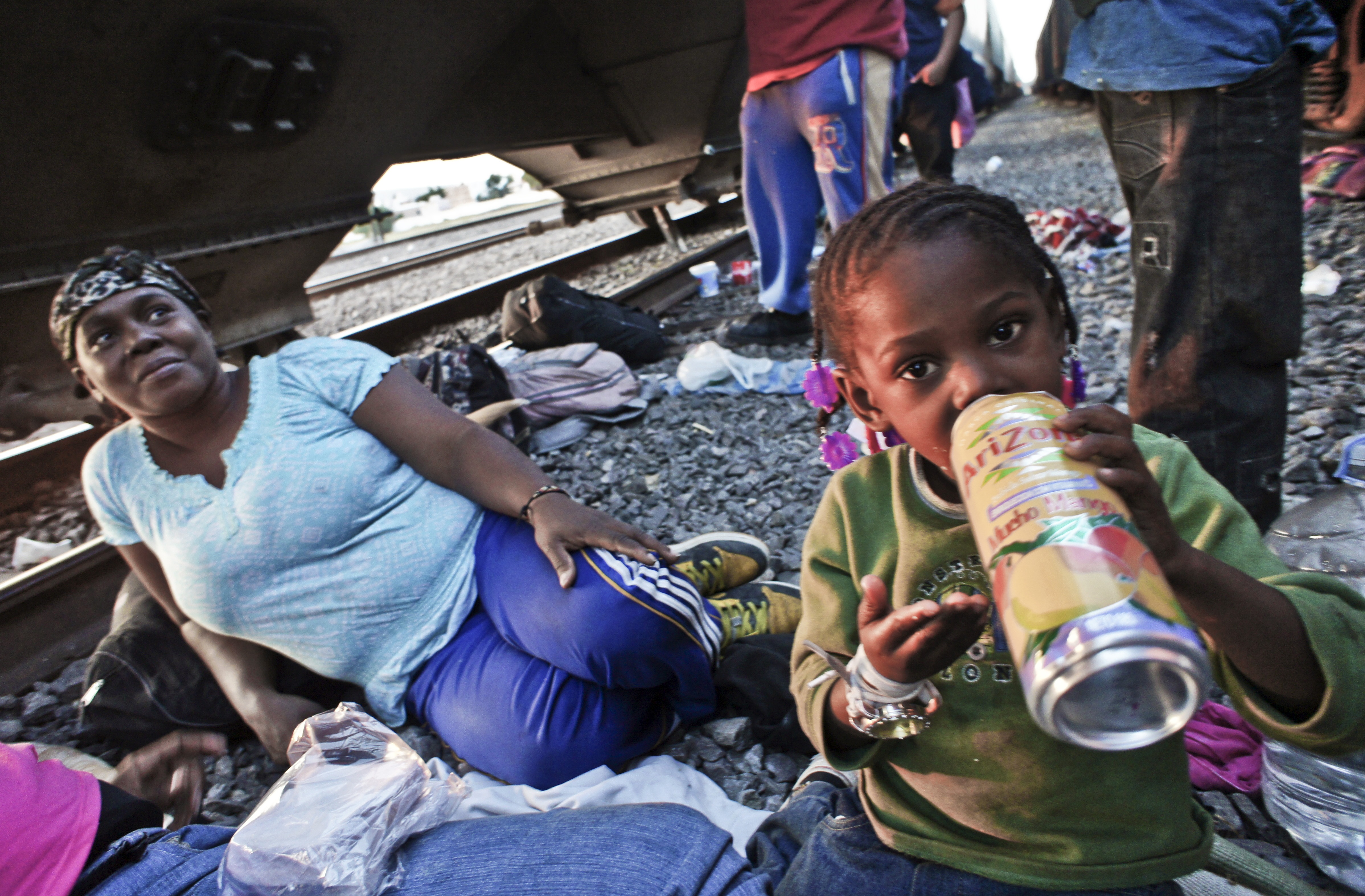
Family at Train in Celaya, Guanajuato. Photo by Víctor M. Espinosa. CC BY-NC-ND

Family at Train in Celaya, Guanajuato. Photo by Víctor M. Espinosa. CC BY-NC-ND

Emotional reactions to this year’s rise in the number of undocumented children apprehended at the U.S.-Mexico border often take one of two forms: sentimental-but-useless compassion or angry rejection. My dentist’s receptionist, like many well-intentioned people, lamented, “It just tears my heart up. I wish I could adopt them all.” Gut-twisting images and horror stories sometimes lead us to drown out the migrant experience in our own tears.

At the other extreme, The New York Times reported that protesters in Murrieta, California, shouted “Go home!” at migrant mothers and children on buses. Protesters opposed to a proposed shelter in Vassar, Michigan, presumably felt so threatened by the migrants that some of them reportedly carried semiautomatic rifles and handguns.

Even President Barack Obama adopted a stern tone: “Do not send your children to the border. If they do make it, they’ll get sent back. More importantly, they may not make it.” It’s difficult to imagine Central American parents hearing this on the news and saying, “OK, since you asked so nicely, I’ll just accept that it’s my lot in life to stay here with my kids, no matter how bad the poverty or the violence gets.” And what about the many minors who don’t ask permission before they hit the road? When we blame the parents, we ignore that most Central American mothers and fathers are doing the best they can to cope with global economic forces and structural violence that leave them on the short end of the neoliberal stick.

Central America is not an isolated, distant region of the world where the United States and its citizens bear little responsibility. Many books have been written on the long, nasty history of U.S. intervention in the region. To recall just a few highlights: in 1954 the CIA sponsored a coup in Guatemala on behalf of the United Fruit Company that destroyed a democratically elected government and plunged the country into decades of genocidal military rule; in the 1980s, the United States funded the Salvadoran military during that country’s civil war, despite the military’s links to right-wing death squads in the service of a tiny upper-class elite; in the wake of the 2009 coup that ousted President Manuel Zelaya from Honduras, the United States provided funding for the police force of Zelaya’s successor, Porfirio Lobo Sosa, despite his ties to the coup leaders and his shaky human rights record.

Not to mention that our consumer demand for illegal drugs fuels violent organized crime networks throughout the hemisphere, some of which also specialize in the human trafficking of Central American minors.

Children Playing at Tenosique Migrant Shelter. Photo by Víctor M. Espinosa. CC BY-NC-ND

Children Playing at Tenosique Migrant Shelter. Photo by Víctor M. Espinosa. CC BY-NC-ND

The United States can pressure Mexico to attempt to seal its southern border with Guatemala, but as Father Alejandro Solalinde, the director of a shelter for migrants in Ixtepec, Oaxaca reminded me, “People will migrate when they have to regardless of what governments try to decide for them, whether they pass immigration reform or build more walls.”

What if we were to think of undocumented migrant children neither as the heart-string tugging heroes of (let’s face it) entertaining melodramas featuring poor innocent, vulnerable children on dangerous adventures nor as the germ-ridden children of villainous criminals invading our country (depending on your point of view). What if we expend more of our energy on figuring out how to respect their rights? The Obama administration’s recent decision to interview some Honduran minors in their home country to determine whether they qualify for refugee status will not provide a perfect solution, since few children are likely to meet the stringent qualifications for a very limited number of visas. But at least it conceives of children less as objects of our own love or hate and more as persons with human rights under international law, persons for whom we bear an undeniable responsibility.

Ana Elena Puga is an Associate Professor in the Departments of Theatre and Spanish & Portuguese at The Ohio State University. She is working on a book, Staging Migrant Suffering: Melodrama in Latin American and Latino Activism, with sociologist Víctor M. Espinosa. Their 2013-14 research in Mexico was supported by a Fulbright fellowship.

“Adam’s Rib: Island Taboo Unveiled”


by Iris Lafé

I had long forgiven my father. For the sake of my battered mother’s dignity safely folded the skeletons in the family closet as good little Puerto Rican girls and boys so often do. Five decades later and our homecoming to their native Puerto Rico (1999), the dreadful specter of domestic violence returns to haunt me again—this time, in high definition. In this essay, I explore a silent tragedy ravaging La Familia Puertorriqueña of the 21st Century: Femicide.

My story begins with a visit from The Muse. While languishing in the remote, rural quiet solitude of my aging parents’ Barrio down south, my heart cries out for the battered mujeres of Puerto Rico. I was expecting her.

“There’s a reason you came back to the troubled homeland when you did,” she prompts. “Family violence, child abuse and benign neglect, the traumatic ripple effects on victims and to society is a subject you know all too well. Remember your experience. Don’t be afraid. You lived it and carry your mother’s memories deep inside the well of your anguished soul. You both survived, as a single mother you broke that cycle of abuse and your only daughter remains virtually unscathed. But look at the future, getting bleaker by the day for the next generation of women and girls, if they survive at all. Be the light, tell your story and break the silence.” The Muse emboldened me and possessed my disenchanted body right on the spot.

Day after day I was riveted to the Spanish local TV news. During breaks from my 24/7 caregiver duties, I began to chronicle my life on the island, to document what I was witnessing—it became a feverish compulsion—a reflex and residue from my California days in broadcasting and the media: Where’s the story? Get the story and get the scoop. Switching channels, clearly, from the missing coverage on mainstream networks beaming down by satellite, I had the scoop.

On the U.S. Caribbean colony—population 3.7 million “Forgotten Americans”—violence against women had reached unbridled, unconscionable proportions. From January to June 2011, in only six months, an unprecedented nineteen (19) mujeressuffered brutal, gruesome deaths, mortal mutilations and slayings reminiscent of a Stephen King novel—an abomination to our noble society.[i]

Despite La Ley 54 (domestic violence protection and prevention act of 1989) Puerto Rico had the highest per capita rate in the world of women over 14 murdered at the hands of a spouse or partner and the numbers kept climbing, ending 2011 with 30 femicides, scrutinized in an ACLU report.2 These are terrorizedwomenthe police failed to protect (whether by omission or commission) among the total of 1136 men, women, and children violently murdered that year.[ii]

The vivid scenarios of families trapped in violence, condemned to unmitigated poverty, beamed me back to my childhood household in 1960s New York.

The sweltering Lower East Side tenement, exuding the aroma of festering refuse from the back alleys, made me gag each time I scurried past the dingy hallways into our fire escape window apartment #1. The humble hearth Mami, the dutiful domestic—Boricua clean freak—whitewashed using her penetrating Pine Sol cleaner and irresistible sautéing sofrito vapors rising from the stove. Her story I’d begun to write:

Everything I am, ever was or ever shall be I owe to mi santa madre. Mami was a saint— “Saint Tolerance.” She put up with my father´s “casca rabia” irascible, grumpy temperament, early years of matrimonial hell, always on her knees, praying without cease at her overworked altar of Catholic Christian faith. Holding high hopes for a miracle, that one day, Papi would stop getting drunk, using her as his punching bag; while she still loved “el macho de la casa” (her sole provider) unconditionally. To the day he passed away, she justified, “tu Papá es bueno.” Your father is a good man, her misty eyes imploring me to forgive him, her final dying wish.  

It hadn’t looked that way to me. I’d seen “The Hulk” crush her face into one bloody pulp. From the age of five in Loisaida, I witnessed the “War of the Lópezes” time and time again. The silent and sullen type, under the influence Papi was “a bad drunk,” your standard Dr. Jekyl and Mr. Hyde. Generous shots of rum fueled a strange combustion unleashing the beast, a cruel monster of a two-legged kind. No civility whatsoever, he fumed and roared, the foul-mannered brute he became, ¿Pendeja, cómo dejastes que’se nene se queme? Idiot, how could you let the child get burned? he charged. No questions asked of Mami, as if she were chattel, less than human to boot, and beat!—reared on erroneous illusions of greater male entitlement.  

Earlier, my curious brother reached up to the hot stove toppling the simmering pot of yummy habichuelas (beans) onto his 3-year-old frame. An ossified Papi arrived from his midtown-Manhattan garment district job pushing clothes racks (earning a paltry $35 a week) to find little Junior badly burned.    

A sewing machine operator (he forbade to keep her factory job) Mami was busy too; in the living room sewing piecemeal to earn some cash to feed her hungry brood. The roach-overrun cupboards were bare again. Accidents were common with my hyperactive brother. Impatient for dinner on the table, he wiled into the kitchen to silence the grumbling in his belly. Mami feared Papi squandered his meager earnings again—drinking.

“Yo no tengo la culpa.” It´s not my fault, Mami pleads Papi to hear her out. “You don’t help me raise these children. You’re their father.” It never failed, on pay day, Papi took a detour to the liquor store for his panacea and was plastered by the time he got home, swearing ¡hijo eh putas!, those sons of bitches, without a care our little hearts were pumping fear. An in-your-face Mami dares to “sass” her Lord and master! “¿Pa´ qué fué eso?” She went there? Not again!

Papi clenches his teeth, huffs and puffs arrogance. His sledgehammer fist craters the walls, crashing into Mami’s lovely cinnamon-colored face, rapid fire licks meant to show her who´s boss. The heavyweight punches dislodging her front teeth vanished her cheerful alabaster smile. “Why don’t you leave that man, he will kill you the next time,” I begged my inconsolable mother, afraid I could be next, to suffer the wrath of a drunken, domineering father. A future feminist was burning inside the “Mini-me.”  

“I can’t. I will not raise my children without a father,” she despaired; Adam’s Rib beaten but not broken. Down her swelling face cascaded red rivulets of tears.

Loving, as it were, Papi was a tormented man from the time he learned he was a “castaway”—a love-child kicked to the curb. “Yo no tengo familia,” I have no family, he bemoaned to me on his death bed. “Ello sí.” Of course you do. “You have us, Daddy,” I retorted consolingly, switching from Spanish to English, like we always did since the time I was a little girl, feeling the sting of his rejection all over again. And yet, I empathized with his frail human condition.

Hijo de crianza (adopted by next of kin) Papi never knew his biological parents. Emotional baggage he was not up to the task of handling in marriage; Mami captured his heart at the tender age of 17—she was 27. He piled his arrested development issues on her, inflicted bodily and emotional injuries no child should grow up seeing as my three siblings and I did during the formative years. Early childhood traumas leave an enduring emotional scab that can harden one’s heart.  

On July 14 2011, reported our daily Primera Hora, outraged women advocates, representing the organization Coordinadora Paz Para La Mujer, a women’s collective of emergency shelter and service providers; and the civil rights coalition Movimiento Amplio de Mujeres, MAMPR, (General Mobilization of Women of Puerto Rico) denounced the government for not doing more to confront this issue and declared Un Estado de Emergencia Nacional (National State of Emergency) to stop the killings, demanding government action.[iii] Decrying the failures of La Ley 54 for lacking the muscle (and greater goodwill) of a male-dominated police and judiciary on the island; for not observing the tactical plans and protocols implemented, since 2005, by La Oficina de la Procuradora de Las Mujeres (Women’s Legal Advocate Office); for sanctioning the consequential violation of victim’s rights: bottom line, for being part of the problem, not the solution.

Puerto Rico suffragettes earned the right to vote in 1935. Eighty years later, women victims of gender violence fall victim to another crime, the cavalier machismo attitude judging that “the woman asked for it” including my own Papi until the thrashings stopped.

I pondered Mami’s fate, had not the NYC police handcuffed him and placed him behind bars, shielding her from her abuser. Not so in the case of la colonia:

  • 20,000 domestic violence incidents, on average, are officially reported each year
  • 130,000 women and girls subjected to family violence each year eschew the unresponsive system.[iv]

According to the ACLU, 107 femicides over the five years 2007–2011highlight the new normal today.[v]

My Mami’s action in defending herself scared my Papi straight. The thrashings stopped. To my parents’ credit, true love killed the beast.

[i] González, Leysa Caro. “Emergencia nacional por muertes de mujeres víctimas de violencia doméstica.” Primera Hora. 14 de julio de 2011.

[ii] Alvarez, Lizette. “Economy and Crime Spur New Puerto Rican Exodus.” New York Times. Feb. 9, 2014. [iii] González, Leysa Caro. “Emergencia nacional por muertes de mujeres víctimas de violencia doméstica.” Primera Hora. 14 de julio de 2011.

[iv] Mollmann, Marianne. A Step Backward for Puerto Rican Women.Women’s Rights Advocacy Director for Human Rights Watch. Puerto Rico Daily Sun. August 4, 2011.

[v] ACLU. “Failure to Police Crimes of Domestic Violence and Sexual Assault in Puerto Rico.” June 19, 2012.

Iris Lafé is the pen name for an emerging Afro-Latina writer who reports on 21st Century “Colonial” Puerto Rico from her perspective as a Diasporican returnee to the homeland in stylized personal vignettes. A Writer’s Well Literary Competition winner (2012), contributor to herkind.org Global Woman, and former writer KCBS News Radio (SF), Lafé is a Bronx Science alumna, holds a BA in Black and Puerto Rican Studies from Hunter College, and works and lives in the San Juan Metropolitan Zone with her daughter. Currently editing her back-to-roots memoir, Lafé can be reached at: boricua.freedom.writer@gmail.com

Contending Worldviews in Leslie Marmon Silko’s Almanac of the Dead

by Theresa Delgadillo

This essay, originally prepared in 1996 for Professor Cherríe Moraga in her course on “Prophets/Scribes of Aztlán” at UCLA, has been updated and edited to meet Mujeres Talk requirements. Professor Moraga required students to do a kind of writing different from that typically required in a graduate seminar. She asked us to put ourselves into our critical work, and I took this to mean that we should write in a way that explicitly acknowledged the perspective from which we wrote, making clear and concrete, in writing, our investments and histories in the intellectual projects we undertake. For me, what it yielded was a creative non-fiction essay about a piece of literature, a form different than the academic article and made more so here through editing into a blog essay, a form that also calls upon authors to share more of oneself that one might in an academic journal. The blog essay is also a form necessarily focused on a small part of the literature under discussion, meant to provoke reflection, discussion, and further reading. I refer interested readers to the many excellent articles on Silko’s novel on the MLA International Bibliography.

In Almanac of the Dead (1991) Leslie Marmon Silko re-writes the history of the encounter between Europeans and indigenous peoples in the Americas. It is no longer the story of “civilization” meeting the barbarians, not the moment at which Indians begin to disappear, but a brutal, cunning, bloody, savage conquest that spawns equally brutal societies. It is almost as if Silko, in one massive novel, attempts to reverse generations of schooling on the history of this continent, though one has to be open and ready to hear new stories in order to understand the Almanac.

Growing up Chicana anywhere in the United States presents many challenges to one’s “story,” because our experience is undervalued or denied. We live in a nation where ours is not the official story, and yet it is ours. Like the speaker in Lorna Dee Cervantes’ poem who says, “I’m marked by the color of my skin” (35-7), so, too, have I been marked in every school I’ve been in since childhood. Though I knew it from my first day in school in Milwaukee, Wisconsin, I only began to understand it in seventh grade. One of my older brothers gave me a copy of Bury My Heart at Wounded Knee (1970), which I read while my Social Studies class studied the period of westward expansion into the Dakotas and the Black Hills Gold Rush. I was stunned by the glaring difference in these narratives. The two books had completely different things to say about the same events. While Indians were nowhere to be found in the school textbook, they were everywhere in Dee Brown’s account, prompting me to ask our teacher about this discrepancy.

My question to the teacher was not simply about facts or words, it was, as Linda Hogan says, about “ways of thinking and being in the world” (12). Around that time, there were a series of marches and protests by Wisconsin Native Americans in the news. Having already been mistaken for Native American, I knew that discriminatory treatment toward Native Americans was not unlike that directed against Mexican Americans. I was disturbed by how our textbook completely erased Native American peoples from history. Our teacher, however, insisted that our textbook was accurate. He dismissed my question. When I tried to explain what Dee Brown reveals in Bury My Heart at Wounded Knee, he told me to be quiet. I continued, but the teacher yelled at me. I then did something completely surprising to all, myself included: I yelled back. Another supervising teacher was called in. Lots of tense whispering, then the bell rang, and so did discussion.

When I read Almanac of the Dead, I thought back to this youthful confrontation with history. Today, I also have to wonder about where Latina/os were in that curriculum, but back then I was just beginning to understand then what the novel illustrates so well — the difference between dominant history and story/ies/histories. A conception of history in the singular as the static and unchangeable past shields it from inquiry and allows it to be compartmentalized and separated from both the present and the future. New knowledge cannot alter it. History in that sense is perhaps why the teacher could not accept another version of the same events in the Dakota Hills and why he did not even consider it important enough to discuss–the events were safely in the past and therefore not of major concern, not to mention that Dee Brown’s version of events was in conflict with the textbook narrative.

In Almanac of the Dead, there are two conceptions of the past diametrically opposed to one another: dominant history versus story/ies/histories. These distinct conceptions are really competing worldviews and they create conflicts for individual characters, who must decide which view will guide their lives. One character who experiences this conflict is Sterling:

[He] had been carefully following advice printed recently in a number of magazines concerning depression and the best ways of combating it. He had purposely been living in the present moment as much as he could. One article had pointed out that whatever has happened to you had already happened and can’t be changed. Spilled milk. But Sterling knows he’s one of those old-fashioned people who has trouble forgetting the past no matter how bad remembering might be for chronic depression. (24)

The past Sterling wants to forget is his banishment from Laguna Pueblo, yet he was raised on the stories of his Pueblo, including the dispossessions and indignities imposed upon them by  government and dominant knowledge systems (31). He cannot forget one portion of the past without forgetting it all. He enjoys reading the Police Gazette, with its stories of criminals past, in part, because this is one place where Indians to appear in the history of the West with some attempt at understanding their perspective (39-40).

An awareness of the contrast between dominant history and story/histories also operates for the character of Clinton, who, as an African-American Vietnam veteran now homeless, tracks on the discrepancies between the two. Clinton remains highly critical of what he learns in university classes  yet he also finds there, in Black Studies, research that confirms his sense of his people as more than mere pawns of history, and gains a wealth of knowledge on the experiences and cultures of Blacks (414-431). When he critically recalls how wealthy Cherokee Indians had been rounded up by orders of Andrew Jackson, Clinton insists that a “a people’s history” must include all the stories: “That was why a people had to know their history, even the embarrassments when bad judgment had got them slaughtered by the millions” (415).

In the novel, characters who refuse the stories of others are racked with fear, and in the novel, doomed to failure. As Linda Hogan observes, “the Western tradition of beliefs within a straight line of history leads to an apocalyptic end” (93). This is what the characters Beaufrey and Serlo see in the future–cities burning and anarchy reigning–which is why they want to develop modules to survive in space (542). An apocalyptic ending is also what the character Menardo sees and why he is obsessed with insurance and security (266). In the novel, his first wife, Iliana, too, proud of the historical pedigree of having been descended from the conquistador De Oñate “still was gnawed by the fear that disaster was stalking all of them” (270). That fear is also one shared and preyed upon in the novel by characters representing the military regimes of Latin America and their U.S. collaborators.

Another view of the future emerges in the novel from the character of the Barefoot Hopi, who presents a perspective challenging for humans when he says:

            You destroyers….don’t know how much the spirits of these continents despise you, how the earth hates you….All the riches ripped from the heart of the earth will be reclaimed by the oceans and mountains. Earthquakes and volcanic eruptions of enormous magnitude will devastate the accumulated wealth of the Pacific Rim. (734)

Unlike Serlo’s view or Menardo’s view, this prediction of cataclysmic events is not a prediction of end, but of beginning. In the Hopi’s view, the world does not revolve around humans and therefore the end of things human is not a catastrophe. He predicts that the Earth will cleanse itself and continue; this he does not fear. His view parallels Yoeme’s, who says that the sacred Earth “would go on, [it] would outlast anything man did to it” (718). This is what Sterling comes to understand, too: “Burned and radioactive, with all humans dead, the earth would still be sacred. Man was too insignificant to desecrate her” (762). In the course of the novel, several characters arrive at this understanding of the earth’s story, and must re-consider human interaction with it. Yet, do the Barefoot Hopi’s words leave us off the hook for what happens to the Earth or inspire responsibility?

The old woman Yoeme’s notebook, carried by the children in the novel, says, “sacred time is always in the Present” (136). Though it may sound like the same message of the magazines Sterling reads to cope with depression, it is not. Instead, it is akin to what Linda Hogan’s grandmother articulates: “Our work is our altar” (148); or what Hogan herself describes as “what happens to people and what happens to the land is the same thing” (89). The idea of the sacred in the present recognizes the web of existence that links humans with the natural world. It is also an idea that imposes demands on characters in this novel. As Silko says in an article in Artforum, “for the old people, no one person or thing is better than another; hierarchies presuming superiority and inferiority are considered absurd.”

The conception of story in the novel knits together past, present, and future. Story is alive and everything has a story, but not the same one. Story in this novel is not only the narratives characters create to make meaning of life, but movements and experiences of peoples, the variety of plants and animals in the natural world, the Earth itself. To embrace story appears as a way to embrace a worldview that accepts the interconnectedness of organisms through time.

Many characters in Almanac struggle to make sense of their story, trying to fit their past with their present and future. Some try to forget their own story and instead embrace history, like Menardo; some are rejected because they are evidence of a past that their families want to forget, like Root; some think that their own history is everybody’s history, like Bartolomeo; some see only part of the past and therefore mistakenly think they know what the future will be, like Beaufrey and Serlo; some make connections between other stories and their own and organize people to act with others, such as Angelita and El Feo; some people tell their own stories/histories, such as Clinton, Tacho, the Barefoot Hopi, Wilson Weasel Tail Clinton, Angelita and Lecha; while others, most, struggle to understand the relationship between their stories and other stories. Like the children carrying the pages of the almanac north (246-253), each person in Silko’s novel carries a story that is incomplete without the other stories/histories.

The almanac-carrying children are fleeing “the Butcher” who is enslaving and murdering their tribe, an allusion to both a historical genocide and contemporary circumstances forcing children to flee north. In this storyline, the novel represents the very real experience of the Yaqui tribe, who created a testamento of their creation and their land that is passed down today in handwritten notebooks, and even, as Evers and Molina point out, has been carried by messengers who had the document sewn into their clothes (32). Like Silko’s fictional almanac, both a document and an oral story altered with the additions of each narrator, it is expected and necessary that the Yaqui testamento be “unfixed” by those re-telling it (Evers and Molina 23). These are only two examples of the many stories and histories that are embedded in Almanac of the Dead.

As the character Clinton points out in the Almanac, denying people their histories helps to ensure submission and subordination (431), cutting people off from the stories of their ancestors means stranding them in madness and meanness (424). The novel seems to ask us: Do we recognize story/ies/histories, recognize “differences” as Calabazas says (203), and learn from them? Or do we continue to privilege destruction?

Works Cited

Cervantes, Lorna Dee. Emplumada. Pittsburgh: University of Pittsburgh Press, 1981.

Evers, Larry and Felipe S. Molina. “The Holy Dividing Line: Inscription and Resistance in Yaqui Culture.” Journal of the Southwest. 34:1. (1992): 3-46.

Hogan, Linda. Dwellings: A Spiritual History of the Living World. New York: Norton, 1995.

Silko, Leslie Marmon. Almanac of the Dead. New York: Simon & Schuster, 1991.

Silko, Leslie Marmon. “The Fourth World.” Artforum. 28:10. (1989): 124-125.

Theresa Delgadillo is an Associate Professor of Comparative Studies and Coordinator of the Latina/o Studies Program at The Ohio State University. She has served as Editor of Mujeres Talk since January 2011. 

 

Separatismo in the Age of Global Coloniality

by Marie Cruz Soto

Last June 23rd, I participated for the first time in the U.N. Decolonization Hearings on Puerto Rico. My statement addressed the detrimental effects the U.S. Navy has had on Vieques and how these did not magically disappear with its official parting from the island eleven years ago. The horrors of the past cannot be done away with so easily, especially when the conditions that facilitate them persist. I thus emphasized how the colonial status of the Puerto Rican archipelago has facilitated the abuses committed in the island-municipality. Petitioner after petitioner, from their different perspectives, similarly stressed the detrimental effects of colonialism. And at the end of the day the Special Committee unanimously approved a call on the U.S. to, “allow the people of Puerto Rico to fully exercise their inalienable right to self-determination and independence, as well as take decisions, in a sovereign manner, to address their economic and social needs.”[1] The statement is in accord with the view shared by, arguably, the majority of Puerto Ricans who hold that the present relationship to the U.S. is unacceptable and that islanders have the right to self-determination.[2] Yet, self-determination is commonly understood as choosing between independence, statehood, and (an enhanced version of) commonwealth. Puerto Ricans are not dreaming of independence. Or at least not of the independence offered by traditional party politics. The option received 5% of the votes in the latest referendum, which coincides with the numbers of the Partido Independentista Puertorriqueño in general elections.[3] The question is: Why? With the centrality of nation-states to modern liberal democracies and global world order, why is the political imagination of islanders captive to a triad in which independence seems to fulfill the role of scaring people to vote for the other two options? A look at two recent initiatives may throw some light on the issue.

Anyone following the news these days will know that things in Puerto Rico are heated. And not just because of the summer temperatures. The Puerto Rican government is currently confronting a fiscal crisis, credit rating agencies, and unions. The talk about austerity measures and strikes may have opened up some space for stories to circulate about unorthodox political thinking. And, indeed, it may appear as counterintuitive for separatistas in a colonial setting to be against nation-state and for empire. But this is the case with two initiatives that have caught the attention of the media. On the one hand, a group called Movimiento de Reunificación con España (MRE) has declared null the 1898 Treaty of Paris and expressed desire to be annexed to Spain.[4] According to its founder José Nieves Seise, the Iberian metropole granted political autonomy to Puerto Ricans with the 1897 Carta Autonómica. Puerto Rico stopped then being a colony and thus could not be ceded to the U.S as booty of war the following year. Islanders had to be consulted for the Treaty of Paris to be valid. And since they were not, the transfer of sovereignty to the U.S. was illegitimate and so have been the last 116 years of U.S. rule. He further states that Puerto Ricans have supported options other than annexation “because in school we were taught a distorted version of history, one that demonized Spain and that hid the fact that we were Spanish citizens and that we are the descendants of the conquistadores.”[5] For him, Puerto Rico is (in a good and inalienable way) a product of Spanish colonialism, and annexation a matter of putting things right. Not only does annexation corrects a historical wrong, but it also opens up a brighter future with a more benevolent empire. Spain, for the MRE, stands in stark contrast to a U.S. Empire that has long neglected Puerto Ricans and denied them of political representation and economic opportunities. In this sense, U.S. rule is, more than illegitimate, highly undesirable. But so is a Puerto Rican nation-state.

On the other hand, there are the Viequense separatistas. These seek independence from Puerto Rico in order to establish a more direct relationship with the U.S. The initiative steers clear of identity politics and nostalgic looks at the long colonial past of the Puerto Rican archipelago. There is no counter-slogan to the MRE’s “Somos puertorriqueños Somos españoles No gringos.”[6] It assumes instead a rather pragmatic stance that has surprised, if not disturbed, many Puerto Rican main islanders. Indeed, the initiative cannot but make main islanders uncomfortable given that it is built on a searing critique of Puerto Rican politics. According to the spokespersons Yashei Rosario and Julián García, the Viequense island-community suffers from underdevelopment and from the neglect of San Juan-based politicians who take detrimental decisions from far away.[7] Not knowing or caring about the people on the other side of the Vieques Sound. Water is here a divide that separates Viequenses from constituents actually benefited by the actions of their elected officials. In this regard, Rosario further states that Vieques is doubly colonized: by Puerto Rico and by the U.S. The agenda of these separatistas is thus not built on a romanticized vision of the U.S. It is not even built on the typical colonial mentality of the incapacity of the colonized. Rosario, on the contrary, identifies the U.S. as an oppressive power and Viequenses as individuals who can develop themselves successfully. If only allowed to. The goal then is to sever ties to Puerto Rico and work with the remaining metropole in the securing of economic well-being.

The MRE and the Viequense separatistas while embracing different empires concur on their rejection of a Puerto Rican nation-state. In order to do so, the MRE opens up the past to the demands of the present. It depends on historical reinterpretations that elide the fact that the Carta Autonómica was only granted after four centuries of imperialism and anti-colonial resistance. Rather than a gift, the Charter was a modest opening that came late and at a high price. For it was not in the nature of the Spanish Empire to be any kinder than the U.S. Both endeavored to discipline the local population and ensure that independence was neither viable nor desired by islanders. Eradicating dissent, by any means necessary, has been fundamental to the fashioning of a profitable colony. And Puerto Rico has been a profitable colony. One historically dependent on the work of enslaved and immigrant peoples. Their central role in the making of modern day Puerto Ricans renders any unqualified claim to Spanish ancestry problematic. The Viequense separatistas accordingly overlook that, while the Puerto Rican government has many times enacted unfavorable policies for Vieques (and the rest of the archipelago), it has also with limited power of negotiation deterred the actions of the U.S. For if San Juan-based politicians backed the onset of the 1940s expropriations, they later avoided the complete takeover of the island by the U.S. Navy. Puerto Rican main islanders and the diaspora, in addition, were instrumental in driving out the Navy. Without their support, it is quite likely that Viequenses would still be living between an ammunition depot and a live fire target range. In these post-Navy days the U.S. federal government has repeatedly invoked sovereign immunity in order to evade responsibility over the welfare of Viequenses. It is thus unclear what sort of support the Viequense separatistas could expect. Yet, they wish to cast their lot with the U.S., and the MRE with Spain.

It would be easy to reduce the actions of these two groups to opportunism, to historical amnesia, or to the otherwise ills of a colonial mentality. It would be more productive, however, to contextualize their actions diachronically and synchronically. All Puerto Ricans are the product of a long colonial history throughout which dissent has been persecuted and the capacity of islanders has been questioned. Over the years the violence of colonialism has been normalized and made part of the invisible workings of the everyday. It is then not surprising that Puerto Ricans have trouble imagining a future without a metropole. And this daring feat only becomes more difficult when the metropole shuns the term empire and claims to be the defender of liberal principles, human rights, and economic development. Anti-imperial critiques are thus rendered nonsensical. Yet, Puerto Ricans are also of this world characterized by Arturo Escobar as ruled by imperial globality and global coloniality. The terms highlight the U.S.-led, “economic-military-ideological order that subordinates regions, peoples and economies world-wide.”[8] Nation-states, in this context, take back seat to global dynamics that “heightened marginalisation and suppression of the knowledge and culture of subaltern groups.”[9] This is not to say that nation-states are irrelevant in the potential offsetting of such global dynamics, or that the search for independence is not a worthy endeavor, but rather that the optimism which once permeated mid-20th century decolonization movements is lost. Nation-states can no longer be considered the panacea to the problems faced by historically marginalized groups. Neither can nationalism be understood as inherently anti-colonial or empowering discourse. New political imaginings are needed to envision a more just world.

[1] http://www.un.org/News/Press/docs/2014/gacol3269.doc.htm

[2] http://ceepur.org/es-pr/Webmaster/Paginas/Eventos-Electorales.aspx

[3] http://ceepur.org/es-pr/Webmaster/Paginas/Eventos-Electorales.aspx

[4] http://reunificaciondepuertorico.blogspot.com/

[5] http://www.elnuevodia.com/boricuasbuscanlaanexionaespana-1791528.html

[6] http://reunificaciondepuertorico.blogspot.com/

[7] http://www.elnuevodia.com/viequensesbuscanindependizarsedepuertorico-1777687.html

[8] Escobar, Arturo.  “Beyond the Third World: Imperial Globality, Global Coloniality and Anti-globalisation Social Movements.” Third World Quarterly 25:1 (2004): 207.

[9] Escobar, “Beyond the Third World.”

Marie Cruz Soto teaches at the Gallatin School of Individualized Study, New York University. She has a Ph.D. in History from the University of Michigan, Ann Arbor. Her research interests and publications focus on the island community of Vieques, militarized colonialism, reproductive rights, knowledge production, and coloniality. She is currently working on a book manuscript that delves into the five-century struggle of peoples to inhabit the island of Vieques and of empires to control it.