Category Archives: Latina/o Studies

Aztlán and Anzaldúa

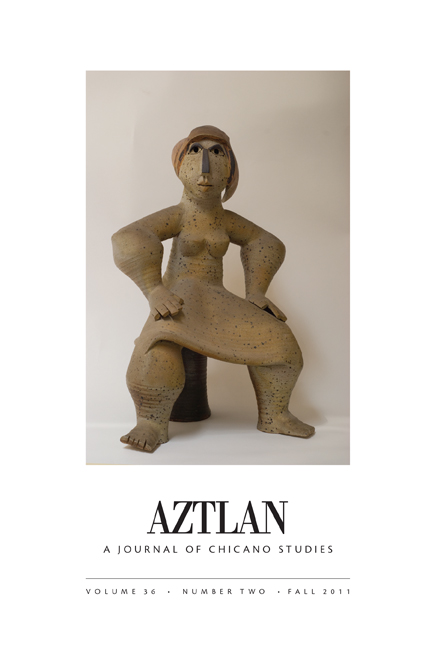
Stone sculpture of woman seated facing forward with hands on thighs.

Copyright 2011 by The Regents of the University of California. Cover art by Dora De Larios, Sierra Madre, 1960. Glazed stoneware, 26 x 15 x 12 inches. Copyright 1960 by Dora de Larios, photograph by Sabrina Judge.

By Karrmen Crey

I’m somewhat new to Aztlán: A Journal of Chicano Studies, having joined the journal as assistant editor in June 2013, so I’ve played a very small part in Aztlán’s history, which is now approaching its forty-fifth anniversary. As a part of my position I process submissions and coordinate our double-blind peer review process. Although I’m far from an expert in Chicana/o studies (I’m a doctoral candidate in film studies studying Canadian Indigenous media), the sheer volume of submissions that comes across my desk has given me a sense of the contours of Chicana/o studies—that is, a familiarity with certain themes, topics, and scholars in the field. Of these scholars, perhaps none is more frequently cited than the groundbreaking feminist, queer, Chicana scholar Gloria Anzaldúa. In fact, since 2007, every issue of Aztlán— fourteen issues total—has contained at least one essay or dossier that takes up Anzaldúa’s ideas. Given a longer timeline it would be interesting to comb through earlier issues, although I fully expect that I would see her name appear over and over. The submissions that Aztlán receives engage with the full scope of thinkers and theorists that constitute the rich intellectual terrain of Chicano studies. Still, authors return to Anzaldúa so frequently, and across so many disciplines, that tracing the use of her work offers a window onto the evolution of her ideas in Chicana/o studies, and a sense of the contemporary contours of the field.

In theorizing the “borderlands,” particularly in her groundbreaking The Borderlands/La Frontera: The New Mestiza (1987), Anzaldúa developed a language and set of conceptual tools that scholars continue to employ and debate, building on and complicating her ideas as they are applied to new and different areas. Anzaldúa’s theorizations, which sprang from her lived experience as a Chicana lesbian, produced a methodological framework for making visible subjectivities that are often invisible within unifying constructs such as “community” and “nation.”  In articles published in Aztlán over the past several years, we see Anzaldúa’s ideas driving, for instance, research methods in ethnographic projects that concentrate on social groups—women, the LGBTQ community, and people from mixed racial backgrounds—whose experiences, following Anzaldúa’s “theory of the flesh,” form the terra firma of cultural theory. Studies have, for instance, have employed intersectionality to examine Chicana/o political organizations in order to recuperate into the historical record the complex social dimensions (gender, race, transborder life experiences) that shaped these organizations.
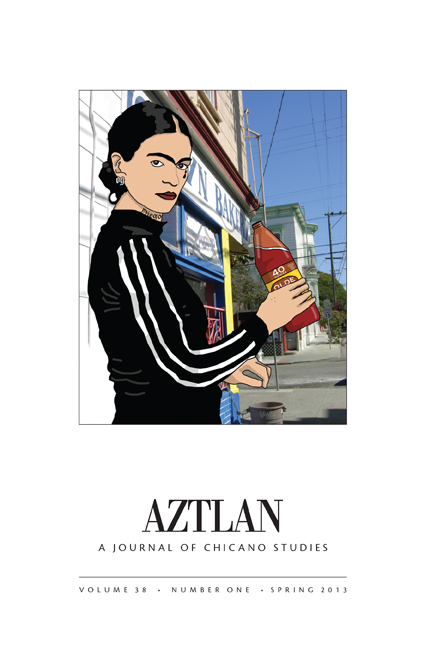
Graphic illustration of frida kahlo like girl on contemporary street in athletic wear.

Copyright 2014 by The Regents of the University of California. Cover art by Rio Yañez, Ghetto Frida, 2006. Digital illustration, 16 x 20 inches. Copyright 2006 by Rio Yañez.

Anzaldúa’s ideas have flourished in jotería and queer studies, where the intersectionality of race, gender, and sexuality is fundamental to the field, as we saw in the dossier on jotería studies in the Spring 2014 issue. In this collection Anzaldúan thought forms a backdrop for nuanced discussions of the history of jotería studies and the growing diversity within this area over the past several decades. Naturally, border studies is indebted to her work, as we see in submissions that explore many types of borderland—national and transnational, physical and psychological, concrete and metaphoric.  More recently, it has been fascinating to see scholars in political science and sociology taking up Anzaldúa’s thoughts to better frame and understand principles of political organizing and inter- and intragroup dynamics—a testament to the value and relevance of her ideas across disciplines.

Anzaldúa’s legacy is seen perhaps most frequently in submissions that examine Chicana/o cultural production. We receive our share of literary analysis, of course—it would be fair to say that among the submissions that Aztlán receives, Anzaldúan thought is applied most frequently to Chicana/o and Latina/o literature. Yet scholars have explored her ideas in other areas too, including the visual arts, performance, and film and media, and even comic books. Authors apply Anzaldúa’s critical concepts of mestiza consciousness, the borderlands, and nepantla, extending them through analyses of the text and its production, and at times challenging these concepts; for instance, where the celebration of “hybridity” is seen as masking the tensions inherent in identities that are shaped by intersecting and sometimes irreconcilable social markers and experiences.

The breadth of scholarship that engages Anzaldúa’s work is a testament to the richness of her ideas and their ongoing relevance to Chicana/o studies as the field continues to expand, embracing more academic disciplines and specializations. As it does, so too does Aztlán, as these shifts and others are reflected in the submissions we receive and encourage. We welcome and invite your essays, dossiers, artwork, and book reviews. Please see our website for more information on submissions and subscriptions. Institutions and individuals with subscriptions to Aztlán can access our entire catalog of issues through Metapress.

Karrmen Crey is a PhD candidate in the Cinema and Media Studies Program at the University of California, where she is researching the infrastructure for Aboriginal media in Canada. Prior to beginning her doctoral work, she received her Master of Arts in Cinema Studies at the University of Toronto. She has been the Assistant Editor of Aztlan: A Journal of Chicano Studies at the University of California, Los Angeles since June 2013.
Central American Migrant Minors: Sentimental Stories or People with Human Rights?

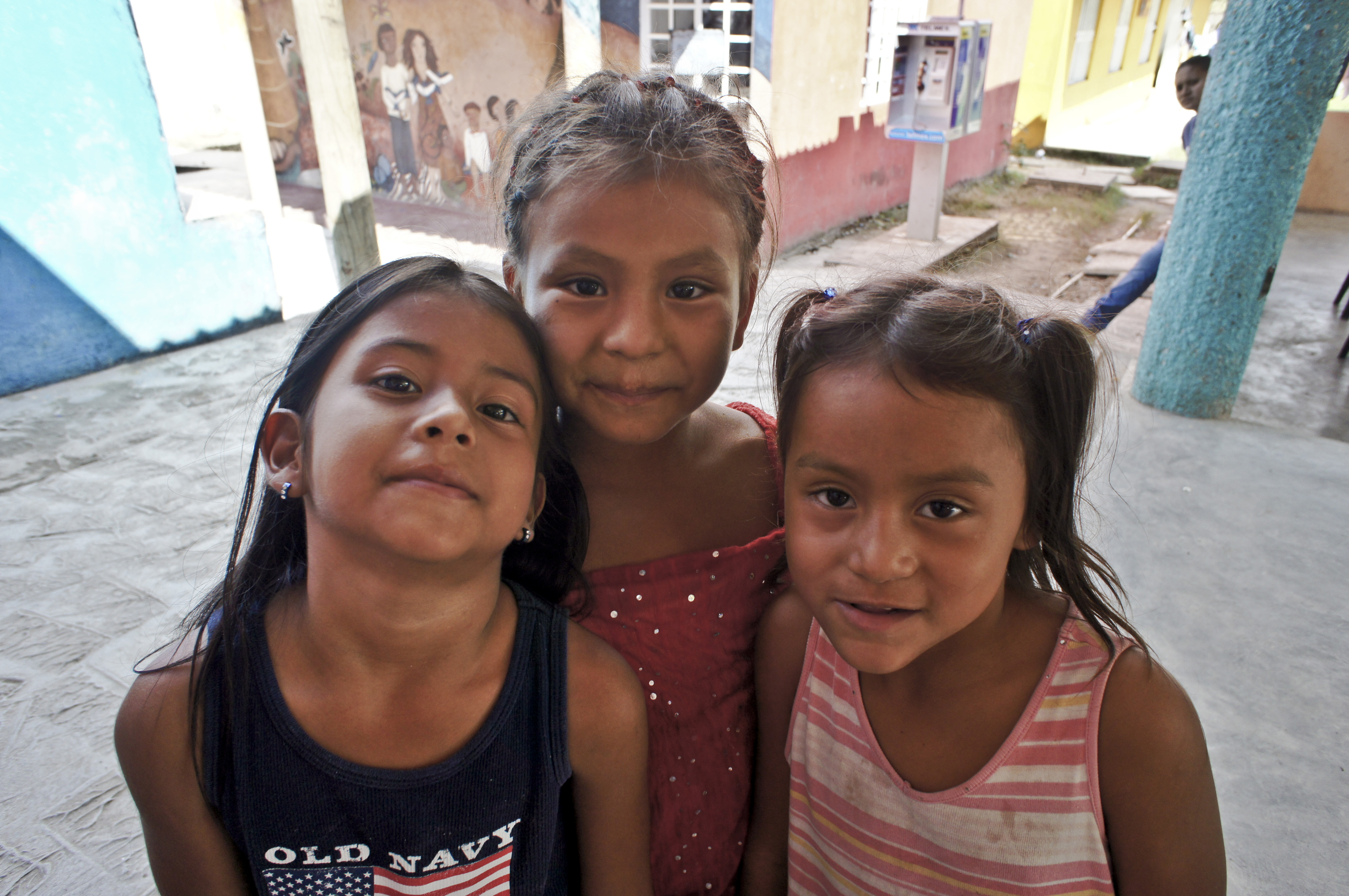
Girls at Tenosique Migrant Shelter. Photo by Víctor M. Espinosa. CC BY-NC-ND.

Girls at Tenosique Migrant Shelter. Photo by Víctor M. Espinosa. CC BY-NC-ND.

By Ana Elena Puga

What do we make of a photo of a two-year-old Honduran baby with a bandaged leg stump, the consequence of an accident on the freight train that he and his migrant mother were riding? Or the news stories about the 12-year-old Ecuadorean girl who hung herself in the shower after her attempt to reunite with her family was foiled by the arrest of her guide?

These past few months anyone in the United States who follows the news has seen a torrent of stories and images detailing the suffering of Latin American migrant minors who are brought here by their parents, or who come on their own in an attempt to work, reunite with family, or seek political asylum. As an academic who spent the last year conducting research in Mexican shelters and other facilities that help migrants, I am struck by how few people in the United States make the connection between their own comforts and the pain of others.

Every time I see a Fruit of the Loom ad, for instance, I think of the young woman I spoke to with blisters on her feet from walking for days from the Mexico-Guatemalan border to reach a shelter in Arriaga, Chiapas. In El Salvador she had left her village for a larger city to work in a Fruit of the Loom factory, sewing together my brand of underwear. She earned just enough money to stay alive and keep working, but not enough to feed, clothe, and educate her children. Having uprooted herself once for the sake of work made it easier for her to uproot herself again in hopes of an even better wage in the United States proper – instead of its exploitative outpost abroad. That six-pack of women’s underwear I can buy at Walmart for under $10 depends on the labor of people who are already working for us, even before they physically arrive on U.S. soil.

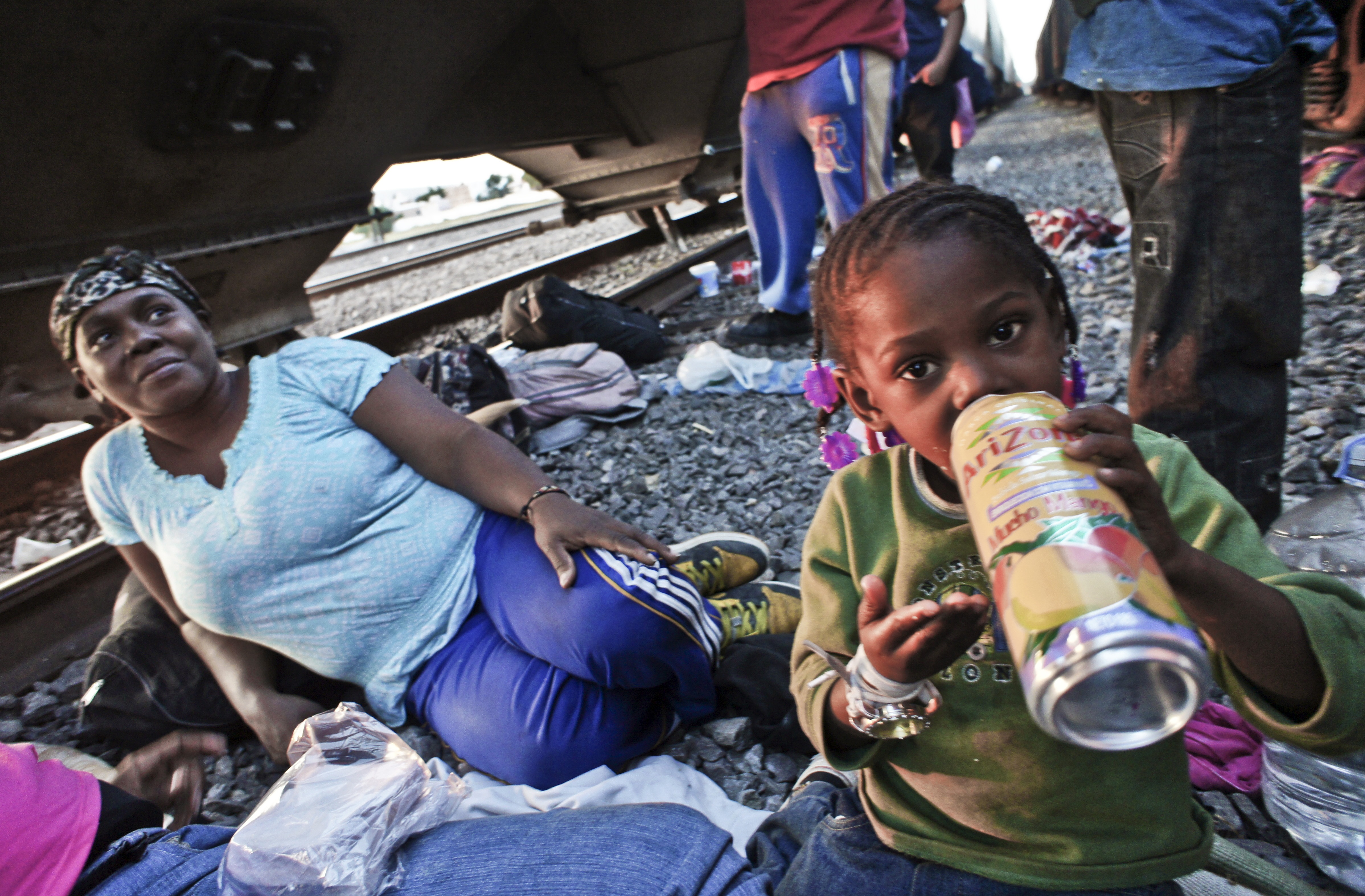
Family at Train in Celaya, Guanajuato. Photo by Víctor M. Espinosa. CC BY-NC-ND

Family at Train in Celaya, Guanajuato. Photo by Víctor M. Espinosa. CC BY-NC-ND

Emotional reactions to this year’s rise in the number of undocumented children apprehended at the U.S.-Mexico border often take one of two forms: sentimental-but-useless compassion or angry rejection. My dentist’s receptionist, like many well-intentioned people, lamented, “It just tears my heart up. I wish I could adopt them all.” Gut-twisting images and horror stories sometimes lead us to drown out the migrant experience in our own tears.

At the other extreme, The New York Times reported that protesters in Murrieta, California, shouted “Go home!” at migrant mothers and children on buses. Protesters opposed to a proposed shelter in Vassar, Michigan, presumably felt so threatened by the migrants that some of them reportedly carried semiautomatic rifles and handguns.

Even President Barack Obama adopted a stern tone: “Do not send your children to the border. If they do make it, they’ll get sent back. More importantly, they may not make it.” It’s difficult to imagine Central American parents hearing this on the news and saying, “OK, since you asked so nicely, I’ll just accept that it’s my lot in life to stay here with my kids, no matter how bad the poverty or the violence gets.” And what about the many minors who don’t ask permission before they hit the road? When we blame the parents, we ignore that most Central American mothers and fathers are doing the best they can to cope with global economic forces and structural violence that leave them on the short end of the neoliberal stick.

Central America is not an isolated, distant region of the world where the United States and its citizens bear little responsibility. Many books have been written on the long, nasty history of U.S. intervention in the region. To recall just a few highlights: in 1954 the CIA sponsored a coup in Guatemala on behalf of the United Fruit Company that destroyed a democratically elected government and plunged the country into decades of genocidal military rule; in the 1980s, the United States funded the Salvadoran military during that country’s civil war, despite the military’s links to right-wing death squads in the service of a tiny upper-class elite; in the wake of the 2009 coup that ousted President Manuel Zelaya from Honduras, the United States provided funding for the police force of Zelaya’s successor, Porfirio Lobo Sosa, despite his ties to the coup leaders and his shaky human rights record.

Not to mention that our consumer demand for illegal drugs fuels violent organized crime networks throughout the hemisphere, some of which also specialize in the human trafficking of Central American minors.

Children Playing at Tenosique Migrant Shelter. Photo by Víctor M. Espinosa. CC BY-NC-ND

Children Playing at Tenosique Migrant Shelter. Photo by Víctor M. Espinosa. CC BY-NC-ND

The United States can pressure Mexico to attempt to seal its southern border with Guatemala, but as Father Alejandro Solalinde, the director of a shelter for migrants in Ixtepec, Oaxaca reminded me, “People will migrate when they have to regardless of what governments try to decide for them, whether they pass immigration reform or build more walls.”

What if we were to think of undocumented migrant children neither as the heart-string tugging heroes of (let’s face it) entertaining melodramas featuring poor innocent, vulnerable children on dangerous adventures nor as the germ-ridden children of villainous criminals invading our country (depending on your point of view). What if we expend more of our energy on figuring out how to respect their rights? The Obama administration’s recent decision to interview some Honduran minors in their home country to determine whether they qualify for refugee status will not provide a perfect solution, since few children are likely to meet the stringent qualifications for a very limited number of visas. But at least it conceives of children less as objects of our own love or hate and more as persons with human rights under international law, persons for whom we bear an undeniable responsibility.

Ana Elena Puga is an Associate Professor in the Departments of Theatre and Spanish & Portuguese at The Ohio State University. She is working on a book, Staging Migrant Suffering: Melodrama in Latin American and Latino Activism, with sociologist Víctor M. Espinosa. Their 2013-14 research in Mexico was supported by a Fulbright fellowship.

Reports from “Imagining Latina/o Studies: Past, Present, and Future”

“Imagining Latina/o Studies”: Perspectives on the First International Latina/o Studies Initiative Conference

It’s not everyday that new professional and academic organizations are formed. That’s why the decision to join together in a new association, made by over 500 scholars gathered in Chicago for the “Imagining Latina/o Studies: Past, Present, and Future” Conference on July 17, 2014, was a historic moment. As the Program Committee, composed of leading scholars in multiple fields from all regions of the country, stated in the program:

With this conference we hope to spotlight the dynamic work being carried out in a range of disciplines with a particular focus on the interdisciplinary impulse that shapes and motivates work produced under the banner of Latina/o Studies. We recognize the decades-long history and crucial work of national-origin studies, such as Chicana/o Studies and Puerto Rican Studies, from which many of us have emerged; and we further ask how might we conceptualize the field so that it reflects the complex histories, social formations, and cultural production of Latinas/os even while seeking to imagine a larger sense of belonging that might transcend nationalisms?

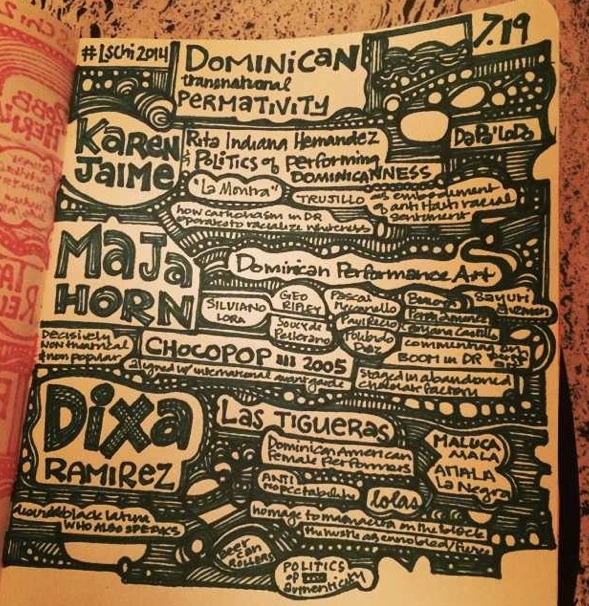
Fourteen sessions, with eight to ten panels in each session, took place over the three days of this gathering, providing a wealth of rigorous and creative scholarship as well as insights on pedagogy in this interdisciplinary field. The growing establishment of Latina/o Studies Departments in colleges and universities across the country was evident at the gathering, as well as valuable regional networks of Latina/o Studies scholars in many parts of the country. Another indication of the significance of this professional gathering was the participation of eleven academic presses and four academic journals in the book exhibit. Eighteen (18) of the forty-one (41) ads in the program booklet were from Latina/o Studies Departments, programs, journals and presses based in the Midwest, representing a significant new trend in the field. Conference organizers allowed all participants to join in the work of creating a new association by scheduling business meetings over the lunch period. Participants either picked up something to go or took advantage of a limited number of conference free lunches and joined in the business discussions, voting to form a new association, discussing possible names for the new group, deciding on an initial leadership and governance structure, and establishing a Coordinating Committee to guide the next steps. The new Coordinating Committee includes: Elena Machado, Carmen Lamas, Deb Vargas, Raúl Coronado, and Isabel Porras. Along with Frances Aparicio and Lourdes Torres, who will not continue on the Coordinating Committee, this group worked together to organize the events.  Included here are some of the comments and observations of those who participated in the conference. The colorful notes/doodles on conference sessions of Brian Herrera, in Theater at Princeton University – used with his permission — also provide additional commentary here.

From Adriana Estill, English, Carleton College, Minnesota

On Thursday morning, July 17, 2014, I was one of “those people” — the members of the audience in a conference session that get thanked because they came out so early. (In this case at 8:00 a.m.) But on that Thursday morning, “those people” were out in droves. The excitement was palpable at the session “Latina/o Representation in Mass Media and Popular Culture,” not only because the papers were riveting and engaging, but because we knew — I knew — that this was a historic moment. The energy at the Palmer Hotel in Chicago was unflagging, from 8 a.m. to 6 p.m. every day. Even our business meetings occupied a crowded Empire ballroom. Things that I deeply appreciated about the inaugural conference of a new Latina/o Studies Association:

  • feeling like I was “at home,” that people could understand the basic motivation for my work and that, maybe more importantly, they saw me;
  • hearing exciting new ideas insistently framed in relation to past Latin@, Chican@ and Puertorriqueñ@ scholarship. There was no amnesia here;
  • the sense of empowerment. Here, in this space (unlike at my home institution), it felt like our ideas, our curricula, our Latina/o Studies initiatives, and our scholarship could, should, and can matter. Part of this feeling stemmed from hearing about the amazing work that colleagues are doing, but part came from feeling heard in a number of different arenas.

Things that I hope we’ll work on in this new organization:

  • I saw the photo of our amazing conference organizers recently. Out of 10 (?) people, only one was cisgender male. I’d like to make sure that service to our association doesn’t fall primarily on cisgender female shoulders, given historical imbalances in that arena.
  • In that vein, a number of sessions that I attended that had “feminism” or “Latina” as one of the organizing rationale drew mainly cisgender women. Two thoughts: men involved in Latin@ studies should care about these issues; are we thinking deeply about masculinities?

Last but not least, a number of scholars used twitter at this conference, mainly to help get out the word on the sessions they attended. It was exciting to watch the ideas circulate not just in the rooms they were uttered, but out in “the open,” ready to be engaged by wider publics. And Iván Chaar López has archived our #LSCHI2014 in order to preserve those conversations for the archives.

From Luz Baez, M.A., Studies of the Americas, CUNY/City College of New York

First, I congratulate the Conference organizers for coordinating, what was in my estimation, a very successful event. Each panelist was distinguished and presented research in their field of study passionately and eloquently. It was enlightening to hear about the research each is conducting in their field.  There were several that resonated loudly and peak further interest in the subject matter, specifically how the construct of race has evolved and developed in a different space as Latina/os migrate to the South specifically Alabama, Mississippi and Florida; how inequality in media representation distorts the Latino/a image, and creates identity confusion and economic disparities; and, finally, the impact that the Treyvon Martin and George Zimmerman case had on the Latino/a community.  The benefits I received from attending the conference are countless and will further assist me in the development of my research.  Thanks again to the Organizers.  I look forward to the next Latino/a Studies Conference.

From Diana Rivera, Librarian and Archivist, Michigan State University

I attended the Latino Studies Conference in Chicago from July 17 to July 19, 2014.  It was the launching of the Latina/o Studies Association; an idea discussed throughout the previous year at national-origin studies conferences (whose focus are Latin American Studies, Puerto Rican Studies and Chicana and Chicano Studies) and the American Studies Association, the Modern Language Association, the Organization of American Historians and the Recovering the US Hispanic Literary Heritage conferences.  The new organization will meet biennially and discuss the shifting landscape of Latina/os (including Chicana/os) in the humanities, social sciences and professional schools. My presentation, in a roundtable/workshop on Mujeres Talk, discussed Chicana and Latina blogs generally, and the work I have done as an associate editor of Mujeres Talk, which is a unique format with a two-editor review of submitted and solicited posts.  Ohio State University Libraries is the hosting institution for the blog. Sessions I attended included:

  • Latina/o Representation in Mass Media and Popular Culture
  • Roundtable on Latina/o History in the American Midwest
  • Roundtable on Libraries, Institutional Pressures and Cultural Politics
  • Latin@ in the Upper Midwest and Canada
  • Printing Latinidad: The Power of Paper in Latina/o Art
  • Roundtable – La Bloga Contributors in Person: Talk about Blogging, Writing, Publishing
  • Theorizing an Alternative Ethos of Preservation: Land, Space and Place in Latina/o Literature and Culture
  • Roundtable – Archive as Social Practice, Contestation, Queer Gesture, and Chisme

Librarians from Stanford University, UC San Diego and I moved a motion forward to have librarians as part of the executive leadership structure of the new organization to educate, improve and establish a continued library/archives use among the new faculty entering the ranks of academia. It was a conversation that was well received.

To reach the Coordinating Committee for a new Latina/o Studies Association use the Contact Form on their website, or look up “Latina/o Studies Initiative” on Facebook. 

Separatismo in the Age of Global Coloniality

by Marie Cruz Soto

Last June 23rd, I participated for the first time in the U.N. Decolonization Hearings on Puerto Rico. My statement addressed the detrimental effects the U.S. Navy has had on Vieques and how these did not magically disappear with its official parting from the island eleven years ago. The horrors of the past cannot be done away with so easily, especially when the conditions that facilitate them persist. I thus emphasized how the colonial status of the Puerto Rican archipelago has facilitated the abuses committed in the island-municipality. Petitioner after petitioner, from their different perspectives, similarly stressed the detrimental effects of colonialism. And at the end of the day the Special Committee unanimously approved a call on the U.S. to, “allow the people of Puerto Rico to fully exercise their inalienable right to self-determination and independence, as well as take decisions, in a sovereign manner, to address their economic and social needs.”[1] The statement is in accord with the view shared by, arguably, the majority of Puerto Ricans who hold that the present relationship to the U.S. is unacceptable and that islanders have the right to self-determination.[2] Yet, self-determination is commonly understood as choosing between independence, statehood, and (an enhanced version of) commonwealth. Puerto Ricans are not dreaming of independence. Or at least not of the independence offered by traditional party politics. The option received 5% of the votes in the latest referendum, which coincides with the numbers of the Partido Independentista Puertorriqueño in general elections.[3] The question is: Why? With the centrality of nation-states to modern liberal democracies and global world order, why is the political imagination of islanders captive to a triad in which independence seems to fulfill the role of scaring people to vote for the other two options? A look at two recent initiatives may throw some light on the issue.

Anyone following the news these days will know that things in Puerto Rico are heated. And not just because of the summer temperatures. The Puerto Rican government is currently confronting a fiscal crisis, credit rating agencies, and unions. The talk about austerity measures and strikes may have opened up some space for stories to circulate about unorthodox political thinking. And, indeed, it may appear as counterintuitive for separatistas in a colonial setting to be against nation-state and for empire. But this is the case with two initiatives that have caught the attention of the media. On the one hand, a group called Movimiento de Reunificación con España (MRE) has declared null the 1898 Treaty of Paris and expressed desire to be annexed to Spain.[4] According to its founder José Nieves Seise, the Iberian metropole granted political autonomy to Puerto Ricans with the 1897 Carta Autonómica. Puerto Rico stopped then being a colony and thus could not be ceded to the U.S as booty of war the following year. Islanders had to be consulted for the Treaty of Paris to be valid. And since they were not, the transfer of sovereignty to the U.S. was illegitimate and so have been the last 116 years of U.S. rule. He further states that Puerto Ricans have supported options other than annexation “because in school we were taught a distorted version of history, one that demonized Spain and that hid the fact that we were Spanish citizens and that we are the descendants of the conquistadores.”[5] For him, Puerto Rico is (in a good and inalienable way) a product of Spanish colonialism, and annexation a matter of putting things right. Not only does annexation corrects a historical wrong, but it also opens up a brighter future with a more benevolent empire. Spain, for the MRE, stands in stark contrast to a U.S. Empire that has long neglected Puerto Ricans and denied them of political representation and economic opportunities. In this sense, U.S. rule is, more than illegitimate, highly undesirable. But so is a Puerto Rican nation-state.

On the other hand, there are the Viequense separatistas. These seek independence from Puerto Rico in order to establish a more direct relationship with the U.S. The initiative steers clear of identity politics and nostalgic looks at the long colonial past of the Puerto Rican archipelago. There is no counter-slogan to the MRE’s “Somos puertorriqueños Somos españoles No gringos.”[6] It assumes instead a rather pragmatic stance that has surprised, if not disturbed, many Puerto Rican main islanders. Indeed, the initiative cannot but make main islanders uncomfortable given that it is built on a searing critique of Puerto Rican politics. According to the spokespersons Yashei Rosario and Julián García, the Viequense island-community suffers from underdevelopment and from the neglect of San Juan-based politicians who take detrimental decisions from far away.[7] Not knowing or caring about the people on the other side of the Vieques Sound. Water is here a divide that separates Viequenses from constituents actually benefited by the actions of their elected officials. In this regard, Rosario further states that Vieques is doubly colonized: by Puerto Rico and by the U.S. The agenda of these separatistas is thus not built on a romanticized vision of the U.S. It is not even built on the typical colonial mentality of the incapacity of the colonized. Rosario, on the contrary, identifies the U.S. as an oppressive power and Viequenses as individuals who can develop themselves successfully. If only allowed to. The goal then is to sever ties to Puerto Rico and work with the remaining metropole in the securing of economic well-being.

The MRE and the Viequense separatistas while embracing different empires concur on their rejection of a Puerto Rican nation-state. In order to do so, the MRE opens up the past to the demands of the present. It depends on historical reinterpretations that elide the fact that the Carta Autonómica was only granted after four centuries of imperialism and anti-colonial resistance. Rather than a gift, the Charter was a modest opening that came late and at a high price. For it was not in the nature of the Spanish Empire to be any kinder than the U.S. Both endeavored to discipline the local population and ensure that independence was neither viable nor desired by islanders. Eradicating dissent, by any means necessary, has been fundamental to the fashioning of a profitable colony. And Puerto Rico has been a profitable colony. One historically dependent on the work of enslaved and immigrant peoples. Their central role in the making of modern day Puerto Ricans renders any unqualified claim to Spanish ancestry problematic. The Viequense separatistas accordingly overlook that, while the Puerto Rican government has many times enacted unfavorable policies for Vieques (and the rest of the archipelago), it has also with limited power of negotiation deterred the actions of the U.S. For if San Juan-based politicians backed the onset of the 1940s expropriations, they later avoided the complete takeover of the island by the U.S. Navy. Puerto Rican main islanders and the diaspora, in addition, were instrumental in driving out the Navy. Without their support, it is quite likely that Viequenses would still be living between an ammunition depot and a live fire target range. In these post-Navy days the U.S. federal government has repeatedly invoked sovereign immunity in order to evade responsibility over the welfare of Viequenses. It is thus unclear what sort of support the Viequense separatistas could expect. Yet, they wish to cast their lot with the U.S., and the MRE with Spain.

It would be easy to reduce the actions of these two groups to opportunism, to historical amnesia, or to the otherwise ills of a colonial mentality. It would be more productive, however, to contextualize their actions diachronically and synchronically. All Puerto Ricans are the product of a long colonial history throughout which dissent has been persecuted and the capacity of islanders has been questioned. Over the years the violence of colonialism has been normalized and made part of the invisible workings of the everyday. It is then not surprising that Puerto Ricans have trouble imagining a future without a metropole. And this daring feat only becomes more difficult when the metropole shuns the term empire and claims to be the defender of liberal principles, human rights, and economic development. Anti-imperial critiques are thus rendered nonsensical. Yet, Puerto Ricans are also of this world characterized by Arturo Escobar as ruled by imperial globality and global coloniality. The terms highlight the U.S.-led, “economic-military-ideological order that subordinates regions, peoples and economies world-wide.”[8] Nation-states, in this context, take back seat to global dynamics that “heightened marginalisation and suppression of the knowledge and culture of subaltern groups.”[9] This is not to say that nation-states are irrelevant in the potential offsetting of such global dynamics, or that the search for independence is not a worthy endeavor, but rather that the optimism which once permeated mid-20th century decolonization movements is lost. Nation-states can no longer be considered the panacea to the problems faced by historically marginalized groups. Neither can nationalism be understood as inherently anti-colonial or empowering discourse. New political imaginings are needed to envision a more just world.

[1] http://www.un.org/News/Press/docs/2014/gacol3269.doc.htm

[2] http://ceepur.org/es-pr/Webmaster/Paginas/Eventos-Electorales.aspx

[3] http://ceepur.org/es-pr/Webmaster/Paginas/Eventos-Electorales.aspx

[4] http://reunificaciondepuertorico.blogspot.com/

[5] http://www.elnuevodia.com/boricuasbuscanlaanexionaespana-1791528.html

[6] http://reunificaciondepuertorico.blogspot.com/

[7] http://www.elnuevodia.com/viequensesbuscanindependizarsedepuertorico-1777687.html

[8] Escobar, Arturo.  “Beyond the Third World: Imperial Globality, Global Coloniality and Anti-globalisation Social Movements.” Third World Quarterly 25:1 (2004): 207.

[9] Escobar, “Beyond the Third World.”

Marie Cruz Soto teaches at the Gallatin School of Individualized Study, New York University. She has a Ph.D. in History from the University of Michigan, Ann Arbor. Her research interests and publications focus on the island community of Vieques, militarized colonialism, reproductive rights, knowledge production, and coloniality. She is currently working on a book manuscript that delves into the five-century struggle of peoples to inhabit the island of Vieques and of empires to control it.