


The Charles and Patricia Buser Collection
Research Materials on Native American Cultures
A Guide and Inventory
SPEC.RARE.CMS.319
INTRODUCTION
The Story of the Collection
Charles Aubrey Buser (1922-2010) and Ardis Patricia Anderson Buser had a strong personal interest in Wyandotte language and culture. They traveled widely, throughout the United States and Canada, making many enduring friendships along the way. They explored the history and traditions of the Wyandotte, as well as other indigenous peoples, gathered genealogical information, and sought to record as much as possible of various Iroquoian languages, especially Mohawk, speculating on the character of the Wandat language. Charles Buser's research proved to be valuable to the Wyandotte people on more than one occasion, and he was honored for his contributions.Stephen Buser, former faculty member of the Fisher College of Business at The Ohio State University, recognized the research value of his parents’ papers and offered to permit the OSU Libraries to scan the collection before the materials were donated to the Wyandotte Nation. He graciously contributed financial support for the scanning project. Scanning commenced in November of 2008, and the project was completed in July 2012, although students and outside researchers were able to access the collection as the finding aids began to appear on the web.
For the early history of the collection before it was transferred to University Libraries, please read Dr. Brian Joseph's account of work done within the Linguistics Department.
Content and Description
The Buser collection, which is now held, and rehoused, by the Wyandotte Nation in Oklahoma, originally consisted of 13 boxes of photocopies, notes, books, pamphlets, scanned government documents, clippings, audio recordings, and a great deal of personal correspondence. The finding aids maintain the order in which the collection came to us for scanning, and thus they are divided into box and folder categories, arranged in two main alphabetical sequences that seem to reflect the contents of two separate filing locations rather than a clear categorical division. Additional binders and boxes of note cards were used to track historical events and form the beginning of a dictionary. The collection contains a wealth of information that will be a useful introductory resource for historians, linguists and genealogists. The contents are of value for researching the history of the Wyandotte people in general, and individual families in particular. Buser, who also documented cultural practices and details about clothing design, was at times consulted by the Wyandotte because of the extent of his research in these areas. Buser's handwritten language materials are the most readily available, as they may be retrieved directly via links in the finding aids for box 5.
How We Processed the Collection
In evaluating the collection and its potential research value, Rare Books decided to scan every item, except for books, pamphlets and journals, or clippings that include citations of their sources. These were only mentioned in the finding aids so that researchers can pursue those references if they wish to do so. This means that some more obscure clippings were scanned, as well as hand-typed and mimeographed newsletters. All of the notes and drawings of Charles and Patricia Buser, including the history and language note cards, are available on the web to interested parties connecting from any location. Official and personal correspondence and photographs were also scanned, and are listed in the finding aids. However, images of these items may only be viewed in the Thompson Library Special Collections Reading Room or the Newark Earthworks Center at OSU Newark, since the correspondence is relatively recent, and the individuals, or their immediate family members, may still be alive. Please make an appointment to view the restricted items in our reading room.OSU Rare Books and Manuscripts would welcome contact from anyone who corresponded with the Busers or whose family members collaborated with the researchers and are willing to have the scans of their letters made public. These have been of particular interest for genealogical investigations.
If viewing the files in the Jack and Jan Creighton Special Collections Reading Room in Thompson Library the filenames will each include the box number, folder name, and item number as listed in the inventory. All of the digitized files are available on a single flash drive if one wishes to browse the images without the finding aid. This approach may be preferred for multi-page documents, which have now been converted to PDF files. The flash drive may be used in the reading room.
Please use the search function within your browser to search each finding aid for particular subjects or individuals.
Overview of the Collection:
| Repository: | Rare Books and Manuscripts Library |
| Identification: | Spec.RARE.CMS.319 |
| Creator: | Charles Aubrey and Patricia Buser |
| Title: | Charles Aubrey and Patricia Buser Collection of Wyandot Indian language materials |
| Dates: | 1700s through 2005 |
| Quantity: | 13 boxes |
| Description: | The collection includes audiotapes, transcriptions, notes and research on the Wyandot language. In addition, there are many articles, as well as complete newsletters or other publications related to their study of the Wyandot tribe and other Native Americans. There is a significant amount of correspondence, both professional and personal, and a number of photographs. |
Note to researchers from Wyandotte Nation:
Charles Aubrey Buser, a friend to the Wyandotte Nation, helped usher in an era of research conducted by Wyandottes, rather than just about Wyandottes. Buser defied the common logic of his time by recognizing the inherent value of our culture. His physical location near Washington, D.C. enabled him to monitor our cases before the Indian Claims Commission at a time when money for travel by Tribal officials was scarce. As a motivated amateur historian, he reassembled some of the missing pieces of our past otherwise lost in our long history of dispersal and removals, always willingly sharing what he found. He viewed his work in service to the Wyandotte Nation, and even encouraged and mentored several citizens in our early Tribal Heritage efforts. We at Wyandotte Nation view the Buser Collection as a symbol of hard work and allyship. The limitations of Buser’s research as a non-Wyandotte including problematic language in use at the time require another step. Alongside these archival records, researchers today should consult contemporary scholarship and contact Wyandotte Nation regarding our research protocols prior to any formal publications. This digital age may have changed the research landscape, especially when it comes to access, but it cannot diminish the appreciation we hold for his hard work, enthusiasm, and friendship.Box and Card Listing:
Box 13: Vocabulary Notecards
Description: This box is filled with notecards. On each notecard is either an English word with the Wyandot translation or a Wyandot word with an accompanying English translation. On the back of many of the cards is a translation of the English or Wyandot word in Mohawk as well. The box is in alphabetical order by both English and Wyandot words sorted together with the exception of the pre-division notecards and post-division notecards.Pre-Division Note Cards
- Bounia-terre, Pierre (scan)
- American Antiquity (scan)
- Annual Report of the American Historical Association (scan)
.jpg)
.jpg)
.jpg)
The notecards following are clipped together:
- Colonial Records and Pa Archives (scan recto)(scan verso)
- Colonial Records and Pennsylvania Archives 138 Volumes (scan recto)(scan verso)
- Colonial Records and Pa. Archives (scan)
- Pennsylvania (scan)
- Colonial Records and Pa. Archives 138 Volumes (scan recto)(scan verso))
- Colonial Records and Pa Archives (138 Volumes) (scan)
- Colonial Records and Pa Archives (scan)
- Pennsylvania 1-3: Archives of the Morovial Church, Haverford College Library, Morovian Historical Society (scan)
- Pennsylvania 4-5: American Philosophical Society, Historical Society of Pennsylvania (scan recto)(scan verso)
- 6. Library Company of Philadelphia (scan recto)(scan verso)
- 7. Presbyterian Historical Society (scan)
- 8. University of Pennsylvania (scan recto)(scan verso)
- 8a. Historical Society of Pennsylvania (scan recto)(scan verso)
- 9. Carnegie Library of Pittsburgh (scan)
- 10. Darlington Memorial Library (scan)
- 11. Friends Historical Library of Swarthmore College (scan)
- 12-13: Pennsylvania State University, Wyoming Historical and Geological Society (scan)
.jpg)
.jpg)
.jpg)
.jpg)
.jpg)
.jpg)
.jpg)
.jpg)
.jpg)
.jpg)
.jpg)
.jpg)
.jpg)
.jpg)
.jpg)
.jpg)
.jpg)
.jpg)
.jpg)
.jpg)
.jpg)
.jpg)
.jpg)
The following notecards are not clipped together:
- Cherokee (Tsalaki) (scan)
- Death dates of key figures in Rev & War of 1812 (scan recto)(scan verso)
- Ethnohistory (scan recto)(scan verso)
- Indian Affairs, Laws and Treaties copiled by Charles J. Kappler GPO (scan)
- Journal of American Folklore (scan)
- Journal of the Washington Academy (scan)
- Check Methodist Magazine for 1820’s (scan)
- O’Callaghan, E.B. (scan)
- Ontario Archaeology (scan recto)(scan verso)
- Ontario History (scan)
- Winson’s Narrative and Critical history (scan)
.jpg)
.jpg)
.jpg)
.jpg)
.jpg)
.jpg)
.jpg)
.jpg)
.jpg)
.jpg)
.jpg)
jpg.jpg)
.jpg)
.jpg)
A
- Aaao (scan)
- Aataentsic (scan)
- Adonwe (scan)
- Aescara (scan)
- Agojuda (scan)
- Ahatonnia (scan)
- Ahra’hoc (scan)
- Aiheonde (scan)
- Aihtaha (scan)
- America (scan)
- Americans (scan)
- Anan (scan)
- Andacwander (scan)
- Aneah’ (scan)
- Angont (scan)
- Anier (scan)
- Anoo (scan)
- Apples (scan)
- Arendarhonon(scan)
- Arendiwane(scan)
- Aretsan(scan)
- Arm(s) (scan recto)(scan verso)
- Arrow (scan recto)(scan verso)
- Ash (scan recto)(scan verso)
- Askicwaneronons (scan)
- Asqua (scan)
- Ataquen (scan)
- Ataronchronon (scan)
- Atenonha (scan)
- Athataion (scan)
- Atirenda (scan)
- Atisken (scan)
- Attignawantan (scan)
- Attigneenongnahac (scan)
- Attiwandaronk (scan)
- Attiwandarons (scan)
- Aunt (1) (scan)
- Aunt (2) (scan recto)(scan verso)
- Autumn (scan recto)(scan verso)
- Awataerohi (scan)
- Away (scan)
- Axe (scan recto)(scan verso)
- Ayein (scan)
- Ayeuh (scan)
- Aystan (scan)
.jpg)
.jpg)
.jpg)
.jpg)
.jpg)
.jpg)
.jpg)
.jpg)
.jpg)
.jpg)
.jpg)
.jpg)
.jpg)
.jpg)
.jpg)
.jpg)
.jpg)
.jpg)
.jpg)
.jpg)
A-ro(800).jpg)
B-vo(800).jpg)
.jpg)
.jpg)
.jpg)
.jpg)
.jpg)
.jpg)
.jpg)
.jpg)
.jpg)
.jpg)
.jpg)
.jpg)
.jpg)
.jpg)
.jpg)
.jpg)
.jpg)
.jpg)
.jpg)
.jpg)
.jpg)
.jpg)
.jpg)
.jpg)
.jpg)
.jpg)
.jpg)
.jpg)
B
- Backbone (scan recto)(scan verso)
- Bad (scan recto)(scan verso)
- Bark (of tree) (scan)
- Basswood
- Beak (scan recto)(scan verso)
- Bean (scan recto)(scan verso)
- Bear (1) (scan recto)(scan verso)
- Bear (2) (scan)
- Beard (scan recto)(scan verso)
- Beaver (scan recto)(scab verso)
- Bed (scan)
- Bees (scan)
- Bell (scan)
- Belt (scan)
- Berries (scan)
.jpg)
.jpg)
.jpg)
.jpg)
.jpg)
.jpg)
.jpg)
.jpg)
.jpg)
.jpg)
.jpg)
.jpg)
.jpg)
.jpg)
.jpg)
.jpg)
.jpg)
.jpg)
.jpg)
.jpg)
.jpg)
Bi
- Big (scan)
- Big lake (scan)
- Bird (scan recto)(scan verso)
- Black (scan)
- Black robe (scan)
- Blanket (scan)
- Blue (scan)
- Body (scan recto)(scan verso)
- Bone (1) (scan)
- Bone (2) (scan recto)(scan verso)
- Bow (scan recto)(scan verso)
- Boy (scan recto)(scan verso)
- Brave (scan)
- Bread (scan recto)(scan verso)
- Bridle (scan)
- Brother (1) (scan recto)(scan verso)
- Brother (2) (scan)
- Buck (scan)
- Buffalo (scan)
- Bull (scan)
.jpg)
.jpg)
.jpg)
.jpg)
.jpg)
.jpg)
.jpg)
.jpg)
.jpg)
.jpg)
.jpg)
.jpg)
.jpg)
.jpg)
.jpg)
.jpg)
.jpg)
.jpg)
.jpg)
.jpg)
.jpg)
.jpg)
.jpg)
.jpg)
.jpg)
.jpg)
.jpg)
C
- Camp (scan)
- Caneheanta (1) (scan)
- Caneheanta (2) (scan)
- Canoe (scan)
- Caretaker of grapes (scan)
- Cat (scan)
- Cave of people (scan)
- Cayugas (scan)
- Chant (scan)
- Cherokee (scan)
- Chicken (scan)
- Child (scan recto)(scan verso)
- Chippewa (scan)
- Christmas (scan)
- Claw (scan recto)(scan verso)
- Cloud (scan)
.jpg)
.jpg)
.jpg)
.jpg)
.jpg)
.jpg)
.jpg)
.jpg)
.jpg)
.jpg)
.jpg)
.jpg)
.jpg)
.jpg)
.jpg)
.jpg)
.jpg)
.jpg)
Co
- Coat (scan recto)(scan verso)
- Cold (1)(scan recto)(scan verso)
- Cold (2)(scan recto)(scan verso)
- Come here (scan)
- Corn (1) (scan recto)(scan verso)
- Corn(2) (scan recto)(scan verso)
- Cornfield (scan)
- Cousin (1) (scan)
- Cousin (2) (scan)
- Cow (scan recto)(scan verso)
- Crow (scan recto)(scan verso)
- Curing society (scan)
.jpg)
.jpg)
.jpg)
.jpg)
.jpg)
.jpg)
.jpg)
.jpg)
.jpg)
.jpg)
.jpg)
.jpg)
.jpg)
.jpg)
.jpg)
.jpg)
.jpg)
.jpg)
.jpg)
D
- Dark (scan recto)(scan verso)
- Daughter (1) (scan)
- Daughter (2) (scan recto)(scan verso)
- Dawn of a new day (scan)
- Day (scan recto)(scan verso)
- Dead (scan recto)(scan verso)
- Deer (scan recto)(scan verso)
- Delaware(scan)
- Detroit(scan)
- Devil (scan recto)(scan verso)
.jpg)
.jpg)
.jpg)
.jpg)
.jpg)
.jpg)
.jpg)
.jpg)
.jpg)
.jpg)
.jpg)
.jpg)
.jpg)
.jpg)
.jpg)
.jpg)
Do
- Doe (scan)
- Dog (1) (scan recto)(scan verso)
- Dog (2) (scan recto)(scan verso)
- Dollar (scan)
- Down (scan)
- Duck (scan recto)(scan verso)
.jpg)
.jpg)
.jpg)
.jpg)
.jpg)
.jpg)
.jpg)
.jpg)
.jpg)
E
- Eagle (scan recto)(scan)
- Earasse (scan)
- Ears (scan recto)(scan verso)
- Earth (scan recto)(scan verso)
- East (scan)
- Eat (scan)
- Egg (scan recto)(scan verso)
- Ehoneronons (scan)
- Elm (scan recto)(scan verso)
.jpg)
.jpg)
.jpg)
.jpg)
.jpg)
.jpg)
.jpg)
.jpg)
.jpg)
.jpg)
.jpg)
.jpg)
.jpg)
En
- Eneah (scan)
- Enemy (scan)
- Englishmen (scan)
- Enough (scan)
- Etaquen (scan)
- Evening (scan recto)(scan verso)
- Eyein (scan)
- Eyes (scan)(scan)
.jpg)
.jpg)
.jpg)
.jpg)
.jpg)
.jpg)
.jpg)
.jpg)
.jpg)
.jpg)
F
- Face (scan recto)(scan verso)
- Fat (scan recto)(scan verso)
- Father (1) (scan recto)(scan verso)
- Father (2) (scan)
- Father’s sister (scan)
- Feasts (scan)
- Feather (scan recto)(scan verso)
- Feet (scan recto)(scan verso)
- Fin (scan recto)(scan verso)
- Finger (scan)
- Fingernail (scan)
- Fire (scan recto)(scan verso)
- Fish (scan recto)(scan verso)
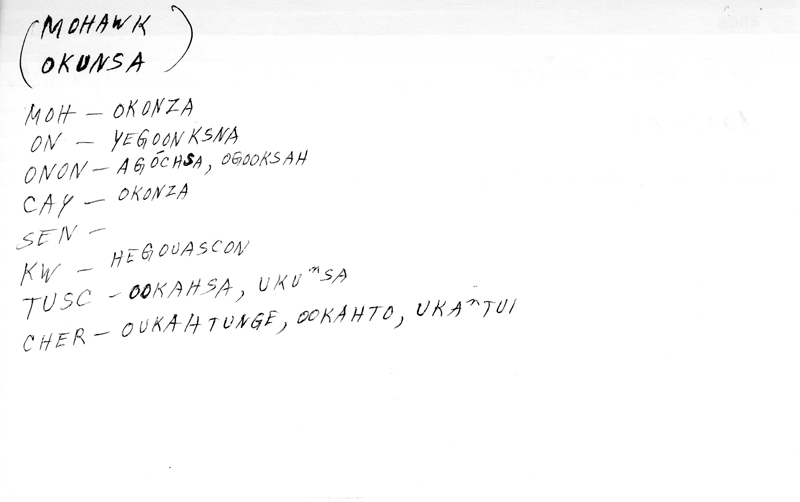
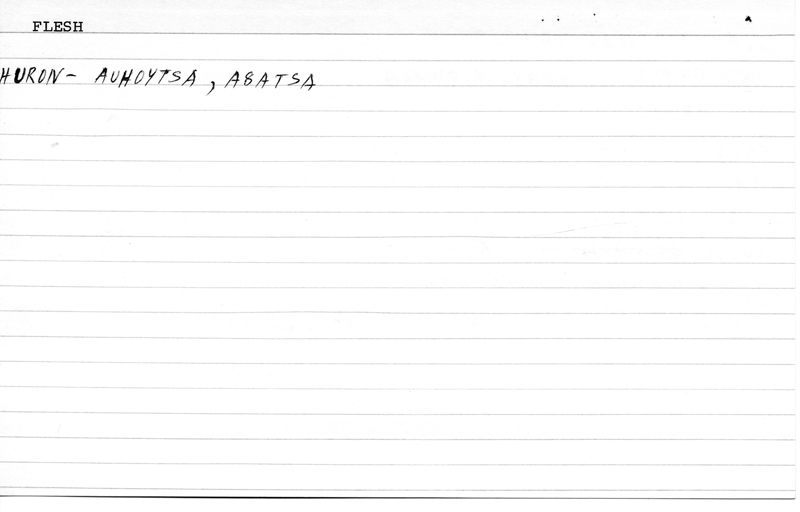
- Flesh (scan recto)(scan verso)
- Flint (scan)
- Flour (scan recto)(scan verso)
- Flower (scan recto)(scan verso)
- A fly (scan)
.jpg)
.jpg)
.jpg)
.jpg)
.jpg)
.jpg)
.jpg)
.jpg)
.jpg)
.jpg)
.jpg)
.jpg)
.jpg)
.jpg)
.jpg)
.jpg)
.jpg)
.jpg)
.jpg)
.jpg)
.jpg)
.jpg)
.jpg)
.jpg)
.jpg)
.jpg)
.jpg)
Fo
- Fool (scan)
- Foot (scan)
- Footprint of the wolf (scan)
- Forest (scan recto)(scan verso)
- Four bits (scan)
- Fox (scan recto)(scan verso)
- Frenchmen (scan)
- Friday (scan)
- Friend (scan)
- Frog (scan)
- Fruit (scan)
.jpg)
.jpg)
.jpg)
.jpg)
.jpg)
.jpg)
.jpg)
.jpg)
.jpg)
.jpg)
.jpg)
.jpg)
G
- Girl (scan recto)(scan verso)
- Give me a bit of tobacco (scan)
- Glory! Glory! To the Great Spirit (scan)
- Gnat (scan)
- Go away (scan)
- Go on, go on (scan)
- God (1) (scan recto)(scan verso)
- God (2) (scan)
- God (3) (scan)
- God forgive me (scan)
- Gold (scan)
- Good (scan)
- Good man (scan)
- Goose (scan recto)(scan verso)
- Gorge (scan recto)(scan verso)
- Grandfather (scan recto)(scan verso)
- Grandmother (scan)
- Grandmother toad (scan)
- Grass (scan recto)(scan verso)
- Grave (scan)
- Grease (scan)
- Great (scan recto)(scan verso)
- Green (scan)
- Groundhog (woodchuck) (scan)
- Gun (scan recto)(scan verso)
.jpg)
.jpg)
.jpg)
.jpg)
.jpg)
.jpg)
.jpg)
.jpg)
.jpg)
.jpg)
.jpg)
.jpg)
.jpg)
.jpg)
.jpg)
.jpg)
.jpg)
.jpg)
.jpg)
.jpg)
.jpg)
.jpg)
.jpg)
.jpg)
.jpg)
.jpg)
.jpg)
.jpg)
.jpg)
.jpg)
.jpg)
.jpg)
.jpg)
H
- Ha-she-tra (scan)
- Hail (scan recto)(scan verso)
- Hair (scan recto)(scan verso)
- Hand (scan recto)(scan verso)
- Harha (scan)
- Hat (scan recto)(scan verso)
- Hatchet (scan recto)(scan verso)
- Hawk (scan)
- Haw-tse-hen-staw-se (scan)
- Hayea’ha (scan)
- Haye-uh (scan)
- He (scan)
- He is here (scan)
- Head (scan recto)(scan verso)
- Headdress (scan recto)(scan verso)
- Heaven (scan recto)(scan verso)
- Hell (scan)
- Hill (scan recto)(scan verso)
.jpg)
.jpg)
.jpg)
.jpg)
.jpg)
.jpg)
.jpg)
.jpg)
.jpg)
.jpg)
.jpg)
.jpg)
.jpg)
.jpg)
.jpg)
.jpg)
.jpg)
.jpg)
.jpg)
.jpg)
.jpg)
.jpg)
.jpg)
.jpg)
.jpg)
.jpg)
Ho
- Hog (scan)
- Home (scan)
- Hominy (scan)
- Horse (scan recto)(scan verso)
- Hot (scan recto)(scan verso)
- House (scan recto)(scan verso)
- Hun-haw (scan)
- Hungry (scan)
- Huron (scan)
- Hush and eat (scan)
- Huti watsi ya (scan)
.jpg)
.jpg)
.jpg)
.jpg)
.jpg)
.jpg)
.jpg)
.jpg)
.jpg)
.jpg)
.jpg)
.jpg)
.jpg)
I
- I am afraid (scan)
- I am dying (scan)
- I am here (scan)
- I am sitting out on a stump in the water all by myself (scan)
- I am sorry (scan)
- I don’t like whitemen (scan)
- I go to war (scan)
- I hate you (scan)
- I love all (scan)
- I love you (scan)
- I saw (scan)
- I see (scan)
- I to them (scan recto)(scan verso)
- Ice (scan recto)(scan verso)
.jpg)
.jpg)
.jpg)
.jpg)
.jpg)
.jpg)
.jpg)
.jpg)
.jpg)
.jpg)
.jpg)
.jpg)
.jpg)
.jpg)
.jpg)
.jpg)
In
- Indian (scan recto)(scan verso)
- Indian summer (scan)
- Infant (scan recto)(scan verso)
- Insect (scan recto)(scan verso)
- Iouskeha (scan)
- Is born (scan)
- Island (scan recto)(scan verso)
- Islanders (scan)
.jpg)
.jpg)
.jpg)
.jpg)
.jpg)
.jpg)
.jpg)
.jpg)
.jpg)
.jpg)
.jpg)
.jpg)
J
- Jay bird (scan)
.jpg)
K
- Kansas City, Missouri (scan)
- Keeper of the heavens (scan)
- Kentucky (scan)
- Ketq skwaye (scan)
- Kettle (1) (scan recto)(scan verso)
- Kettle (2) (scan)
- Knees (scan recto)(scan verso)
- Knife (scan)
.jpg)
.jpg)
.jpg)
.jpg)
.jpg)
.jpg)
.jpg)
.jpg)
.jpg)
L
- Lake (1) (scan)
- Lake (2) (scan)
- Language (1) (scan)
- Language (2) (scan)
- Lead (scan)
- Leaf (scan recto)(scan verso)
- Leaves (scan)
- Leg (scan recto)(scan verso)
- Leggings (scan recto)(scan verso)
- Legs (scan recto)(scan verso)
- Leindohy (scan)
- Let’s go (scan)
- Light (scan recto)(scan verso)
- Lightning (scan recto)(scan verso)
- Lion (scan)
- Lodge (scan recto)(scan verso)
- Longhouse (scan)
- Look here (scan)
- Love (1) (scan recto)(scan verso)
- Love (2) (scan recto)(scan verso)
.jpg)
.jpg)
.jpg)
.jpg)
.jpg)
.jpg)
.jpg)
.jpg)
.jpg)
.jpg)
.jpg)
.jpg)
.jpg)
.jpg)
.jpg)
.jpg)
.jpg)
.jpg)
.jpg)
.jpg)
.jpg)
.jpg)
.jpg)
.jpg)
.jpg)
.jpg)
.jpg)
.jpg)
.jpg)
M
- Man (1) (scan recto)(scan verso)
- Man (2)(scan recto)(scan verso)
- Man (3) (scan)
- Married (scan)
- Maumee river (scan)
- Meadow (scan recto)(scan verso)
- Meat (scan recto)(scan verso)
- Medicine man (scan)
- Melon (scan)
- Men (scan)
- Men surpassing all others (scan)
- Meteor (scan)
- Miami of the lake (scan)
- Mink (scan)
- Missouri river (scan)
.jpg)
.jpg)
.jpg)
.jpg)
.jpg)
.jpg)
.jpg)
.jpg)
.jpg)
.jpg)
.jpg)
.jpg)
.jpg)
.jpg)
.jpg)
.jpg)
.jpg)
.jpg)
.jpg)
Mo
- Moccasin (scan)
- Mohawk (scan)
- Mole (scan)
- Monday (scan)
- Money (scan)
- Monkey (scan)
- Moon (scan recto)(scan verso)
- Morning (scan recto)(scan verso)
- Mosquito (scan)
- Mother (1) (scan recto)(scan verso)
- Mother (2) (scan)
- Mountain (scan recto)(scan verso)
- Mouth (scan recto)(scan verso)
- Muskrat (scan recto)(scan verso)
- My home (scan)
.jpg)
.jpg)
.jpg)
.jpg)
.jpg)
.jpg)
.jpg)
.jpg)
.jpg)
.jpg)
.jpg)
.jpg)
.jpg)
.jpg)
.jpg)
.jpg)
.jpg)
.jpg)
.jpg)
.jpg)
N
- Navajo (1) (scan)
- Navajo (2) (scan recto)(scan verso)
- Navajo (3) (scan)
- Navajo (4) (scan)
- Navajo (5) (scan)
- Neck (scan recto)(scan verso)
- Negro (scan)
- New moon (scan)
- New year’s day (scan)
- Night (scan recto)(scan verso)
- North (scan)
- Nose (scan recto)(scan verso)
- Not yet (scan)
.jpg)
.jpg)
.jpg)
.jpg)
.jpg)
.jpg)
.jpg)
.jpg)
.jpg)
.jpg)
.jpg)
.jpg)
.jpg)
.jpg)
.jpg)
.jpg)
.jpg)
O
- Oak (scan recto)(scan verso)
- Ocata (scan)
- Ocean (scan recto)(scan verso)
- Ohnenata (scan)
- Oki (scan)
- Old (scan recto)(scan verso)
- Ondatra (scan)
- Ondouen (scan)
- Ongue-honwe (scan)
- Ononharoia (scan)
- Ossossane (scan)
- Otakrendoiae (scan)
- Ottawa (scan)
- Otter (scan)
- Owl (scan recto)(scan verso)
.jpg)
.jpg)
.jpg)
.jpg)
.jpg)
.jpg)
.jpg)
.jpg)
.jpg)
.jpg)
.jpg)
.jpg)
.jpg)
.jpg)
.jpg)
.jpg)
.jpg)
.jpg)
.jpg)
P
- Panther (scan)
- Paper (scan)
- Partridge (scan)
- Peace (scan)
- Peddler (scan)
- Pig (scan)
- Pigeon (scan recto)(scan verso)
- Pillow (scan)
- Pine (scan recto)(scan verso)
- Pipe (scan recto)(scan verso)
- Pity (scan)
.jpg)
.jpg)
.jpg)
.jpg)
.jpg)
.jpg)
.jpg)
.jpg)
.jpg)
.jpg)
.jpg)
.jpg)
.jpg)
.jpg)
Pl
- The place where the nettles grow (scan)
- Plain (scan recto)(scan verso)
- Plums (scan)
- Polecat (scan recto)(scan verso)
- Porcupine (scan recto)(scan verso)
- Potatoes (scan recto)(scan verso)
- Pottawatomie (scan)
- Powder (scan)
- Prairie (scan recto)(scan verso)
- President (scan)
- Priest(catholic) (scan)
- Prisoner (scan)
- Pumpkin (scan)
- Purple (scan)
.jpg)
.jpg)
.jpg)
.jpg)
.jpg)
.jpg)
.jpg)
.jpg)
.jpg)
.jpg)
.jpg)
.jpg)
.jpg)
.jpg)
.jpg)
.jpg)
.jpg)
.jpg)
.jpg)
Q
.jpg)
.jpg)
.jpg)
R
- Rabbit (scan)
- Raccoon (scan recto)(scan verso)
- Rain (scan recto)(scan verso)
- Raven (scan)
- Red (scan)
- Red-bud tree (scan)
- Red headed woodpecker (scan)
- River (scan recto)(scan verso)
- The rivers rushing by (scan)
- Robin (scan recto)(scan verso)
- Rock (1) (scan)
- Rock (2)
- Rockfish (scan)
- Rum (scan)
.jpg)
.jpg)
.jpg)
.jpg)
.jpg)
.jpg)
.jpg)
.jpg)
.jpg)
.jpg)
.jpg)
.jpg)
.jpg)
.jpg)
.jpg)
.jpg)
.jpg)
S
- Saddle (scan)
- Salt (scan)
- Salt water (scan)
- Sapsucker (scan)
- Sash (scan recto)(scan verso)
- Saturday (scan)
- Scalp (scan)
- Scar (scan)
- Screech owl (scan)
- Sea (scan recto)(scan verso)
- Seneca (scan)
- Shaman (scan)
- Shawnee (scan)
- She (scan)
- Sheep (scan)
- Shirt (scan recto)(scan verso)
- Shoes (scan recto)(scan verso)
- Sick (scan)
- Silver (scan)
- Sister (1) (scan recto)(scan verso)
- Sister (2) (scan)
- Sit down (scan)
- Six bits (scan)
.jpg)
.jpg)
.jpg)
.jpg)
.jpg)
.jpg)
.jpg)
.jpg)
.jpg)
.jpg)
.jpg)
.jpg)
.jpg)
.jpg)
.jpg)
.jpg)
.jpg)
.jpg)
.jpg)
.jpg)
.jpg)
.jpg)
.jpg)
.jpg)
.jpg)
.jpg)
.jpg)
.jpg)
Sk
- Sken-ri-a-tauh (scan)
- Skunk (scan recto)(scan verso)
- Sky (scan recto)(scan verso)
- Sleepy (scan)
- Smallpox (scan)
- Smoke (scan)
- Snake (scan recto)(scan verso)
- Snipe (scan recto)(scan verso)
- Snipe Clan (scan recto)
- Snow (scan recto)(scan verso)
- Son (1) (scan recto)(scan verso)
- Son (2) (scan)
- Sorcerers (scan)
- Soul (scan)
- Sour (scan)
- South (scan)
- Speak (scan)
- Spear (scan recto)(scan verso)
- Spirit (scan)
- Spring (scan recto)(scan verso)
- Squash (scan)
- Squirrel (scan recto)(scan verso)
- Stag (scan recto)(scan verso)
- Standing rock (scan)
- Stars (scan recto)(scan verso)
- Stone (scan recto)(scan verso)
- Stone giants (scan)
- Stove (scan)
- Sugar (scan)
- Summer (scan recto)(scan verso)
- Sun (scan recto)(scan verso)
- Sunday (scan)
- Sunyendeand (scan)
- Sweet (scan)
.jpg)
.jpg)
.jpg)
.jpg)
.jpg)
.jpg)
.jpg)
.jpg)
.jpg)
.jpg)
.jpg)
.jpg)
.jpg)
.jpg)
.jpg)
.jpg)
.jpg)
.jpg)
.jpg)
.jpg)
.jpg)
.jpg)
.jpg)
.jpg)
.jpg)
.jpg)
.jpg)
.jpg)
.jpg)
.jpg)
.jpg)
.jpg)
.jpg)
.jpg)
.jpg)
.jpg)
.jpg)
.jpg)
.jpg)
.jpg)
.jpg)
.jpg)
.jpg)
.jpg)
.jpg)
.jpg)
.jpg)
.jpg)
T
- Tahontaenrat
- Take pity on us, take pity on us (scan)
- Tawiscara (scan)
- Tawiscaron (scan)
- Teanaostaiae (scan)
- Teeth (scan recto)(scan verso)
- Te-zhu-ska-hau (scan)
- Thank you (scan)
- Their (scan recto)(scan verso)
- Thief (scan)
- Thou alone (scan recto)(scan verso)
- Thunder (1) (scan recto)(scan verso)
- Thunder (2) (scan)
- Thurensera (scan)
- Thursday (scan)
- Tired (scan)
.jpg)
.jpg)
.jpg)
.jpg)
.jpg)
.jpg)
.jpg)
.jpg)
.jpg)
.jpg)
.jpg)
.jpg)
.jpg)
.jpg)
.jpg)
.jpg)
.jpg)
.jpg)
.jpg)
To
- Toad (scan)
- Tobacco (scan recto)(scan verso)
- Today (scan recto)(scan verso)
- Toe (scan recto)(scan verso)
- Tongue (scan recto)(scan verso)
- Tooth (scan recto)(scan verso)
- Toronto (scan)
- Town (scan recto)(scan verso)
- Tree (scan recto)(scan verso)
- True (scan)
- Tuesday (scan)
- Turkey (scan recto)(scan verso)
- Turtle (scan)
- Two bits (scan)
.jpg)
.jpg)
.jpg)
.jpg)
.jpg)
.jpg)
.jpg)
.jpg)
.jpg)
.jpg)
.jpg)
.jpg)
.jpg)
.jpg)
.jpg)
.jpg)
.jpg)
.jpg)
.jpg)
.jpg)
.jpg)
.jpg)
U
.jpg)
.jpg)
.jpg)
.jpg)
.jpg)
V
- Valley (scan recto)(scan verso)
- Vocabulary source (scan)
.jpg)
.jpg)
.jpg)
W
- Wampum (scan)
- War (scan)
- War club (scan recto)(scan verso)
- Warm (scan)
- Water (scan recto)(scan verso)
- We (scan recto)(scan verso)
- Wednesday (scan)
- Weeds (scan)
- Welcome (scan)
- Well (scan)
- West (scan)
- White (scan)
.jpg)
.jpg)
.jpg)
.jpg)
.jpg)
.jpg)
.jpg)
.jpg)
.jpg)
.jpg)
.jpg)
.jpg)
.jpg)
.jpg)
.jpg)
Wi
- Wife (scan recto)(scan verso)
- Wild apple (scan)
- Wildcat (scan)
- Wind (scan recto)(scan verso)
- Wing (scan recto)(scan verso)
- Winter (scan recto)(scan verso)
- Witch (scan)
- Wolf (scan recto)(scan verso)
- Wolverine (scan)
- Woman (1) (scan recto)(scan verso)
- Woman (2) (scan)
- Wood (scan recto)(scan verso)
- Woodpecker (scan recto)(scan verso)
- Wyandot (scan)
.jpg)
.jpg)
.jpg)
.jpg)
.jpg)
.jpg)
.jpg)
.jpg)
.jpg)
.jpg)
.jpg)
.jpg)
.jpg)
.jpg)
.jpg)
.jpg)
.jpg)
.jpg)
.jpg)
.jpg)
.jpg)
.jpg)
XYZ
- Yayeah’ha (scan)
- Yellow (scan)
- Yes (scan)
- Yesterday (scan)
- Yoh-hah (scan)
- You (scan recto)(scan verso)
- You are here (scan)
- You bother me (scan)
.jpg)
.jpg)
.jpg)
.jpg)
.jpg)
.jpg)
.jpg)
.jpg)
.jpg)
Post-division notecards
- Wyandot Vocabulary (1) (scan)
- Wyandot Vocabulary (2) (scan)
- Wyandot Vocabulary (3) (scan)
- Wyandot Vocabulary (4) (scan)
- Wyandot Vocabulary (5) (scan)
- Wyandot Vocabulary (6) (scan)
- Wyandot Vocabulary (7) (scan)
- Wyandot Vocabulary (8) (scan)
- Wyandot Vocabulary (9) (scan)
- Wyandot Vocabulary (10) (scan)
- Wyandot Vocabulary (11) (scan)
- Wyandot Vocabulary (12) (scan)
- Wyandot Vocabulary (13) (scan)
- Wyandot Vocabulary (14) (scan)
- Wyandot Vocabulary (15) (scan)
- Wyandot Vocabulary (16) (scan)
- Wyandot Vocabulary (17) (scan)
- Wyandot Vocabulary (18) (scan)
- Wyandot Vocabulary (19) (scan)
- Wyandot Vocabulary (20) (scan)
- Wyandot Vocabulary (21) (scan)
- Wyandot Vocabulary (22) (scan)
- Wyandot Vocabulary (23) (scan)
- Wyandot Vocabulary (24) (scan)
- Wyandot Vocabulary (25) (scan)
- Wyandot Vocabulary (26) (scan)
- Wyandot Vocabulary (27) (scan)
- Wyandot Vocabulary (28) (scan)
- Wyandot Vocabulary (29) (scan)
- Wyandot Vocabulary (30) (scan)
- Wyandot Vocabulary (31) (scan)
- Wyandot Vocabulary (32) (scan)
- Wyandot Vocabulary (33) (scan)
- Wyandot Vocabulary (34) (scan)
- Wyandot Vocabulary (35) (scan)
- Wyandot Vocabulary (36) (scan)
.jpg)
.jpg)
.jpg)
.jpg)
.jpg)
.jpg)
.jpg)
.jpg)
.jpg)
.jpg)
.jpg)
.jpg)
.jpg)
.jpg)
.jpg)
.jpg)
.jpg)
.jpg)
.jpg)
.jpg)
.jpg)
.jpg)
.jpg)
.jpg)
.jpg)
.jpg)
.jpg)
.jpg)
.jpg)
.jpg)
.jpg)
.jpg)
.jpg)
.jpg)
.jpg)
.jpg)
Post-division notecards: Numbers
- One (scan recto)(scan verso)
- Two (scan recto)(scan verso)
- Three (scan recto)(scan verso)
- Four (scan recto)(scan verso)
- Five (scan recto)(scan verso)
- Six (scan recto)(scan verso)
- Seven (scan recto)(scan verso)
- Eight (scan recto)(scan verso)
- Nine (scan recto)(scan verso)
- Ten (scan recto)(scan verso)
- Eleven (scan)
- Twelve (scan)
- Thirteen (scan)
- Fourteen (scan)
- Fifteen (scan)
- Sixteen (scan)
- Seventeen (scan)
- Eighteen (scan)
- Nineteen (scan)
- Twenty (scan recto)(scan verso)
- Twenty-one (scan)
- Thirty (scan)
- Forty (scan)
- Fifty (scan)
- Sixty (scan)
- Seventy (scan)
- Eighty (scan)
- Ninety (scan)
- One hundred (scan recto)(scan verso)
- One thousand (scan recto)(scan verso)
- Ten thousand (scan)
.jpg)
.jpg)
.jpg)
.jpg)
.jpg)
.jpg)
.jpg)
.jpg)
.jpg)
.jpg)
.jpg)
.jpg)
.jpg)
.jpg)
.jpg)
.jpg)
.jpg)
.jpg)
.jpg)
.jpg)
.jpg)
.jpg)
.jpg)
.jpg)
.jpg)
.jpg)
.jpg)
.jpg)
.jpg)
.jpg)
.jpg)
.jpg)
.jpg)
.jpg)
.jpg)
.jpg)
.jpg)
.jpg)
.jpg)
.jpg)
.jpg)
.jpg)
.jpg)
.jpg)