University Libraries
VERSE

VERSE | Ann Hamilton
a public art project
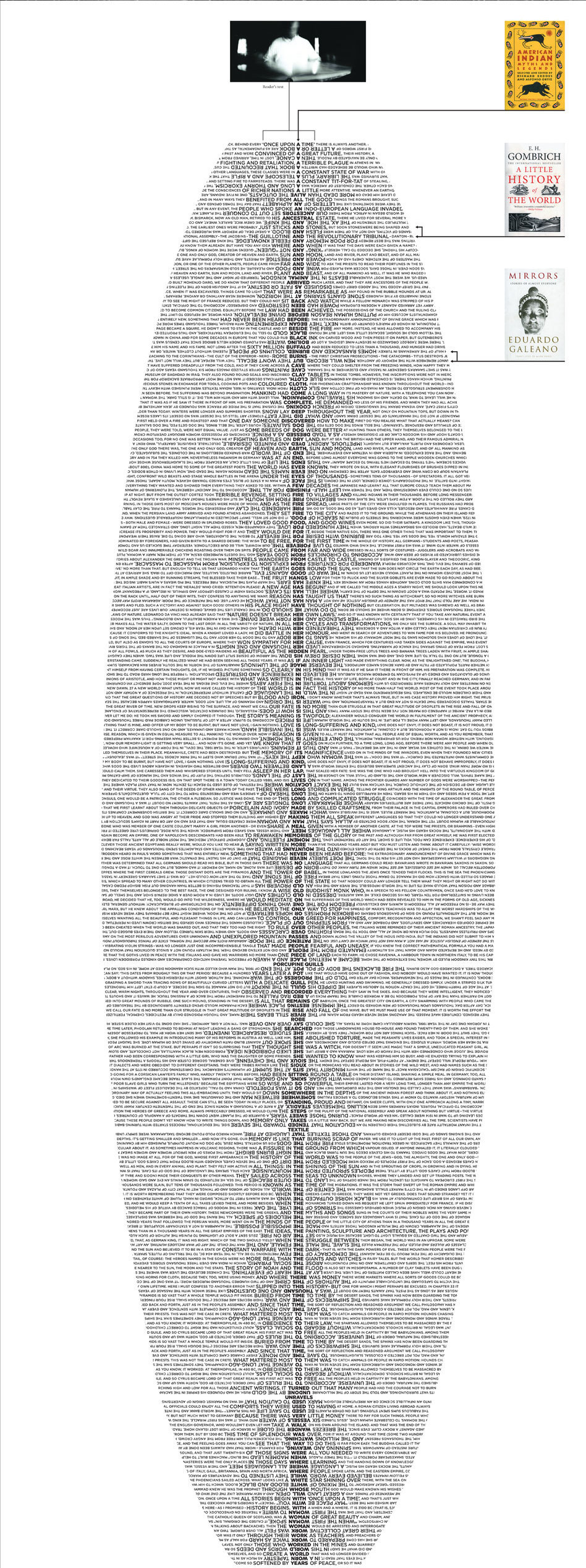
A two-color cork floor laid as a field of words set in relief and located in the the Thompson Library Buckeye Reading Room at The Ohio State University.
The text is created by an alphabetic intersection and line-by-line weaving of three different accountings of world history that are arranged in a literary concordance.
The spine along the north-south axis is composed of 299 words in A-Z order and adapted from "The End of the World" - a White River Sioux story.
The east-west lines of text intersect this story with prose fragments from A Little History of the World by E.H. Gombrich (1936) and Mirrors: Stories of Almost Everyone by Eduardo Galeano (2009).
The renovation and reopening of the Thompson Library occurs during a time when digital technologies are changing a reader's relationship to a page of text, to the book as object, and to the library as an institution and system of access to information and print culture. As libraries take on multiple roles, the housing of book collections shares space with its function as an access location to infinitely expanding digital information and a social site for its community of users. Within this context, Hamilton's project, a 6080 square foot cork floor in the Buckeye Reading Room is constituted of a field of words whose graphic organization follows the structure of an alphabetic concordance. Unlike indices which locate subject matter, concordances alphabetize the principal words used in a single text within the context of the sentence in which they appear. The alphabetized words run like a spine throught the text, allowing the reader to examine the intersections of context and the frequeney of their usage. Just as a concordance is an intersection of a key word with a body of text the library is one place where a reader intersects with the artifacts of print culture. Verse, in its form and woven organization is a reflection of how the reader intersects with and culls information and meaning from the library's collection.
Here, Ann Hamilton creates a different kind of concordance, a mesostic of vertical words intersecting a horizontal text. The 299 words of "The End of the World", adapted from a White River Sioux myth, are alphabetized to form the spine of the composition inlaid on the floor. "The End of the World" tells the story of a world that is kept alive by a process of weaving, relating itself to the library's life, sustained by its readers and the circulation movement of its books passing from patron to patron. Ann Hamilton, instead of creating a concordance of this story, finds the occurances of these 299 words in two other texts which account world histories: A Little History of the World by E.H.Goembrich, orginally published in 1936 and Mirrors: Stories of Almost Everyone by Eduardo Galeano published in 2009. The Sioux myth serves as the spine and its words as points of intersection with the two other texts, each reading in different direction. Where no sentences extend from the spine is where the unique esssence of the Sioux story resides: the words "porcupine-quills," "robe," "textile," and "unravels," integral to the action that, when repeated, sustains the life of the world in the myth, are absent in the Gombrich and Galeano accounts of the world. Further, the phrases which are emphasized on either side of the spine are the "floating weft," the visual thread of an unnamed reader for whom another shape — or layer of perception — weaves through the texts. It is the reader, this reader, ultimately, who shapes the world-selecting and accumulating information into knowledge, another process of weaving which cannot help but be full of truths and contradictions, slippages and poetic potential.*
*It Is Almost That: A Collection of Image + Text Work by Women Artists & Writers, edited by Lisa Pearson (Siglio, 2011)

George Acock, Acock Associates Architects
Hans Cogne | Typesetting & Graphic Design
Typeface Gotham by Hoefler & Frere-Jones
Mike Neidig, Color Text Incorporated | Fabrication
Kevin Jones, Jones Commercial Flooring | Installation
Ohio Arts Council Ohio Percent for Art Program
Bibliography
Excerpted from Mirrors: Stories of Almost Everyone. Copyright © 2009 by Eduardo Galeano. Translation copyright © 2009 by Mark Fried. Published by Nation Books, a member of the Perseus Books Group. First published in the Spanish language as Espejos by Siglio XXI Editores (Spain and Mexico) and Ediciones del Chanchito (Uruguay) in 2008. By permission of Susan Bergholz Literary Services, New York, NY and Lamy, NM. All rights reserved.
Gombrich, E.H.. A Little History of the World. Trans. Caroline Mustill. New Haven and London: Yale University Press, 2005.
Book from which the White River Sioux story is adapted:
Erdoes, Richard and Alfonso Ortiz, eds. “ The End of the World (White River Sioux).” American Indian Myths and Legends. New York: Pantheon Books, 1984, 485-486.
Illustration Ann Hamilton, reading - Francis, 2007
Credits
Ann Hamilton Studio
Jamie Boyle
Colin McDonald
Herb Peterson
Aimee Sones
Anjali Srinivasan
Color Text Incorporated | Fabrication
Aryn Bourk
Kim Bourk
Shawn Bourk
Tyson Bourk
Chris D’Andrea
Patrick D’Andrea
John Eckstein
Kevin Gay
Mike Neidig
Chris Vonau
Jones Commercial Flooring, LLC | Installation
Kevin Jones Owner/President
Aaron Pierfelice, Estimator
Brandy Horst, Project Manager
Kristina Whiting, Office Manager
Conchata Berry
Andrew Nelson
Martin Jones
Craig Parsons
Jason Davis
Austin Havens
Dean Kielmeyer
Josh Bryant
Web Design and Content Management
Joshua Penrose
Beth Black
Jim Muir
Russell Schelby
Amanda Gluibizzi
Acock Associates Architects
George Acock
Pete Confar
Dave Lee
Photography
Fredrik Marsh (interiors)
The Ohio State University
Sergio Soave
Wes Boomgaarden
Kristin Poldemann
Pat Purtee
Mark Moziejko
Ryan Langhurst
Duke Morgan
Paul Walsh
Denise Beard
Ohio Arts Council
Kathy Signorino
Ken Emerick
Ohio Percent for Art Projects
In 1990, the Ohio Legislature, recognizing the state's responsibility to foster culture and the arts and to encourage the development of artists and craftspeople, established the Ohio Percent for Art Program. The program provides funds for the acquisition, commissioning and installation of works of art for new or renovated public buildings that receive appropriations of more than $4 million from the State of Ohio. For these projects the law provides that one percent of the total appropriation will be allocated for the purchase of permanent public art. Since the legislation went into effect over 112 projects have been completed. Those projects have brought public art into many cities and small communities around Ohio